






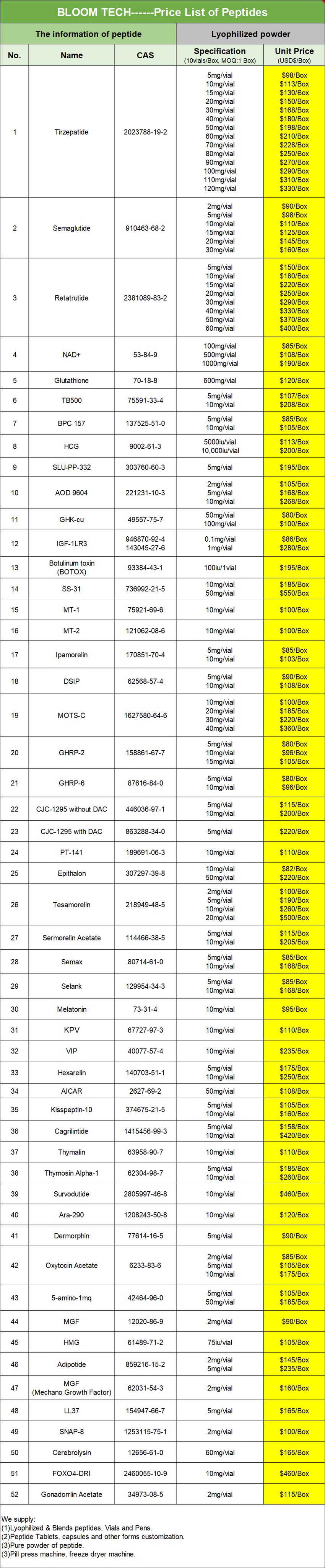
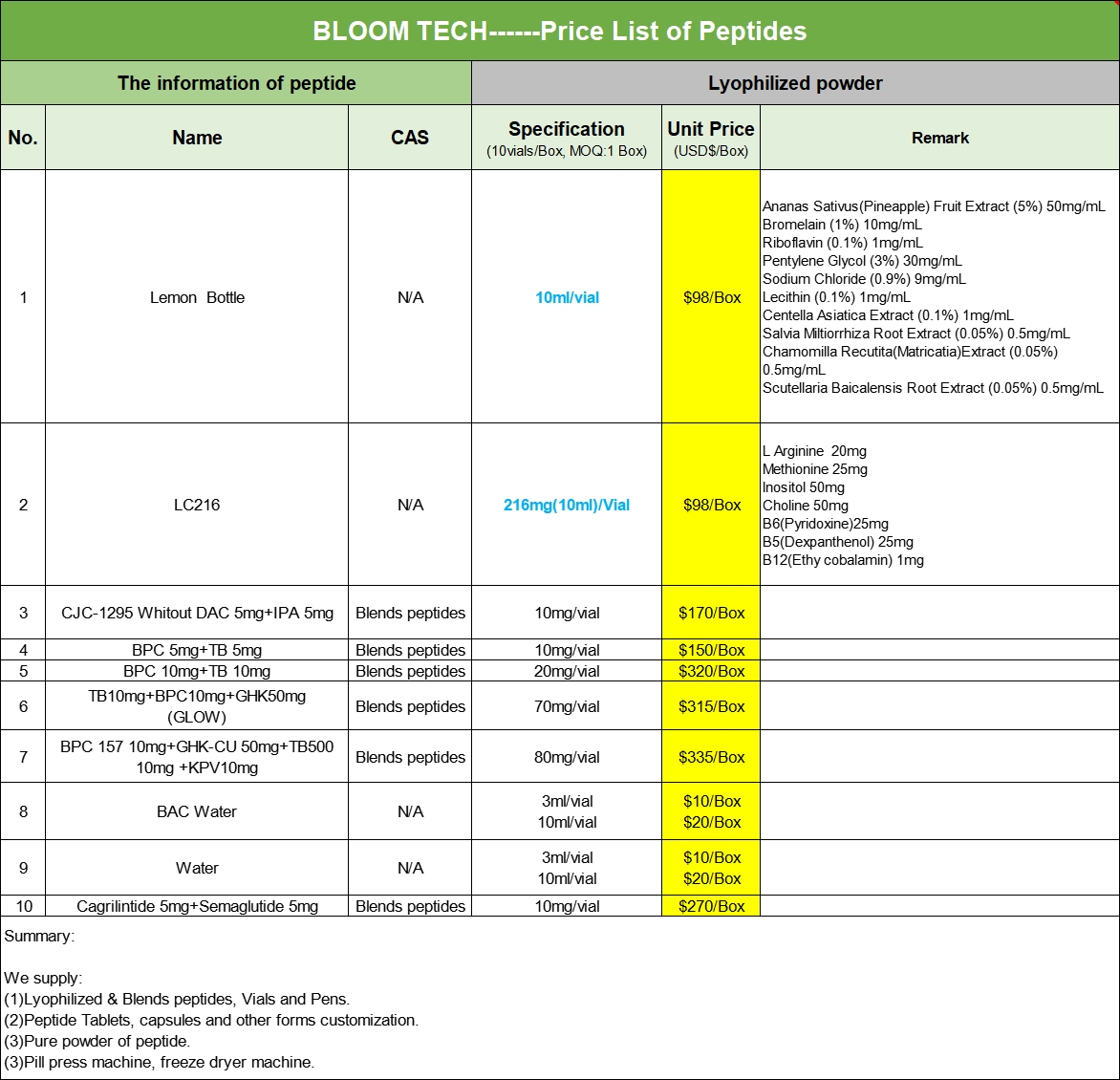
Shaanxi BLOOM Tech Co., Ltd. is one of the most experienced manufacturers and suppliers of gonadorelin peptide in China. Welcome to wholesale bulk high quality gonadorelin peptide for sale here from our factory. Good service and reasonable price are available.
Gonadorelin peptide is a ten-peptide hormone naturally synthesized by the hypothalamus. As a key messenger in the human endocrine system, its main function is to stimulate the anterior pituitary gland to release two important gonadotropins: luteinizing hormone (LH) and follicle-stimulating hormone (FSH). This mechanism makes it the core for regulating gonadal function, directly influencing the steroid hormone production of the testes and ovaries, gamete formation, and overall reproductive health. In the clinical field, the synthetic version of it is used for diagnosis. By evaluating the pituitary function, it helps to identify whether the cause of hypogonadism lies in the hypothalamus or the pituitary itself.
|
|
|




Gonadorelin COA



Gonadorelin peptide is an artificially synthesized ten-peptide analogue of gonadotropin-releasing hormone (GnRH). Its development prospects have demonstrated significant potential in various fields such as reproductive medicine, cancer treatment, chronic disease management, and scientific innovation. The following analysis is conducted from five dimensions: clinical application expansion, breakthroughs in cancer treatment, integration of personalized medicine, innovation in scientific research, and policy and market support.
Diversified Expansion of Clinical Application Scenarios

Main drugs in the field of reproductive health
The core function of Gonadorelin is to stimulate the pituitary gland to release follicle-stimulating hormone (FSH) and luteinizing hormone (LH), thereby regulating the secretion of sex hormones. Currently, its clinical applications have covered scenarios such as infertility treatment, cryptorchidism correction, and diagnosis of amenorrhea. For example, in male infertility, pulse administration can simulate the physiological release of GnRH, restoring the function of the hypothalamus-pituitary-testis axis; in the diagnosis of female amenorrhea, by detecting the peak changes of LH/FSH after administration, it can precisely distinguish the causes of hypothalamic or pituitary origin. In the future, with the deepening understanding of reproductive endocrine mechanisms, its indications are expected to expand to complex diseases such as polycystic ovary syndrome and premature ovarian failure.
New Choice for Chronic Endocrine Disease Management
For gonadal dysfunction caused by hypothalamic or pituitary damage, traditional hormone replacement therapy has side effects such as osteoporosis and metabolic disorders, while Gonadorelin, through physiological regulation of hormone secretion, can reduce the risk of long-term medication. For example, in patients after pituitary tumor surgery, continuous low-dose administration can maintain gonadal function and avoid sudden discontinuation of medication causing hormonal fluctuations. Additionally, its efficacy in special types of endocrine diseases such as precocious menopause and galactorrhea amenorrhea is also being explored.

Breakthrough Progress in Cancer Treatment
Targeted Inhibition of Hormone-dependent Tumors
The product and its analogues inhibit LH secretion by down-regulating GnRH receptor sensitivity, thereby reducing testosterone/estrogen levels and blocking the growth signals of hormone-dependent tumors (such as prostate cancer, breast cancer). Animal experiments show that continuous exposure to it can reduce the risk of breast cancer cell proliferation by 70% and increase the apoptosis rate of prostate cancer cells by 40%. Currently, GnRH agonists (such as leuprorelin) are widely used in clinical practice, while Gonadorelin, as a natural GnRH analogue, has a shorter half-life (about 6 minutes) and a lower risk of receptor desensitization. In the future, through modified formulations (such as sustained-release microspheres), it may achieve more precise hormone regulation.
Synergistic Enhancement of Tumor Immunotherapy
Recent studies have found that GnRH receptors are expressed on the surface of various tumor cells, providing new ideas for targeted therapy. For example, fusing GnRH with ribonuclease (hpRNase1) can construct an enzyme-peptide complex specifically killing tumor cells. Additionally, it can enhance the efficacy of PD-1/PD-L1 inhibitors by regulating the immune microenvironment (such as inhibiting the function of regulatory T cells), providing theoretical support for combined immunotherapy.
Integration of Personalized Medicine and Precise Drug Administration

Gene Testing Guided Individualized Treatment
With the development of genomics, the association between GnRH receptor gene polymorphisms (such as rs10872677) and differences in drug responses has gradually become clear. For example, patients carrying specific genotypes have a higher sensitivity to GnRH pulse therapy and can achieve maximum efficacy by adjusting the administration frequency. In the future, combined with dynamic monitoring of hormone levels (such as AMH, inhibin B) and gene testing, a personalized medication model for Gonadorelin peptide can be constructed.
Research and Development of New Delivery Systems
To overcome the limitation of its short half-life, new formulations such as nanocarriers and transdermal patches are under development. For example, poly(lactic-co-glycolic acid) (PLGA) microspheres can achieve sustained-release of the drug for 28 days, significantly improving patient compliance; nasal spray through mucosal absorption bypasses the first-pass effect, increasing the bioavailability to over 30%. These innovations will drive it to transform from a "therapeutic drug" to a "chronic disease management tool".

Driving Scientific Research Innovation and Interdisciplinary Collaboration
Lorem ipsum dolor sit amet consectetur adipisicing elit.
Basic Research Reveals New Mechanisms
Epigenetic studies indicate that it can influence germ cell development by regulating DNA methylation. For example, in a cryptorchidism model, the drug reverses hypermethylation in the promoter region of tumor suppressor genes, restoring testicular descent function. Additionally, its potential roles in neuroprotection (e.g., Alzheimer's disease) and metabolic regulation (e.g., obesity-related hypogonadism) are currently under investigation.
Interdisciplinary Technologies Enable Product Upgrades
The application of artificial intelligence in drug design has accelerated the development of it analogues. For example, by predicting peptide chain conformations using deep learning models, mutated variants with fivefold enhanced activity (such as [D-Trp6]-GnRH) have been successfully designed. Meanwhile, 3D bioprinting technology can construct in vitro models of the hypothalamic-pituitary-gonadal axis, providing an efficient platform for drug screening.
Dual guarantees of policy support and market demand
Global fertility policies drive demand growth
According to the WHO, approximately 15% of couples worldwide suffer from infertility. The two-child/three-child policy in China has further released the demand for assisted reproduction. As a key drug for ovulation induction, the market size of it is expected to expand at an annual rate of 8% and reach 1.2 billion US dollars by 2030.
Policy support for cancer drug research
The "14th Five-Year Plan" for China's pharmaceutical industry clearly lists GnRH analogues as key development varieties and provides support in review and approval, medical insurance access, etc. For example, the domestic gonadorelin injection has passed consistency evaluation and the price is 40% lower than that of imported products, significantly improving accessibility.

Conclusion
The development prospects of the product stem from its unique physiological regulatory mechanism and interdisciplinary innovation potential. From reproductive health to cancer treatment, from basic research to clinical translation, its value chain is continuously expanding. In the future, with the breakthroughs in personalized medicine, new formulations, and combination therapies, it is expected to become a core drug in the field of reproductive endocrinology and hormone-dependent tumor treatment, providing safer and more precise treatment solutions for patients worldwide.

Therapeutic value
Gonadorelin peptide is an artificially synthesized ten-peptide analog of gonadotropin-releasing hormone (GnRH). Its therapeutic value has demonstrated unique advantages in fields such as reproductive medicine, cancer treatment, and chronic disease management. The core mechanism lies in regulating the function of the hypothalamus-pituitary-gonadal axis and precisely interfering with the secretion of sex hormones, providing innovative treatment solutions for various diseases.
Core Drugs for Reproductive System Diseases Treatment
In male patients suffering from infertility associated with hypothalamic-pituitary-testicular (HPT) axis dysfunction, Gonadorelin serves as a key therapeutic agent by restoring the normal regulatory function of this critical endocrine axis. As a synthetic analog of endogenous gonadotropin-releasing hormone (GnRH), it mimics the natural pulsed release pattern of GnRH from the hypothalamus, which is essential to avoid pituitary desensitization and ensure the sustained secretion of pituitary gonadotropins.


By activating the HPT axis, Gonadorelin effectively stimulates the pituitary gland to secrete follicle-stimulating hormone (FSH) and luteinizing hormone (LH): LH promotes the production of testosterone in testicular Leydig cells, while FSH enhances spermatogenesis in the seminiferous tubules, thereby comprehensively increasing testosterone levels and improving sperm production, motility, and overall quality.This therapeutic effect is particularly beneficial in specific subgroups of male infertility patients. For children diagnosed with cryptorchidism-an condition where one or both testicles fail to descend into the scrotum spontaneously-short-term pulsed administration of Gonadorelin during the critical developmental period (usually before 1 year of age) can effectively stimulate testicular descent.
This non-surgical intervention not only avoids the physical trauma and potential complications of surgical orchidopexy but also helps preserve long-term testicular function, reducing the risk of infertility or testicular malignancy in adulthood.For adult patients with idiopathic oligospermia-a common cause of male infertility characterized by abnormally low sperm concentration with no clear underlying etiology (such as infection, obstruction, or genetic abnormalities)-continuous pulsed Gonadorelin therapy over 3 to 6 months can significantly improve sperm parameters. Clinical data consistently show that this therapy can increase sperm concentration by 40%-50% compared with baseline, and the subsequent natural conception rate is also notably improved, offering a safe and effective alternative to more invasive treatment options.

Breakthrough Progress in Hormone-dependent Tumor Treatment

Endocrine regulation is a cornerstone of adjuvant therapy for estrogen receptor-positive (ER-positive) breast cancer, as tumor growth in these patients is closely dependent on estrogen stimulation. Gonadorelin, a synthetic analog of gonadotropin-releasing hormone (GnRH), plays a vital role in this therapeutic strategy by targeting the hypothalamic-pituitary-ovarian axis to inhibit ovarian function. Unlike traditional surgical oophorectomy, Gonadorelin exerts its effect through a reversible mechanism: it initially stimulates the pituitary gland to secrete luteinizing hormone (LH) and follicle-stimulating hormone (FSH) but then induces pituitary desensitization with continuous administration, ultimately suppressing ovarian estrogen synthesis and secretion.
This reduction in circulating estrogen levels deprives ER-positive breast cancer cells of the key growth factor they rely on, thereby inhibiting tumor progression and significantly lowering the risk of local recurrence and distant metastasis.
In clinical practice, Gonadorelin is rarely used as a monotherapy; instead, it is commonly combined with other endocrine agents to enhance therapeutic efficacy. When administered in conjunction with tamoxifen (a selective estrogen receptor modulator) or aromatase inhibitors (which block peripheral estrogen synthesis), it creates a synergistic effect that further suppresses estrogen signaling in tumor cells. Clinical trials and long-term follow-up data have confirmed that this combined therapy can increase the 5-year disease-free survival rate by 15%-20% in ER-positive breast cancer patients, especially in premenopausal women with high-risk features such as lymph node involvement or large tumor size.


A notable advantage of Gonadorelin over irreversible ovarian ablation (such as surgical removal of the ovaries) is its reversible inhibitory characteristic. For young premenopausal patients with ER-positive breast cancer who wish to retain their reproductive potential after completing adjuvant therapy, discontinuing Gonadorelin can allow ovarian function to gradually recover. This feature addresses a critical unmet need in young breast cancer survivors, offering them the possibility of conceiving naturally or through assisted reproductive technologies in the future, while still ensuring effective tumor control during treatment. Additionally, compared to surgical oophorectomy, Gonadorelin avoids the surgical trauma, postoperative complications, and sudden onset of menopause-related symptoms (such as hot flashes, mood swings, and osteoporosis), improving patients' quality of life during and after therapy .
Therapeutic Advantages and Clinical Application Prospects
Gonadorelin mimics the natural pulsatile release of GnRH, avoiding the side effects of traditional hormone replacement therapy (such as osteoporosis, metabolic disorders). Its reversible inhibitory characteristic provides the possibility for young patients to retain their reproductive function.
In addition to intravenous injection, the development of nasal sprays and sustained-release microsphere preparations has significantly improved patient compliance. For example, the bioavailability of nasal administration reaches 30%, and it can avoid injection site pain and thrombophlebitis.
Basic research shows that GnRH receptors are expressed on the surface of tumor cells such as breast cancer and ovarian cancer, providing new ideas for targeted therapy. In addition, its potential roles in neuroprotection (such as Alzheimer's disease) and metabolic regulation (such as obesity-related hypogonadism) are also being explored.
Conclusion
The Gonadorelin Peptide, with its unique physiological regulatory mechanism and interdisciplinary application potential, has become a core drug in the fields of reproductive medicine and tumor treatment. From ovulation induction therapy to the inhibition of hormone-dependent tumors, from intervention in childhood precocious puberty to optimization of assisted reproductive technologies, its therapeutic value is constantly expanding. In the future, with the development of personalized medicine and new drug delivery systems, Gonadorelin is expected to provide safe and precise treatment solutions for more patients.



1. High-Performance Liquid Chromatography (HPLC): Core Purity and Stability Analysis
HPLC is the most commonly used method for Gonadorelin analysis, mainly applied for purity detection and stability evaluation. Reversed-phase HPLC is preferred, using a C18 chromatographic column with gradient elution to separate Gonadorelin from impurities and degradation products. It can accurately determine the purity of synthetic Gonadorelin (requiring ≥95% purity) and monitor its degradation kinetics in aqueous solutions, with photodiode array detection ensuring detection accuracy. This method is also specified in pharmacopeias for identifying Gonadorelin by comparing the retention time of the sample's major peak with the standard preparation.
2. Mass Spectrometry (MS): Precision Qualification and Metabolite Detection
MS is often combined with HPLC (LC-MS/MS, LC-HRMS) for high-sensitivity analysis. It is mainly used to identify Gonadorelin's chemical structure, detect its metabolites, and quantify trace levels in biological samples. For example, LC-HRMS can quantify Gonadorelin in plasma or urine down to the low picogram level, while LC-MS/MS is used to characterize its degradation products with high resolution. This method is crucial for clinical pharmacokinetic research and anti-doping detection.
3. Immunoassay: Rapid Quantitative Detection
Immunoassay methods, including chemical发光法 (CLIA) and biomimetic enzyme-linked immunosorbent assay (BELISA), are used for rapid quantitative analysis of Gonadorelin in biological samples. CLIA has high sensitivity (detection limit 0.1pg/mL) for serum/plasma samples, while BELISA uses molecularly imprinted polymers to achieve rapid quantification with good reproducibility. These methods are suitable for large-scale clinical sample detection and anti-doping screening due to their simplicity and high efficiency.
FAQ
What is gonadorelin peptide used for?
+
-
Gonadorelin is used to test how well the hypothalamus and the pituitary glands are working. It is also used to cause ovulation (release of an egg from the ovary) in women who do not have regular ovulation and menstrual periods because the hypothalamus gland does not release enough GnRH.
What are the side effects of gonadorelin injections?
+
-
Headache, nausea, and mild abdominal pain may occur with menstrual bleeding. Injection site reactions (such as mild irritation, redness, bruising) may occur. If any of these effects last or get worse, tell your doctor or pharmacist promptly.
Does gonadorelin build muscle?
+
-
Increased Testosterone Levels: Gonadorelin stimulates the production of testosterone, which can improve energy levels, strength, and overall vitality. Enhanced Muscle Mass: Higher testosterone levels support muscle growth and maintenance, contributing to a more toned and defined physique.
Hot Tags: gonadorelin peptide, suppliers, manufacturers, factory, wholesale, buy, price, bulk, for sale, Cosmetic, DERMORPHIN, dermorphin in humans, dermorphin peptide, Melanotan ii powder