




Teduglutide is a synthetic peptide drug that targets the intestinal tract itself for treatment. It mimics and enhances the physiological functions of the natural human intestinal glucagon-like peptide-2 (GLP-2), representing a paradigm shift from "passive nutritional support" to "active functional restoration" for patients with intestinal dysfunction. This drug precisely activates the GLP-2 receptors on intestinal epithelial cells, systematically promoting the proliferation of intestinal mucosal villi, deepening of crypts, and improvement of blood flow, thereby significantly expanding the effective absorption area of the intestine, delaying gastrointestinal transit time, and enhancing its ability to absorb water and nutrients. For patients with severe intestinal maladaptation such as short bowel syndrome who rely on total parenteral nutrition, the core value of Teduglutide lies in its ability to gradually restore the autonomous physiological functions of the intestine, aiming to reduce or even eliminate lifelong dependence on intravenous nutrition, and reduce the risks of liver damage, infection, and thrombosis associated with it. It is not only an alternative therapy but also a regenerative treatment strategy aimed at restoring intestinal integrity, improving long-term prognosis and quality of life.
|
Customized Bottle Caps And Corks:
|
|

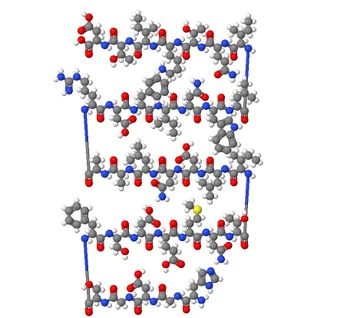


Teduglutide has demonstrated remarkable efficacy in the treatment of short bowel syndrome (SBS). The core mechanism of action, clinical effects, and policy support for this drug are as follows:
Core mechanism of action: Promotes intestinal compensation and enhances absorption function
Teduglutide is the world's first GLP-2 analogue approved for use in SBS. It mimics the effects of natural GLP-2 to activate the receptors on the surface of intestinal cells, triggering the following key physiological responses:
Promote intestinal mucosal growth
Stimulate the proliferation of crypt cells, increase villus height and mucosal thickness, thereby expanding the intestinal absorption area.
Inhibit gastric acid secretion
Reduce the stimulation of gastric acid on the intestinal mucosa, protecting the intestinal barrier function.
Regulate intestinal peristalsis
Slow down the passage speed of intestinal contents, prolong the contact time of nutrients, and improve absorption efficiency.
Promote angiogenesis
Enhance intestinal blood flow, improve the conditions for nutrient transportation.
These mechanisms work together to help SBS patients achieve the recovery of intestinal autonomous function and reduce the dependence on parenteral nutrition (PN).
Clinical effect: Significantly reduces the need for PN, improves quality of life
|
|
|
|


Multiple clinical trials have verified the effectiveness of Teduglutide in the treatment of SBS:
Adult patients:
24-week treatment: 63% of the patients had a reduction of ≥20% in PN intake per week; 39% of the patients were able to discontinue PN/parenteral injection for ≥3 days per week.
30-month treatment: 33% of the patients completely got rid of PN dependence, and over 90% of the patients had a reduction of ≥20% in PN intake.
Pediatric patients:
24-week treatment: 12% of the children completely got rid of PN dependence, and 69% of the children had a reduction of ≥20% in PN intake; the average daily PN infusion time for the experimental group children was reduced by 3 hours, a decrease of 42% compared to the baseline.
Case study: A 4-year-old SBS child who received Teduglutide treatment had a 50% reduction in daily infusion volume, gained 20.4 kilograms in weight, grew 2 centimeters in height, showed significant improvement in mental state, and was able to study normally and recite ancient poems, with a significant improvement in quality of life.
Policy support: Accelerated implementation, filling the domestic treatment gap
|
|
|
|


International recognition: Teduglutide has been approved in countries and regions such as Europe, America, and Japan for the treatment of SBS patients aged 1 year and above, and has also been approved for use in children aged 4 months and above in Japan.
Domestic breakthrough:
Pilot project: Relying on the policies of the Hainan Boao Lecheng International Medical Tourism Pilot Zone, Teduglutide completed its first clinical application in China in May 2023, benefiting multiple SBS patients.
Official approval: In February 2024, the China National Medical Products Administration (NMPA) approved Teduglutide for use in adult and children aged 1 year and above with SBS, becoming the first SBS treatment drug in China.
Drug carrying policy for discharge: After assessment, patients can take no more than 12 weeks' worth of the drug out of Boao and continue the treatment at the original treatment site, greatly improving treatment convenience.
Safety and tolerability: Overall good, with regular monitoring required
|
|
|


Common adverse reactions: Include nausea, headache, abdominal pain, and upper respiratory tract infections, mostly mild to moderate and tolerable.
Long-term risks: Regular monitoring of intestinal tumor markers (due to the potential stimulation of cell proliferation by GLP-2 analogues), but current clinical data do not show a significant increase in the incidence of tumors.
Special populations: Children patients need to closely monitor growth and development indicators to ensure medication safety.

Teduglutide is an important bioactive substance with multiple physiological and biochemical functions. In the laboratory, tiglutide can be synthesized through various methods. The following is one of the commonly used synthesis methods:
Chemical equation:
(Equation 1) C5H9NO4+C3H10N2.HCl → γ- Glutamoyl propanediamine hydrochloride
(Equation 2) γ- Glutamoyl propanediamine hydrochloride+C14H10O3 → parent compound of Tidulutide
(Formula 3) The parent compound of Tidulutide+H4N2 → the cysteine derivative of Tidulutide
(Formula 4) Cysteine derivative of Tidulutide+HCl → Thioamino acid derivative of Tidulutide
(Formula 5) Thioamino acid derivative of Tidulutide+BrCN → Tidulutide

Starting materials and reagents
Starting materials: L-glutamic acid, malondiamine hydrochloride, benzoic anhydride, etc.
Synthesis steps
(1) Mix L-glutamic acid with propylene diamine hydrochloride, add concentrated sulfuric acid as a catalyst, and heat to reflux state. During this process, L-glutamic acid undergoes a condensation reaction, generating intermediate products γ- Glutamoyl propanediamine hydrochloride (formula 1).
(2) Generate intermediate products γ- Mix glutamylpropylenediamine hydrochloride with benzoic anhydride, add triethylamine as a catalyst, and heat to reflux state. During this process, the intermediate product undergoes an esterification reaction with benzoic anhydride to generate the parent compound of dideluptin (Formula 2).
(3) Mix the parent compound of the generated tilurutide with hydrazine hydrate, add triethylamine as a catalyst, and heat to reflux state. During this process, the parent compound undergoes a reduction reaction with hydrazine hydrate to generate a cysteine derivative of tigurotide (formula 3).
(4) Mix the cysteine derivative of the generated tilurutide with hydrogen chloride gas and heat it to reflux state. During this process, cysteine derivatives undergo a substitution reaction with hydrogen chloride gas to generate a thioamino acid derivative of dideluptin (Formula 4).
(5) Mix the thioamino acid derivatives of the generated tilurutide with cyanide bromide and heat to reflux state. During this process, thioamino acid derivatives undergo a substitution reaction with cyanide bromide to generate tilurutide (formula 5).
The above is a common chemical synthesis method of tiglutide. This method requires controlling reaction conditions such as temperature, pH value, reaction time, etc. to ensure the purity and yield of Teduglutide.
Preparation of Tedroside
Add 1220g (2mol) Fmoc His (Trt) - OH and 230g (2mol) HOSu to a 10L three necked glass reaction flask, dissolve in 4000ml DMF for 30 minutes, then add 412g DIC and stir at room temperature for 2 hours. Finally, add 402g (2mol) Gly OBzl. HCl and 300ml (2mol) triethylamine and react for 10 hours to complete the reaction and synthesize Fmoc His (Trt) - Gly. OBzL protected dipeptide. Use 10 times the amount of reaction liquid to precipitate, filter and collect the precipitate, wash with plenty of water, and dry under reduced pressure. After passing the inspection, the solid was dissolved in a 50% ethanol aqueous solution, 50g of 5% Pd/c was added, and catalytic hydrogenation was carried out for 16 hours to complete the concentration of ethanol. The filtered product was dried under reduced pressure to obtain 644.2g of Fmoc His (Trt) - Gly OH as the final product, with a yield of 47.6%.
Add 422g (2mol) Fmoc Asp (OtBu) - OH and 230g (2mol) HOSu to a 10L three necked glass reaction flask, dissolve in 4000ml DMF for 30 minutes, then add 412g DIC and stir at room temperature for 2 hours. Finally, add 402g (2mol) Gly OBzl. HCl and 300ml (2mol) triethylamine and react for 10 hours to complete the condensation synthesis of Fmoc Asp (OtBu) - Gly. OBzL protected dipeptide. Use 10 times the amount of reaction liquid to precipitate, filter and collect the precipitate, wash with plenty of water, and dry under reduced pressure. After passing the inspection, the solid was dissolved in a 50% ethanol aqueous solution, 50g of 5% Pd/c was added, and catalytic hydrogenation was carried out for 16 hours to complete the concentration of ethanol. The filtered product was dried under reduced pressure to obtain the final product 402.1g Fmoc Asp (OtBu) - Gly OH, with a yield of 42.9%. MW:468
Take 500g of 2-Cl Trt Cl resin with a substitution value of 0.6mmol/g and add DMF swelling resin. Take 0.6mol Fmoc Asp (OtBu), dissolve it in an appropriate amount of DMF, add it to the above resin, stir evenly, then add 1.2mol DIEA, stir and react for 3 hours, remove the reaction solution, wash it with DMF 3 times, and wash it with DCM 3 times to obtain Fmoc Asp (OtBu) -2-Cl Trt resin with a substitution value of 0.46mmol/g.
Take 500g of Wang resin with a substitution value of 0.5mmol/g and add DMF swelling resin. Take 0.5mol of Fmoc Asp (OtBu), dissolve it in an appropriate amount of DMF, and add it to the above resin. After stirring evenly, add 1.0mol of DIC, 0.4mol of HOBt, and 0.04mol of 4-N, N-dimethylpyridine. Stir the reaction for 6 hours, remove the reaction solution, wash it three times with DMF, and wash it three times with DCM to obtain Fmoc Asp (OtBu) - Wang resin with a substitution value of 0.41mmol/g.
Take 0.1mol of Fmoc Asp (OtBu) -2-Cl Trt resin from Example 4 (with a substitution value of approximately 0.46mmol/g), protect it with a 20% PIP/DMF solution for 25 minutes, wash and filter to obtain H-Asp (OtBu) -2-Cl Trt resin without Fmoc.
Dissolve 0.3mol Fmoc Thr (tBu) and 0.3mol HOBt in an appropriate amount of DMF; Take another 0.3mol of DIC and slowly add it while stirring. Continue stirring for 30 minutes and add it to the H-Asp (OtBu) -2-Cl Trt resin mentioned above. Perform a coupling reaction for 120-300 minutes. The reaction endpoint is determined by the indene ketone method. Wash and filter, then protect with 20% PIP/DMF solution for 25 minutes. Wash and filter to obtain H-Thr (tBu) - Lys (Boc) -2-Cl Trt resin. Obtain peptide fragment 3:
H-Ser(tBu)-Phe-Ser(tBu)-Asp(OtBu)-Glu(OtBu)-Met-Asn(Trt)-Thr(tBu)-Ile- Leu-Asp(OtBu)-Asn(Trt)-Leu-Ala-Ala-Arg(Pbf)-Asp(OtBu)-Phe-Ile-Asn(Trt)-Trp (Boc)-Leu-Ile-Gln(Trt)-Thr(tBu)-Lys(Boc)-Ile-Thr(tBu)-Asp(OtBu)-2-Cl Trt- resin
H-His(Trt)-Gly-Asp(OtBu)-Gly-Ser(tBu)-Phe-Ser(tBu)-Asp(OtBu)-Glu(OtBu )-Met-Asn(Trt)-Thr(tBu)-Ile-Leu-Asp(OtBu)-Asn(Trt)-Leu-Ala-Ala-Arg(Pbf)-Asp (OtBu)-Phe-Ile-Asn(Trt)-Trp(Boc)-Leu-Ile-Gln(Trt)-Thr(tBu)-Lys(Boc)-Ile-Thr(tB u)-Asp(OtBu)-2-Cl Trt- Resin.
FAQ
1. What are the fundamental differences between Teduglutide and common diabetes medications (such as GLP-1 agonists)?
The core target is different from the target. It acts on the GLP-2 receptor and its main function is to promote intestinal mucosal repair and adaptation, aiming to improve nutrient absorption, rather than controlling blood sugar and weight by regulating insulin or appetite.
2. Does using it mean that intravenous nutrition can be completely stopped?
Not necessarily. The treatment goal is to significantly reduce (rather than completely eliminate) reliance on parenteral nutrition. The efficacy varies from person to person and needs to be adjusted gradually based on individual intestinal adaptation under close monitoring of the amount of intravenous nutrition.
3. What are the main risks?
The most critical risk to be concerned about is the acceleration of intestinal hyperplasia, which may cause the existing gastrointestinal tumors (including polyps) to grow faster or increase the risk of potential tumors. Strict screening and monitoring for gastrointestinal tumors must be conducted before and during treatment.
4. How does it affect the quality of life of the patients?
By reducing or eliminating the reliance on prolonged intravenous infusions daily, patients can enjoy greater freedom of movement, fewer infusion-related complications (such as infections, thrombosis), and improved psychological feelings related to diet. However, this needs to be weighed against the potential long-term treatment and monitoring burdens.
Hot Tags: teduglutide cas 197922-42-2, suppliers, manufacturers, factory, wholesale, buy, price, bulk, for sale, 6 4 bromopyridin 2 yl phenanthridine, CAS 213 46 7, CAS 1762 84 1, 9 4 4 4 5 5 TETRAMETHYL 1 3 2 DIOXABOROLAN 2 YL 1 1 BIPHENYL 3 YL 9H CARBAZOLE, N N N Trimethylethylenediamine, 4 Butylresorcinol powder