


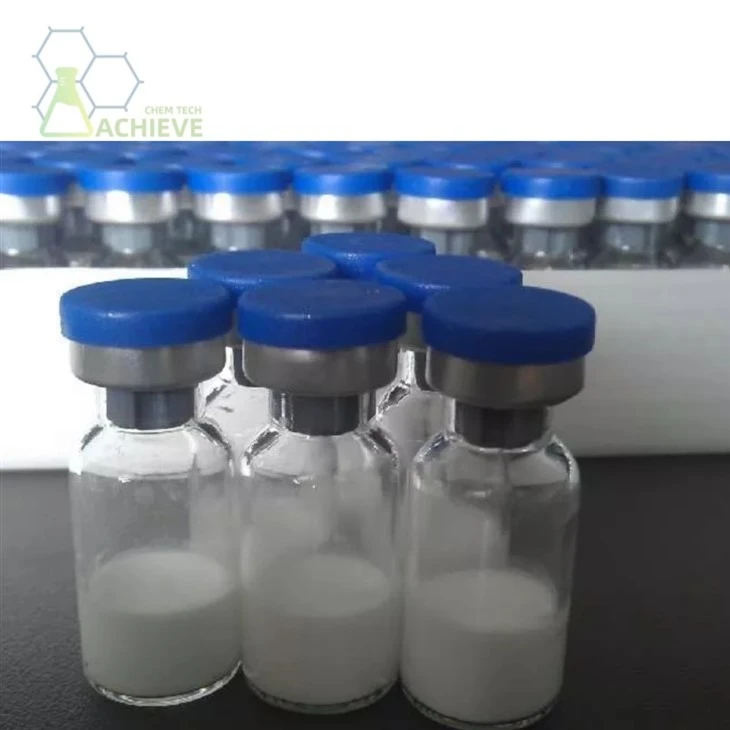


Bivalirudin powder is an artificially synthesized anticoagulant drug that is a 20 peptide analogue of hirudin. It is a white to grayish white powder, odorless and tasteless. The molecular formula is C98H138N24O33, CAS 128270-60-0, and the molecular weight is 2295.31. The molecule contains multiple acidic and alkaline groups, giving it zwitterionic ionization properties. Under specific pH conditions, it can carry either positive or negative charges. Moisture content ≤ 5.0%, TFA content ≤ 12.0%, purity ≥ 98.0%, single impurity ≤ 1.0%, peptide content ≥ 80.0%, endotoxin ≤ 5EU/mg. Bivalutine is soluble in water and most organic solvents. Surface tension is related to its self-assembly behavior and aggregation state in aqueous solutions, while viscosity is related to its diffusion and transport properties in aqueous solutions. It is relatively stable in light, heat, and acid-base environments and is not prone to chemical degradation. Its stability in solution is not affected by metal ions. In addition to inhibiting the activity of thrombin, it also has an anti platelet aggregation effect. It exerts anti thrombotic effects by inhibiting the binding of platelets to fibrinogen, reducing platelet activity. The anticoagulant effect has a high selectivity, mainly targeting enzymes related to blood coagulation, and has no significant effect on enzymes in other physiological processes.
|
Customized Bottle Caps And Corks:
|
|


|
Chemical Formula |
C98H138N24O33 |
|
Exact Mass |
2179 |
|
Molecular Weight |
2180 |
|
m/z |
2180 (100.0%), 2179 (94.3%), 2181 (40.3%), 2182 (17.5%), 2181 (12.1%), 2181 (8.9%), 2180 (8.4%), 2182 (6.8%), 2181 (6.4%), 2182 (4.7%), 2183 (4.6%), 2183 (2.7%), 2181 (1.6%), 2180 (1.5%), 2181 (1.3%), 2180 (1.2%), 2184 (1.2%) |
|
Elemental Analysis |
C, 53.99; H, 6.38; N, 15.42; O, 24.22 |

Bivalirudin is a direct thrombin inhibitor used primarily in cardiac interventional procedures and in the treatment of cardiovascular diseases such as acute coronary syndromes. Its main uses include:
Cardiac interventional procedures
Bivalirudin is widely used in coronary interventional procedures (e.g., stent implantation). It can be used as an alternative to traditional heparin as an anticoagulant therapy, reducing the risk of bleeding during the procedure.
01
Acute Coronary Syndrome (ACS)
Bivalirudin is also used in the treatment of acute coronary syndromes including non-ST-segment elevation myocardial infarction (NSTEMI) and unstable angina pectoris (UA) to prevent thrombosis and further cardiovascular events.
02
Heart Valve Surgery
Bivalirudin may also be used as an anticoagulant therapy in patients requiring heart valve surgery to reduce the risk of thrombosis during the procedure.
03
Other Cardiovascular Diseases
Bivalirudin may also have a role in the treatment of other cardiovascular diseases, such as myocardial infarction, heart failure, and other conditions requiring anticoagulation.
04
Overall, Bivalirudin is an important anticoagulant used primarily in cardiac interventions, treatment of acute coronary syndromes, and anticoagulation in other cardiovascular diseases. In the treatment of cardiovascular disease, Bivalirudin plays a key role in reducing thrombosis, preventing cardiovascular events and reducing the risk of bleeding.

Bivalirudin powder is a natural diphenylpropane compound with various biological activities. It has extensive applications in fields such as pharmacy and cosmetics. In order to obtain high-purity bivaludine, many researchers have attempted to use chemical synthesis methods for production. Below, I will introduce a common synthesis method and steps for bivaludine.
1. Synthesis of precursor for biphenyl ring
Firstly, we need to synthesize the precursor of the biphenyl ring. This process can be completed through aromatic electrophilic substitution reactions. React 2-oxobenzoic acid with bromobenzene to produce bromobenzoic acid. Then react bromobenzoic acid with phenol to produce 2- (4-methoxyphenyl) benzoic acid. Finally, 2- (4-methoxyphenyl) benzoic acid is reacted with sulfuric acid to form a precursor of the biphenyl ring.
Step 1: 2-Oxobenzoic acid+Br2 → Br-2-C7H6O2
Step 2: Br-2-C7H6O2+C6H5OH → 2-(4-methoxyphenyl) benzoic acid
Step 3: 2-(4-methoxyphenyl) benzoic acid+H2SO4 → Diphenyl precursor

2. Synthesis of Bivalutin
Next, we need to react the precursor of the biphenyl ring with benzopyran to generate bivalirudin. In this process, we need to use sodium hydroxide, trichloroacetic acid, and tetrahydrofuran as reaction reagents.
Step 4: Diphenyl precursor+PhNO → C98H138N24O33
The overall reaction equation is as follows:
2-Oxobenzoic acid+Br2 → Br-2-C7H6O2
Br-2-C7H6O2+C6H5OH → 2-(4-methoxyphenyl) benzoic acid
2-(4-Methoxyphenyl) benzoic acid+H2SO4 → Diphenyl precursor
Diphenyl precursor+PhNO → C98H138N24O33
This is a common method for synthesizing bivaludine. It should be noted that in the actual operation process, a series of purification and purification steps need to be carried out to ensure the quality and purity of the product. In addition, due to the strong biological activity of bivaludine, if accidentally ingested or inhaled, it may cause irreversible damage. Therefore, in the process of synthesizing bivaludine, strict adherence to laboratory safety regulations is necessary.

The molecular structure analysis of Bivalirudin powder can be carried out from the following aspects:

1. Molecular composition and basic structure
Bivalirudin is a short peptide composed of 20 amino acid residues, with the molecular formula C98H138N24O33 and a relative molecular weight of 2295.31. Its basic structure is similar to natural hirudin, but compared to the 25 amino acid residues of natural hirudin, it has one less amino acid residue at the N-terminus and one less amino acid residue at the C-terminus. This special structure is a key factor in the higher anticoagulant activity of bivaludine.
2. Amino acid sequence analysis
The amino acid sequence of bivaludine has a significant impact on its anticoagulant activity and stability. The lysine residues and arginine residues in the sequence are key sites for the binding of bivaludine to thrombin. In addition, the ratio of acidic and alkaline amino acid residues in the sequence also affects its physical properties such as charge and solubility.
3. Spatial conformational analysis
The spatial conformation of bivaludine also has a significant impact on its anticoagulant activity. Research has shown that bivaludine can form specific spiral or circular structures in solution, which can promote its binding with thrombin. Through techniques such as X-ray crystallography and nuclear magnetic resonance, the spatial conformation of Valutin can be analyzed in depth to further understand its anticoagulant mechanism.
4. Chemical bond and functional group analysis
Bivalutine molecules contain multiple chemical bonds and functional groups, such as peptide bonds, carboxyl groups, amino groups, thioethers, etc. These chemical bonds and functional groups play an important role in the stability, charge properties, and interaction with target enzymes of bivaludine. For example, the thioether bond in the molecule is one of the key factors that specifically inhibit thrombin by bivaludine.
5. Mass spectrometry and infrared spectroscopy analysis
Mass spectrometry analysis can determine the molecular weight, sequence analysis, and structural characteristics of bivaludine. Infrared spectroscopy analysis can provide information about functional groups in molecules, such as peptide bonds, carboxyl groups, and amino groups. These pieces of information are of great significance for verifying the molecular structure and purity of bivaludine.
6. Nuclear magnetic resonance analysis
Nuclear magnetic resonance technology is an important means of determining the molecular structure of Bivalirudin powder. By analyzing methods such as hydrogen and carbon spectra, the sequence of amino acid residues in the molecule and specific chemical environment can be determined, allowing for precise identification of the molecular structure of Valutin.

|
|
|
|


Bivalirudin, as a novel direct thrombin inhibitor, has shown broad development prospects in the medical field, especially in the treatment of cardiovascular diseases. The following is a detailed analysis of its development prospects:
Market demand growth: With the aging of the global population, the incidence rate of cardiovascular diseases is increasing year by year. Bivalirudin, as an anticoagulant, plays an important role in the treatment of cardiovascular diseases such as percutaneous coronary intervention (PCI), and its market demand has also increased accordingly. Compared with traditional anticoagulant drugs such as heparin, bivalirudin has the advantages of not relying on antithrombin to directly exert anticoagulant effects, significantly better anticoagulant effects than regular heparin, and significantly reducing the risk of postoperative bleeding and the incidence of cardiovascular events. Therefore, bivalirudin is gradually replacing traditional anticoagulant drugs in clinical practice and becoming the choice of more doctors and patients.
Expansion of application areas: Bivarudine is mainly used for adult elective percutaneous coronary intervention (PCI) to prevent unstable angina, ischemic complications, etc. With the continuous advancement and innovation of cardiovascular disease treatment technology, the application fields of bivalirudin are expected to further expand. In addition to the treatment of cardiovascular diseases, bivalirudin is expected to play an important role in other medical fields. For example, in the treatment of patients with acute coronary syndrome (ACS), bivalide alone or in combination with glycoprotein IIb/IIIa inhibitors has shown good efficacy and safety.
Technological progress and innovation: With the continuous advancement of chemical technology, the production process of bivalirudin will continue to improve and innovate. For example, more efficient synthesis methods and purification techniques can be used to improve the yield and purity of bivalirudin and reduce production costs. In order to meet the needs of different patients, new formulations of bivalirudin are also constantly being developed. For example, oral formulations or long-acting injections of bivalirudin can be developed to improve patient medication adherence and treatment efficacy.
Environmental Protection and Sustainable Development: In the production process of Bifaluding, more emphasis will be placed on environmental protection and sustainable development. For example, green chemistry methods can be used to reduce the generation of by-products and waste, thereby reducing environmental pollution. Bivarudine should also pay attention to sustainable application during use. For example, biodegradable and recyclable products based on fenugreek can be developed to reduce their impact on the environment.
Market competition pattern: Currently, the competition in the Bivarudin market is fierce, with multiple companies entering the field. In order to stand out in the competition, enterprises need to continuously improve product quality and technological level, strengthen brand building and marketing efforts. With the continuous deepening and development of globalization, the Bivarudin market is also facing challenges from international competition. Domestic enterprises can strengthen cooperation and communication with international enterprises, jointly develop new products, explore new markets, improve product quality, and reduce costs.
Future Development Trends: With the rise of the incidence rate of cardiovascular diseases and the widespread clinical application of bevalodine, its market demand will continue to grow. It is expected that the market for Bivarudine will maintain a steady growth trend in the coming years. With the continuous advancement and innovation of medical technology, the application fields of bivalirudin will continue to expand and deepen. For example, in the field of cardiovascular disease treatment, bivalirudin is expected to be used in combination with other novel drugs or therapies to improve treatment efficacy and reduce side effects. Technological innovation is an important driving force for the development of Bivarudin.
Future Development Trends: In the future, with the continuous progress and innovation of science and technology, research on comparative fenugreek will also continue to deepen.For example, the application of bivalirudin in the development of new anticoagulants and treatment methods for cardiovascular diseases can be explored. The government's policy support and strengthened regulation of the healthcare industry will have a significant impact on the development of Biaoluding. For example, the government can introduce relevant policies to encourage enterprises to increase their research and development investment and production efforts in comparison to fenugreek; At the same time, strengthen market supervision of fenugreek to ensure its quality and safety.
Bivalirudin powder exemplifies the success of rational drug design, transforming anticoagulation therapy with its precision, safety, and versatility. From PCI to HIT, its clinical benefits are underscored by robust evidence, while ongoing research explores its potential in stroke, cancer, and beyond. As manufacturing advancements improve accessibility, bivalirudin is poised to remain a vital tool in managing thrombotic disorders, balancing efficacy with patient-centered care.
It represents a significant advancement in anticoagulation therapy, offering a safer and more effective alternative to traditional heparin-based regimens. Its direct thrombin inhibition mechanism, favorable pharmacokinetic profile, and robust clinical evidence support its use in patients undergoing PCI and those with HIT. While bleeding complications remain a concern, careful patient selection, dose adjustments, and combination therapy with antiplatelet agents can mitigate these risks. Future research directions, including combination therapies, personalized medicine, and novel formulations, hold promise for further optimizing Bivalirudin's therapeutic potential. As the field of anticoagulation continues to evolve, Bivalirudin is poised to remain a cornerstone of modern cardiovascular therapy.
Hot Tags: bivalirudin powder cas 128270-60-0, suppliers, manufacturers, factory, wholesale, buy, price, bulk, for sale, LONG R3 IGF I CAS 143045 27 6, Melanotan 2 Powder, GLP 1 Peptide CAS 87805 34 3, Kisspeptin powder, Best Growth Hormone Releasing Peptide CAS 87616 84 0, Melanotan ii powder