




Shaanxi BLOOM Tech Co., Ltd. is one of the most experienced manufacturers and suppliers of potassium iodide powder cas 7681-11-0 in China. Welcome to wholesale bulk high quality potassium iodide powder cas 7681-11-0 for sale here from our factory. Good service and reasonable price are available.
Potassium iodide powder is an inorganic compound with the chemical formula KI. It is a colorless or white crystal, odorless, and has a strong bitter and salty taste. It is composed of a potassium cation and an iodide anion. Potassium iodine compounds can be dissolved in water, and about 137 grams of potassium iodide compounds can be dissolved per 100 grams of water. It can also be dissolved in organic solvents such as methanol and ethanol. The medicine is used as a diuretic, and adding an appropriate amount to table salt can prevent and treat thyroid diseases. Soluble in water and ethanol. The aqueous solution darkens with light, and free iodine. Potassium iodide is used as an organic compound and a pharmaceutical raw material. It is medically used to prevent and treat goiter (big neck disease) and preoperative preparations for hyperthyroidism. It can also be used as an expectorant. It can also be used for photographic plate making and so on. It has good solubility, redox and alkalinity, and it will decompose at high temperature. These properties provide the basis for its application in chemical, medical and other fields.

|
|
|


Potassium iodide powder is a widely used inorganic compound. It has many uses in medicine, food, industry and other fields. The following is a detailed description of all uses of potassium iodide:

1. Radiation protection:
Potassium iodine compounds can be used to prevent the absorption of radioactive iodine because it can occupy the iodine uptake site in the thyroid gland and reduce the amount of radioactive iodine ingested by the body, thereby reducing radiation damage. This is because potassium iodine compounds can provide a large amount of stable iodine and compete with radioactive iodine to reduce the intake of radioactive iodine. In addition, it can be used to prevent radiation damage in emergency situations. Potassium iodide is often used to relieve radiation damage following treatment for thyroid and lung cancer.
2. Treatment of thyroid disease:
Potassium iodine compounds can be used to treat hyperthyroidism. During treatment, patients are given doses of potassium-iodide compounds sufficient to occupy the iodine uptake site in the thyroid gland, thereby reducing the amount of thyroid hormone produced by the thyroid gland. In addition, potassium iodide compounds can also treat some thyroid inflammations, such as subacute thyroiditis and goiter.

3. Animal and plant feed additives:
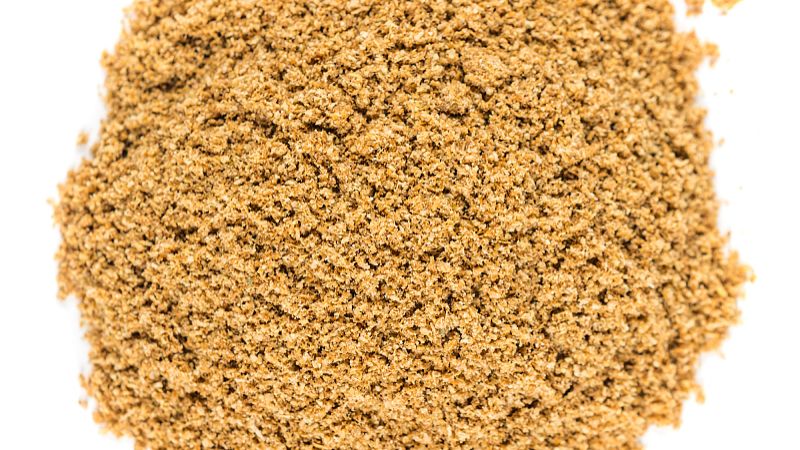
Potassium iodide compounds can be used as animal and plant feed additives. It is a good source of stable iodine, which can meet the iodine needs of these animals and plants, and at the same time improve their ability to resist diseases and promote their growth and reproduction. Adding potassium iodine compounds to animal feed can also improve the nutritional content and quality of meat, eggs and dairy products.
4. Food additives:
Potassium iodine compounds can be added to foods to increase their nutritional content. Common ones include seasonings, meat products, bread, pastries, biscuits, etc. At the same time, potassium-iodine compounds can also prevent iodine deficiency disorders because it can provide the stable iodine needed by the body.

5. Chemical reagents:
Potassium iodide is also a common chemical reagent in the laboratory. For example, in chemical analysis, organic chemistry and biochemistry, it can be used as a catalyst, reducing agent, oxidizing agent and other reagents for many reactions, such as potassium bromide (KBrO3), potassium sulfate (K2SO4) and silver nitrate (AgNO3), etc. .
6. Shorten the crystallization time of Bacillus toxin:
Potassium iodide compounds can be used to shorten the crystallization time of Bacillus toxin, a heat-sensitive toxin that seriously affects food safety and human health. The use of potassium iodide compounds will reduce the crystallization time of the toxin, speed up the detection speed, and be safer at the same time.


7. Reduce the bioavailability of tungsten:
Tungsten is an important metal element widely used in industry. During tungsten exposure, potassium iodide compounds are used to reduce its bioavailability to protect the environment and human health.
In summary, potassium iodine compounds have a wide range of applications, not only for radiation protection and treatment of thyroid diseases, but also as animal and plant feed additives, food additives and chemical reagents.
In addition, potassium iodide compounds can also be used in some special cases, such as shortening the crystallization time of bacillus toxins and reducing the bioavailability of tungsten.
Application examples
Here are some specific examples of potassium iodide applications to gain a more intuitive understanding of its role and effectiveness in practical applications.

(1) Preventing iodine deficiency disorders:
In iodine deficient areas, people are prone to developing iodine deficiency disorders such as thyroid enlargement and dwarfism. To prevent the occurrence of these diseases, an appropriate amount of potassium iodide can be added to local salt to make iodized salt for people to consume. This can effectively increase the iodine intake of the population and prevent the occurrence of iodine deficiency disorders.
(2) Treatment of thyroid diseases:
For patients who have already suffered from thyroid diseases such as goiter, hyperthyroidism, etc., potassium iodide can be used for treatment. Supplementing with iodine can promote the synthesis and secretion of thyroid hormones, restoring normal thyroid function. At the same time, potassium iodide can also inhibit the release and synthesis of thyroid hormones, alleviate the symptoms of thyroid toxicity, and help control the development of the disease.


(3) Emergency response to nuclear accidents:
In the event of a nuclear accident, radioactive iodine may cause serious damage to people's thyroid gland. To reduce this risk, potassium iodide can be provided to the affected population for prevention. Potassium iodide can saturate the iodine sites in the thyroid gland, reduce the absorption of radioactive iodine, and thus lower the risk of damage caused by radioactive iodine to the thyroid gland.
(4) Laboratory analysis:
Potassium iodide is commonly used in the laboratory to determine iodine levels in water or thyroid hormone levels in blood. For example, the iodine content in water can be determined using the iodometric method. This method is based on the principle of the reaction between potassium iodide and elemental iodine to generate iodine ions. By measuring the content of iodine ions, the iodine content in water can be indirectly determined. This method has the advantages of high sensitivity and good accuracy, and has important applications in fields such as environmental monitoring and water quality analysis.


(5) Organic synthesis reactions:
In the field of organic synthesis, potassium iodide can participate in various chemical reactions as an important raw material and intermediate. For example, in the preparation of halogenated hydrocarbons, potassium iodide can react with halogens to produce potassium halide and elemental iodine. Then, the activity of potassium halide is utilized for substitution or addition reactions to synthesize the target compound. This method has the advantages of simple operation and mild reaction conditions, and has broad application prospects in the field of organic synthesis.

Potassium iodide, chemical formula KI, is an inorganic salt widely used in medicine, food, industry and other fields. All the synthesis methods of potassium Iodide powder will be introduced in detail below.
Reaction method with hydroiodic acid:
This is one of the most commonly used methods for preparing KI. KI can be obtained by reacting hydroiodic acid (HI) with potassium carbonate (K2CO3) or potassium hydroxide (KOH). Reaction formula:
HI + K2CO3 → 2KI + H2O + CO2 HI + KOH → KI + H2O
Reaction method with iodine:
Potassium metal or sodium metal can react with iodine to generate potassium iodide or sodium iodide, and then react with excess hydroiodic acid to finally prepare KI. Reaction formula:
2Na + I2 → 2NaI 5KI + 3H2SO4 + 2H2O2 → 5KHSO4 + 3H2O + 2I2
The reduction method of iron oxide in potassium chloride solution:
Iron oxide can be reduced in potassium chloride solution to produce ferric hydroxide and KI, which can be obtained after filtration and evaporation. Reaction formula:
4Fe3O4 + 24KCl + 20HCl → 12FeCl2 + 4K2FeCl5 + 10H2O 2K2FeCl5 + 10KI → Fe2O3·2H2O + 10KCl + 2I2
Reaction method of iodine gas and hydrogen gas:
Hydrogen and iodine react under the catalyst of graphite or platinum to generate hydroiodic acid and KI, which are then concentrated by evaporation to obtain KI. Reaction formula:
H2 + I2 → 2HI 6HI + H3PO4 → 3H2O + 6I + H3PO4 6HI + KIO3 → 6I + KIO3 + 3H2O

Potassium permanganate oxidation method:
Potassium permanganate can oxidize I- to I2 under alkaline conditions. Using this reaction, KCl can be reduced to KI by adding potassium permanganate in KOH solution. Reaction formula:
2KMnO4 + 16KOH + 10KI → 2K2MnO4 + 8K2CO3 + 5I2 + 5H2O
Potassium permanganate and potassium chloride reaction method:
Potassium permanganate can oxidize potassium chloride to chlorine gas and reduce KCl to KI under alkaline conditions. Reaction formula:
2KMnO4 + 16KOH + 3KCl → 2K3MnO4 + 3K2CO3 + 3Cl2 + 8H2O 6Cl2 + 6KI → 6KCl + I2
Hydrogen peroxide oxidation method:
Hydrogen peroxide can oxidize iodide ion to I2, and then react with potassium hydroxide to prepare KI. Reaction formula:
2KI + H2O2 → 2KOH + 2I + O2
To sum up, there are many synthetic methods of KI, and each method has its characteristics and scope of application. In actual production and research, different synthesis methods are selected according to different needs and conditions to obtain high-quality Potassium Iodide Powder.

|
Chemical Formula |
IK |
|
Exact Mass |
166 |
|
Molecular Weight |
166 |
|
m/z |
166 (100.0%), 168 (7.2%) |
|
Elemental Analysis |
I, 76.45; K, 23.55 |
Potassium iodide can react with many substances through I- in KI. Among the halogen ions, I- has the largest radius, so I- is easy to form complexes with transition metal ions and d-block metal ions; I- is more reductive than Br- and Cl-, and is easily oxidized to I2 simple substance; The solubility of iodide is similar to that of chloride and bromide. The iodide of Ag+, Hg2+, Cu+, Hg2+, and Pb2+ is insoluble, and most of the precipitates are colored.
 |
 |
 |
 |

The discovery history of Potassium iodide powder (KI) can be traced back to 1811, when the British chemist Bernard Courtois accidentally discovered this compound in refining seaweed ash. In fact, before Courtois, Johan Ritter and Joseph Louis Proust also isolated iodine from iodine-containing compounds and seaweed in early 1820, but they did not identify this compound as iodide.
The rendering method used by Courtois at the time involved grilling kelp and other seaweeds to extract the iodine from them. In the process, he noticed a precipitate appearing in the residue of grilled seaweed, which Courtois eventually identified as KI through rigorous chemical analysis.
A few years later, Gay-Lussac and Balard each confirmed that the same compound as Courtois's precipitate was a new element-the compound KI of iodine, through the analysis of halides in different sources such as seawater. Balard isolated iodine in seaweed in 1826, performed chemical analysis and identified the compound.
Since then, KI has been widely used in medicine, scientific experiments, and industry, and has become an important inorganic compound.
Frequently Asked Questions
What is potassium iodide used for?
+
-
Potassium iodide is a salt that healthcare providers sometimes use as a medication to treat certain thyroid conditions or protect your thyroid from radiation exposure. Potassium iodide acts as a thyroid blocker, which means it stops your thyroid from releasing thyroid hormone.
Is potassium iodide a KL or KI?
+
-
Potassium iodide, also known by its chemical symbol "KI", is a salt.
What is potassium iodate used for?
+
-
Potassium iodate is defined as a stable iodine compound used in the form of tablets to saturate the thyroid and prevent the accumulation of radioactive iodine following exposure to radioactive fission products, thereby reducing the risk of thyroid cancer.
Is potassium iodide safe to eat?
+
-
KI is considered safe for most people but can cause minor side effects such as gastrointestinal disturbances (nausea, diarrhea, etc.) and rashes. Those who are allergic to Iodine or shellfish should not take KI.
Can I take potassium iodide daily?
+
-
Adults or teenagers approaching adult weight (greater than 70 kg or 154 lbs of body weight)-130 mg once a day, until significant risk of exposure to radioiodines no longer exists. Children through 1 month of age-16 mg once a day, until significant risk of exposure to radioiodines no longer exists.
Hot Tags: potassium iodide powder cas 7681-11-0, suppliers, manufacturers, factory, wholesale, buy, price, bulk, for sale, Potassium Formate Powder, Sodium Cyanoborohydride Solution CAS 25895 60 7, 4 Hydroxyacetophenone CAS 99 93 4, terephthalic acid powder, Raw Materials, N N Dimethylformamide pure