

Sevoflurane is a well - known volatile anesthetic agent that has been widely used in the field of anesthesia for many years. As a supplier of pure Sevoflurane, I have witnessed its growing popularity due to its favorable properties such as low blood - gas partition coefficient, rapid onset, and offset of anesthesia, and relatively mild odor, which makes it more acceptable to patients. In this blog, I will delve into how pure Sevoflurane affects the respiratory rate.
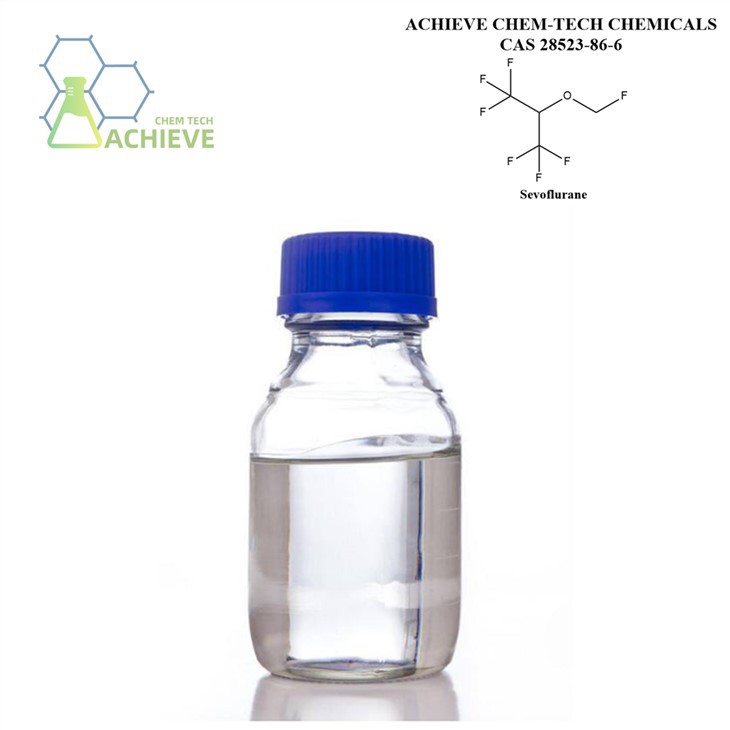
Product Code: BM-2-5-026
Name: Sevoflurane
CAS: 28523-86-6
Molecular formula: C4H3F7O
Molecular weight: 200.05
EINECS No.: 643-089-7
Enterprise standard: CP 2015, National standard, HPLC>99.0%,NMR
Manufacturer: BLOOM Yinchuan Factory
Technology service: R&D Dept.-4
Usage: Pharmacokinetic study
Analysis items: HPLC>99.0%, LC-MS
Main market: USA, Australia, Brazil, Japan, Germany, Indonesia, UK, New Zealand , Canada etc.
We provide sevoflurane powder, please refer to the following website for detailed specifications and product information.
Product: https://www.bloomtechz.com/synthetic-chemical/api-researching-only/pure-sevoflurane-28523-86-6.html
Mechanisms of Sevoflurane on the Respiratory System
To understand how Sevoflurane impacts the respiratory rate, we first need to look at its mechanisms of action on the respiratory system. Sevoflurane acts on multiple levels within the body, including the central nervous system (CNS) and the peripheral respiratory muscles.
In the CNS, Sevoflurane suppresses the activity of neurons in the respiratory centers located in the medulla oblongata. These centers are responsible for regulating the basic rhythm of breathing. The inhalation of Sevoflurane leads to a decrease in the excitability of the respiratory neurons, which in turn affects the pattern and rate of breathing. It alters the balance between the inspiratory and expiratory phases of the respiratory cycle.
On the peripheral level, Sevoflurane can also have an impact on the respiratory muscles. It may cause a relaxation of the diaphragm and other accessory respiratory muscles. This relaxation can lead to a decrease in the force of inspiration and expiration, which can contribute to changes in the respiratory rate.

Dose - Dependent Effects on Respiratory Rate
The effect of Sevoflurane on the respiratory rate is highly dose - dependent. At low concentrations, Sevoflurane may cause a slight increase in the respiratory rate. This initial increase can be attributed to the body's attempt to compensate for the mild anesthetic effect. The body senses a change in the internal environment due to the presence of the anesthetic and tries to maintain normal gas exchange by increasing the rate of breathing.

However, as the concentration of Sevoflurane increases, the respiratory rate starts to decline. Higher doses of Sevoflurane have a more profound inhibitory effect on the respiratory centers in the CNS. The neurons become more and more suppressed, leading to a slower and more irregular breathing pattern. In some cases, at very high concentrations, Sevoflurane can even cause apnea, a temporary cessation of breathing.
For example, in clinical settings, when the end - tidal concentration of Sevoflurane is maintained at around 1 - 2 minimum alveolar concentration (MAC), the respiratory rate may show a small increase. But when the concentration is raised to 3 - 4 MAC, a significant decrease in the respiratory rate is commonly observed.
Interaction with Other Factors
The impact of Sevoflurane on the respiratory rate is not only determined by its dose but also by other factors such as the patient's age, underlying health conditions, and the use of other medications.
In elderly patients, the respiratory system is generally more vulnerable. The respiratory centers may be less responsive, and the respiratory muscles may have reduced strength. Therefore, elderly patients are more likely to experience a more significant decrease in the respiratory rate when exposed to Sevoflurane compared to younger patients.


Patients with pre - existing respiratory diseases such as chronic obstructive pulmonary disease (COPD) or asthma are also at a higher risk. Their respiratory function is already compromised, and the addition of Sevoflurane can further exacerbate the problem. The anesthetic may cause more severe respiratory depression in these patients, leading to a greater decrease in the respiratory rate and potentially more serious respiratory complications.
Moreover, the use of other medications can interact with Sevoflurane and affect the respiratory rate. For instance, opioids are commonly used in combination with Sevoflurane during anesthesia. Opioids also have a depressant effect on the respiratory centers. When used together with Sevoflurane, the combined effect can lead to a more pronounced decrease in the respiratory rate than when either drug is used alone.

Clinical Implications
Understanding how pure Sevoflurane affects the respiratory rate is of great clinical importance. Anesthesiologists need to carefully monitor the patient's respiratory rate during Sevoflurane anesthesia. They use various techniques such as capnography, which measures the partial pressure of carbon dioxide in the exhaled air, and pulse oximetry, which measures the oxygen saturation in the blood, to assess the patient's respiratory status.
Based on the patient's response, the anesthesiologist can adjust the concentration of Sevoflurane. If the respiratory rate drops too low, they may reduce the dose of Sevoflurane or provide additional respiratory support such as mechanical ventilation. In some cases, they may also administer medications to reverse the respiratory depressant effect.
Our Role as a Sevoflurane Supplier
As a supplier of pure Sevoflurane, we understand the critical role that our product plays in the field of anesthesia. We are committed to providing high - quality Sevoflurane that meets the strictest standards of purity and safety. Our Sevoflurane is produced using advanced manufacturing processes to ensure its consistency and reliability.
We also recognize the importance of providing relevant information to our customers. We offer technical support and guidance on the proper use of Sevoflurane, including its effects on the respiratory rate. Our team of experts is always available to answer any questions that our customers may have regarding the product.
In addition to Sevoflurane, we also supply other high - quality synthetic chemicals for research purposes. For example, we offer Nicotinamide Riboside Chloride Powder, Chlorhexidine Diacetate CAS 56 - 95 - 1, and β-Nicotinamide Adenine Dinucleotide CAS 53 - 84 - 9. These products are widely used in various research fields and are known for their high purity and quality.

Contact for Purchase and Collaboration
If you are interested in purchasing pure Sevoflurane or any of our other products, we welcome you to contact us for further discussion. We are eager to establish long - term partnerships with customers in the medical and research fields. Our team will be happy to provide you with detailed product information, pricing, and delivery options. Whether you are a hospital, a research institution, or a pharmaceutical company, we can meet your specific needs.
References
- Eger EI II. Desflurane, isoflurane, and sevoflurane. Anesthesiology Clin North Am. 2001;19(2):241 - 268.
- West JB. Respiratory Physiology: The Essentials. 9th ed. Lippincott Williams & Wilkins; 2012.
- Miller RD, Eriksson LI, Fleisher LA, et al. Miller's Anesthesia. 8th ed. Elsevier; 2020.