




Shaanxi BLOOM Tech Co., Ltd. is one of the most experienced manufacturers and suppliers of grubbs catalyst 2nd generation cas 246047-72-3 in China. Welcome to wholesale bulk high quality grubbs catalyst 2nd generation cas 246047-72-3 for sale here from our factory. Good service and reasonable price are available.
Grubbs Catalyst 2nd Generation is an efficient and widely applicable ruthenium-based carbene complex. As a revolutionary tool in the field of olefin disproportionation reactions, it significantly enhances catalytic activity and stability through the synergistic action of its core ruthenium metal center with a stable N-heterocyclic carbene ligand and a meta-benzyl carbene ligand. Compared to the first-generation catalyst, the large and electron-rich bis(tricyclohexylphosphorus)-phenylmethyl ligand introduced in this catalyst not only greatly enhances the electron cloud density of the ruthenium center, enabling it to efficiently initiate and catalyze various transformations including ring closure disproportionation, cross disproportionation, and ring-opening disproportionation polymerization, but more importantly, it demonstrates excellent tolerance to functional group-containing substrates and superior thermal stability compared to the previous generation. This characteristic enables the second-generation Grubbs catalyst to successfully be applied in the construction of complex macrocycles, precise polymer materials, and the total synthesis of natural products, significantly simplifying the synthesis routes and improving efficiency. Due to its contribution to the significant advancement of organic synthesis methods, its developer Robert Grubbs was awarded the 2005 Nobel Prize in Chemistry. This catalyst is generally stable to air and water and is easy to operate, but it still slowly decomposes in solution. It is usually stored and used under an inert atmosphere to maintain optimal activity.

|
|
|

| Chemical Formula | C46H67Cl2N2PRu |
| Exact Mass | 850.35 |
| Molecular Weight | 851.00 |
| m/z | 850.35 (100.0%), 852.34 (63.9%), 852.35 (59.0%), 849.35 (54.1%), 851.35 (49.8%), 847.35 (40.4%), 848.35 (39.9%), 854.34 (37.7%), 851.34 (34.6%), 853.35 (31.8%), 853.35 (29.4%), 850.35 (26.9%), 849.34 (25.9%), 850.34 (25.5%), 848.35 (20.1%), 849.35 (19.9%), 855.35 (18.8%), 844.35 (17.6%), 852.35 (17.2%), 850.35 (12.9%), 851.35 (12.7%), 852.35 (12.1%), 846.35 (11.2%), 854.34 (10.2%), 845.35 (8.7%), 854.35 (7.7%), 854.35 (7.1%), 851.35 (6.5%), 856.34 (6.0%), 846.35 (5.9%), 847.35 (5.6%), 853.34 (5.5%), 855.34 (5.1%), 849.35 (4.9%), 850.35 (4.8%), 856.35 (4.6%), 853.35 (4.2%), 851.34 (4.1%), 852.34 (4.1%), 848.34 (3.8%), 851.35 (3.1%), 852.35 (3.1%), 857.34 (3.0%), 847.35 (2.9%), 854.34 (2.7%), 846.36 (2.1%), 852.35 (2.1%), 853.34 (2.0%), 849.35 (1.9%), 848.34 (1.8%), 848.35 (1.4%), 856.35 (1.2%), 853.36 (1.1%) |
| Elemental Analysis | C, 64.92; H, 7.94; Cl, 8.33; N, 3.29; P, 3.64; Ru, 11.88 |
The 2nd generation Grubbs' Catalyst is characterized by its ruthenium metal center coordinated with chelating ligands, which impart remarkable stability to the complex. It is tolerant to various functional groups present in olefins, enabling its application in a wide range of organic transformations. Additionally, its high air and moisture stability ensures consistent catalytic performance even in the presence of oxygen and water.
The molecular structure of it comprises a ruthenium center bound to a benzylidene moiety, a 1,3-bis(2,4,6-trimethylphenyl)imidazolidin-2-ylidene ligand, and a tricyclohexylphosphine (PCy3) ligand, with two chloride ions completing the coordination sphere. This intricate arrangement of ligands contributes to the exceptional catalytic properties of the complex.

Enhanced Reactivity and Stability
Reactivity
It exhibits significantly higher catalytic activity compared to its first-generation counterpart, with an increase of two orders of magnitude. This heightened reactivity allows for reduced catalyst loadings, down to parts per million (ppm) levels, in some cases. For instance, in ring-closing metathesis (RCM) reactions, the amount required can be as low as 0.05 mol%.
Stability
The catalyst is remarkably stable not only towards air but also in various solvents such as water, acids, and alcohols. This stability enables it to retain its catalytic activity under diverse reaction conditions, making it versatile and applicable in a wide range of synthetic protocols.
Applications in Olefin Metathesis
Ring-Closing Metathesis (RCM)
It is particularly effective in promoting RCM reactions, where olefins are transformed into cyclic compounds. Its high reactivity and stability enable the efficient formation of large ring structures with high yields, overcoming some of the limitations of the first-generation catalyst, which could undergo intermolecular metathesis side reactions.


Cross-Metathesis (CM)
In cross-metathesis reactions, two different olefins are transformed into new olefinic products. The second-generation Grubbs catalyst facilitates these transformations with excellent selectivity and efficiency, enabling the synthesis of complex molecules.
Ring-Opening Metathesis Polymerization (ROMP)
ROMP is a process where cyclic olefins are polymerized into high molecular weight polymers. It has been successfully employed in ROMP reactions, leading to the synthesis of polymers with controlled structures and properties.

Other Applications
Enantioselective Synthesis
Although primarily known for its application in olefin metathesis, it has also been explored in enantioselective reactions, albeit to a lesser extent. Researchers continue to investigate strategies to harness its reactivity for asymmetric transformations.
Functional Group Tolerance
The catalyst demonstrates excellent tolerance towards various functional groups, allowing for the synthesis of complex molecules containing sensitive functionalities.
Industrial Relevance
The wide applicability and improved performance of Grubbs Catalyst 2nd Generation have made it a valuable tool in the pharmaceutical, materials science, and polymer chemistry industries. Its use in the synthesis of bioactive molecules, advanced materials, and specialty polymers underscores its industrial significance.

Synthetic Route
The most common and established method for synthesizing it involves a multi-step reaction starting from readily available precursors. The key steps typically involve:
Preparation of H2IMes Ligand
This step involves the preparation of the imidazolidine ligand, H2IMes, from its precursor, either HJMes(H)(Cl) or HJMes(H)(BF4).
The precursor is reacted with a suitable reagent (e.g., KNSi(CH3)3) in a solvent such as tetrahydrofuran (THF) or n-hexane.
The resulting product is purified through filtration, concentration, crystallization, washing, and drying to obtain H2IMes in good yield.
Synthesis Method
In the second step, the ligand H2IMes is reacted with a ruthenium precursor, typically Ru(p-cymene)(COD), along with phenylchloroform (PhCHCl2) and tricyclohexylphosphine (PCy3).
The reaction is carried out in a hydrocarbon solvent such as pentane, n-hexane, toluene, or benzene at temperatures ranging from 20°C to 80°C for 12 to 48 hours.
The product is then purified by concentration, crystallization, filtration, washing, and drying to yield the desired it, (H2IMes)(PCy3)(Cl)2Ru=CHPh.
Key Reagents and Conditions
Reagents
1
2
3
4
Conditions
- The ligand preparation is typically carried out at room temperature for 0.5 to 2 hours.
- The catalyst synthesis is performed at temperatures ranging from 20°C to 80°C for 12 to 48 hours.
Advantages
1
The synthetic route is efficient, with good overall yields.
2
The reagents used are readily available and relatively inexpensive.
3
The process is amenable to scale-up for industrial production.
Grubbs Catalyst 2nd Generation, a seminal advancement in the field of olefin metathesis, offers unparalleled advantages that revolutionize organic synthesis. Chief among its merits lies its exceptional stability and reactivity, enabling efficient transformations under mild conditions. This second-generation catalyst boasts enhanced tolerance to moisture, oxygen, and a broad range of functional groups, simplifying purification steps and broadening the scope of applicable substrates.
Its improved stability also translates into longer catalyst lifetimes, reducing waste and costs associated with frequent catalyst replacement. Furthermore, it exhibits remarkable stereoselectivity, allowing for precise control over product stereochemistry, a crucial factor in drug discovery and materials science.
The catalyst's versatility is unmatched, facilitating both ring-closing and ring-opening metathesis reactions, as well as cross-metathesis transformations, making it a go-to tool for complex molecule synthesis. Its ease of use, combined with high yields and purity of products, has made it a staple in academic research and industrial processes alike.
In summary, the Grubbs Catalyst 2nd Generation offers a powerful and versatile platform for modern organic synthesis, driving innovation in fields ranging from pharmaceuticals to polymers and beyond, with its unparalleled stability, reactivity, and stereoselectivity.
Grubbs second-generation catalyst, also known as Grubbs Catalyst 2nd Generation, is a widely used catalyst in organic synthesis. Its CAS number is 246047-72-3, and it is a Ru based catalyst with unique chemical properties and broad application prospects.

Physical properties
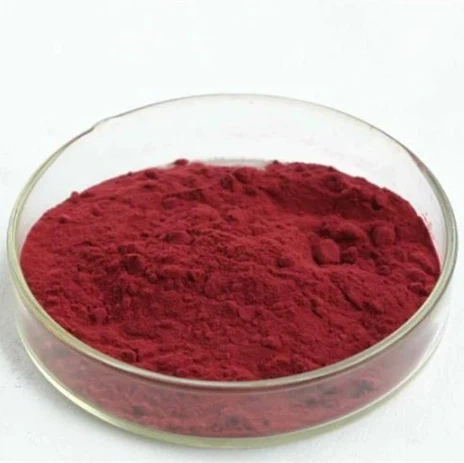
It is a purple red powdery solid with a melting point range of 143.5~148.5 ° C. It is easily soluble in organic solvents such as dichloromethane (CH2Cl2), benzene, or toluene, which are commonly used as reaction media. Due to its powdery morphology and good solubility, Grubbs second-generation catalysts can quickly disperse and function in chemical reactions.
Chemical Structure
The chemical structure is based on organic complexes of ruthenium (Ru) metal. Compared with the first generation Grubbs catalyst, the main improvement of the second-generation catalyst is the replacement of the tricyclohexylphosphine ligand with a di substituted dihydroimidazole ligand. This change not only enhances the reaction activity of the catalyst, but also strengthens its stereoselectivity. The steric hindrance and electronic effects of nitrogen atom substituents in ligands make the catalyst more stable during the reaction process and less prone to decomposition.


Reactivity and selectivity
It has extremely high reactivity and selectivity, which makes it excellent in olefin metathesis reactions. Olefin metathesis reaction is an important type of organic synthesis reaction, including ring closing metathesis (RCM), cross metathesis, and ring opening metathesis polymerization (ROMP). Capable of catalyzing these reactions to generate products with excellent functional group tolerance and selectivity.
Especially in the field of ROMP, due to its excellent thermodynamic stability and catalytic activity, the reaction can be completed with extremely low catalyst usage to produce high-performance poly (dicyclopentadiene) (PDCPD) products. In addition, when catalyzing the RCM reaction of multi substituted olefins, it is possible to overcome the influence of steric hindrance and obtain high yields of trisubstituted and tetrasubstituted cyclic olefin products.
Stability and sensitivity
Despite its high stability, it is still sensitive to air and water. Therefore, special care is required when using it, and the reaction is usually carried out under inert gas protection. In addition, the storage conditions of catalysts are also crucial, and they should be stored at low temperatures and away from light to ensure their long-term stability.


Application prospects
The application prospects of Grubbs second-generation catalysts in organic synthesis are broad. It not only promotes the development of organic synthesis methodology, but also has profound impacts in fields such as medicine and materials. For example, in the field of medicine, Grubbs catalyst mediated reactions have been applied to a novel technology for transmembrane delivery of stapled peptide peptide drugs. In addition, Grubbs second-generation catalysts are also suitable for ring closing metathesis reactions in macrocyclic polyene systems, providing a new pathway for the synthesis of complex organic molecules.
Grubbs second-generation catalyst is a catalyst with unique chemical properties and broad application prospects. Its high reactivity, high selectivity, good stability, and wide range of applications make it an important tool in the field of organic synthesis. However, due to its sensitivity to air and water, special attention should be paid to protective and storage conditions when using it.
Frequently Asked Questions
What is Grubbs test used for?
+
-
In statistics, Grubbs's test or the Grubbs test (named after Frank E. Grubbs, who published the test in 1950), also known as the maximum normalized residual test or extreme studentized deviate test, is a test used to detect outliers in a univariate data set assumed to come from a normally distributed population.
Is Grubbs catalyst commercially available?
+
-
The catalyst is a ruthenium complex that can be prepared in one step from commercially available Grubbs' second generation catalyst. It has been shown to be effective in the synthesis of polycyclic aromatic hydrocarbons and microcapsules.
Where is Grubbs catalyst used?
+
-
Grubbs catalyst is defined as a type of catalyst used in olefin metathesis and ring-opening metathesis polymerization, particularly with cyclic olefins such as norbornene, developed by Professor Robert Grubbs.
Hot Tags: grubbs catalyst 2nd generation cas 246047-72-3, suppliers, manufacturers, factory, wholesale, buy, price, bulk, for sale, 2-bromo-3-hexylthiophene, Trifluoromethanesulfonic Acid CAS 1493 13 6, 3 5 Dichlorophenylboronic acid, Polymerization inhibitor 510 NPAL , 4 4 Nitrobenzyl pyridine CAS 1083 48 3, Cupferron