




Yttrium powder, a gray black metal with the chemical symbol y, was the first rare earth metal element discovered. CAS 7440-65-5, Molecular formula Y has ductility, can react with hot water, is easily soluble in dilute acid, and can be made into special glass and alloys. The purity of yttrium produced in industry is generally not less than 93.4%, and its main impurities are other rare earth elements, with a content of 3.8%, including 1.6% calcium; Iron 0.05%; Copper 0.1%; Tantalum or tungsten 1%. Yttrium with a purity of not less than 99.8% can also be produced. The main impurities in high-purity yttrium are still rare earth elements. It is very unstable in air, and its metal shavings can burn in air above 400 ℃. Yttrium metal forms yttrium nitride (YN) when heated to 1000 ℃ in nitrogen gas. Concentrated nitric acid and hydrofluoric acid do not rapidly corrode yttrium, but other strong acids can quickly corrode yttrium and produce yttrium salts. At temperatures above 200 ℃, yttrium can form trihalides with various halogens, such as yttrium trifluoride (YF3), yttrium trichloride (YCl3), and yttrium tribromide (YBr3). Carbon, phosphorus, selenium, silicon, and sulfur can also form binary compounds with yttrium at high temperatures.

|
Chemical Formula |
Y |
|
Exact Mass |
89 |
|
Molecular Weight |
89 |
|
m/z |
89 (100.0%) |
|
Elemental Analysis |
Y, 100.00 |
|
|
|
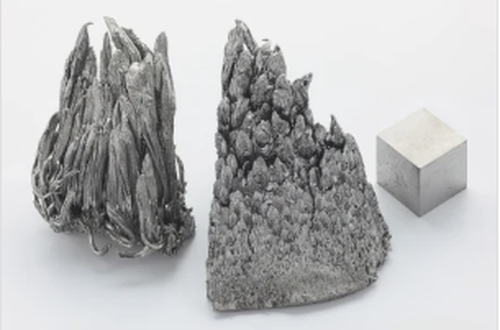

Yttrium powder, a gray black metal with the chemical symbol y, was the first rare earth metal element discovered. CAS 7440-65-5, Molecular formula Y has ductility, can react with hot water, is easily soluble in dilute acid, and can be made into special glass and alloys. The purity of yttrium produced in industry is generally not less than 93.4%, and its main impurities are other rare earth elements, with a content of 3.8%, including 1.6% calcium; Iron 0.05%; Copper 0.1%; Tantalum or tungsten 1%. Yttrium with a purity of not less than 99.8% can also be produced. The main impurities in high-purity yttrium are still rare earth elements. It is very unstable in air, and its metal shavings can burn in air above 400 ℃. Yttrium metal forms yttrium nitride (YN) when heated to 1000 ℃ in nitrogen gas. Concentrated nitric acid and hydrofluoric acid do not rapidly corrode yttrium, but other strong acids can quickly corrode yttrium and produce yttrium salts. At temperatures above 200 ℃, yttrium can form trihalides with various halogens, such as yttrium trifluoride (YF3), yttrium trichloride (YCl3), and yttrium tribromide (YBr3). Carbon, phosphorus, selenium, silicon, and sulfur can also form binary compounds with yttrium at high temperatures.

Yttrium is a rare earth element. Rare earth elements refer to scandium, yttrium and all lanthanide elements. Because of their scarce content in the earth's crust, their oxides are similar to the properties of native elements such as calcium oxide, so they are named. Due to the scattered distribution of rare earth elements, they are often disorderly mineralization, and their properties are very similar to each other, so it is difficult to find, separate and analyze them. Yttrium and cerium, another rare earth element, are two elements with large content in the earth's crust, so they were first found in rare earth elements. Norway and Sweden on Scandinavia in northern Europe are rich in rare earth minerals, so these two elements were first discovered in this area.

Yttrium powder is a soft, lustrous silver white transition metal belonging to Group 3 of the periodic table and is the first element in the D region of the fifth period. The crystal belongs to the hexagonal system. Blocked pure yttrium forms a protective oxide layer (Y2O3) on its surface in air, and this "passivation" process makes it relatively stable. When heated to 750 ℃ in steam, the thickness of the protective layer can reach 10 microns. Yttrium can form insoluble fluorides, hydroxides, and oxalates, as well as water-soluble bromides, chlorides, iodides, nitrates, and sulfates. Based on this property, it has applications in multiple fields.

1. Industrial
Yttrium has a wide range of industrial applications. It can be used as a yttrium phosphor to produce red color on television screens, and is also used as a filter for certain rays, superconductors, superalloys, and special glass. Yttrium is heat-resistant and corrosion-resistant, and can be used as a cladding material for nuclear fuel. Yttrium can form stable chelates with various amino carboxylic acid ligands; Yttrium aluminum garnet containing neodymium is an excellent laser material, yttrium iron garnet is an excellent laser material, and yttrium iron garnet and yttrium aluminum garnet are new magnetic materials.
Adding a small amount of yttrium (0.1% to 0.2%) can reduce the grain size of chromium, molybdenum, titanium, and zirconium, and improve their comprehensive mechanical properties in strength, plasticity, toughness, and other aspects. [9] Adding yttrium to alloys can also enhance the material strength of aluminum and magnesium alloys, making them resistant to high-temperature recrystallization, reducing the difficulty of processing procedures, and greatly improving their resistance to high-temperature oxidation.


2. Medical
Yttrium 90 is a radioisotope, which is used in anticancer drugs such as Edotriptide and Teimomab, and can treat lymphoma, leukemia, ovarian cancer, colorectal cancer, pancreatic cancer cancer, bone cancer, and so on. The drug will attach to monoclonal antibodies and bind to cancer cells, causing mutations in the DNA of cancer cells through strong beta radiation of yttrium-90. After a half-life period of radiation exposure, the biological cloning characteristics will prevent the cancer cell DNA from continuing to transcribe and reproduce.
Generally, it is considered a successful treatment and requires an observation period of about 3-6 months. However, Yttrium-90 is still one of the local radiation therapies and may still cause unpredictable harm to patients undergoing treatment, such as acute liver failure.
Needles made with yttrium-90 can be more precise than dissecting knives and can be used to cut pain nerves in the spinal cord. Yttrium 90 can also be used in synovectomy of inflamed joints, especially in the knee area, for the treatment of rheumatoid arthritis.


3. Superconductor
In 1987, the University of Alabama and the University of Houston developed yttrium barium copper oxide (YBa2Cu3O7, also known as YBCO or 1-2-3) superconductors. It can operate at a temperature of 93 K, which is higher than the boiling point of liquid nitrogen (77.1 K). Other superconductors must use more expensive liquid helium for cooling, so this discovery can reduce costs.
The construction of China's second-generation yttrium based high-temperature superconducting cable project has begun in Tianjin, and the development of a new type of yttrium silicate Lu crystal has been successful; Significant breakthroughs have been made in the research of neodymium doped lanthanum yttrium oxide laser transparent ceramics.

Discovery history: in 1787, Karl Arrhenius encountered an unusual black stone in an old quarry in ytterby, near Stockholm (Sweden). He thought he had found a new tungsten ore, and then handed the sample to Johan gadolin, who lives in Finland. In 1794, gadolin announced that it contained a new "soil", which constituted 38% of its weight. It is called "Earth" because it is yttrium oxide, Y2O3, which cannot be further reduced after heating with charcoal.
This metal itself was independently produced by Friedrich w ö hler in 1828 by the reaction of yttrium chloride with potassium. However, there are other elements hidden in yttrium.
In 1843, Carl mosander studied yttrium oxide more thoroughly and found that it was composed of three oxides: yttrium oxide, which was white; Terbium oxide, yellow; And erbium oxide, which is rose red.
The abundance of yttrium powder in the Earth's crust is about 31 parts per million, ranking 28th among all elements and 400 times higher than that of silver. It is one of the most abundant rare earth elements, mainly present in siliceous beryllium yttrium ore, black rare earth ore, and phosphorite, as well as in monazite and fluorocarbon waste ore, but it never appears as a single element. Yttrium still exists in nuclear fission products, and all yttrium found in nature is the stable isotope yttrium-89. Mainly distributed in countries such as China, the United States, Australia, India, Malaysia, and Brazil, with over 40% concentrated in China.
Yttrium has no known biological use, but it is present in small amounts in almost all living organisms. Yttrium mainly accumulates in the liver, kidneys, spleen, lungs, and bones. There is about 0.5 milligrams of yttrium in the human body. In edible plants, the content of yttrium ranges from 20 to 100 parts per million (fresh weight), with cabbage having the highest content. The content in woody plant seeds is 700 parts per million, which is the highest known content in plants.
Isotope:
In nature, there is only one isotope, Y-89, and the other 25 known isotopes are all artificial. The more stable artificial isotopes are Y-88 (half-life 106.65 days), Y-91 (half-life 58.51 days), and Y-87 (half-life 79.8 hours), while the half lives of other isotopes are less than one day. The decay mode of isotopes below Y-89 is mainly electron capture, while the main decay mode of isotopes above Y-89 is beta decay.
The effect of lanthanide contraction:
Lanthanide contraction is a well-known phenomenon in inorganic chemistry, where the atomic radius of elements decreases by 0.143 Å from La (1.877 Å) to Lu (1.734 Å), with an average decrease of 0.015 Å between every two adjacent elements. Although the average reduction in radius between two adjacent lanthanide elements is much smaller than that of non transition elements (~0.1 Å) and transition metal elements (~0.05 Å), the overall contraction of the lanthanide series is quite significant due to the large number of elements. As a result of the contraction of the lanthanide series, the ionic radius of Y3+(0.88 Å) falls near Er3+(0.881 Å) in the sequence. Therefore, yttrium often coexists with lanthanide elements in nature and exhibits properties very similar to lanthanide elements, especially heavy lanthanide elements (such as crystal structure, covalent degree of compounds, stability of complexes, etc.), making it difficult to separate from heavy lanthanide elements and becoming a member of rare earth elements. Although scandium, which is also a transition metal in the d-region along with yttrium, was once a member of rare earth elements, its ion radius (0.68 Å) is much smaller than that of lanthanide elements, and its properties are also far different, so it is sometimes not discussed as a rare earth element.
Frequently Asked Questions
What is yttrium used for?
+
-
In metallurgical applications, yttrium was used as a grain-refining additive and as a deoxidizer. Yttrium was used in heating-element alloys, high-temperature superconductors, and superalloys. Yttrium was used in phosphor compounds for flat-panel displays and various lighting applications.
What is yttrium used for in medicine?
+
-
Yttrium-90 radioembolization
This therapy is used to treat both primary and metastatic liver tumors. This treatment involves injection of plastic or glass microspheres incorporating the radioactive isotope Yttrium-90 directly into the tumor.
Is yttrium toxic to humans?
+
-
HAZARD SUMMARY
* Yttrium can affect you when breathed in. * Yttrium can irritate the eyes on contact. * Breathing Yttrium may irritate the lungs causing coughing and/or shortness of breath. * Repeated exposure to Yttrium may cause permanent scarring of the lungs (pneumoconiosis).
Is yttrium in diamonds?
+
-
Yttrium aluminium garnet, also known as YAG, is a very important synthetic mineral. It is used to make hard, artificial diamonds, which sparkle just like the real ones.
What does yttrium do to the human body?
+
-
Yttrium has no known biological role. Exposure to yttrium compounds can cause lung disease in humans.
Hot Tags: yttrium powder cas 7440-65-5, suppliers, manufacturers, factory, wholesale, buy, price, bulk, for sale, sulfosalicylic acid powder, Trifluoromethanesulfonic Acid CAS 1493 13 6, 1 3 5 Tribromobenzene, 1 AMINO 2 NAPHTHOL 4 SULFONIC ACID, 2-bromo-3-hexylthiophene, Chlorodiphenylphosphine