




Shaanxi BLOOM Tech Co., Ltd. is one of the most experienced manufacturers and suppliers of pure oleic acid cas 112-80-1 in China. Welcome to wholesale bulk high quality pure oleic acid cas 112-80-1 for sale here from our factory. Good service and reasonable price are available.
Pure oleic acid, chemical formula C18H34O2. Colorless oily liquid, with the smell of animal oil or vegetable oil. The color gradually darkens after a long time in the air. Industrial products are yellow to red oily liquid, with the smell of lard. Easily soluble in ethanol, ether, chloroform and other organic solvents, insoluble in water. Flammable. It is easy to saponify when encountering alkali, and generates white soft solid after solidification. It is easily oxidized, polymerized or decomposed under high heat. non-toxic. It is a monounsaturated Omega-9 fatty acid, which exists in animals and plants. The oleic acid is hydrogenated to obtain stearic acid. The double bond trans isomer of oleic acid is called trans oleic acid. Oleic acid can regulate blood lipid level, reduce cholesterol, effectively reduce the occurrence of hypercholesterolemia and cardiovascular disease, and reduce the probability of coronary heart disease.
|
Chemical Formula |
C18H34O2 |
|
Exact Mass |
282 |
|
Molecular Weight |
282 |
|
m/z |
282 (100.0%), 283 (19.5%), 284 (1.8%) |
|
Elemental Analysis |
C, 76.54; H, 12.13; O, 11.33 |
|
|
|


The derivatives of pure oleic acid are fine chemical products with wide applications and play an important role in national production. This paper focuses on the application of oleic acid based surfactants.

1. Surfactant:
Industrial oleic acid reacts with alkali metal hydroxide to prepare soaps, such as potassium oleate, sodium oleate, etc. They are very good detergents and can be used as important raw materials of detergents for human bodies, fabrics and industrial detergents. The reaction of oleic acid and dehydrated sorbitol can produce Span-80, Span-85, and then condensate with ethylene oxide to produce Tween series products. Oleic acid can also react with glycerol to produce triglyceride oleate. These oleic acid polyol esters have low HLB values and are lipophilic surfactants, which are widely used in the cosmetics industry and leather industry.
2. Other applications:
Oleic acid products used in oil filled capacitors can improve the insulation performance of capacitors. Adding an appropriate amount of aluminum oleate to the ink can improve the printing effect and get a clearer picture. Potassium oleate can be used as a defoamer in beer. Polyoxyethylene oleate can be used as dispersant in rubber industry and as a component of oil spill dispersant in petroleum industry and environmental protection industry.


3. Plastic industry:
Butyl oleate is a plasticizer with the advantages of cold resistance and water resistance. It can be used as an oily additive for machine oil, a surface wetting agent for dyes, and a plasticizer and wetting agent for neoprene and ethyl cellulose. Epoxy compounds of oleic acd are widely used in plastic and paint industries, mainly for making plasticizers and heat stabilizers of plastics. Oleic acid reacts with ammonia to produce oleamide. The product is white powder, fragment or bead, insoluble in water, soluble in ethanol, ether and many other organic solvents.
Oleamide can be used as a lubricant and anti adhesion agent for polyethylene, polypropylene, polyamide and other plastics to improve the processing operability in injection molding and extrusion molding, making the opening of tubular film easier. The product also has an antistatic effect, which can reduce the accumulation of dust on the surface of plastic products. In PVC, the product can play an internal lubricating role.


4. Machinery industry:
Pure oleic acid is mainly used for manufacturing emulsified cutting oil, metal surface cleaning, rust prevention and lubrication in metal processing operations. Oleic acd and sodium oleate have good lubrication effect in emulsion lubrication application. Oleic acd often reacts with triethanolamine to produce oleic acd amine soap. Triethanolamine oleate is a water-soluble emulsifier with strong degreasing power.
It is commonly used as a metal cleaner and cutting fluid, and has certain rust resistance on ferrous metals and aluminum alloys after washing. Oleic acd and epichlorohydrin can synthesize esters under the action of catalyst, which can be used as high anti-wear oil soluble additives. Oleic acd can be made into metal grinding paste, which can greatly improve the metal surface finish and grinding efficiency. Oleic and linoleic acd polymers can be used as cold rolling lubricants for metals.

Oleic acid can be used in the manufacture of emulsions, creams and detergents in the pharmaceutical industry; It can also be used to manufacture emulsified food; In the production of cosmetics, it is used to make creams, shampoos, etc. Oleic acd and its products are good mineral flotation additives. For example, they are used as flotation agents for hematite, goethite, non sulfide ore, barite ore, apatite and other minerals, which can greatly improve the ore collection rate.

The preparation methods of oleic acid mainly include freezing press, crystallization press filtration, distillation, organic solvent, surfactant, urea complexation, etc. Due to the increasingly fierce market competition and more and more attention to environmental protection issues, at present, freezing press, crystallization press filtration and distillation are mainly used in industrial production.
In the freeze pressing method, firstly, molten fatty acds are injected into a rectangular shallow aluminum plate, placed in the cold room for cooling and solidification, and then the cakes generated are taken out of the plate, put into a cloth bag, and stacked on a vertical press. Slowly pressurize the liquid acid with low melting point to flow out, so that saturated fatty acds and unsaturated fatty acds can be separated. The purity (usually expressed by the freezing point) depends on the temperature at which the solid is cooled. The freeze pressing method has low requirements for equipment and simple process, but it covers a large area, has high labor intensity, low efficiency and cannot be operated continuously. It is suitable for small workshop production and is not suitable for large-scale production of enterprises. In addition, the production enterprises often show the phenomenon of dirty, disorderly and poor. At present, only a certain amount of pure oleic acid is produced by this method.
The principle of urea complexation method is that urea molecules form relatively stable crystal inclusion compounds with saturated fatty acids or monounsaturated fatty acids during crystallization, while polyvalent unsaturated fatty acids have a certain spatial configuration due to more double bonds and bent carbon chains, and are not easy to be included by urea. High purity oleic acid can be prepared by this method, but the cost is high and the yield is low. In addition, there are supercritical fluid extraction method, derivative separation method, adsorption separation method, molecular sieve separation method, extraction crystallization method, etc., but at present, only the refrigeration pressing method, crystallization filter pressing method and distillation method are really used in industrial production.
The distillation method is used to separate fatty acds according to their different carbon chain lengths and boiling points. As the raw material of oleic acid is mainly a mixture of C16 and C18, C16 can be well separated by distillation, but it is difficult to separate the homologues of C18, so the freezing point of oleic acid produced by distillation is generally higher, generally above 15 ℃, and it is difficult to obtain oleic acid with lower freezing point by this method. The oleic acd obtained by this method is mainly used to prepare alkyd resin, dimeric acid, etc. This method is also the preparation method of oleic acd with the largest domestic demand.
This method is based on the different solubility and freezing point of fatty acids in organic solvents. According to the different solvents used, there are methanol method, acetone method and propane method. Generally, the solubility of fatty acids in organic solvents decreases with the increase of carbon chain length, and increases with the increase of double bond number. This difference in solubility is more significant with the decrease of temperature. Therefore, different quality fatty acids can be obtained by changing the cooling temperature and solvent ratio of fatty acid solution. This method has good separation effect, high yield and simple equipment, but it needs to use a large number of flammable and valuable solvents, with large loss, and requires low freezing temperature, with high energy consumption. In addition, solvent recovery needs to be considered.
Surfactant method is also called emulsification separation method. According to the different melting points of fatty acids, they are solid and liquid phases respectively in a certain period of time. The mixed fatty acids of different phases are dispersed in aqueous solutions containing surfactants and electrolytes to form a polydisperse system. According to the different density of each phase in the system, the heavy phase and light phase are separated by centrifuges to obtain crude pure oleic acid, and high-purity oleic acid is obtained by molecular distillation. This method has many wastewater and low separation purity, and has been basically eliminated.

Health Benefits

Reduce the risk of cardiovascular disease:
Oleic acid can significantly reduce the level of cholesterol and triacylglycerol, which helps to reduce the occurrence of atherosclerosis, thereby reducing the risk of cardiovascular disease.
Protecting skin health:
Oleic acid can increase the fluidity of skin cell membranes, promote intercellular communication and nutrient exchange, enhance skin antioxidant capacity, and prevent free radical damage and aging.
Supporting neurological function:
Oleic acid is one of the important components required by the nervous system, which helps maintain normal brain and nervous system function, improve thinking ability and memory, and prevent neurological diseases such as Alzheimer's disease.
Promoting gastrointestinal health:
Oleic acid can stimulate the secretion of mucus from the intestinal mucosa, alleviate constipation and other digestive problems, while increasing appetite and promoting nutrient absorption.

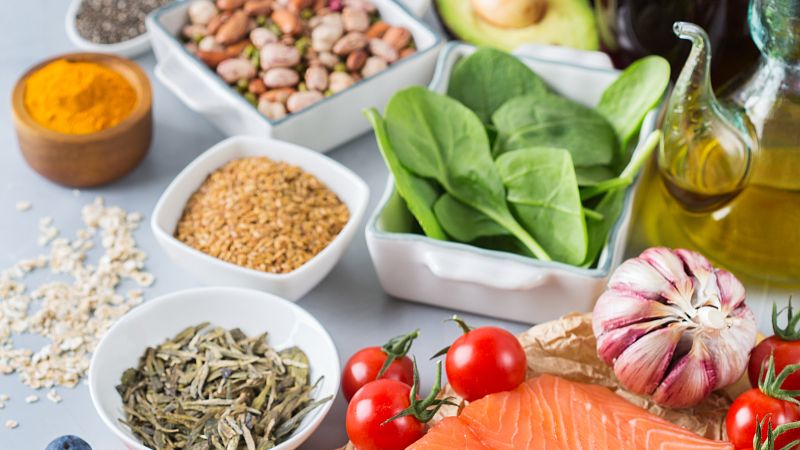
Oleic acid can reduce cholesterol levels
Did sisters find that oleic acid is really powerful in reducing cholesterol! Especially, it can significantly reduce the level of "bad cholesterol" (low-density lipoprotein cholesterol) in the blood, while also increasing the content of "good cholesterol" (high-density lipoprotein cholesterol). This bidirectional regulatory effect is very important for maintaining cardiovascular health! By lowering the level of bad cholesterol, oleic acid can help reduce the occurrence of hypercholesterolemia and cardiovascular disease, and lower the risk of coronary heart disease. Isn't it impressive?
Oleic acid can prevent arteriosclerosis
Atherosclerosis is one of the main causes of cardiovascular disease, but oleic acid also has its advantages in preventing arteriosclerosis! In addition to lowering cholesterol levels, oleic acid can also prevent arteriosclerosis through other mechanisms. For example, it can reduce the oxidative sensitivity of low-density cholesterol, effectively preventing the occurrence of arteriosclerosis. A large number of human studies have also confirmed that an increase in oleic acid intake can significantly reduce the risk of cardiovascular and cerebrovascular diseases and death. So, moderate intake of vegetable oils rich in oleic acid, such as tea seed oil, olive oil, etc., is really important for preventing arteriosclerosis!


Oleic acid has antioxidant properties
In addition to lowering cholesterol and preventing arteriosclerosis, oleic acid also has strong antioxidant properties! Under high temperature conditions, oleic acid can maintain its chemical properties stably and effectively resist oxidative decomposition. This characteristic allows oleic acid to maintain its nutritional value during cooking, while also helping to extend the shelf life of food. More importantly, the antioxidant function of oleic acid can also protect cells from free radical damage, thereby maintaining our overall health. He's an all-around player!
Everything You Need to Know
Is oleic acid good or bad for you?
"Relatively balanced levels of oleic acid seem to be beneficial, but higher and prolonged levels may be detrimental. If someone is at risk for heart disease, high levels of oleic acid may not be a good idea."
What foods are high in oleic acid?
Oleic acid can be found naturally in numerous food sources, including edible oils, meat (such as beef, chicken, and pork), cheese, nuts, sunflower seeds, eggs, pasta, milk, olives, and avocados.
Does oleic acid cause dandruff?
Oleic, a key fatty acid component of human sebum, is shown to induce a dandruff-like desquamation that is ultrastructurally identical to dandruff. Interestingly, the same dose of oleic acid does not induce the lesion in subjects who do not get dandruff.
What is C17H33COOH called?
Oleic acid is an unsaturated fatty acid with the chemical formula C17H33COOH that is found in many fats and oils, including olive oil and canola oil. It has been shown to have health benefits, such as lowering blood levels of cholesterol and reducing the risk of heart problems when administered in high amounts.
Hot Tags: pure oleic acid cas 112-80-1, suppliers, manufacturers, factory, wholesale, buy, price, bulk, for sale