


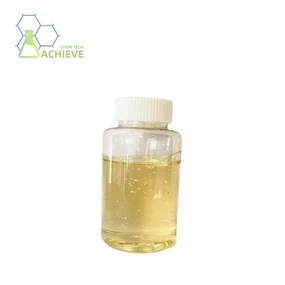
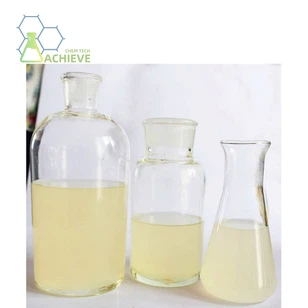
The molecular formula of 5-Bromo-1-pentene(link:https://www.bloomtechz.com/synthetic-chemical/organic-intermediates/5-bromo-1-pentene-cas-1119-51-3.html) is C5H9Br, CAS 1119-51-3. It is a colorless liquid with a branched structure. The molecule contains a bromine atom, which forms a single bond with a carbon atom. As an organic compound, it has broad application prospects in organic synthetic chemistry, medicine, material science and other related fields. For researchers, further understanding and utilization of the chemical properties and reaction behavior of 5-Bromo-1-pentene will help promote the development of related fields and promote the emergence of innovative technologies and products.
|
|
|
For the synthesis of 5-Bromo-1-pentene, there are mainly the following methods.
1. Isobutylene bromination preparation method:
The method is to prepare 5-Bromo-1-pentene by reacting isobutene with bromine. Specific steps are as follows:
Step 1: Prepare Isobutene:
First, isobutene needs to be prepared as a starting material for the bromination reaction. Isobutene (C4H8) is an unsaturated hydrocarbon with a double bond in its chemical structure.
Step 2: Choice of solvent:
Dissolve isobutene in anhydrous solvents, commonly used anhydrous solvents include tetrahydrofuran (THF) or dimethyl sulfoxide (DMSO). These solvents have good solubility and stability, and can provide a suitable reaction environment.
Step 3: Bromination reaction:
Bromine (Br2) was gradually added dropwise to the isobutene solution. Bromine is a diatomic molecule consisting of two bromine atoms. The bromination reaction is the addition of bromine molecules to the double bonds of isobutylene to form new carbon-bromine bonds.
Chemical reaction formula:

In the above chemical reaction, a hydrogen on the double bond of isobutene is replaced by a bromine atom to form 5-Bromo-1-pentene. This reaction is an addition reaction where a bromine atom is added to the double bond of an unsaturated hydrocarbon to form a substituted alkene.
Step 4: Reaction conditions:
The bromination reaction of isobutene is usually carried out at low temperature, generally between 0-5 degrees Celsius, to control the reaction rate and selectivity. Low temperature can reduce the generation of side reactions, so that the main product is the target product.
Step 5: Product Isolation:
After the reaction is completed, 5-Bromo-1-pentene is separated from the reaction mixture through steps such as washing with water and extracting the organic phase. Organic phase extraction is to extract the target product from the solution into the organic solvent through the difference of selective solubility, so as to realize the purification and separation of the product.
2. Preparation of hexene and bromination:
The method is to prepare 5-Bromo-1-pentene by reacting hexene (1-hexene) with bromine. Specific steps are as follows:
Step 1: Prepare Hexene:
First, hexene needs to be prepared as a starting material for the bromination reaction. Hexene (C6H12) is an unsaturated aliphatic hydrocarbon containing a double bond in its chemical structure.
Step 2: Choice of solvent:
Dissolve hexene in anhydrous solvents, commonly used anhydrous solvents include tetrahydrofuran (THF) or dimethyl sulfoxide (DMSO). These solvents have good solubility and stability, and can provide a suitable reaction environment.
Step 3: Bromination reaction:
Bromine (Br2) was gradually added dropwise to the hexene solution. Bromine is a diatomic molecule consisting of two bromine atoms. The bromination reaction is the addition of a bromine molecule to the double bond of hexene to form a new carbon-bromine bond.
Chemical reaction formula:

In the above chemical reaction, a hydrogen on the double bond of hexene is replaced by a bromine atom to form 5-Bromo-1-pentene. This reaction is an addition reaction where a bromine atom is added to the double bond of an unsaturated hydrocarbon to form a substituted alkene.
Step 4: Reaction conditions:
The bromination reaction of hexene is usually carried out at low temperature, generally between 0-5 degrees Celsius, to control the reaction rate and selectivity. Low temperature can reduce the generation of side reactions, so that the main product is the target product.
Step 5: Product Isolation:
After the reaction is completed, 5-Bromo-1-pentene is separated from the reaction mixture through steps such as washing with water and extracting the organic phase. Organic phase extraction is to extract the target product from the solution into the organic solvent through the difference of selective solubility, so as to realize the purification and separation of the product.
3. Propyl bromination preparation method:
The method is to prepare 5-Bromo-1-pentene by reacting propylene with bromine. Specific steps are as follows:
Step 1: Prepare Propylene:
First, propylene needs to be prepared as a starting material for the bromination reaction. Propylene (C3H6) is an unsaturated hydrocarbon with a double bond in its chemical structure.
Step 2: Choice of solvent:
Dissolve propylene in anhydrous solvents, commonly used anhydrous solvents include tetrahydrofuran (THF) or dimethyl sulfoxide (DMSO). These solvents have good solubility and stability, and can provide a suitable reaction environment.
Step 3: Acryl bromination reaction:
The propenyl bromination reaction generally uses N-bromobutanedidehydrobrominated dehydrating agent (NBS) to introduce bromine atoms. During the reaction, NBS can slowly generate bromine radicals, which will react with propylene to form carbon-bromine bonds.
Chemical reaction formula:

In the above chemical reaction, a hydrogen on the double bond of propylene is replaced by a bromine atom to form 5-Bromo-1-pentene. This reaction is an addition reaction where a bromine atom is added to the double bond of an unsaturated hydrocarbon to form a substituted alkene.
Step 4: Reaction conditions:
The propenyl bromination reaction is usually carried out at room temperature without heating. NBS can slowly generate bromine free radicals, making the reaction milder, thereby improving selectivity and yield.
Step 5: Product Isolation:
After the reaction is completed, 5-Bromo-1-pentene is separated from the reaction mixture through steps such as washing with water and extracting the organic phase. Organic phase extraction is to extract the target product from the solution into the organic solvent through the difference of selective solubility, so as to realize the purification and separation of the product.
4. Qingyun chemical method:
The method is to prepare 5-Bromo-1-pentene by reacting hexene with phosphorus tribromide (PBr3) and dimethyl sulfoxide (DMSO). Specific steps are as follows:
Step 1: Dissolve hexene in dimethylsulfoxide.
Step 2: Add phosphorus tribromide and heat the reaction, usually the reaction temperature is 80-100 degrees Celsius.
Step 3: After the reaction is completed, the 5-Bromo-1-pentene product is separated from the reaction mixture by washing with water and extracting the organic phase.

5. Alkene substitution preparation method:
The method is to react 1-pentene with bromine, and then upgrade the reaction to obtain 5-Bromo-1-pentene. Specific steps
Step 1: Prepare the substrate:
First, an appropriate substrate, such as 1-pentene, needs to be prepared. 1-pentene (C5H10) is an alkene with a single double bond.
Step 2: Choice of solvent:
Dissolve 1-pentene in an inert solvent, commonly used inert solvents include tetrahydrofuran (THF), dimethyl sulfoxide (DMSO), etc. These solvents have good solubility and stability, and can provide a suitable reaction environment.
Step 3: Alkene substitution reaction:
Alkene substitution reactions usually use alkyl halides as substitution reagents. In this reaction, an alkyl halide replaces a hydrogen atom in an alkene substrate, forming a new carbon-halide bond.
Chemical reaction formula:

In the above chemical reaction, one hydrogen on the carbon-carbon double bond of 1-pentene is replaced by bromoalkane to form 5-Bromo-1-pentene. This reaction is a substitution reaction in which an alkyl halide is used to replace a hydrogen atom in an alkene to produce a substituted alkene product.
Step 4: Reaction conditions:
Alkene substitution reactions are usually carried out at room temperature. The reaction rate and selectivity can be controlled by adjusting the reaction temperature and reaction time.
Step 5: Product Isolation:
After the reaction is completed, 5-Bromo-1-pentene is separated from the reaction mixture through steps such as washing with water and extracting with an organic solvent. Organic solvent extraction is to extract the target product from the solution into the organic solvent through the difference of selective solubility, so as to realize the purification and separation of the product.
It should be noted that the specific conditions and steps of each synthetic method may vary depending on factors such as laboratory equipment, reaction scale, and desired purity requirements. Therefore, in actual operation, it should be adjusted and optimized according to the specific situation. At the same time, when performing the synthesis reaction, attention should be paid to safe operation, and relevant laws and regulations should be followed.