


Pet owners face an ongoing challenge when protecting their beloved companions from parasitic threats. Among the arsenal of veterinary antiparasitic treatments, milbemycin oxime tablets have emerged as a reliable solution for managing internal and external parasite infestations in dogs and cats. Understanding the effectiveness of this treatment requires examining the biological mechanisms that enable these tablets to neutralize parasitic threats while maintaining safety for companion animals.
The efficacy of any antiparasitic medication depends on multiple factors: the compound's ability to reach target parasites, its mechanism of disrupting parasite physiology, and its capacity to maintain therapeutic concentrations without harming the host animal. This article explores how milbemycin oxime tablets achieve parasite control through their unique mode of action and what pet owners and veterinary professionals should know about their performance in real-world applications.
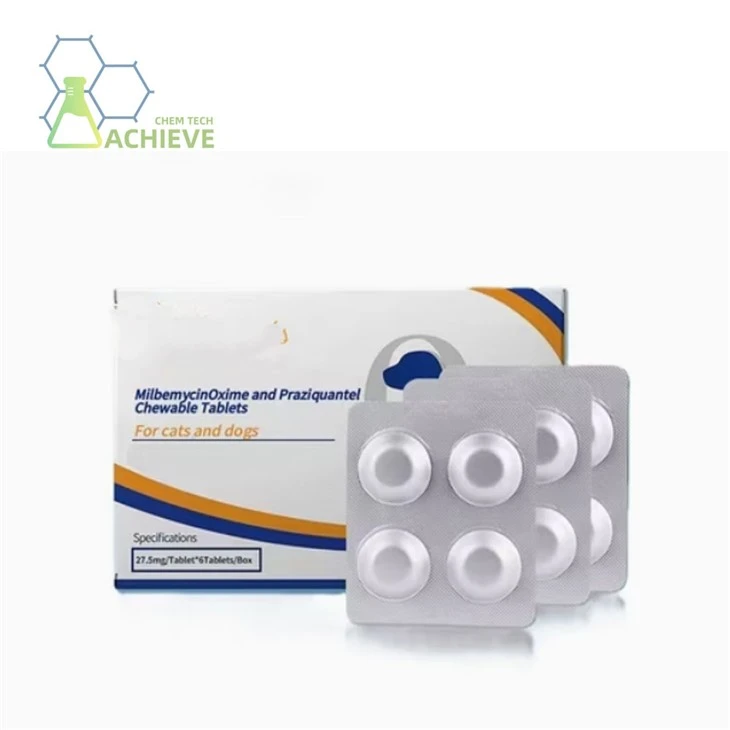
Milbemycin Oxime Tablets
1.General Specification(in stock)
(1)API(Pure powder)
(2)Tablets
For dogs:2.3mg/5.75mg/11.5mg/23.0mg
For cats: 5.75mg/11.5mg/23.0mg
2.Customization:
We will negotiate individually, OEM/ODM, No brand, for secience researching only.
Internal Code: BM-2-067
Milbemycin oxime CAS 129496-10-2
Main market: USA, Australia, Brazil, Japan, Germany, Indonesia, UK, New Zealand , Canada etc.
How Does Milbemycin Oxime Tablet Activity Determine Parasite Control Effectiveness?
The reason milbemycin oxime tablets work is that they specifically affect how parasites' nervous systems work. This type of macrolide works by attaching itself to glutamate-gated chloride channels in parasite nerve and muscle cells. If the active substance gets to parasitic cells, it causes a flood of chloride ions that can't be stopped. This paralyses the organism and kills it in the end. It's important to note that mammals don't have these specific glutamate-gated chloride channels in peripheral places. This is why it only hurts parasites and not pets.
Milbemycin oxime is absorbed through the digestive system after being taken by mouth. It reaches its highest levels in the blood within two to four hours. The compound's lipophilic property makes it easier for it to spread through human cells, even those that are home to parasites. This pattern of wide distribution lets the medicine reach heartworm larvae moving through subcutaneous tissues and the bloodstream, as well as intestinal nematodes living inside the gut.

Spectrum of Activity Against Common Parasites

When given once a month, milbemycin oxime tablets are very good at killing heartworm larvae (Dirofilaria immitis), as shown in clinical tests. The chemical stops the third and fourth stages of larval growth into adult worms, stopping the parasite's lifespan before it does any damage to the heart. According to research, the rate of success for protection is higher than 95% when used regularly as recommended by veterinarians.
When it comes to gut parasites, these drugs work very well against whipworms (Trichuris vulpis), hookworms (Ancylostoma species), and roundworms (Toxocara species). The chemical makes it hard for these worms' nerves and muscles to work together, which lets them fall off the walls of their intestines and be thrown out naturally. Field tests show that different types of gut nematodes can be killed with rates ranging from 92% to 99% when the right doses are used.

Milbemycin Oxime Tablets Effectiveness: Linking Molecular Mechanism with Parasite Response
Figuring out how milbemycin oxime interacts with parasite neuroreceptors at the molecular level helps explain why this compound always works. The drug has a 16-membered macrocyclic lactone ring, which is typical of macrolide molecules. It is also changed with oxime and oxymethyl functional groups that improve its ability to bind to receptors and move through the body.

Parasites have glutamate-gated chloride channels that help nerves and muscles work together and process sensory information. The structure of these channels is different from that of those in vertebrates, which makes selective targeting possible. When milbemycin oxime binds to certain receptor sites on these channels, they stay open longer than regular metabolic signalling would tell them to. Because of this, nerve cells become too highly charged, which stops normal action potential transmission. This stops the parasite from moving or eating.
Milbemycin oxime is still very effective in most populations, but parasitologists who study animals keep an eye out for any signs of resistance. Its structure is similar to that of other macrocyclic lactones, which means that cross-resistance patterns might appear. Most of the time, resistance happens when mutations change drug-binding sites or when efflux transporters are overexpressed, which lowers the amount of drug inside cells. According to recent monitoring data, resistance is still not common in parasite populations of pets when goods are used as directed on the label.

Dose-Response Relationships and Therapeutic Windows

Getting the right amount of drug to the parasite sites is important for effectiveness. Veterinary formulations have exact amounts that are based on body weight to make sure that therapeutic levels are reached without going too far and becoming toxic. Milbemycin oxime still has a good therapeutic index, which is the ratio between doses that are harmful and doses that are useful. This gives a safety window that allows for small changes in dosing. Given this feature, milbemycin oxime tablets are especially good for use with pets whose weight can be hard to accurately measure.
How Milbemycin Oxime Tablets Influence Parasite Survival Through Targeted Biological Action
Milbemycin oxime has effects on living things that go beyond just paralysing muscles. The combination changes many parts of the parasites' bodies, making it impossible for them to live and reproduce. These many-sided effects all add to the general success seen in clinical settings.
To stay attached to host tissues and take in nutrients, parasites need coordinated neuromuscular activity. Hookworms, in particular, use their strong mouth parts to connect to the lining of the intestine and feed on blood. Milbemycin oxime stops nerve signals from getting through, so these parasites can't keep up their eating and binding pressure. This causes the parasites to separate and eventually fall out of the host animal before they can cause it to lose a lot of blood or become anaemic.

Impact on Reproductive Capacity

Milbemycin oxime does more than just kill adult parasites; it also changes how living things reproduce. The chemical stops female worms from making eggs and stops their larvae from growing, which lowers the parasite load in several ways. Along with the direct killing effects, this stops parasites from reproducing, which speeds up the fall of parasite numbers in animals that have been treated.
Milbemycin oxime stays in the body at an effective level for a certain amount of time after being administered. This usually protects against heartworms for the recommended monthly dosing interval. The substance is broken down and flushed out of the body by the liver, and concentrations slowly drop after they reach their highest point.


When given once a month, the drug makes sure that new parasite exposures reach the right level to stop infections from starting. In this case, the timing matches the stage of growth of heartworm worms, catching them during the most vulnerable time when they can still be helped by chemotherapy.
Evaluating Milbemycin Oxime Tablets Through Their Mechanism of Parasite Interaction
To fully evaluate any antiparasitic treatment, it is important to look at both its short-term and long-term effects in a variety of settings. Milbemycin oxime tablets have been tested in the field in a lot of different places, climates, and levels of parasite prevalence.
Controlled clinical studies are the basis for learning how well drugs work in controlled settings. Studies with naturally infected dogs and cats show that milbemycin oxime tablets get rid of parasites at about the same rate as other top antiparasitic drugs. When tested against heartworm challenge infections in the lab, the substance regularly stops the growth of adult heartworms when given within the right time frame after exposure to the larvae.
Safety must be weighed against how well something works. When given in the right amounts, milbemycin oxime is well tolerated by most dogs and cats. The substance only affects parasite-specific receptors, so it doesn't have many effects on mammals. When adverse events do happen, they usually involve weak gastrointestinal symptoms that go away on their own, like losing your hunger temporarily or having soft stools.
Some dog breeds that have changes in the MDR1 gene (multi-drug resistance gene) are more sensitive to macrocyclic lactones. These dog breeds, like some Collies, Australian Shepherds, and related herds, may have neurological effects if they are exposed to too much. When vets prescribe treatment plans, they take this genetic tendency into account by changing their suggestions based on the breed's risk profile.
How well milbemycin oxime tablets get rid of parasites in different people depends on a number of factors. The most important thing is to stick to the dosing schedule. Missed doses leave gaps in protection that let parasites take hold. Body state also affects how drugs are distributed. For example, pharmacokinetics may be different in animals that are severely underweight or fat compared to animals that are the right weight.
The pressure of parasites in the environment also affects how well medicine works. In places where heartworms are common or where gut parasites are common, treating all year round works better than treating at certain times of the year. Veterinarians make suggestions based on the epidemiological conditions in the area and make sure that the level of treatment matches the level of risk in the environment.
Milbemycin Oxime Tablets Performance: Understanding the Connection Between Action and Results
To turn molecular processes into measured health results, you need to know the whole picture, from giving the drug to getting rid of the parasites to improving the health of the host. The way milbemycin oxime tablets work is that they combine pharmaceutical properties, biological activity, and factors that are useful for everyday use.
The main reason many people are prescribed milbemycin oxime is to avoid heartworms. In this case, success means stopping the development of infective larvae into adult worms that live in the pulmonary arteries and heart chambers. Adult heartworm incidence rates are less than 1% in groups that get milbemycin oxime every month, even in places where heartworms are very common. With this level of safety, heartworm disease's cardiovascular illness and death are cut down by a huge amount.


The success of mosquito prevention depends on when it is given in relation to mosquito exposure. The chemical has a "reach-back" effect, getting rid of any larvae that attacked the animal in the month before. Small changes to the plan won't hurt the effectiveness of this protective window, but consistent time is best for getting the best results.
Reducing the number of faecal eggs and getting rid of adult worms are signs that an intestinal nematode control method is working. Follow-up faecal exams done a few weeks after treatment are given to check to see if the treatment worked. When treatment works, either faeces tests come back empty, or the number of parasite eggs produced drops dramatically. As parasite loads drop, clinical signs of intestinal parasitism go away, like diarrhoea, weight loss, or a bad coat condition.


Repeated monthly dosing provides ongoing control of reinfections in environments where parasite exposure continues. This preventive approach maintains low intestinal parasite burdens that cause minimal clinical impact, contrasting with treatment-only strategies that allow cyclic reinfection between interventions.
How well a pharmaceutical product works depends a lot on how well it was made. Milbemycin oxime tablets made according to GMP (Good Manufacturing Practice) guidelines make sure that the tablets always have the right amount of active ingredient, the right kind of inactive ingredients, and the right way of putting them together. Quality control tests make sure that every batch of drugs made meets the standards for safety, uniform drug content, and fast breakdown rates.


High-purity synthesis methods get rid of as many impurities as possible that could make the product less effective or cause bad effects. High-Performance Liquid Chromatography (HPLC) and mass spectrometry are two analytical methods that show that the finished tablets have the right amount of active substance and are pure enough. This high level of quality control during production means that when vets recommend these goods, they will work as expected in the clinic.
Conclusion
Milbemycin oxime tablets are very good at killing parasites that are harmful to the health of pets. They work by selectively interfering with the brain function of parasites through glutamate-gated chloride channel binding. This gets rid of a lot of parasites while keeping dogs and cats safe. There is clinical evidence that they can help prevent heartworms and get rid of intestinal nematodes. When given according to a vet's instructions, they have success rates of over 95%.
The molecule works well because it has good pharmacokinetic qualities that make sure it gets to all the right tissues, a molecular structure that makes it easy for parasite receptors to bind, and a therapeutic window that works with real-life dose situations. Pet owners who give their animals medicine on a regular monthly plan safeguard them against parasitic diseases that can cause serious illness.
Understanding the biological basis for milbemycin oxime's antiparasitic activity helps veterinarians and pet owners appreciate why compliance with dosing schedules matters and how this medication fits within comprehensive parasite control strategies. As with any therapeutic intervention, optimal outcomes depend on proper product selection, correct dosing, and consistent application over time.
FAQ
1. What parasites do milbemycin oxime tablets effectively control?
+
-
Heartworm disease can be avoided with milbemycin oxime tablets because they kill eggs before they grow into adult worms. These tablets also get rid of common gut bugs in dogs and cats, like hookworms, roundworms, and whipworms. The substance gets rid of these parasites by messing with their nerve signals. When given correctly, it gets rid of more than 92% of most kinds of intestinal nematodes.
2. How quickly do milbemycin oxime tablets start working against parasites?
+
-
The active chemical hits its highest level in the blood within two to four hours of being taken by mouth. It then starts killing parasites soon after. The parasites become paralysed and die over the next 24 to 48 hours, when the drug amounts hit the right levels in the tissues where the organisms are living. Getting rid of all gut parasites usually takes a few days, since paralysed worms are normally thrown out of the body through digestion.
3. Can milbemycin oxime tablets be used in all dog and cat breeds?
+
-
Milbemycin oxime tablets are generally well tolerated by dogs and cats when taken as directed. When it comes to some herding types, veterinarians are extra careful because they may have the MDR1 gene mutation, which makes them more sensitive to macrocyclic lactone chemicals. Genetic tests can help vets figure out which animals are most likely to get sick and change their treatment plans accordingly. All breeds are less likely to get sick if they get the right dose based on their exact body weight.
Partner with BLOOM TECH for Premium Milbemycin Oxime Tablets Supply
You can trust BLOOM TECH to provide you with milbemycin oxime tablets because they have been making them for over 12 years and are GMP-certified. Our factory in Xi'an is certified by the US FDA, the EU GMP, and the CFDA. This means that the quality is pharmaceutical-grade and meets international standards. We provide complete options, ranging from pure API powder to finished tablets in a range of dosage amounts for use with both dogs and cats.
Our quality assurance method uses three levels of testing-factory analysis, internal QA/QC verification, and third-party certification-to make sure that product standards go beyond what is required by the pharmacopoeia. Our milbemycin oxime tablets always work well in the clinic because they are over 98% pure by HPLC and have strict controls on impurities. We work with 24 of the biggest pharmaceutical companies in the world and offer clear pricing with low profit margins. This lets us build long-term partnerships based on trust and value.
Whether you need a large API supply, custom tablet formulations, or OEM/ODM services, BLOOM TECH's R&D team supports your specific requirements from laboratory development through commercial-scale manufacturing. Contact us today at Sales@bloomtechz.com to discuss how our technical capabilities and quality commitment can support your veterinary pharmaceutical needs.
References
1. Campbell W.C., Benz G.W. (1984). Ivermectin: A Review of Efficacy and Safety. Journal of Veterinary Pharmacology and Therapeutics, 7(1), 1-16.
2. Prichard R.K., Geary T.G. (2019). Perspectives on the Utility of Moxidectin for the Control of Parasitic Nematodes in the Face of Developing Anthelmintic Resistance. International Journal for Parasitology: Drugs and Drug Resistance, 10, 69-83.
3. Bowman D.D., Atkins C.E. (2009). Heartworm Biology, Treatment, and Control. Veterinary Clinics of North America: Small Animal Practice, 39(6), 1127-1158.
4. Wolstenholme A.J., Rogers A.T. (2005). Glutamate-Gated Chloride Channels and the Mode of Action of the Avermectin/Milbemycin Anthelmintics. Parasitology, 131(S1), S85-S95.
5. Paul A.J., Tranquilli W.J., Hutchens D.E. (2000). Safety of Moxidectin in Avermectin-Sensitive Collies. American Journal of Veterinary Research, 61(4), 482-483.
6. Companion Animal Parasite Council (2020). Guidelines for the Diagnosis, Treatment, and Control of Heartworm Infection in Dogs. Companion Animal Parasite Council Recommendations.