


The endocrine system relies on precise hormonal balance, with the adrenal glands playing a central role in producing essential steroids. When this delicate equilibrium becomes disrupted, pharmaceutical interventions become necessary. Trilostane capsule has emerged as a significant pharmacological tool for modulating adrenal steroid synthesis through its selective inhibition of the 3β-hydroxysteroid dehydrogenase enzyme. This pharmaceutical compound provides researchers and clinicians with a targeted approach to managing conditions involving excessive steroid production.
1.General Specification(in stock)
(1)Injection
Customizable
(2)Tablet
Customizable
(3)API(Pure powder)
PE/Al foil bag/ paper box for Pure powder
HPLC≥99.0%
(4)Pill press machine
https://www.achievechem.com/pill-press
2.Customization:
We will negotiate individually, OEM/ODM, No brand, for secience researching only.
Internal Code: BM-6-010
Trilostane CAS 13647-35-3
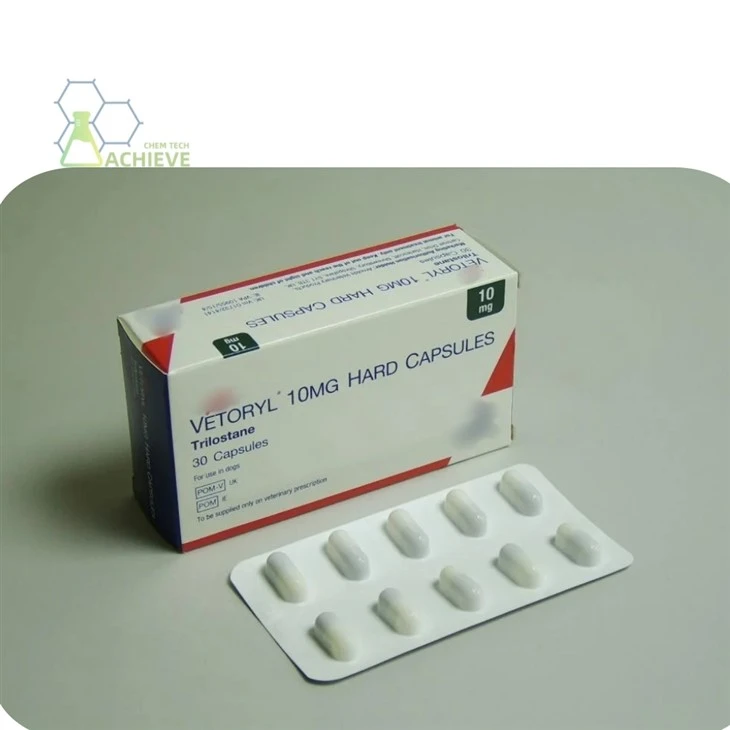
We provide trilostane capsule, please refer to the following website for detailed specifications and product information.
Product: https://www.bloomtechz.com/oem-odm/capsule-softgel/trilostane-capsule.html
Understanding how trilostane capsule functions within the adrenal steroid pathway offers valuable insights into hormone regulation mechanisms. The compound's ability to selectively block specific enzymatic steps in steroidogenesis has made it an important reference material for studying adrenal function. As scientific understanding of endocrine pathways continues to advance, the application of 3β-HSD inhibitors like trilostane has expanded across various research domains.
This article explores the biochemical mechanisms through which trilostane capsule inhibits adrenal steroid synthesis, its role in hormone regulation, and its contributions to both veterinary management and scientific research. By examining these aspects, we can appreciate the compound's significance in understanding and managing conditions related to adrenal steroid overproduction.
What Role Does Trilostane Capsule Play in Blocking Adrenal Steroid Synthesis?

Enzymatic Targeting in Steroidogenesis
Through a complicated biosynthetic pathway, the adrenal cortex makes many steroid hormones. Trilostane capsule works by blocking 3β-hydroxysteroid dehydrogenase (3β-HSD), an enzyme that is needed to change precursor steroids into stronger hormone forms. Pregnenolone changes into progesterone, 17α-hydroxypregnenolone into 17α-hydroxyprogesterone, and dehydroepiandrosterone (DHEA) changes into androstenedione with the help of this enzyme. Trilostane stops this conversion step, which in turn stops the production of steroid hormones like cortisol and aldosterone that come after it. Trilostane is very good at controlling diseases marked by high cortisol levels because it selectively binds to 3β-HSD.
Instead of using chemicals that weaken the adrenal glands in a broad sense, this focused method lets steroid production be changed more precisely. Researchers have shown that trilostane can stop enzymes in a competitive and reversible way. This means that the amount of enzyme blockage can be changed by changing the dose.
Impact on Cortisol and Aldosterone Production
When a trilostane capsule stops 3β-HSD from working, the production of cortisol, the main glucocorticoid hormone, drops right away.


Cortisol has many functions in the body, such as controlling glucose metabolism, changing defence responses, and helping the body deal with stress. When cortisol production goes too high in a pathological state, symptoms like muscle weakness, changes in the skin, and metabolic problems may appear.
The compound also changes the production of aldosterone, but the effect is different for each person and depends on the dose. Through its effects on kidney function, aldosterone controls the balance of electrolytes and blood pressure. Trilostane capsule is a complete way to deal with too much adrenaline because it changes both the cortisol and aldosterone routes. To make sure the right therapeutic reaction, clinical tracking usually includes checking electrolyte levels and adrenal function markers.
Reversibility and Dose-Dependent Effects
One interesting thing about trilostane's mechanism is that it can be turned around. Trilostane capsule's effects wear off as the substance is broken down and flushed out of the body, unlike surgery or chemical inhibitors that can't be reversed. This reversibility gives treatment plans more freedom and lets doses be changed based on how each patient reacts.
Trilostane administration and steroid synthesis inhibition are related in a way that depends on dose. This lets doctors and researchers control the level of hormonal suppression.

Lower doses may only partly stop the production of steroids while keeping some adrenal function, while higher amounts completely stop production. Because it has a graduated response pattern, trilostane can be used to study many different areas of adrenal physiology and pathophysiology.
How Does Trilostane Capsule Act as a 3β-HSD Inhibitor in Hormone Regulation?

Molecular Interaction with the Enzyme
Trilostane can directly interact with the active site of 3β-hydroxysteroid dehydrogenase because of the way its molecules are structured. Trilostane works as a competitive inhibitor, which means it fights with natural steroid substrates for enzyme binding. Because the molecule has a structure that is similar to endogenous steroids, it can compete with them and make it harder for the enzyme to break down its natural substrates.
Scientists who studied how trilostane binds to enzymes have found that the substance only makes short-term connections with it, not long-lasting covalent bonds.
This temporary binding explains both why its effects can be undone and why its blocking effect changes with dose. Figuring out how these molecules combine has been very important for improving dosing plans and guessing how well treatments will work.
Cascade Effects on the Hypothalamic-Pituitary-Adrenal Axis
The hypothalamic-pituitary-adrenal (HPA) axis reacts through negative feedback processes when trilostane capsule lowers the production of cortisol. Lower amounts of cortisol usually cause the pituitary gland to release more adrenocorticotropic hormone (ACTH).


By stimulating the adrenal glands, this compensatory response is the body's attempt to get cortisol levels back to normal. Trilostane's effects on blocking signals and the HPA axis's feedback systems work together to make a complicated regulatory dynamic. If the HPA axis is working properly, this feedback may partly offset the effects of trilostane by sending more ACTH to the adrenal glands. On the other hand, trilostane may have stronger and longer-lasting effects when the HPA axis is not working properly, like in some adrenal disorders.
Pharmacokinetic Considerations
Trilostane's ability to stop 3β-HSD depends on both how it works at the molecular level and how it moves through the body.
When the trilostane capsule is taken by mouth, the compound is absorbed in the digestive tract. The amount of food eaten may affect how quickly the compound is absorbed. Peak plasma concentrations usually happen a few hours after the drug is given.
While being broken down in the liver, trilostane changes into different molecules, some of which may still have some pharmacological action. How often trilostane should be taken and how long enzymes are blocked are both affected by its half-life in the blood. Understanding these pharmacokinetic factors helps doctors make more accurate predictions about how medicines will work and come up with the best ways to give them.
The Connection Between Trilostane Capsule and Adrenal Steroid Pathway Modulation

The adrenal steroid synthesis pathway is a complicated biochemical chain reaction that changes cholesterol into different steroid hormones. Trilostane capsule gets in the way of this route at a key point, stopping the change from Δ5-steroids to Δ4-steroids. This planned entry point changes several hormones downstream at the same time, which makes trilostane a useful tool for understanding how pathways change over time.
Trilostane blocks 3β-HSD, which makes upstream steroid precursors build up while downstream products get used up.
This change in steroid profiles can be measured in the lab, which gives researchers useful information about how pathways move and how enzymes work. We now know more about how different steroids are made and controlled in different bodily situations because we can change only certain steps in the process of steroidogenesis. Trilostane changes more than just hormone levels when it affects pathways. The compound's impact on the buildup of steroid precursors may change other biochemical pathways and the creation of steroid molecules with different biological functions. Researchers are still looking into these side effects and what they might mean for our understanding of how adrenal glands work.

Understanding the Application Value of Trilostane Capsule in Veterinary Hormone Management
Trilostane capsule has been accepted by veterinary medicine as a useful way to treat problems connected to the adrenal glands in pets. Several diseases in dogs, especially some breeds, are marked by too much cortisol release. Clinical use of trilostane in veterinary medicine has given doctors a good way to treat these endocrine disorders with drugs.

Using trilostane on animals has led to a lot of clinical data about how well it works, how safe it is, and how to give it most effectively. Veterinarians usually start treatment with low doses and make changes based on how the animal responds and what the lab tests show. To effectively treat adrenal diseases in animals, hormone levels, electrolyte balance, and clinical signs must be checked on a frequent basis.
Knowledge gained from using trilostane on animals has helped us learn more about its drug-like qualities. The compound's mechanism of action has been proven by the fact that it caused clinical improvements in animals that were treated and changes that could be measured in hormone levels. This proof from the real world adds to studies done in the lab and makes people more confident in trilostane's ability to help people of all species.

How Trilostane Capsule Supports Scientific Research into Adrenal Function and Steroid Metabolism
As a pharmaceutical tool, the trilostane capsule is used in research labs to study adrenal physiology and steroid biochemistry. Researchers can set up experiments that show how steroid synthesis pathways react to enzymatic blockage by specifically blocking 3β-HSD. These studies have shed light on basic parts of how hormones work and how feedback works.

Scientists have been able to study the kinetics of 3β-HSD enzymes and their selectivity for substrates in vitro using trilostane. When different concentrations of trilostane are added to cell culture systems, the production of steroids changes depending on the dose. This gives us quantitative information about enzyme activity and inhibitor potency. The purpose of these laboratory models is to help us learn more about the chemical processes that make steroids.
Scientists who use animals to study trilostane have learned a lot about how different hormones work together to react to changes in steroid output. These studies look at how organisms adjust to lower levels of cortisol and aldosterone production, showing how they make up for it and pointing out any possible bad effects. The information gathered from this kind of research is used in both clinical settings and to help scientists learn more about how adrenal glands work.

Conclusion
Trilostane capsule is a useful drug for controlling the production of adrenal steroids by blocking 3β-HSD selectively. It works by stopping important enzyme conversions in the steroidogenesis pathway. This gives scientists and doctors a focused way to treat situations where the body makes too many steroids. The compound can be used in a wide range of research and therapeutic settings because its effects are reversible and depend on the dose.
As more study is done on trilostane's effects on steroid pathway dynamics, hormone control, and physiological adaptations, our scientific understanding of its actions continues to grow. A lot of information about this compound's qualities and possible uses has been gathered from both animal studies and lab work. As research into endocrine systems moves forward, compounds like trilostane are still needed to fully understand the complicated processes that control hormone production and management.
Trilostane and other selective enzyme inhibitors are likely to continue to help the field of adrenal steroid research in the future. By learning how to precisely change certain steps in steroidogenesis, we can come up with better ways to treat diseases and learn more about how endocrine systems work.
FAQ
1. What makes trilostane capsule effective as a 3β-HSD inhibitor?
Due to its structural features that allow competitive binding with the enzyme's active site, trilostane capsule shows efficiency as a 3β-HSD inhibitor. The chemical fights with natural steroid substrates for enzyme access, which slows down the process of turning precursor steroids into hormones further down the line. This competitive inhibition can be undone and depends on the dose, which lets steroid production be controlled. Because it selectively targets 3β-HSD, trilostane is a great drug for going after specific places in the adrenal steroid system without stopping all adrenal function.
2. How does trilostane capsule affect different steroid hormones in the adrenal pathway?
By blocking the 3β-HSD enzyme, which is necessary for their synthesis, Trilostane capsule mainly lowers the release of cortisol and aldosterone. Upstream steroid precursors like pregnenolone and DHEA build up because of the blockage, while downstream products decrease. How strong an effect is on different steroids depends on a lot of things, like the dose, the person's metabolism, and the enzyme pathways that are involved. When the main method for making steroids is stopped, pathway rerouting may have an indirect effect on some steroid metabolites.
3. What role does trilostane capsule play in research related to adrenal steroid metabolism?
Trilostane capsules are used by researchers as an experimental tool to study how adrenal steroid production routes work and how they react to stopping enzymes from working. Scientists can study how the hypothalamus-pituitary-adrenal axis is controlled by making conditions where 3β-HSD activity is low. This lets them see how compensatory mechanisms work, how steroid profiles change, and how they are regulated. Trilostane studies in the lab have given us useful information about enzyme kinetics, pathway dynamics, and how our bodies react to changes in steroid production, which has helped us learn more about how endocrine systems work.
Partner with BLOOM TECH for Premium Trilostane Capsule Supplier Solutions
If you need a dependable source for trilostane capsule supplier solutions for study or pharmaceutical uses, BLOOM TECH is ready to provide you with top-notch quality and service. Our company has been working with chemical synthesis and pharmaceutical products for more than 12 years and has 100,000 square meters of GMP-certified production space. As qualified suppliers to 24 well-known international companies, we show that we are dedicated to quality excellence.
Our trilostane capsule products undergo rigorous triple-layer quality analysis-first in the factory, second through our dedicated QA/QC department, and third via accredited authority agencies. This comprehensive quality assurance protocol ensures that every batch meets the highest international standards. We know how important it is for scientific research and drug development to have dependable supply lines and correct technical specs.
BLOOM TECH gives competitive pricing, clear profit margins, and accurate lead time estimates through our integrated ERP platform. This is in addition to high-quality products. Because we care about our customers, we take every question like an order and give you exact prices, delivery times, and paperwork for easy customs clearance. Whether you need materials for study purposes or large amounts for bigger projects, our team can help you in a way that is tailored to your needs. Get in touch with our technical experts right away at Sales@bloomtechz.com to talk about how BLOOM TECH can meet your needs for trilostane capsules with reliable quality and professional service.
References
1. Potts GO, Creange JE, Harding HR, Schane HP. Trilostane, an orally active inhibitor of steroid biosynthesis. Steroids. 1978;32(2):257-267.
2. Newell-Price J, Bertagna X, Grossman AB, Nieman LK. Cushing's syndrome. Lancet. 2006;367(9522):1605-1617.
3. Behrend EN, Kooistra HS, Nelson R, Reusch CE, Scott-Moncrieff JC. Diagnosis of spontaneous canine hyperadrenocorticism: 2012 ACVIM consensus statement. Journal of Veterinary Internal Medicine. 2013;27(6):1292-1304.
4. Simard J, Ricketts ML, Gingras S, Soucy P, Feltus FA, Melner MH. Molecular biology of the 3β-hydroxysteroid dehydrogenase/Δ5-Δ4 isomerase gene family. Endocrine Reviews. 2005;26(4):525-582.
5. Reine NJ. Medical management of pituitary-dependent hyperadrenocorticism: mitotane versus trilostane. Clinical Techniques in Small Animal Practice. 2007;22(1):18-25.
6. Miller WL, Auchus RJ. The molecular biology, biochemistry, and physiology of human steroidogenesis and its disorders. Endocrine Reviews. 2011;32(1):81-151.