


Adrenal glands are tiny yet very strong. They are located right above the kidneys and secrete hormones that control the body's reaction to stress, fluid balance, and metabolic activity. When these glands go into overdrive, the results might be devastating, and that is where trilostane tablets come in. In this post, we will discuss how trilostane tablets operate, why management of adrenal hormones is important, and what patients and practitioners need to know about this chemical.
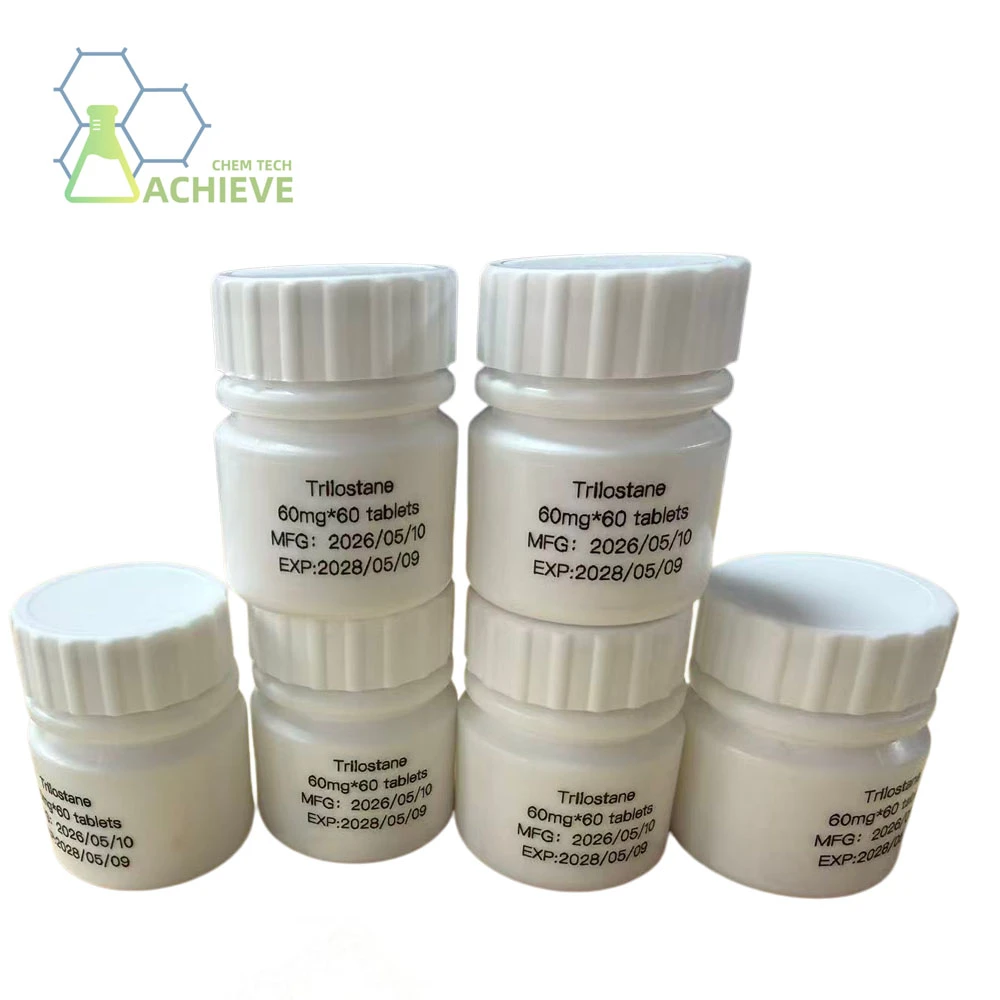
Trilostane Tablets
1.General Specification(in stock)
(1)Injection
Customizable
(2)Tablet
Customizable
(3)API(Pure powder)
PE/Al foil bag/ paper box for Pure powder
HPLC≥99.0%
(4)Pill press machine
https://www.achievechem.com/pill-press
2.Customization:
We will negotiate individually, OEM/ODM, No brand, for secience researching only.
Internal Code: BM-2-016
Trilostane CAS 13647-35-3
Analysis: HPLC, LC-MS, HNMR
Technology support: R&D Dept.-4
How Do Trilostane Tablets Affect Adrenal Hormone Synthesis?
Trilostane tablets work by inhibiting a certain enzyme in the adrenal glands. This mechanism contributes to understanding the reason why they are seen as a significant solution for controlling adrenal hormone overproduction.
The Role of 3β-Hydroxysteroid Dehydrogenase
Trilostane primarily functions by blocking the enzyme 3β-hydroxysteroid dehydrogenase (3β-HSD), the first step in the conversion of steroid precursors to hormones. If this enzyme doesn't operate properly, the adrenal glands cannot make high amounts of cortisol and aldosterone. Trilostane works by reversibly binding to this enzyme, therefore the inhibition is not permanent and the body may revert to normal function when the medication is removed or modified.
This reversibility is a therapeutically significant property. This provides additional flexibility for prescribers to titrate doses and respond to changes in the patient's health over time.


Δ⁵→⁴ isomerase Inhibition and Steroid Pathway Disruption
Trilostane also inhibits another enzyme in the cascade of steroidogenesis, Δ⁵→⁴ isomerase, in addition to the suppression of 3β-HSD. These two enzymes work together in the synthesis of mineralocorticoids as well as glucocorticoids. Trilostane tablets block both and cause a significant drop in the downstream production of both hormones – without totally shutting them down (which would be bad).
Trilostane blocks both enzymes; therefore, it is a focused intervention rather than a blunt suppressor. It acts directly on the steroidogenic pathway, with a reduction in excess production, but with a working hormonal baseline.
Trilostane Tablets and the Regulation of Cortisol and Aldosterone
Cushing's disease and primary aldosteronism are two illnesses that impact the two main adrenal hormones, cortisol and aldosterone. They both have a similar enzymatic mechanism, and both are treated with trilostane tablets.
Cortisol Reduction in Hyperadrenocorticism
Cortisol is the so-called "stress hormone." It regulates metabolism, immunological response and blood pressure. Animals with hyperadrenocorticism (excess production of cortisol by the adrenal cortex) show a particular pattern of redistribution of weight, muscular weakness, polyuria, and tendency to infection.
Trilostane blocks the manufacture of cortisol by inhibiting the enzymes that convert pregnenolone to progesterone, and subsequently to cortisol. Clinical investigations have shown that trilostane results in normal or considerably decreased cortisol production and improvement in symptom profiles of afflicted individuals. Patients are frequently maintained on doses of cortisol throughout their therapy to keep the dose effective but not precipitate adrenal insufficiency.
Aldosterone Modulation and Fluid Balance
Aldosterone is involved in the control of sodium retention and potassium excretion by the kidneys, which directly affect blood pressure and electrolyte balance. Primary aldosteronism: Hyperaldosteronism. Hypertension, hypokalemia, and edema.
Trilostane blocks the same enzyme pathway and hence reduces plasma aldosterone levels. Blood pressure control and electrolyte balance have been significantly improved by the treatment of primary aldosteronism. Trilostane tablets therefore provide a double-acting alternative in disorders with dysregulation of both mineralocorticoid and glucocorticoid.
Which Adrenal Steroid Pathways Are Targeted by Trilostane Tablets?
The adrenal cortex has three layers, each generating various types of steroid hormones. Trilostane inhibits the enzyme and has a primary effect on the zona fasciulata and zona glomerulosa - the areas where glucocorticoid and mineralocorticoid are produced correspondingly.
Zona Fasciculata and Glucocorticoid Synthesis
In the zona fasciculata, the enzymatic steps leading to cortisol begin with cholesterol. This cascade is inhibited by trilostane at the 3β-HSD stage, thereby decreasing conversion of Δ5 steroids ( e.g., pregnenolone) to Δ4 steroids ( e.g., progesterone ) . This reduction is passed downstream, which decreases cortisol production.
This specificity of action enables the correction of the pathologically increased levels of glucocorticoids while other adrenal functions are generally unaffected, allowing for both safety and therapeutic benefit.
Zona Glomerulosa and Mineralocorticoid Control
Aldosterone is generated in the zona glomerulosa by overlapping enzymatic machinery.
3β-HSD also works in this zone; hence, the trilostane actions naturally extend to inhibition of aldosterone synthesis.
This cross-zone action renders trilostane especially useful in individuals with combined adrenal insufficiency when both cortisol and aldosterone excesses contribute to clinical symptoms.
How Does Trilostane Help Regulate Adrenal Hormone Overproduction in Dogs?
Canine hyperadrenocorticism, or Cushing's disease, in dogs is one of the most prevalent endocrine illnesses discovered in senior canines. Trilostane tablets have become a well-established tool for management in veterinary medicine.
Clinical Outcomes in Canine Cushing's Disease
Signs of Cushing's disease in dogs include a pot-bellied look, increased thirst and urination, hair loss, and lethargy. According to published data in veterinary trials, more than 80-90% of dogs treated with trilostane have clinical improvement, making it one of the most successful pharmacological choices for this ailment.
The mechanism of action is similar to that in human medicine - trilostane inhibits adrenal steroidogenesis and hence reduces overproduction of cortisol. For standard dosing in dogs, start at 0.8-1 mg/kg PO q12h with meals to increase absorption.
Monitoring Protocols During Canine Treatment

Veterinary recommendations indicate follow-up examinations be performed 10–14 days following initiation of therapy or alteration of dose.Generally, monitoring involves an ACTH stimulation test to determine the cortisol response, and panels of electrolytes to identify any evidence of adrenal insufficiency.
These data are used to alter the dose, increasing it by 10–50% depending on the clinical response. A practical benefit of the reversible enzyme inhibition of trilostane is that if the cortisol suppression becomes severe, withdrawal of the drug permits the adrenal function to recover in a short period of time.
Understanding Adrenal Hormone Changes During Trilostane Tablet Treatment
Monitoring of hormonal changes during medication is a safety measure and verification of therapeutic impact. The adrenal hormone profiles change predictably with trilostane and are thus quantifiable benchmarks for therapeutic effect.

Cortisol and ACTH Dynamics
Trilostane tablets usually reduce cortisol levels within days after beginning therapy. Lower cortisol production could prompt the pituitary gland to increase the secretion of adrenocorticotropic hormone (ACTH). The feedback loop should be continuously monitored, since sustained ACTH elevation may result in adrenal hyperplasia over time with sustained cortisol suppression in the absence of periodic re-evaluation.
The conventional therapeutic approach is to measure post-ACTH stimulation cortisol levels, aiming for a level that provides adequate suppression, but does not cause iatrogenic adrenal insufficiency.
Electrolyte and Mineralocorticoid Shifts
Trilostane medication will cause a reduction in aldosterone and changes in salt and potassium balance.Mild hyponatremia or hyperkalemia occurs in a few people after treatment, particularly with greater doses. These electrolyte imbalances are generally managed by adjusting the dose and require regular laboratory testing during medication.
Knowledge of these alterations helps prescribers to optimize dosing regimens and ensures that patients obtain the therapeutic benefit of adrenal hormone manipulation without the unwanted metabolic issues.
Conclusion
You may adjust the levels of adrenal hormones accurately and reversibly using trilostane tablets. They work on 3β-HSD and △5,4-isomerase to diminish excess cortisol and aldosterone production in a controlled, titratable manner. They are used in human adrenal disorders and canine hyperadrenocorticism and are supported by a growing body of clinical evidence. Careful monitoring and individualized dosages remain the cornerstone for maximizing safety and efficacy throughout treatment.
Frequently Asked Questions
Q1: What is the primary mechanism of trilostane tablets in adrenal hormone regulation?
+
-
Trilostane tablets block the adrenal cortex enzymes 3β-hydroxysteroid dehydrogenase and △5,4-isomerase and thereby reduce the production of cortisol and aldosterone. This reversible inhibition decreases excess adrenal hormone production, but does not permanently abolish gland function.
Q2: Are trilostane tablets used only in human medicine?
+
-
No. Trilostane tablets are often used in veterinary medicine, notably for the treatment of hyperadrenocorticism in dogs. Clinical data consistently reveal significant rates of symptom relief in canine patients when trilostane is dosed and monitored properly.
Q3: What monitoring is required during trilostane tablet treatment?
+
-
Patients should have their cortisol levels checked periodically (usually by ACTH stimulation tests) as well as their electrolytes, liver function and renal function. The initial follow-up is usually suggested 10-14 days after commencing treatment or following a dosage change.
Partner With Bloomtechz - Your Trusted Trilostane Tablets Supplier
At Bloomtechz, we combine over 12 years of expertise in organic synthesis and pharmaceutical intermediate manufacturing with GMP-certified production that meets US FDA, EU, JP, and CFDA standards. As a qualified trilostane tablets supplier, we offer customizable dosage forms - including 5 mg, 10 mg, 20 mg, 30 mg, and 60 mg tablets - along with API powder (HPLC ≥99.0%) and OEM/ODM services. Our triple-layer quality assurance process ensures every batch meets contractual specifications, and we back our commitment with a full refund policy for any non-conforming product. If you are sourcing pharmaceutical-grade trilostane tablets for research, clinical, or commercial applications, reach out to our team today.
Contact us at: Sales@bloomtechz.com
References
1. Neiger, R., Ramsey, I., O'Connor, J., Hurley, K. J., & Mooney, C. T. (2002). Trilostane treatment of 78 dogs with pituitary-dependent hyperadrenocorticism. Veterinary Record, 150(26), 799–804.
2. Ruckstuhl, N. S., Nett, C. S., & Reusch, C. E. (2002). Results of clinical examinations, laboratory tests and ultrasonography in dogs with pituitary-dependent hyperadrenocorticism treated with trilostane. American Journal of Veterinary Research, 63(4), 506–512.
3. Sieber-Ruckstuhl, N. S., Boretti, F. S., Wenger, M., Maser-Gluth, C., & Reusch, C. E. (2006). Cortisol, aldosterone, cortisol precursor, androgen and endogenous ACTH concentrations in dogs with pituitary-dependent hyperadrenocorticism treated with trilostane. Domestic Animal Endocrinology, 31(1), 63–75.
4. Wenger, M., Sieber-Ruckstuhl, N. S., Müller, C., Reusch, C. E., & Boretti, F. S. (2004). Echocardiographic parameters in dogs with pituitary-dependent hyperadrenocorticism before and after treatment with trilostane. Journal of Veterinary Internal Medicine, 18(4), 534.
5. Williams, D. M., & Cho, S. (1995). Adrenal steroidogenesis and the clinical pharmacology of inhibitors of cortisol synthesis. Clinical Endocrinology, 43(4), 395–406.
6. Feldman, E. C., & Nelson, R. W. (2004). Trilostane as a treatment option for pituitary-dependent hyperadrenocorticism in dogs. Canine and Feline Endocrinology and Reproduction, 3rd edition, W.B. Saunders, Philadelphia, 252–257.