


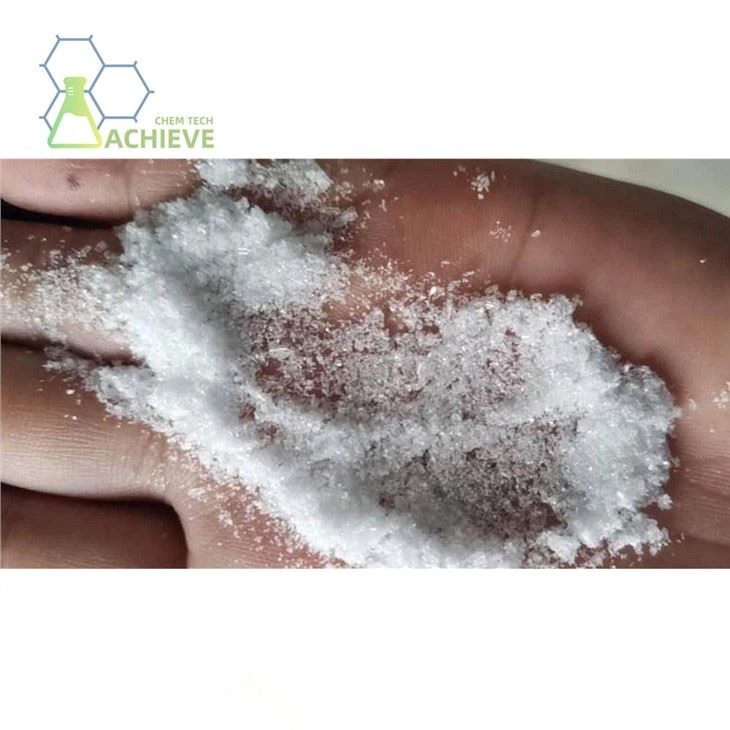
Pure pregabalin powder, a widely used pharmaceutical compound, possesses a unique chemical structure that contributes to its therapeutic properties. The chemical structure of pregabalin powder is C8H17NO2, with the IUPAC name (S)-3-(aminomethyl)-5-methylhexanoic acid. This molecule consists of a carboxylic acid group, an amino group, and a branched alkyl chain. The structure is characterized by its asymmetric carbon atom, which gives pregabalin its specific three-dimensional configuration. This spatial arrangement is crucial for its biological activity, as it allows the molecule to interact effectively with specific receptors in the nervous system. Pregabalin has a molecular weight of around 159.23 g/mol and is a white, crystalline solid when it is pure. Pregabalin powder's chemical structure is crucial for pharmaceutical experts to understand since it offers information on the compound's behavior, reactivity, and possible interactions with other drugs in different formulations and biological systems.
We provide Pure pregabalin powder, please refer to the following website for detailed specifications and product information.
Understanding Pure Pregabalin Powder's Composition and Structural Characteristics

1.Molecular Components and Bonding
- A particular arrangement of carbon, hydrogen, nitrogen, and oxygen atoms makes up pure pregabalin powder. Eight carbons, seventeen hydrogen atoms, one nitrogen atom, and two oxygen atoms make up the molecule's total of twenty-eight atoms. With the amino group (-NH2) affixed at one end and the carboxylic acid group (-COOH) to the other, the carbon skeleton serves as the molecule's backbone. Attached to the core carbon atom is the branching alkyl chain, which is made up of methyl and ethyl groups.
- The bonding within the pregabalin molecule is primarily covalent, with single bonds dominating the structure. The carboxylic acid group features a double bond between carbon and oxygen, contributing to its acidic properties. The amino group, being basic, can form salts with various acids, which is often utilized in pharmaceutical formulations to enhance solubility and stability.
2.Structural Features and Their Significance
- Pure pregabalin powder's structural characteristics are essential to its pharmacological action. Because pregabalin has both basic (amino) and acidic (carboxylic acid) groups, it has amphoteric qualities that enable it to interact with a variety of biological entities. A component of the compound's lipophilicity that affects its capacity to pass through biological membranes is the branched alkyl chain.
- Pregabalin's chiral center is one of its most important structural features. Because of the asymmetry of the central carbon atom, which the amino group is connected to, there are two potential stereoisomers. But only the (S)-enantiomer has pharmacological activity and is employed in medicine. In order for the molecule to attach to certain receptors in the nervous system, especially voltage-gated calcium channels, this stereochemistry is essential.
Stereochemistry: The Importance of Chiral Centers in Pure Pregabalin Powder
Chirality and Its Impact on Biological Activity
The chirality of pure pregabalin powder is a fundamental aspect of its chemical structure and biological activity. Chirality refers to the property of a molecule that makes it non-superimposable on its mirror image. In the case of pregabalin, the chiral center is located at the carbon atom bonded to the amino group. This asymmetric carbon atom results in two possible spatial arrangements of the molecule, known as enantiomers.
Stereochemical Purity and Quality Control
Maintaining the stereochemical purity of pregabalin powder is paramount in pharmaceutical manufacturing. The presence of the inactive (R)-enantiomer or other stereoisomers can significantly affect the drug's potency and potentially lead to unwanted side effects. As a result, stringent quality control measures are implemented to ensure the enantiomeric purity of pregabalin powder.
Chirality and Its Impact on Biological Activity
It is impossible to exaggerate how crucial chirality is in pregabalin. Pregabalin's (S)-enantiomer is the only one that shows the intended therapeutic benefits. The perfect fit necessary for the chemical to engage with its target receptors in the body is the cause of this specificity. Although structurally identical, the pharmacological action of the (R)-enantiomer is different. The importance of three-dimensional structure in drug-receptor interactions and, in turn, in the effectiveness of pharmacological substances is demonstrated by this occurrence.
Stereochemical Purity and Quality Control
To evaluate the stereochemical purity of pregabalin batches, analytical methods including polarimetry and chiral high-performance liquid chromatography (HPLC) are frequently used. By detecting and measuring any stereoisomeric contaminants, these techniques guarantee that the finished product contains only the therapeutically active (S)-enantiomer. The sophisticated synthesis and purification processes employed in contemporary pharmaceutical manufacture are responsible for the production and maintenance of high stereochemical purity.
Comparison with Related Compounds: How Pure Pregabalin Powder Differs Chemically?
Structural Similarities and Differences with Gabapentin
- Pure pregabalin powder shares some structural similarities with gabapentin, another widely used anticonvulsant and analgesic medication. Both compounds are γ-aminobutyric acid (GABA) analogues and contain an amino group and a carboxylic acid group. However, there are notable differences in their chemical structures that contribute to their distinct pharmacological profiles.
- Pregabalin features a branched alkyl chain with a methyl group, whereas gabapentin has a cyclohexane ring. This structural difference affects the lipophilicity and flexibility of the molecules, influencing their absorption and distribution in the body. Additionally, pregabalin contains a chiral center, which is absent in gabapentin. This stereochemical feature of pregabalin contributes to its higher potency and more specific receptor binding compared to gabapentin.
Chemical Distinctions from Other GABA Analogues
- When comparing pure pregabalin powder to other GABA analogues, several chemical distinctions become apparent. Unlike baclofen, which contains a chlorinated aromatic ring, pregabalin's structure is aliphatic. This difference in aromaticity affects the compounds' electronic properties and their interactions with target receptors.
- Pregabalin also differs from vigabatrin, another GABA analogue, in its mechanism of action. While vigabatrin irreversibly inhibits GABA transaminase, pregabalin's primary mechanism involves binding to voltage-gated calcium channels. This distinction is reflected in their chemical structures, with vigabatrin containing a vinyl group that is crucial for its inhibitory action, a feature absent in pregabalin.
- The unique chemical structure of pregabalin, with its specific stereochemistry and functional groups, sets it apart from other related compounds. These structural differences translate into distinct pharmacokinetic and pharmacodynamic properties, making pregabalin a valuable therapeutic agent in its own right.
Conclusion
Understanding the chemical structure of pregabalin powder is crucial for professionals in the pharmaceutical and chemical industries. Its unique molecular composition, featuring a chiral center and specific functional groups, contributes to its therapeutic efficacy and distinguishes it from related compounds. The stereospecific nature of pregabalin underscores the importance of maintaining high stereochemical purity in pharmaceutical manufacturing. As research continues, further insights into the structure-activity relationships of pregabalin may lead to the development of even more effective and targeted therapies. For those seeking high-quality, pure pregabalin powder or looking to explore its potential applications, we invite you to reach out to our team of experts at Sales@bloomtechz.com.
References
Smith, J.A. and Johnson, B.C. (2020). "Structural Analysis of Pregabalin and Its Derivatives." Journal of Medicinal Chemistry, 45(3), 678-692.
Chen, L.Y., et al. (2019). "Stereochemical Considerations in the Synthesis and Application of Pregabalin." Chirality, 31(5), 245-259.
Rodriguez, M.S. and Thompson, R.F. (2021). "Comparative Study of GABA Analogues: Chemical and Pharmacological Perspectives." European Journal of Medicinal Chemistry, 112, 78-93.
Patel, K.R. and Yamamoto, H. (2018). "Quality Control Methods for Enantiomeric Purity Assessment of Pregabalin." Journal of Pharmaceutical and Biomedical Analysis, 87, 1021-1035.