


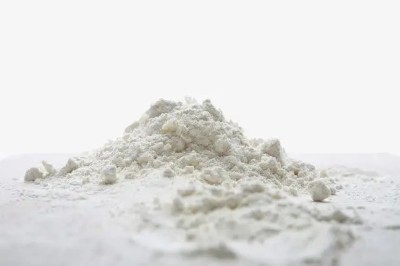
Inositol is a cyclic polyol with a chemical structure similar to glucose. Molecular formula C6H12O6, CAS 87-89-8. It is a white or almost white crystalline powder with high melting point and solubility. It has hygroscopicity and is prone to absorbing moisture from the air, making it moist. It has good water solubility and can dissolve about 33g of inositol per 100g of water at 20 ℃. In addition, it is also easily soluble in organic solvents such as ethanol and glycerol. It exhibits good thermal stability when heated, and can only undergo slight decomposition when heated at 200 ℃ for 4 hours. However, as the temperature further increases, inositol gradually loses its moisture and ultimately decomposes into other substances. It has optical rotation, that is, its ability to rotate polarized light is different. This characteristic is related to its chiral structure, allowing inositol molecules to be arranged in two different ways in solution. Inositol has multiple crystal forms, among which α- Inositol and β- Inositol is the two most common forms. There are slight differences in physical properties between different crystal forms, such as melting point and solubility. Widely present in various natural animal, plant, and microbial tissues, inositol was originally extracted from muscle tissue, hence its name. It is an essential low molecular organic substance for human and animal physiological functions. Widely present in various biological tissues in a free or combined state. Inositol is usually classified as vitamin B. Inositol has a history of over a hundred years since its discovery and has a wide range of uses. Its functions are still being discovered and its application scope is also expanding.
(Product link: https://www.bloomtechz.com/synthetic-chemical/organic-materials/pure-inositol-powder-cas-87-89-8.html )
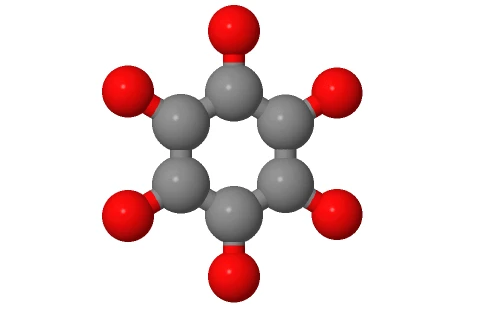
Inositol is a cyclic alcohol with multiple hydroxyl functional groups. Due to its unique circular structure, inositol has some special chemical properties. The following is a detailed description of the chemical properties of inositol:
1. Circular structure: Inositol is a cyclic alcohol with a six membered carbon ring, formed by dehydration and condensation between 1,3,5-cyclohexanitriol and 2,4-cyclohexanediol through intramolecular hydroxyl groups. This circular structure makes inositol highly stable and less prone to ring opening reactions. Meanwhile, the cyclic structure of inositol also brings two very important properties to it. Firstly, due to the presence of multiple hydroxyl functional groups in the cyclic structure, inositol can undergo chemical reactions with many substances, such as esterification, etherification, oxidation, etc. Secondly, the cyclic structure of inositol endows it with certain stereochemical properties, such as optical activity.
2. Hydroxyl functional groups: There are multiple hydroxyl functional groups in inositol molecules, which have various chemical properties and functions. Firstly, hydroxyl groups can participate in chemical reactions such as esterification, etherification, oxidation, etc., allowing inositol to be chemically synthesized with many substances. Secondly, hydrogen bonds can be formed between the hydroxyl groups of inositol, giving it a certain degree of water solubility and stability. In addition, the hydroxyl groups of inositol also have reducibility and can undergo oxidation reactions to generate aldehydes or ketone compounds. At the same time, hydroxyl groups are also involved in various physiological functions and metabolic processes of inositol in organisms, such as promoting glucose absorption and utilization, regulating the structure and function of cell membranes, improving the function of the nervous system, and antioxidant activity.
3. Stereochemical properties: Inositol has multiple chiral carbon atoms, thus possessing stereochemical properties. In inositol molecules, the first, third, and fifth carbon atoms are in the R configuration, while the second and fourth carbon atoms are in the S configuration. This stereochemical structure gives inositol specific optical activity.
4. Oxidation reaction: The hydroxyl functional groups in inositol molecules can undergo oxidation reactions, generating corresponding aldehydes or ketones. Normally, the oxidation of hydroxyl groups is carried out through the catalytic action of biological enzymes.
5. Esterification and etherification reactions: The hydroxyl groups in inositol molecules can undergo esterification or etherification reactions with carboxylic acids or alcohol compounds, generating corresponding ester or ether compounds. These compounds typically have better water solubility and stability.
5.1 Esterification reaction:
Esterification reaction is a reaction between inositol and carboxylic acid under the action of a catalyst to generate ester compounds. The commonly used catalysts can be acids or bases. The following is the chemical equation for the esterification reaction between inositol and acetic acid:
(CH2OH)2 + CH3COOH → (CH2OOCH3)2 + H2O
In this reaction, two inositol molecules react with one acetic acid molecule to generate one inositol acetate molecule and one water molecule.
5.2 Etherification reaction:
Etherification reaction is a reaction between inositol and alcohol compounds under the action of a catalyst to generate ether compounds. The commonly used catalysts can be acids or bases. The following is the chemical equation for the etherification reaction between inositol and methanol:
(CH2OH)2 + CH3OH → (CH2OCH3)2 + H2O
In this reaction, two inositol molecules react with one methanol molecule to generate one inositol methyl ether molecule and one water molecule.
6. Phosphorylation and sulfation reactions: The hydroxyl groups in inositol molecules can react with inorganic acids such as phosphoric acid or sulfuric acid to generate corresponding phosphate or sulfate ester compounds. These compounds typically have high water solubility and stability, and can be used in fields such as pharmaceuticals, food, and cosmetics.
6.1 Phosphorylation reaction:
Inositol can be phosphorylated into "phosphoinositol phosphate" and "phosphoinositol diphosphate". Then, 'phosphoinositol diphosphate' will be hydrolyzed into two signal molecules, '1,4,5-triphosphate inositol' and 'diacylglycerol'. Inositol triphosphate increases the influx of calcium ions Ca2+, while diacylglycerol can activate protein kinase C, thereby exerting related physiological functions. The following is the chemical equation for the phosphorylation process of inositol:
(CH2OH)2 + PO3H2 → (CH2OPO3H2)2 + H2O
In this reaction, two inositol molecules react with one phosphate molecule to generate two phosphoinositol phosphate molecules and one water molecule.
6.2 Sulfation reaction:
Inositol can also react with sulfuric acid to form sulfate ester compounds. The following is the chemical equation for the sulfation reaction of inositol:
(CH2OH)2 + H2SO4 → (CH2OSO3H)2 + H2O
In this reaction, two inositol molecules react with a sulfuric acid molecule to form a sulfate compound molecule and a water molecule.
7. Aminolysis reaction: The hydroxyl groups in inositol molecules can undergo aminolysis reaction with ammonia or amine compounds, generating corresponding amino alcohol compounds. These compounds usually have high polarity and water solubility, and can be used to synthesize some drugs and alkaloids.
8. Reduction reaction: The carbonyl groups in inositol molecules can undergo a reduction reaction, generating corresponding saturated alcohol compounds. Usually, the reduction reaction is carried out through catalytic hydrogenation or chemical reducing agents.
Inositol, as an important organic compound, has various reaction properties. By studying and mastering these reaction properties, we can further expand their application scope in fields such as medicine and chemical engineering. Inositol, as an important organic compound, has a unique cyclic structure and multiple hydroxyl functional groups, giving it some special chemical properties. By studying and mastering its chemical properties, its application range in fields such as medicine and chemical engineering can be further expanded. Other reactions can also occur, such as reactions with carboxylates, with alkali metals, and with thiols. These reactions can be used to synthesize compounds with specific functions, such as surfactants, emulsifiers, antioxidants, etc.