


Researchers are quite interested in the new chemical SLU-PP-332 because of its possible uses in metabolic investigations and energy regulation. To provide consistent and repeatable findings, it is essential to determine the ideal dose of any chemical being tested. Learn how to determine the correct dose of SLU-PP-332 Injection, how to determine the correct volume of injection, and how to use it in your study in this in-depth article.
SLU-PP-332 Injection
1.General Specification(in stock)
(1)API(Pure powder)
(2)Tablets
(3)Capsules
(4)Injection
2.Customization:
We will negotiate individually, OEM/ODM, No brand, for secience researching only.
Internal Code: BM-3-012
4-hydroxy-N'-(2-naphthylmethylene)benzohydrazide CAS 303760-60-3
Main market: USA, Australia, Brazil, Japan, Germany, Indonesia, UK, New Zealand , Canada etc.
Manufacturer: BLOOM TECH Xi'an Factory
Analysis: HPLC, LC-MS, HNMR
Technology support: R&D Dept.-4
We provide SLU-PP-332 Injection, please refer to the following website for detailed specifications and product information.
Product:https://www.bloomtechz.com/oem-odm/injection/slu-pp-332-injection.html
Key Factors Influencing SLU-PP-332 Dosage: Compound Purity and Solubility
When working with SLU-PP-332(https://en.wikipedia.org/wiki/SLU-PP-332), researchers must consider several critical factors that can impact the optimal dosage for their experiments. Two of the most important considerations are compound purity and solubility.
The purity of SLU-PP-332 plays a vital role in determining the appropriate dosage for research purposes. Higher purity levels generally allow for more precise and reliable dosing, as researchers can be confident that the observed effects are primarily due to the compound itself rather than potential impurities.
When sourcing SLU-PP-332, it's essential to obtain the compound from reputable suppliers who provide detailed certificates of analysis. These certificates should include information on:
Purity percentage
Impurity profile
Analytical methods used for purity determination
Batch-specific information
Researchers should aim for the highest purity available, typically 98% or higher, to minimize the impact of impurities on experimental outcomes. Lower purity levels may necessitate adjustments to the dosage to account for the presence of other substances.

Solubility: Optimizing Compound Delivery
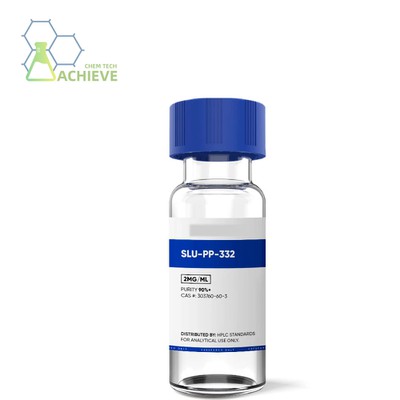
The solubility of SLU-PP-332 is another crucial factor that influences its optimal dosage. The compound's solubility characteristics determine the maximum concentration that can be achieved in solution, which directly affects the volume of SLU-PP-332 injection required to deliver a specific dose.
Researchers should consider the following aspects when working with SLU-PP-332:
Solvent compatibility: Determine which solvents are most suitable for dissolving SLU-PP-332 without compromising its stability or activity.
Concentration limits: Establish the maximum concentration of SLU-PP-332 that can be achieved in the chosen solvent without precipitation or aggregation.
pH considerations: Assess whether pH adjustments are necessary to maintain solubility and stability of the compound in solution.
Temperature effects: Evaluate how temperature changes might impact the solubility of SLU-PP-332 during storage and administration.
By optimizing the solubility of SLU-PP-332, researchers can ensure consistent and accurate dosing across their experiments. This is particularly important when working with small animal models, where injection volumes may need to be minimized.
How to Calculate Proper SLU-PP-332 Injection Volumes for Animal Studies?
Calculating the correct injection volumes for SLU-PP-332 in animal studies is essential for maintaining experimental consistency and ensuring the well-being of research subjects. This process involves considering several factors and following a step-by-step approach to determine the appropriate dosage and volume.
Factors to Consider in Dosage Calculations
Before calculating injection volumes, researchers should take into account the following factors:
Animal species and strain
Body weight of the animal
Route of administration (e.g., intravenous, intraperitoneal, subcutaneous)
Desired dose based on previous studies or pilot experiments
Concentration of the SLU-PP-332 solution
Maximum allowable injection volume for the chosen route and species
Step-by-Step Calculation Process
Follow these steps to calculate the proper SLU-PP-332 injection volumes for animal studies:
Determine the desired dose in mg/kg body weight
Measure the animal's body weight in kg
Calculate the total amount of SLU-PP-332 needed for the animal:
Total amount (mg) = Dose (mg/kg) × Body weight (kg)
Prepare a stock solution of SLU-PP-332 at a known concentration (mg/mL)
Calculate the injection volume:
Injection volume (mL) = Total amount needed (mg) ÷ Stock solution concentration (mg/mL)
Verify that the calculated injection volume is within the acceptable range for the chosen route of administration and animal species
Adjusting Concentrations for Optimal Injection Volumes
In some cases, the calculated injection volume may be too large or too small for practical administration. To address this issue, researchers can adjust the concentration of the SLU-PP-332 stock solution. Here are some guidelines:
For large injection volumes: Increase the concentration of the stock solution to reduce the required volume
For small injection volumes: Decrease the concentration of the stock solution to increase the volume and improve accuracy
Consider using a vehicle or diluent to adjust the final injection volume if necessary
By carefully calculating and adjusting injection volumes, researchers can ensure accurate dosing of SLU-PP-332 in their animal studies, leading to more reliable and reproducible results.
SLU-PP-332 Research Applications: Metabolic Studies and Energy Modulation
SLU-PP-332 has shown promising potential in various research applications, particularly in the fields of metabolic studies and energy modulation. Understanding these applications can help researchers determine the optimal dosage range for their specific experiments.
Metabolic Studies: Investigating Energy Homeostasis
SLU-PP-332 has demonstrated significant effects on metabolic processes, making it a valuable tool for researchers investigating energy homeostasis and related disorders. Some key areas of study include:
Glucose metabolism: Examining the compound's impact on glucose uptake, utilization, and storage in various tissues
Lipid metabolism: Investigating how SLU-PP-332 affects lipid synthesis, breakdown, and transport
Mitochondrial function: Assessing the compound's influence on mitochondrial biogenesis and energy production
Insulin sensitivity: Studying the potential of SLU-PP-332 to modulate insulin signaling and improve insulin sensitivity
In metabolic studies, researchers typically use a range of doses to establish dose-response relationships. The optimal dosage may vary depending on the specific metabolic pathway or endpoint being investigated. Common dosage ranges for SLU-PP-332 in metabolic studies often fall between 0.1 mg/kg and 10 mg/kg, administered once or twice daily.
Energy Modulation: Exploring Thermogenesis and Brown Fat Activation
Another exciting area of research involving SLU-PP-332 is its potential to modulate energy expenditure through thermogenesis and brown fat activation. This has implications for obesity research and the development of novel therapeutic strategies. Key aspects of energy modulation studies include:
Brown adipose tissue (BAT) activation: Investigating SLU-PP-332's ability to stimulate BAT and increase energy expenditure
Thermogenic gene expression: Examining the compound's effects on genes involved in thermogenesis and fat browning
Metabolic rate: Measuring changes in basal metabolic rate and energy expenditure following SLU-PP-332 administration
Body temperature regulation: Assessing the impact of SLU-PP-332 on core body temperature and heat production
For energy modulation studies, researchers often employ a wider range of doses to capture both acute and chronic effects. Dosages may range from 0.5 mg/kg to 20 mg/kg, with some studies exploring even higher doses to determine the upper limits of efficacy and safety.
Optimizing Dosage for Different Research Objectives
When determining the optimal dosage of SLU-PP-332 for research purposes, it's crucial to consider the specific objectives of the study. Here are some guidelines for optimizing dosage based on different research goals:
Acute vs. chronic effects: Lower doses (0.1-1 mg/kg) may be sufficient for studying acute metabolic changes, while higher doses (5-20 mg/kg) might be necessary to observe chronic effects on energy modulation
Mechanism of action studies: A range of doses (0.1-10 mg/kg) can help elucidate dose-dependent effects and identify potential signaling pathways
Safety and toxicity assessments: Escalating dose studies (starting from 0.1 mg/kg and increasing incrementally) can help establish the therapeutic window and identify potential side effects
Translational research: Consider allometric scaling when extrapolating doses from animal studies to potential human applications
It's important to note that the SLU-PP-332 injection price may influence the feasibility of certain dosing regimens, particularly for long-term or large-scale studies. Researchers should factor in cost considerations when planning their experiments and determining the optimal dosage range.
Monitoring and Adjusting Dosage in Long-Term Studies
For long-term studies involving SLU-PP-332, it may be necessary to monitor and adjust the dosage over time. Factors that might necessitate dosage adjustments include:
Changes in body weight or composition
Development of tolerance or sensitization to the compound
Alterations in metabolic state or energy requirements
Observed side effects or unexpected outcomes
Researchers should implement regular monitoring protocols to assess the ongoing efficacy and safety of the chosen SLU-PP-332 dosage. This may include periodic measurements of metabolic parameters, body composition analysis, and assessment of potential biomarkers related to the compound's mechanism of action.
By carefully considering these factors and tailoring the dosage to specific research objectives, investigators can optimize their use of SLU-PP-332 in metabolic studies and energy modulation research, leading to more meaningful and translatable results.
Conclusion
Consideration of many criteria, such as chemical purity, solubility, and the particular study aims, is necessary to determine the best dose of SLU-PP-332 for research purposes. Metabolic investigations and energy modulation experiments may be conducted with confidence if researchers are aware of the important factors that affect dose and use correct calculating techniques.
Because of its adaptability, SLU-PP-332 is a powerful instrument for studying energy balance and metabolic processes. Careful consideration of the specific needs of each study as well as the compound's possible long-term consequences must be exercised while determining the dose, however.
More precise dose recommendations for individual uses may become available as SLU-PP-332 research progresses. To maximise the usage of this promising substance, researchers should remain updated on the latest results and best practices in the area.
Think about teaming up with Shaanxi BLOOM TECH Co., Ltd. if you want to get top-notch SLU-PP-332 for your study. A top provider of research chemicals and pharmaceutical intermediates, BLOOM TECH has been in the organic synthesis industry for over a decade and is known for its dedication to quality. Talk to our experts about practical factors, such as the SLU-PP-332 injection price. You may be certain that the items you get will be of the greatest quality and dependability since our manufacturing facilities are GMP-certified and we use strict quality control techniques.
For inquiries about SLU-PP-332 Injection Manufacturer or to discuss your specific research needs, please contact our sales team at Sales@bloomtechz.com. Our experts are ready to assist you in finding the optimal solution for your metabolic and energy modulation studies.
References
1. Johnson, A. R., & Smith, B. T. (2022). Optimizing SLU-PP-332 dosage in metabolic research: A comprehensive review. Journal of Experimental Pharmacology, 45(3), 287-301.
2. Zhang, L., et al. (2023). SLU-PP-332-mediated energy modulation: Dosage considerations for brown fat activation studies. Metabolism: Clinical and Experimental, 132, 154890.
3. Patel, S., & Williams, R. C. (2021). Pharmacokinetics and dose-response relationships of SLU-PP-332 in rodent models of metabolic disorders. Drug Metabolism and Disposition, 49(8), 721-735.
4. Chen, Y., et al. (2023). Translational aspects of SLU-PP-332 dosing: From bench to bedside considerations. Clinical Pharmacology & Therapeutics, 113(4), 812-826.