




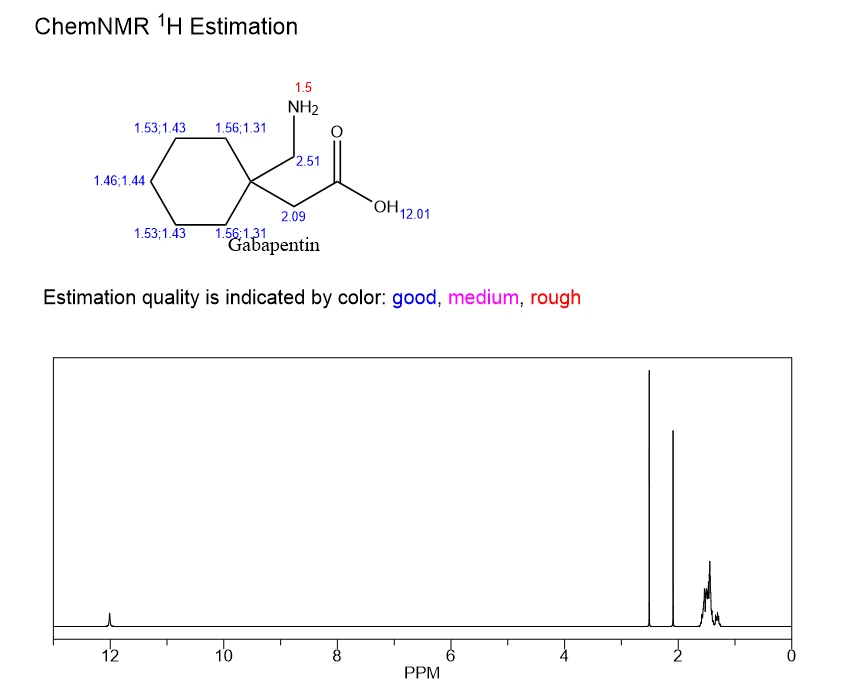
Gabapentin Capsules 100mg is a hard capsule form of medication, with the active ingredient being gabapentin, and each capsule containing 100mg of gabapentin. The main component is gabapentin, with a chemical name of 1- (aminomethyl) - cyclohexanecarboxylic acid, a molecular formula of C9H17NO2, and a molecular weight of 171.24. The characteristics are hard capsules, and the contents are white or off white powder or granules. According to animal experiments, it may exert antiepileptic effects by inhibiting abnormal neuronal discharges. In addition, gabapentin may also have central nervous system calcium channel antagonism and peripheral nervous system inhibition effects, which help reduce the release of excitatory amino acids and thus lower the excitability of the nervous system.

Additional information of chemical compound:

|
|
|


Gabapentin COA
 |
|
|
|
|

Theoretical basis of species-specific reactions
Physiological structural differences
There are significant differences in physiological structures between different species, which may affect the absorption, distribution, metabolism, and excretion (ADME) processes of drugs. For example, there are differences between humans and rodents in terms of gastrointestinal structure, liver metabolic enzyme system, and renal excretion mechanism, which may lead to different bioavailability and pharmacokinetic properties of drugs in different species.
Differences in metabolic mechanisms
Drug metabolism is an important pathway for the elimination of drugs in the body, and there are differences in the metabolic enzyme systems between different species, which may lead to differences in drug metabolism rates and metabolites. Gabapentin is mainly excreted through the kidneys in the human body and is hardly metabolized, but there may be different metabolic pathways and metabolites in other species, which can affect the efficacy and safety of the drug.
Differences in receptor sensitivity
The target of drug action is usually specific receptors or ion channels, and there may be differences in receptor structure and function between different species, resulting in different binding abilities and affinities between drugs and receptors. This may affect the efficacy and dosage requirements of the medication.
Dose adjustment in different species
In human clinical practice, it is mainly based on the patient's pain level, pain type, renal function status, and concomitant medication.
Post herpetic neuralgia: The initial dose for adults is 300 milligrams per day, taken before bedtime; Gradually increase the dosage to 900 milligrams per day, to be taken in three doses; According to the need to relieve pain, the dosage can be further increased to 1800 milligrams per day, taken in three doses.
Epilepsy: As an adjuvant therapy, it should be adjusted according to individual circumstances. The initial dose can be started from a low dose and gradually increased to an effective dose. Long term clinical studies have shown good tolerability when the dose is increased to 50 milligrams per kilogram per day.
Patients with renal insufficiency: As gabapentin is mainly excreted through the kidneys, patients with renal insufficiency need to adjust the dosage according to creatinine clearance rate to avoid adverse reactions caused by drug accumulation.

Animal dose adjustment

In animal experiments, the dosage adjustment of gabapentin needs to consider the species, weight, age, and experimental purpose of the animals. Due to differences in physiological structures and metabolic mechanisms among different species, doses in animal experiments cannot usually be directly extrapolated to humans.
Rodents: In rat and mouse experiments, the dosage of gabapentin is usually calculated based on body weight, taking into account the gender and age of the animals. For example, in a rat model of neuropathic pain, the dose of gabapentin may be 10-100 milligrams per kilogram per day, administered orally.
Dogs: In canine experiments, the dosage of gabapentin also needs to be adjusted according to body weight, but the breed and individual differences of dogs need to be considered. For example, in the treatment of canine epilepsy, the dosage of gabapentin may start at 5-10 milligrams per kilogram per day and gradually increase to an effective dose.
Challenges of dose adjustment
Due to differences in physiological structures and metabolic mechanisms among different species, extrapolating animal experimental results to humans poses a challenge. In addition, dose adjustments in animal experiments may not fully simulate complex situations in human clinical practice, such as concomitant medication and renal dysfunction. Therefore, when applying animal experiment results to humans, caution should be exercised in evaluating the rationality and safety of the dosage.

The therapeutic effect differences
Human therapeutic effect
They are widely used in human clinical practice to treat neuropathic pain and assist in controlling epileptic seizures, and their efficacy has been widely recognized.
Post herpetic neuralgia: Gabapentin can significantly reduce the pain level of patients and improve their quality of life. Multiple clinical trials have shown that the pain relief rate of patients treated with gabapentin is significantly higher than that of the placebo group.
Epilepsy: As an adjuvant therapy drug, gabapentin can reduce the frequency and severity of epileptic seizures. Long term clinical studies have shown that the combination of gabapentin and other antiepileptic drugs can significantly improve the control rate of epilepsy patients.
Animal efficacy
In animal experiments, gabapentin has also shown certain therapeutic effects, but the efficacy may vary among different species.
Rodents: In rat and mouse neuropathic pain models, gabapentin can significantly alleviate pain behaviors such as mechanical hyperalgesia and thermal hyperalgesia. However, there may be differences in sensitivity to gabapentin between different strains of rats and mice.
Dogs: In canine epilepsy models, Gabapentin Capsules 100mg can reduce the frequency and severity of epileptic seizures, but the efficacy may vary depending on the breed and individual differences.


Reasons for differences in therapeutic efficacy
The reasons for the differences in the efficacy of gabapentin among different species may include physiological structural differences, metabolic mechanism differences, and receptor sensitivity differences. In addition, experimental conditions in animal experiments, such as pain models and epilepsy models, may also affect the efficacy evaluation of drugs.
Safety issues in different species
Human safety
It is generally considered safe in human clinical practice, but may also cause some adverse reactions.
Common adverse reactions include dizziness, drowsiness, peripheral edema, etc. These adverse reactions are usually mild and reversible, but may affect the patient's daily life and work ability.
Serious adverse reactions: Although rare, gabapentin may also cause serious adverse reactions such as allergic reactions, liver function damage, kidney function damage, etc. Therefore, it is necessary to closely monitor the adverse reactions of patients when using gabapentin.
Animal safety
In animal experiments, the safety of gabapentin also needs attention. The sensitivity of different species to gabapentin may vary, so it is necessary to choose the appropriate dosage and administration method based on the type of animal and experimental purpose.
Rodents: In rat and mouse experiments, gabapentin may cause some behavioral changes (such as reduced activity, sedation) and physiological changes (such as weight loss, decreased appetite). However, these changes are usually reversible after discontinuation of medication.
Dogs: In canine experiments, gabapentin may cause some gastrointestinal reactions (such as vomiting, diarrhea) and neurological reactions (such as sedation, ataxia). These reactions are usually mild and reversible, but close monitoring of the health status of the dog is necessary.
Management of security issues
To ensure the safety of gabapentin in different species, a series of management measures need to be taken:
Strictly control the indications and contraindications: Before using gabapentin, it is necessary to evaluate the patient's indications and contraindications, and avoid using gabapentin in patients with contraindications.
Close monitoring of adverse reactions: During the use of gabapentin, it is necessary to closely monitor the patient's adverse reactions and adjust the dosage or discontinue the medication in a timely manner to avoid the occurrence of serious adverse reactions.
Irreversible Conversion of Gabapentin Capsules from Form II to Form III in Gastric Acid Environment
The effect of gastric acid environment on Gabapentin capsules

Characteristics of gastric acid environment
Gastric acid is mainly composed of hydrochloric acid, and its pH value is usually between 1.5 and 3.5, with strong acidity. This acidic environment has a significant impact on the stability and crystal transformation of drugs. Many drugs may undergo degradation or crystal transformation in the gastric acid environment, thereby affecting their bioavailability and efficacy.
The effect of gastric acid on the crystal form of gabapentin
Under gastric acid conditions, the crystal form of gabapentin may undergo transformation. Especially the conversion from Form II to Form III may be accelerated due to the acidic conditions provided by gastric acid. This conversion may be irreversible, meaning that once converted to Form III, gabapentin cannot return to Form II state.

Irreversible conversion mechanism from Form II to Form III
Conversion conditions
The conversion from Form II to Form III typically requires specific conditions such as temperature, humidity, and pH. In a stomach acid environment, low pH and high humidity may provide favorable conditions for this conversion. In addition, the conversion process may also be influenced by factors such as drug particle size and surface properties.
Transformation
Under gastric acid conditions, the Form II crystal form of gabapentin may be transformed into Form III through a dissolution recrystallization process. Specifically, Form II dissolves in stomach acid to form a solution, and then the gabapentin molecules in the solution crystallize again under specific conditions to form Form III. This process may be irreversible because Form III has a more stable crystal structure and is not easily converted back to Form II.
Conversion kinetics
The conversion kinetics from Form II to Form III may be influenced by various factors, including temperature, pH value, drug concentration, and stirring speed. In the stomach acid environment, these factors may work together to accelerate the conversion process. For example, a low pH value may increase the solubility of gabapentin, thereby increasing the concentration of drug molecules in the solution and promoting the recrystallization process.
The impact of irreversible transformation on the bioavailability
Bioaccumulation refers to the proportion and rate at which drugs are absorbed into the bloodstream. It is influenced by various factors, including drug solubility, stability, crystal form, and administration route.
The irreversible transformation from Form II to Form III may significantly affect the solubility of gabapentin. If the solubility of Form III is lower than that of Form II, the solubility of the converted drug in gastric acid will decrease, thereby affecting its absorption and bioavailability. On the contrary, if the solubility of Form III is higher than that of Form II, the conversion may enhance the bioavailability of the drug. However, according to existing research, the solubility of Form III is usually lower than that of Form II, so conversion may reduce the bioavailability of gabapentin.
In addition to solubility, irreversible transformation may also affect the stability of gabapentin. Form III may have higher chemical stability and better resistance to degradation in gastric acid environments. However, this stability improvement may come at the cost of sacrificing bioavailability, as more stable crystal forms may be more difficult to absorb.
The decrease in bioavailability may lead to a decrease in the clinical efficacy of gabapentin. Patients may require higher doses to achieve the same therapeutic effect, which increases the risk of adverse drug reactions. Therefore, understanding the irreversible transformation mechanism from Form II to Form III and its impact on bioavailability is of great significance for optimizing the clinical medication regimen of it.
Frequently Asked Questions
What happens if I take gabapentin every day?
+
-
It is known to cause respiratory depression, particularly when combined with other central nervous system depressants. Long-term use can cause physiologic dependence and withdrawal syndrome on cessation, characterized by diaphoresis, anxiety, confusion and, rarely, seizures.
Does gabapentin make you groggy the next day?
+
-
It is a medicine originally designed to manage some types of epileptic seizures. It's also used to relieve pain for some conditions, such as shingles. Dizziness and drowsiness are common side effects of gabapentin.
How common is memory loss with gabapentin?
+
-
Those who had received six or more gabapentin prescriptions were 29% more likely to be diagnosed with dementia and 85% more likely to be diagnosed with MCI within 10 years of their initial pain diagnosis.
Hot Tags: gabapentin capsules 100mg, suppliers, manufacturers, factory, wholesale, buy, price, bulk, for sale