



Shaanxi BLOOM Tech Co., Ltd. is one of the most experienced manufacturers and suppliers of desmopressin acetate injection in China. Welcome to wholesale bulk high quality desmopressin acetate injection for sale here from our factory. Good service and reasonable price are available.
Desmopressin acetate injection is a chemically synthesized analogue of antidiuretic hormone, belonging to vasopressin derivatives. It works by reducing urine output, increasing urine osmotic pressure, and reducing plasma osmotic pressure. It is mainly used to treat central diabetes insipidus, reducing the frequency of urination and nocturia in patients through alternative therapy, thereby improving their quality of life.
In addition, the drug can also be used to control bleeding or prevent bleeding before surgery, and is suitable for patients with congenital or drug-induced platelet dysfunction, uremia, cirrhosis, and unexplained prolonged bleeding time. In specific circumstances, it can also be used for patients with mild hemophilia A and hemophilia to control and prevent bleeding during minor surgeries.
Our Products Form


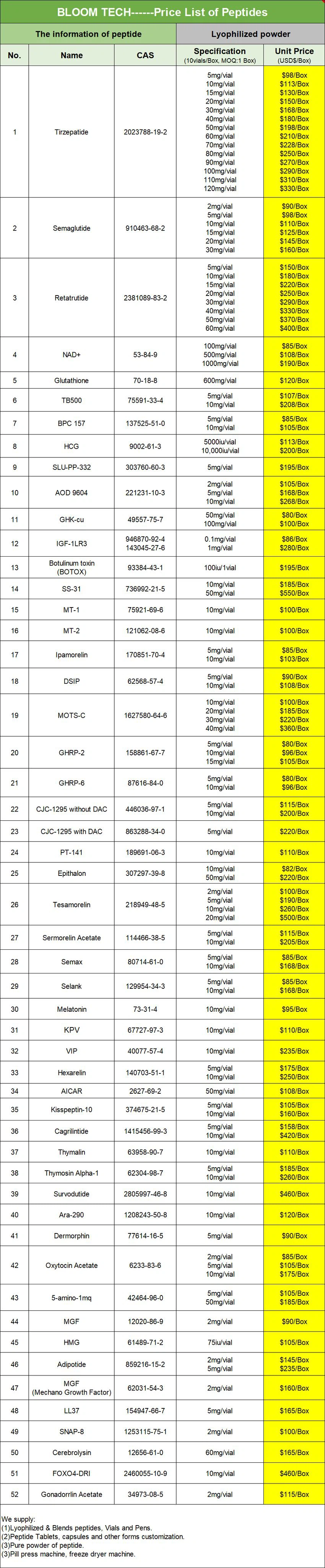
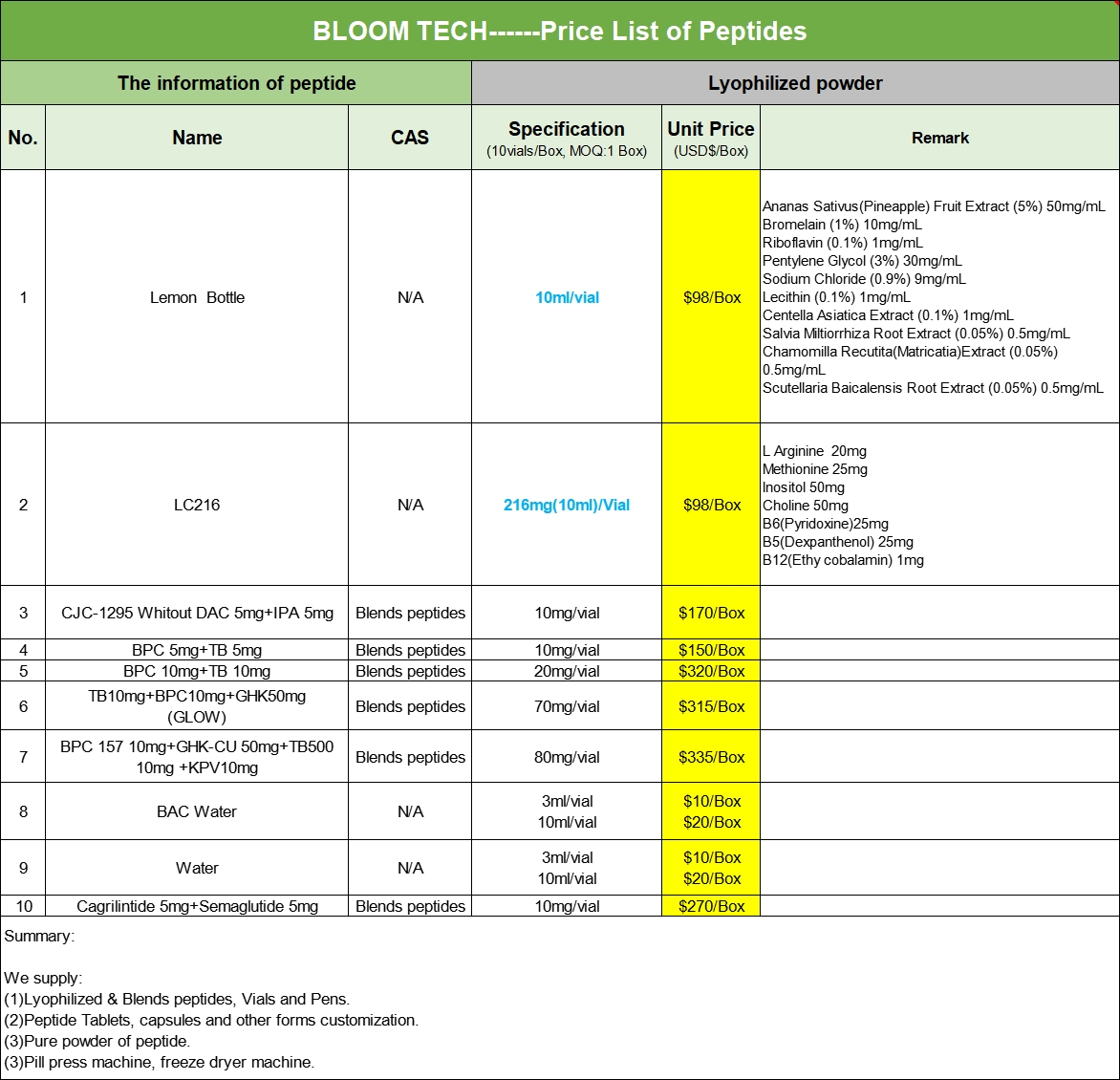

Desmopressin Acetate COA
 |
||
| Certificate of Analysis | ||
| Compound name | Desmopressin Acetate | |
| Grade | Pharmaceutical grade | |
| CAS No. | 16789-98-3 | |
| Quantity | 60g | |
| Packaging standard | PE bag+Al foil bag | |
| Manufacturer | Shaanxi BLOOM TECH Co., Ltd | |
| Lot No. | 202601090055 | |
| MFG | Jan 9th 2026 | |
| EXP | Jan 8th 2029 | |
| Structure |
|
|
| Item | Enterprise standard | Analysis result |
| Appearance | White or almost white powder | Conformed |
| Water content | ≤5.0% | 0.48% |
| Loss on drying | ≤1.0% | 0.30% |
| Heavy Metals | Pb≤0.5ppm | N.D. |
| As≤0.5ppm | N.D. | |
| Hg≤0.5ppm | N.D. | |
| Cd≤0.5ppm | N.D. | |
| Purity (HPLC) | ≥99.0% | 99.90% |
| Single impurity | <0.8% | 0.56% |
| Total microbial count | ≤750cfu/g | 170 |
| E. Coli | ≤2MPN/g | N.D. |
| Salmonella | N.D. | N.D. |
| Ethanol (by GC) | ≤5000ppm | 400ppm |
| Storage | Store in a sealed, dark, and dry place below -20°C | |
|
|
||
|
|
||


| Chemical Formula: | C50H72N14O16S2 |
| Exact Mass: | 1188 |
| Molecular Weight: | 1189 |
| m/z: | 1188 (100.0%), 1189 (49.8%), 1070 (12.1%), 1070 (9.0%), 1069 (5.2%), 1071 (4.5%), 1070 (2.6%), 1070 (2.5%), 1069 (1.6%), 1071 (1.2%), 1071 (1.1%), 1072 (1.1%) |
| Elemental Analysis: | C, 51.67; H, 6.03; N, 18.34; O, 17.96; S, 6.00 |
The administration route includes intravenous, subcutaneous, or intramuscular injection, and the dosage needs to be adjusted according to the specific situation and indications of the patient. For example, in the treatment of central diabetes insipidus, the usual dosage for intravenous injection in adults is 1-4 micrograms per session, 1-2 times a day; When used to control bleeding or prevent bleeding before surgery, the dosage is calculated based on body weight, usually 0.3 micrograms per kilogram of body weight.
Application in the treatment of central diabetes insipidus
Central diabetes insipidus is a syndrome caused by a deficiency of antidiuretic hormone (ADH) in the pituitary gland, characterized by thirst and frequent urination. Insufficient secretion of antidiuretic hormone in the patient's body or insensitivity of the kidneys to it can cause dysfunction in the reabsorption of water by the renal tubules, leading to clinical symptoms such as polyuria, thirst, and excessive drinking. This disease seriously affects the quality of life of patients, therefore effective treatment methods are needed to reduce urine excretion, increase urine osmotic pressure, reduce plasma osmotic pressure, and alleviate related symptoms.

(2) Specific application methods

Dosage form selection: There are many dosage forms of desmopressin acetate injection available, including oral tablets, nasal spray, subcutaneous or intravenous injection, etc. Among them, oral tablets are convenient to use and are one of the commonly used dosage forms; Nasal spray inhalation can take effect quickly; Intramuscular and intravenous injections are suitable for patients who require rapid symptom control or are unable to take orally.
Medication precautions: Due to its restriction on urine excretion, fluid intake must be strictly restricted during treatment, especially for children and elderly patients, to avoid excessive water intake leading to water poisoning and hyponatremia.
Water poisoning and hyponatremia are the most serious adverse reactions in the treatment of this drug, and in severe cases, they can cause epilepsy, coma, and even death. At the same time, it is strictly prohibited to use this drug for patients with moderate to severe renal dysfunction (creatinine clearance rate<50 mL/min) and a history of hyponatremia, and it is also not suitable for patients with renal diabetes insipidus. In addition, newborns should be alert to the toxicity risk of benzyl alcohol, as some preparations contain benzoic acid (a metabolite of benzyl alcohol), and should be highly vigilant when used in low birth weight infants or premature infants.

(3) Therapeutic effect and case studies

Related medical research and clinical practice data show that after standardized use, about 83% of patients with central diabetes insipidus can significantly improve their symptoms, significantly reduce urine output, and improve their quality of life. For example, in practical clinical practice, many patients experience a significant reduction in frequent urination frequency and a relief of thirst after treatment, and are able to restore their normal pace of life and work.
Oral tablets: As the world's first oral product, they are the standard treatment for central diabetes insipidus and have over 40 years of clinical experience. Its advantages lie in convenient administration, high patient compliance, and suitability for long-term treatment. For patients with relatively stable conditions who can take medication on time, oral tablets are an ideal choice.


Nasal spray: it can take effect quickly and is suitable for patients who need to relieve symptoms quickly. For example, when patients suddenly have severe thirst and polyuria, the use of nasal spray can quickly increase the reabsorption of water by the kidneys and reduce the excretion of urine.
Injection type: Subcutaneous or intravenous injection is suitable for patients who cannot take oral medication, such as those in a coma or with gastrointestinal dysfunction. In some emergency situations, such as severe dehydration and electrolyte imbalance caused by central diabetes insipidus, intravenous injection can quickly stabilize the condition.
Recently, Eton Pharmaceuticals announced that the US Food and Drug Administration (FDA) has approved its developed Desmoda acetate vasopressin oral solution for the treatment of central diabetes insipidus in adults and children. The Desmoda approved this time is the first oral liquid formulation of the standard therapeutic drug. Compared to traditional tablets, liquid formulations can achieve more flexible dosage adjustments, especially suitable for the treatment of diabetes insipidus that requires precise titration to maintain water salt balance.


The drug is a 0.05mg/mL ready to use oral solution, and is recommended to be taken on an empty stomach (at least 1 hour before or 2 hours after meals). During the treatment period, urine volume and urine osmotic pressure should be monitored to evaluate the efficacy. The emergence of this new dosage form provides a more precise choice for the treatment of central diabetes insipidus, which helps to improve treatment effectiveness and reduce the occurrence of adverse reactions.
Application in the treatment of nocturnal enuresis
Nocturnal enuresis is common in children, with a incidence rate of about 2% -15%, and an annual self remission rate of 15%. The main manifestation of this disease is bedwetting at night and normal urination during the day, without any anatomical or functional abnormalities in the urinary and nervous systems. However, if left untreated, the severity of enuresis worsens with age, seriously affecting the physical and mental health of the affected child. Children with autism often exhibit fear, impatience, inferiority complex, anxiety, lack of courage, poor social adaptability, and even serious mental and psychological problems (such as depression, autism, ADHD, etc.), which can persist into adulthood. Therefore, seeking effective treatment methods is crucial for improving the quality of life and mental health of pediatric patients.

(2) Specific application methods

Dose adjustment: When treating nocturnal enuresis, the initial dose of desmopressin acetate injection is 0.2 milligrams taken before bedtime; If the therapeutic effect is not significant, it can be increased to 0.4 milligrams. After continuous use for 3 months, medication should be stopped for at least one week to assess whether further treatment is necessary. During the treatment process, it is necessary to adjust the dosage according to the specific situation of the child to achieve the best treatment effect.
Combination therapy: The 4th International Urinary Incontinence Advisory Committee (ICI) Level A recommends its use as a night enuresis treatment drug. When awakening is ineffective or cannot be treated with awakening therapy, it is a safe and effective alternative treatment for enuresis in children. It is a first-line drug for treating primary enuresis, especially suitable for children with nocturia and high bladder capacity. Meanwhile, the diagnosis and treatment guidelines released by ICCS in 2010 recommended that behavioral therapy should be used as the basis for all treatments for children with enuresis.


Therefore, when treating nocturnal enuresis, it is often combined with behavioral therapy, such as dietary guidance, psychological counseling, bladder urination training, and recording of urination frequency. For example, parents need to help their children establish regular urination habits and avoid excessive pressure that can cause psychological stress; Adjust your sleep schedule to avoid excessive excitement before bedtime; Perform bladder function training such as timed urination and pelvic floor muscle exercises.

Refence
The description of disease characteristics (symptoms such as thirst and frequent urination, polyuria, irritability, and excessive drinking) comes from medical textbooks, such as the clinical manifestations of central diabetes insipidus described in "Internal Medicine".
Based on the investigation and analysis of patients' living conditions in numerous clinical studies, including the impact on quality of life and treatment needs, relevant research is commonly found in medical journals such as the Chinese Journal of Endocrinology and Metabolism.
Dose adjustment: Data on initial dose and dose adjustment range for adults and children are sourced from clinical research literature. These studies have determined a reasonable dose range through extensive case observation and analysis, commonly found in journals such as Clinical Pediatrics.
Medication precautions: Limit liquid intake, contraindications, etc. According to the drug instructions and relevant medical guidelines, such as the drug use warning information issued by the US Food and Drug Administration (FDA).
The approval information for Eton Pharmaceuticals' acetate desmopressin oral solution comes from the drug approval announcement published on the FDA official website and the company's official news release.
The incidence rate, self remission rate and other data of nocturnal enuresis in children are derived from large-scale epidemiological research, and relevant research results are published in pediatric professional journals such as the Chinese Journal of Pediatrics.
The impact of diseases on the physical and mental health of children is comprehensively studied through psychological research and clinical observation, and the relevant content is elaborated in medical psychology literature.
RFQ
What does desmopressin acetate do?
It is used to treat central cranial diabetes insipidus. This is a condition that causes the body to lose too much fluid and become dehydrated. It is also used to control bedwetting (nocturnal enuresis), and the frequent urination and increased thirst caused by certain types of brain injury or brain surgery.
Why is desmopressin banned?
DDAVP isn't universally banned but is prohibited in sports by the World Anti-Doping Agency (WADA) because it's a diuretic and masking agent, helping athletes temporarily alter blood concentration (hemodilution) to hide performance-enhancing drugs or lose weight for speed sports. Its use in certain nasal forms for bedwetting (enuresis) was restricted in some countries due to serious risks like severe hyponatremia (low blood sodium) and seizures, leading to recalls and shifts to oral forms.
What to avoid when taking desmopressin?
If you are taking desmopressin to treat bed-wetting, your doctor will probably tell you to avoid drinking for at least one hour before you take desmopressin and at least 8 hours after you take desmopressin. Follow your doctor's directions carefully to prevent serious side effects.
What happens if you drink after taking desmopressin?
If your child has a lot to drink in the hour before going to bed and then takes desmopressin, the extra fluid will not be able to be passed out of the body. It will collect in the body causing fluid retention. This is sometimes called hyponatremia. Symptoms of hyponatremia include headache, feeling sick and vomiting.
Hot Tags: desmopressin acetate injection, suppliers, manufacturers, factory, wholesale, buy, price, bulk, for sale