




Shaanxi BLOOM Tech Co., Ltd. is one of the most experienced manufacturers and suppliers of gonadorelin acetate injection in China. Welcome to wholesale bulk high quality gonadorelin acetate injection for sale here from our factory. Good service and reasonable price are available.
Gonadorelin acetate injection (trade name Norad) ®, Zoladex ®) It is a core drug in the field of gonadotropin-releasing hormone (GnRH) analogs, which achieves therapeutic goals by regulating the hypothalamic pituitary gonadal axis. As an artificially synthesized decapeptide hormone, its chemical structure is 5-oxoprolyl-L-histinyl-L-transerinyl-L-tryptophanyl-L-styrosyl-glycinyl-L-leucyl-L-arginil-L-prolyl-glycinamide, with a molecular weight of 1182.29 Da. This drug was first approved for the cure of prostat cancer in 1986 and has now become the standard cure for various hormone dependent diseases.


Additional information of chemical compound:
| Product Name | Gonadorelin Acetate Injection | Gonadorelin Acetate Peptide |
| Product Type | Injection | Powder |
| Product Purity | ≥99% | ≥99% |
| Product Specifications | Customizable | Customizable |
| Product Package | Customizable | Customizable |
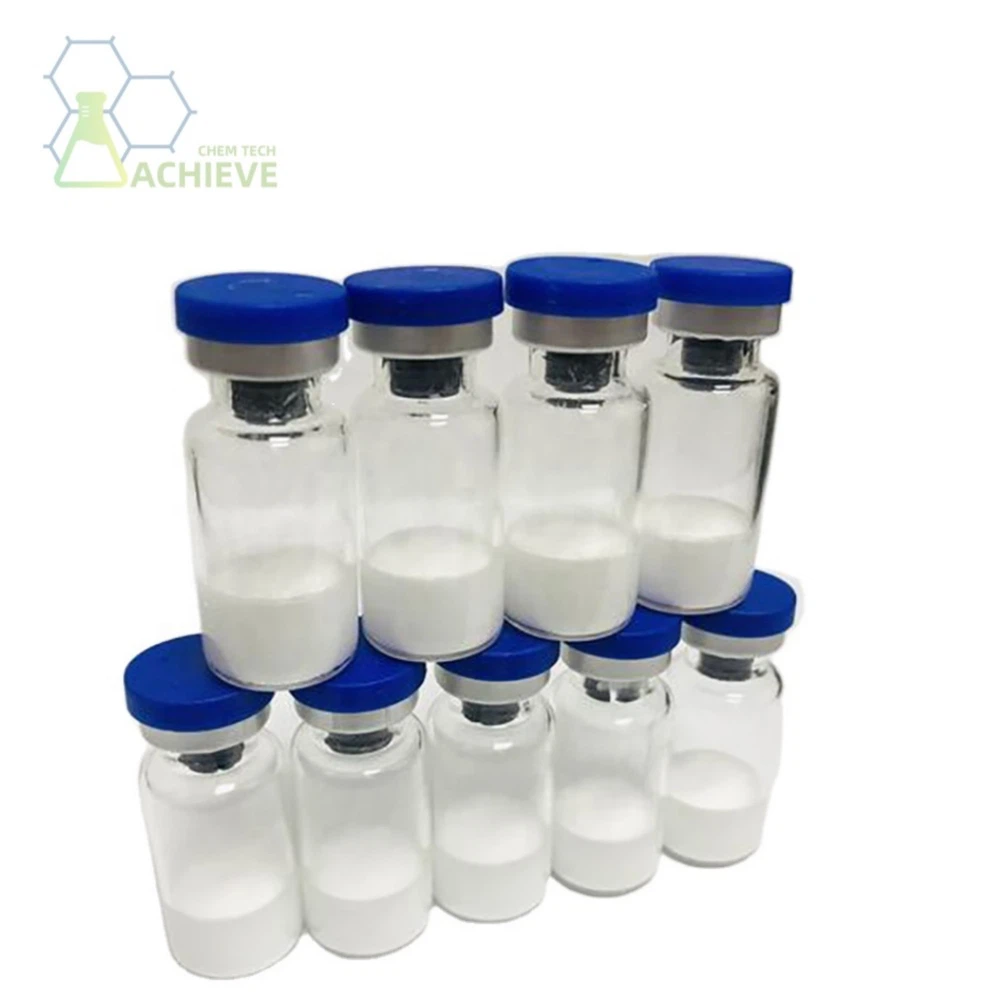
Our product form


Gonadorelin Acetate COA
 |
||
Certificate of Analysis |
||
|
Compound name |
Gonadorelin Acetate | |
|
CAS No. |
34973-08-5 | |
|
Grade |
Pharmaceutical grade | |
|
Quantity |
Customized | |
|
Packaging standard |
Customized | |
| Manufacturer | Shaanxi BLOOM TECH Co., Ltd | |
|
Lot No. |
20250109001 |
|
|
MFG |
Jan 12th 2025 |
|
|
EXP |
Jan 8th 2029 |
|
| TEST STANDARD | GB/T24768-2009 Industry. Stnndard | |
| Sturcture |
|
|
|
Item |
Enterprise standard |
Analysis result |
|
Appearance |
White or almost white powder |
Conformed |
|
Water content |
≤4.5% |
0.30% |
| Loss on drying |
≤1.0% |
0.15% |
|
Heavy Metals |
Pb≤0.5ppm |
N.D. |
|
As≤0.5ppm |
N.D. | |
|
Hg≤0.5ppm |
N.D. | |
|
Cd≤0.5ppm |
N.D. | |
|
Purity (HPLC) |
≥99.0% |
99.5% |
|
Single impurity |
<0.8% |
0.48% |
|
Residue on ignition |
<0.20% |
0.064% |
|
Total microbial count |
≤750cfu/g |
80 |
|
E. Coli |
≤2MPN/g |
N.D. |
|
Salmonella |
N.D. | N.D. |
|
Ethanol (by GC) |
≤5000ppm |
400ppm |
|
Storage |
Store in a sealed, dark and dry place at-20 degrees |
|
|
|
||


Gonadorelin acetate injection (chemical name: 5-Oxopropyl-L-Histoyl-L-tryptophan-L-Serinyl-L-Tyrosyl-Glycyryl-L-Leucyl-L-Arginyl-L-Prolinyl-Glutamide) is an artificially synthesized gonadotropin-releasing hormone (GnRH) analog that is widely used in the remedy of reproductive endocrine diseases and malignant tumors by regulating the hypothalamic pituitary gonadal axis function.
As a cornerstone drug for the remedy of prostat cancer, Gonarelin acetas inhibits the secretion of luteinizing hormone (LH) and follicle stimulating hormone (FSH) by the pituitary gland, reducing serum testosterone levels to castration levels (<50 ng/dL), thereby blocking the stimulation of cancer cells by androgens. Clinical data shows that:
Monotherapy: 95% of patients achieve testosterone levels 2-4 weeks after medication, with a median progression free survival (PFS) of 18.2 months.
Combination therapy: When used in combination with anti androgen drugs such as bicalutamide and flutamide, it can delay the progression of the disease to the castration resistance stage and increase the 5-year overall survival rate (OS) by 20%.
Medication cycle: Subcutaneous injection once every 28 days, long-term maintenance remedy is required until disease progression or intolerable adverse reactions occur.

2. breast cancer (premenopausal hormone receptor positive)

By inhibiting ovarian function, reducing serum estradiol levels (<20 pg/mL), and blocking the proliferative effect of estrogen on cancer cells. Indications include:
Rescue remedy after failed adjuvant therapy: Combined with aromatase inhibitors (such as exemestane), the 5-year disease-free survival rate (DFS) reached 91.1%, which is 3.8% higher than monotherapy with tamoxifen.
Alternative to ovarian function suppression (OFS): Suitable for patients who do not wish to undergo oophorectomy or chemotherapy leading to ovarian failure, requiring continuous remedy for 2-5 years.
Combined chemotherapy: in the neoadjuvant remedy of early breast cancer, it can reduce the tumor size and improve the breast conserving surgery rate.
Endometriosis: By reducing estrogen levels to the postmenopausal range (<30 pg/mL), inhibiting the growth of ectopic endometrial tissue, and relieving symptoms such as dysmenorrhea and sexual pain. The European Society for Human Reproduction and Embryology (ESHRE) guidelines recommend first-line remedy for severe endometriosis, typically lasting for 6 months.
Uterine fibroids: can reduce the volume of fibroids by 35% -50%, improve menstrual flow and anemia symptoms. Attention should be paid to possible low estrogen symptoms (such as hot flashes and vaginal dryness) during medication. It is recommended to combine calcium supplements and vitamin D supplementation to prevent osteoporosis.


Gonadorelin acetate injection, as a synthetic analog of gonadotropin-releasing hormone (GnRH), occupies a core position in the field of reproductive medicine by precisely regulating the hypothalamic pituitary gonadal axis. The scientific nature of its administration method, sequence, and route of action directly affects the efficacy and safety.
Classification of administration methods: Multi pathway adaptation to clinical needs
The administration methods include subcutaneous injection, intravenous injection, intramuscular injection, and pulse pump infusion, each of which has significant differences in drug absorption, onset time, and applicable scenarios.
Operation standard: Select the fat layer on the outer side of the abdomen or thigh, pinch the skin to form wrinkles, and insert the needle vertically. After injection, press for 3-5 minutes to reduce the risk of bleeding. For example, in assisted reproductive technology, patients need to receive subcutaneous injections of 0.1mg per day for 10-14 days to achieve pituitary down-regulation.
Advantages: With a bioavailability of over 90% and minimal fluctuations in blood drug concentration, it is suitable for long-term maintenance cure. Injecting 3.75mg every 4 weeks in patients with endometriosis can effectively inhibit the growth of ectopic endometrium.
Clinical case: Data from a reproductive center in a tertiary hospital showed that IVF patients who received subcutaneous injection had an increase of 1.2 eggs obtained compared to the intramuscular injection group (P<0.05), and the incidence of redness and swelling at the injection site was reduced to 8%.
Operating procedures: Dilute the drug to 100ml of physiological saline and slowly drip it over 20-30 minutes to avoid adverse reactions caused by a sudden increase in blood drug concentration. For example, when diagnosing pituitary dysfunction, if the blood drug concentration reaches its peak within 3 minutes after intravenous injection of 0.1mg, LH/FSH levels can be immediately detected.
Advantages: Rapid onset of action (initial half-life of 2-10 minutes), suitable for acute disease assessment. Research has shown that serum LH levels can increase 3-5 times 15 minutes after intravenous injection, accurately reflecting pituitary reserve function.
Taboo: Prohibited for patients with severe cardiovascular disease, as rapid hormonal fluctuations may induce arrhythmia.
Operation standard: Select the gluteus maximus or deltoid muscle of the upper arm, and inject deeply to reduce local stimulation. Long acting sustained-release formulations (such as 3.6mg/vial) are injected every 28 days and drug release is controlled through PLGA microspheres.
Advantages: High patient compliance, suitable for chronic disease management. After intramuscular injection, serum testosterone levels in prostat cancer patients can decrease to the castration range (<50 ng/dL) within 21 days and remain stable for 28 days.
Risk: The incidence of injection site hardening is relatively high (about 15%), and it is necessary to rotate the injection site and apply hot compress to relieve it.
Operation specification: Use a microinjection pump to release 0.5-1 μ g of drug in a pulsed manner every 90 minutes, simulating the natural secretion rhythm of GnRH in the hypothalamus. For example, when treating hypothalamic amenorrhea, pulse pump infusion can stabilize FSH levels at 10-15 IU/L, avoiding ovarian hyperstimulation.
Advantages: The therapeutic effect is superior to continuous infusion, with an ovulation rate increased to 82% and a pregnancy rate of 35%. Research has shown that pulsed administration can increase the expression of endometrial receptivity markers (such as integrin β 3) by 2.3 times.
Equipment requirements: A dedicated intelligent pump is required, which is costly and currently only widely used in large reproductive centers.
Optimization of administration sequence: stepwise cure strategy
The administration sequence of acetic acid metarelin needs to be dynamically adjusted according to the disease type, cure stage, and patient response, forming a step-by-step scheme of "initial stimulation sustained inhibition reverse addition".
Applicable scenarios: Early cure of hypothalamic amenorrhea and hypogonadism.
Protocol: Subcutaneous gonadorelin acetate injection of 0.5mg daily for 7 days to induce LH/FSH pulsatile secretion. For example, in patients with idiopathic hypogonadotropic hypogonadism (IHH), serum testosterone levels can increase from<100 ng/dL to 300-500 ng/dL after initial stimulation.
Monitoring indicators: Hormone levels are measured every 3 days. If FSH>10 IU/L indicates effective cure, the dose can be adjusted to 0.1mg/day for maintenance.
Applicable scenarios: Long term healing of endometriosis and prostat cancer.
Plan: Inject 3.75mg intramuscularly every 4 weeks to achieve pituitary suppression through receptor desensitization. For example, after 6 months of healing for endometriosis, the volume of the pelvic mass decreased by 55%, and the VAS score for dysmenorrhea decreased from 8.2 points to 2.1 points.
Dose adjustment: If the serum estradiol (E2) is still>30 pg/mL after 3 months of healing, the injection interval should be shortened to 3 weeks or combined with aromatase inhibitors.
Applicable scenario: Management of low estrogen side effects caused by long-term inhibitory cure.
Solution: On the basis of sustained inhibition, a combination of estradiol patch (0.025 mg/day) or progesterone (10 mg/day) is used. For example, after breast cancer patients use Gonarelin+reverse addition, the rate of bone density loss decreases from 3%/year to 0.5%/year, and the incidence of hot flashes decreases from 75% to 30%.
Timing selection: Starting reverse addition after 3 months of cure and E2<20 pg/mL can significantly reduce the risk of cardiovascular events (HR=0.42, 95% CI 0.21-0.85).
Application in Special Scenarios: Breakthrough in Individualized Solutions
1. Childhood precocious puberty: precise regulation of bone age and height
Plan: Calculate the dose based on body weight (2.5-7.5 μ g/kg/day) and use a pulse pump for infusion to avoid premature pulse. After one year of cure, the advanced bone age value decreased by 1.2 years, and the predicted adult height increased by 4.2 cm.
Monitoring: Hormone levels and bone age X-rays should be tested every 3 months. If E2>10 pg/mL or breast development progresses, the dose should be increased to 10 μ g/kg/day.


2. Prevention of ovarian hyperstimulation syndrome (OHSS): GnRH agonist triggered
Solution: In the late stage of IVF ovulation induction, replacing traditional hCG triggering with a single 3.75mg intramuscular injection can reduce the incidence of OHSS from 20% to 3%. The mechanim is to rapidly induce corpus luteum dissolution and reduce the secretion of vascular endothelial growth factor (VEGF).
Support healing: After triggering, it is required to combine luteal support (such as vaginal progesterone gel 90 mg/day) to maintain endometrial receptivity.
3. Management of tumor flare phenomenon: glucocorticoid pretreatment
Scenario: Prostat cancer patients may experience worsening tumor symptoms such as bone pain and spinal cord compression 2-4 weeks after initial medication.
Solution: Taking dexamethasone 4 mg/day orally 3 days before cure can reduce the incidence of solar flares from 35% to 12%. Its mechanim is to inhibit prostaglandin synthesis and reduce the release of inflammatory mediators.

Hot Tags: gonadorelin acetate injection, suppliers, manufacturers, factory, wholesale, buy, price, bulk, for sale