


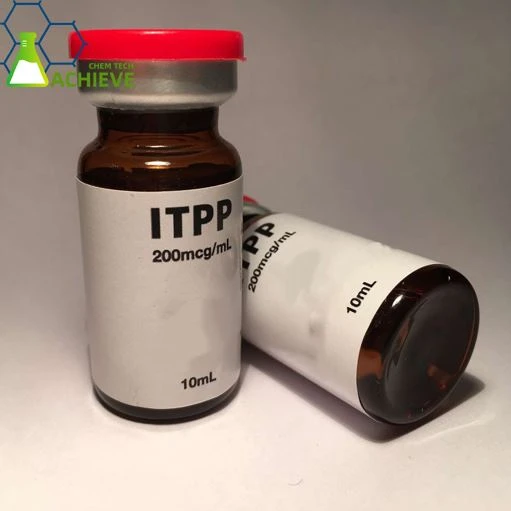





Shaanxi BLOOM Tech Co., Ltd. is one of the most experienced manufacturers and suppliers of itpp injection in China. Welcome to wholesale bulk high quality itpp injection for sale here from our factory. Good service and reasonable price are available.
The ITPP (inositol triphosphate) injection is an experimental compound still in the research stage. Its main mechanism is to enhance the affinity of hemoglobin for oxygen, thereby significantly improving the efficiency of oxygen transportation and release in the blood, with the aim of improving tissue oxygen supply. In preclinical studies, it has shown great potential in enhancing endurance, resisting fatigue, and potentially providing heart protection. Therefore, it is regarded as an "oxygen-enhancing" stimulant that has not been widely tested in the competitive sports field and is thus receiving close attention. However, it must be emphasized that ITPP is far from meeting the standards for mature clinical application. Its long-term safety, effectiveness, and side effects remain unknown in the human body, and there are significant health risks. Therefore, it is only a research tool for scientists to deeply explore the regulatory mechanism of oxygen metabolism and is not a medical or enhancement product for the public.
|
|
|




ITPP Powder COA

Basic Characteristics and Laboratory Research Foundation of ITPP
Chemical Structure and Mechanism of Action of ITPP
ITPP, the full name of which is inositol tripyrophosphate, is an artificially synthesized hemoglobin allosteric effector. Its unique chemical structure enables it to bind with hemoglobin, significantly enhancing the ability of red blood cells to release oxygen by altering the conformation of hemoglobin. This process not only enhances the oxygenation of tissues, but also down-regulates the expression of hypoxia-related genes (such as vascular endothelial growth factor VEGF) by inhibiting the activity of hypoxia-inducible factor-1 α (HIF-1α), thereby influencing the physiological and pathological processes of cells at multiple levels.
In laboratory studies, this mechanism of action of ITPP has been widely verified. For instance, in a study on a rat model of hepatocellular carcinoma, ITPP injection significantly inhibited tumor growth through weekly intravenous injection. This discovery not only reveals the potential of ITPP in the field of anti-tumor, but also provides a theoretical basis for its application in other hypoxia-related diseases.
Breakthroughs in ITPP laboratory research
The laboratory research of ITPP is not limited to its basic pharmacological effects, but also delves deeply into its therapeutic effects in different disease models. In the field of cardiovascular diseases, ITPP is expected to become a new approach for treating myocardial ischemia and heart failure by improving the oxygenation of the myocardium. In the field of neurodegenerative diseases, ITTP provides new ideas for the prevention and treatment of diseases such as Alzheimer's disease and Parkinson's disease by inhibiting hypoxia-induced neuroinflammatory responses.
It is particularly worth mentioning that ITPP has made breakthrough progress in the research of tumor treatment. Traditional tumor treatment methods such as chemotherapy and radiotherapy often have limited efficacy due to the hypoxic microenvironment of tumor tissues. ITPP not only enhances the sensitivity of chemotherapy drugs by improving the oxygenation state of tumor tissues, but also cuts off the nutrient supply to tumors by inhibiting tumor angiogenesis, thereby achieving a double blow to tumor growth. This discovery has opened up new avenues for tumor treatment and laid a solid foundation for the clinical application of ITPP.
Exploration of Clinical Application of ITPP Injection


Preparation and Challenges of Preclinical Research
Before ITPP injection is put into clinical application, a series of rigorous preclinical studies are indispensable. These studies cover multiple aspects such as pharmacokinetics, pharmacodynamics, toxicology and formulation. The pharmacokinetic study of ITPP has revealed its absorption, distribution, metabolism and excretion patterns in the body, providing a scientific basis for the formulation of clinical medication regimens. Pharmacodynamic studies further verified the therapeutic effects of ITPP in different disease models, providing strong support for the selection of its clinical indications.
However, preclinical research also faces many challenges. For instance, as a new type of compound, the long-term toxicity and potential side effects of ITPP are not yet fully understood. In addition, the formulation process of ITPP injection also needs to be continuously optimized to ensure the stability and bioavailability of the drug. These challenges require researchers to maintain a rigorous scientific attitude in preclinical studies, constantly explore and innovate, and clear obstacles for the clinical application of ITPP.
Initiation and Preliminary Results of Clinical Trials
With the continuous deepening of preclinical research, clinical trials of ITPP injection have gradually begun. Clinical trials are a crucial step in verifying the safety and efficacy of drugs, and they are also the inevitable path for drugs to move from the laboratory to clinical application. In the clinical trials of ITPP, researchers adopted a multi-center, randomized, double-blind, placebo-controlled design approach to ensure the objectivity and reliability of the trial results.
Preliminary clinical trial results show that ITPP injection has demonstrated good safety and efficacy in the treatment of hypoxia-related diseases such as hepatocellular carcinoma and myocardial ischemia. For instance, in a clinical trial involving patients with hepatocellular carcinoma, the combination of ITPP injection and chemotherapy drugs significantly improved the survival rate and quality of life of the patients. This discovery not only validates the potential of ITPP in tumor treatment, but also provides strong support for its application in other hypoxia-related diseases.
Challenges and Solutions in Clinical Applications
Although ITPP injection has achieved initial results in clinical trials, its clinical application still faces many challenges. Firstly, as a new type of drug, the selection of clinical indications for ITPP needs to be more cautious and precise. Researchers need to conduct more clinical trials to verify the therapeutic effect and safety of ITPP in different diseases in order to determine its optimal indications.
Secondly, the medication regimen for ITPP injection also needs to be further optimized. For instance, parameters such as the dosage of medication, the frequency of administration and the course of treatment need to be adjusted individually according to the specific conditions of the patient. In addition, the combined application of ITPP with other drugs is also an important direction for future research. Through combined medication, the synergistic effects of different drugs can be exerted to enhance the therapeutic outcome and reduce side effects.
In response to these challenges, researchers are actively seeking solutions. For instance, by establishing a large-scale clinical trial database, the therapeutic effect and safety of ITPP can be tracked and evaluated over the long term. At the same time, strengthen cooperation with basic medical research, deeply explore the mechanism of action and targets of ITPP, and provide more scientific basis for its clinical application.
Non-traditional Perspective Applications of ITPP Injections
Potential in the Treatment of Rare diseases
Rare diseases refer to those with extremely low incidence rates. Due to their small patient population and high research difficulty, they often lack effective treatment methods. As a new type of drug with unique pharmacological effects, ITPP injection has shown great potential in the treatment of rare diseases. For instance, in some hereditary hypoxia-related diseases, ITPP is expected to become a new approach for treating these diseases by improving the oxygenation of tissues.
In addition, ITPP can also be used to treat some rare tumors. Due to the low incidence of rare tumors, traditional treatment methods often have poor effects. ITPP provides a new approach for the treatment of rare tumors by improving the oxygenation state of tumor tissues and enhancing the sensitivity of chemotherapy drugs.
Application Prospects in Geriatrics
With the intensification of population aging, geriatrics has become an important branch of the medical field. Elderly patients, due to their declining physical functions, often suffer from multiple chronic diseases and hypoxia. ITPP injection is expected to become a new approach for treating hypoxia-related diseases in elderly patients by improving the oxygenation of tissues.
For instance, in elderly patients with heart failure, ITPP can improve the oxygenation of the myocardium, enhance cardiac function, thereby alleviating the patients' symptoms and improving their quality of life. In addition, ITPP can also be used to treat hypoxia-related diseases such as cognitive dysfunction and neurodegenerative diseases in elderly patients.
Personalized Applications in Precision Medicine
Precision medicine is an important direction for the future development of medicine. Its core lies in formulating personalized treatment plans based on the individual differences of patients. As a new type of drug with unique pharmacological effects, ITPP injection has shown great application potential in precision medicine.
Through genetic testing and other means, researchers can understand the genetic background and drug metabolism characteristics of patients, thereby formulating more precise medication plans. For instance, for certain patient groups that are sensitive to ITPP, the dosage of medication can be appropriately increased or the course of treatment can be prolonged. For some patient groups that are not sensitive to ITPP, it is necessary to adjust the medication regimen or choose other treatment methods.
Future Prospects of ITPP Injections

Conduct in-depth research on the mechanism of action and targets
Although the mechanism of action of ITPP has been initially revealed, its specific molecular mechanism and targets are still not fully understood. Future research should further explore the mechanism of action and targets of ITPP in depth to provide more scientific basis for its clinical application. For instance, through means such as gene editing technology and proteomics, the specific binding sites and modes of action of ITPP to hemoglobin are revealed; The influence of ITPP on the physiological and pathological processes of cells was explored through means such as transcriptomics and metabolomics.
Expand clinical indications and application scope
At present, the clinical indications of ITPP injection mainly focus on the field of hypoxia-related diseases. Future research should further expand its clinical indications and application scope. For instance, explore the application potential of ITPP in areas such as inflammatory diseases, autoimmune diseases, and infectious diseases; To study the combined application effect of ITPP with other drugs, in order to exert the synergistic effect of different drugs and improve the therapeutic effect.


Strengthen international cooperation and exchanges
The research on ITPP injections is a global issue that requires the joint efforts and cooperation of researchers from all countries. In the future, international cooperation and exchanges should be strengthened, research resources and achievements should be shared, and greater breakthroughs should be made in the research and application of ITPP injections. For instance, by establishing an international cooperative research network and conducting multi-center, large-scale clinical trials; Promote communication and cooperation among researchers by holding international academic conferences, symposiums and other forms.
As a new type of drug with unique pharmacological effects, the journey of ITPP injection from laboratory research to clinical application is full of challenges and opportunities. Through in-depth research on its mechanism of action and targets, expansion of clinical indications and application scope, as well as strengthening international cooperation and exchanges, ITPP injection is expected to play a more important role in the future medical field. We have every reason to believe that in the near future, ITPP injection will become one of the important means for treating hypoxia-related diseases and many other diseases, making greater contributions to the cause of human health.

Hot Tags: itpp injection, suppliers, manufacturers, factory, wholesale, buy, price, bulk, for sale