




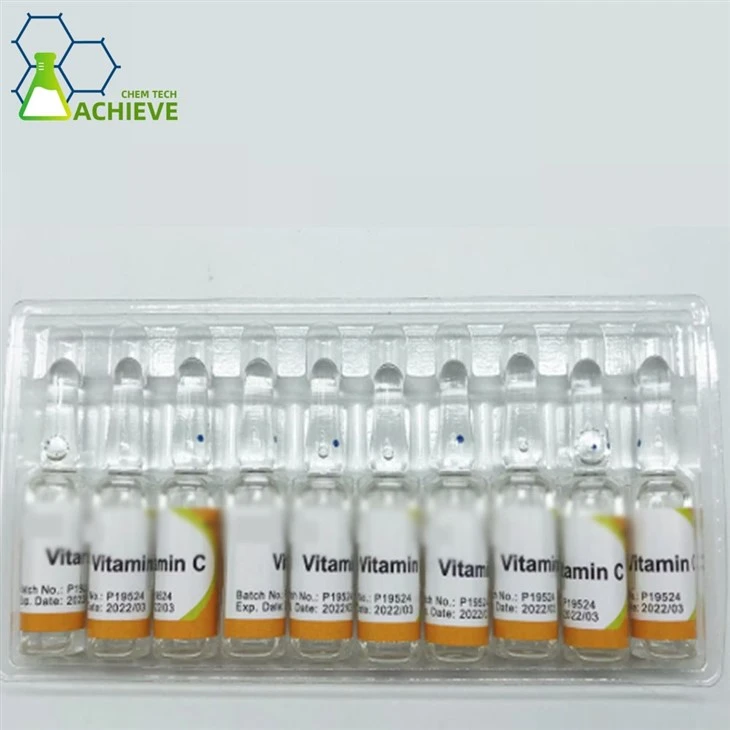


Shaanxi BLOOM Tech Co., Ltd. is one of the most experienced manufacturers and suppliers of liposomal vitamin c injection in China. Welcome to wholesale bulk high quality liposomal vitamin c injection for sale here from our factory. Good service and reasonable price are available.
Liposomal Vitamin C Injection is an injection formulation that encapsulates vitamin C in a liposome carrier, aimed at improving the bioavailability and targeted delivery efficiency of vitamin C.

The absorption rate of traditional oral vitamin C is limited, and high doses may cause gastrointestinal discomfort. Liposome technology can significantly improve the absorption efficiency of vitamin C and directly enter the bloodstream through injection, making it suitable for scenarios that require rapid increase in vitamin C levels (such as severe infections, poisoning, etc.), while reducing adverse reactions such as diarrhea and stomach pain that may be caused by high-dose vitamin C. This substance has antioxidant and immune regulatory effects, and may assist in the treatment of sepsis, viral diseases, etc. High doses of vitamin C may selectively kill cancer cells through pro oxidative effects, and liposome technology can improve its efficacy. Moreover, high-dose vitamin C may lead to risks such as kidney stones and hemolysis, and the dosage needs to be strictly monitored.
At the same time, our company not only provides pure powders, but also tablets and injections. If needed, please feel free to contact us at any time.
|
|
|


Vitamin C COA

Potential mechanisms in tumor immunotherapy
Liposomal vitamin C injection, as a new type of vitamin C preparation, may exert synergistic effects through multiple mechanisms in the field of tumor immunotherapy. Tumor immunotherapy, as an emerging cancer treatment method, attacks tumor cells by activating or enhancing the patient's own immune system, with stronger targeting and persistence. However, tumor cells often evade the surveillance of the immune system through various mechanisms, resulting in limited effectiveness of immunotherapy. Therefore, finding methods that can improve the efficacy of immunotherapy and reverse tumor immune escape has become a current research hotspot:
Enhance the activity of immune cells
The concentration of vitamin C in most immune cells is much higher than in other cells and tissues, reaching 20 millimoles per liter. This characteristic makes vitamin C play an important role in regulating T cell function. Research has shown that high concentrations of vitamin C can enhance the killing and activity of CD8 T cells. In a study on non-small cell lung cancer in the United States, researchers found that after receiving a combination chemotherapy regimen of 75 grams of vitamin C twice a week, the activity of CD8 T cells increased by 4.2 times in patients with progression free survival greater than six months. This discovery suggests that liposome vitamin C injection may enhance the killing effect of T cells on tumor cells by increasing the bioavailability of vitamin C.

The effect of vitamin C on NK cells

Natural killer (NK) cells are an important component of the immune system, capable of directly killing tumor cells and virus-infected cells. Research has found that liposome vitamin C injection may enhance NK cell activity by increasing the concentration of vitamin C in tumor tissue. In a lymphoma animal model, the use of high concentrations of vitamin C or PD-1 inhibitors alone cannot achieve the tumor suppression effect of the combination of the two. After the combined use of liposome vitamin C injection and PD-1 inhibitor, the volume and weight of the tumor significantly decreased, while the activity of NK cells and the degree of infiltration in the tumor tissue significantly increased.
Macrophages also play an important role in tumor immunotherapy. They can engulf and clear tumor cells, while secreting cytokines to regulate immune responses. Research has shown that vitamin C can promote the infiltration and activation of macrophages. A study in a mouse model of kidney cancer showed that the combination therapy of liposome vitamin C injection and programmed death ligand 1 (PD-L1) antibody significantly increased the infiltration of CD4+and CD8+T cells, as well as the CD8+/CD4+ratio, while the infiltration of macrophages was also significantly increased. This discovery suggests that liposome vitamin C injection may further promote the efficacy of tumor immunotherapy by enhancing macrophage activity.

Regulating the tumor microenvironment

Inhibiting immune escape of tumor cells
Tumor cells often evade the surveillance of the immune system through various mechanisms, including reducing immunogenicity, secreting immunosuppressive molecules, and recruiting regulatory T cells (Tregs). Vitamin C may inhibit immune escape of tumor cells through multiple pathways. On the one hand, vitamin C can enhance the activity of immune cells, improve their ability to recognize and kill tumor cells; On the other hand, vitamin C can also regulate the levels of cytokines and chemokines in the tumor microenvironment, inhibiting the production and secretion of immunosuppressive molecules.
Improving the hypoxic state of the tumor microenvironment
The tumor microenvironment is often in a state of hypoxia, which facilitates the growth and metastasis of tumor cells. Vitamin C can improve the hypoxic state of the tumor microenvironment by regulating the activity of hypoxia inducible factor (HIF). HIF is a transcription factor activated under hypoxic conditions, which can induce the expression of various genes related to tumor growth and metastasis. Research has shown that vitamin C can inhibit the activity of HIF, thereby interrupting downstream signaling pathways and causing tumor cells to lose their homeostasis under hypoxic conditions.


Regulating the acid-base balance of the tumor microenvironment
The tumor microenvironment often exhibits an acidic state, which facilitates the growth and invasion of tumor cells. Liposomal vitamin C injection can reduce the acidification of the extracellular environment by inhibiting the activity of specific enzymes. For example, vitamin C can inhibit the activity of carbonic anhydrase, thereby reducing the production and accumulation of lactate. This effect may help improve the acid-base balance of the tumor microenvironment and enhance the activity and function of immune cells.
Combined with other immunotherapy methods to enhance efficacy

Combination with immune checkpoint inhibitors
Immune checkpoint inhibitors such as PD-1/PD-L1 inhibitors and CTLA-4 inhibitors restore T cell anti-tumor activity by blocking the immune checkpoint pathway. Research has shown that the combination of liposome vitamin C injection and immune checkpoint inhibitors can produce a synergistic effect. In a lymphoma animal model, the combined use of liposome vitamin C injection and anti-PD-1 antibody significantly reduced the volume and weight of tumors, while the activity of cytotoxic T cells (CD8 T cells) and natural killer (NK) cells, as well as the degree of infiltration in tumor tissue, increased significantly. This discovery suggests that liposome vitamin C injection may enhance the activity and function of immune cells, further improving the therapeutic effect of immune checkpoint inhibitors.
Combination with adoptive cell therapy
Adoptive cell therapy, such as CAR-T cell therapy and TCR-T cell therapy, attacks tumor cells by extracting T cells from patients and genetically modifying them in vitro before reintroducing them back into the patient's body. Research has shown that the combination of liposome vitamin C injection and adoptive cell therapy can also produce synergistic effects. On the one hand, liposome vitamin C injection can increase the concentration of vitamin C in tumor tissues, enhance the activity and function of immune cells; On the other hand, it can also regulate the levels of cytokines and chemokines in the tumor microenvironment, providing a more favorable microenvironment for adoptive cell therapy.


Combination with tumor vaccines
Tumor vaccines aim to train the immune system to recognize tumor associated antigens (TAA) and induce specific immune responses. However, the efficacy of most tumor vaccines is currently limited. Research has shown that the combination of liposome vitamin C injection and tumor vaccines may improve the efficacy of tumor vaccines. On the one hand, liposome vitamin C injection can enhance the activity and function of immune cells; On the other hand, it can also regulate the immunosuppressive state in the tumor microenvironment, enabling tumor vaccines to more effectively activate the immune system to attack tumor cells.
The working principle of liposome technology
Liposome preparation method
Solvent injection method: Dissolve fat soluble raw materials in organic solvents. After the raw materials are completely dissolved, quickly inject the solution into an aqueous medium to form crude liposomes, and then remove the organic solvents contained therein.
Thin film hydration method: Phospholipids are dissolved in organic solvents, and the organic solvents are removed by vacuum evaporation to form a lipid film. Then, a suitable aqueous medium is added to hydrate and detach the lipid film at the phase transition temperature of phospholipids, and self-assembly is carried out to form liposomes.
Reverse evaporation method: Dissolve lipophilic raw materials in organic solvents, mix and emulsify them with drug containing aqueous solutions, and then remove the organic solvents through vacuum evaporation to form liposomes.
Double emulsion method: First, dissolve the fat soluble raw materials in an appropriate amount of organic solvent, add a small amount of aqueous solution in proportion, mix and emulsify the two through mechanical force to form a relatively stable W/O emulsion, then quickly add a large amount of aqueous solution, mix for secondary emulsification treatment to form W/O/W emulsion, and then remove residual organic solvent through physical means to obtain liposome suspension.
Microfluidic method: Lipids and water phases are transported to a microfluidic chip at a constant speed in a certain proportion for mixing and emulsification. Different flow channel structures in the chip enable the liquid to reach turbulent, laminar, or atomized states. Then, under the action of a high-pressure delivery pump, the liquid is reduced in particle size by impact and shear forces.
The mechanism of action of liposomes in vivo
Adsorption: Liposomes with low fluidity can stably adsorb onto the surface of cultured cells near or below the phase transition temperature of the lipid bilayer. This process is almost temperature dependent and belongs to a common physical adsorption phenomenon, which is influenced by factors such as particle size, density, and surface charge of both.
Lipid exchange: Lipids in liposomes exchange with lipids on the cell membrane. The process involves adsorption between liposomes and cells, followed by specific exchange of polar top groups or non-specific exchange of acyl chains under the mediation of cell surface proteins. Exchange only occurs between the outer monolayer of the liposome bilayer and the outer monolayer of the cell membrane, while the contents of liposomes do not enter the cultured cells.
Endocytosis: Liposomes are easily engulfed by reticuloendothelial system cells, especially monocytes, as foreign substances, entering lysosomes, fusing, and rapidly digested and lysed by lysosomes to release drugs. After drug release, it acts in lysosomes or in vitro with lysosomes. Through endocytosis, liposomes can specifically concentrate drugs in the cell chamber they want to act on, and can also allow drugs that cannot pass through the plasma membrane to reach the lysosome.
Fusion: Liposomal membranes have similar components to cell membranes, and drugs can be loaded into cells through fusion and released through lysosomal digestion. In vitro experiments have shown that liposomes can deliver bioactive macromolecules into cultured cells through cell fusion.
Leakage: Leakage is an indicator of the stability of liposomes, which may be the result of the interaction between cell surface proteins and liposomes.
Diffusion: Liposome gel preparation is used for skin, and the lipid membrane becomes a controlled release membrane. The drug contained in it is released through diffusion, and enters the body subject to the transdermal absorption mechanism. Oral liposomes are mostly digested in the gastrointestinal tract, but they also release their contents through adsorption, diffusion, or fusion with the intestinal mucosa.
Phosphatase digestion: Liposome phospholipid membrane digestion is directly proportional to the content of phosphatase in the body. The level of phosphatase in tumor tissue is significantly higher than that in normal tissue, so liposomes are more likely to release drugs in tumor tissue.
The administration route and advantages of liposomes
Administration routes: including intravenous injection, intramuscular injection, subcutaneous injection, oral administration, intraocular administration, etc. For example, after intravenous injection, liposomes are preferentially taken up by tissues rich in reticuloendothelial cells such as the liver and spleen, and rapidly engulfed and degraded by mononuclear phagocytes, with small amounts taken up by the lungs, bone marrow, and kidneys.
Wide drug loading range: Liposoluble drugs can be located between bilayer lipid membranes, amphiphilic drugs can be located on phospholipids at the interface between the aqueous phase and the membrane, and hydrophilic drugs can be located in the aqueous phase.
There are various routes of administration: in addition to the most common injection route, liposomes are also suitable for oral administration, ocular administration, pulmonary inhalation administration, and transdermal administration.
Targeted: Ordinary liposomes have liver and spleen tissue targeting properties, and liposomes modified with monoclonal antibodies and other antibodies can have specific targeting properties.
Long acting: Long circulating liposomes can prolong the retention time of drugs in the blood, which is beneficial for increasing drug efficacy.
Good tissue compatibility: With a structure similar to biological membranes, liposomes have good cell affinity and tissue compatibility, and can adsorb around target cells for a long time. They can also directly enter cells and release drugs through lysosomal digestion.
Can reduce drug toxicity: After being encapsulated in liposomes, the cumulative amount of drugs in the heart and kidneys is much lower than that of free drugs. Therefore, drugs that are toxic to the heart and kidneys can be prepared into liposomes to achieve the effect of reducing drug toxicity.
Can improve drug stability: For some drugs that are unstable in specific environments, they can be protected by liposome bilayers to enhance the stability of certain drugs.
Challenges faced by liposome technology
Low encapsulation efficiency and instability: Ordinary liposomes have problems such as low encapsulation efficiency, instability, and drug leakage during long-term storage.
The difficulty of industrial production is high: for the industrial production of liposomes, it involves many challenges such as particle size distribution, drug loading rate, encapsulation efficiency, sterility, stability, etc. Currently, there is a lack of mature experience in China and a complete technical system has not been formed. For example, the particle size and distribution of liposome formulations significantly affect their in vivo behavior, which requires the use of particle size control equipment in large-scale production and good reproducibility between batches.
High cost: The cost of excipients and equipment required for preparing liposomes is relatively high, so the cost of liposome formulations is higher than many formulations, resulting in higher prices for liposomes.
Hot Tags: liposomal vitamin c injection, suppliers, manufacturers, factory, wholesale, buy, price, bulk, for sale