


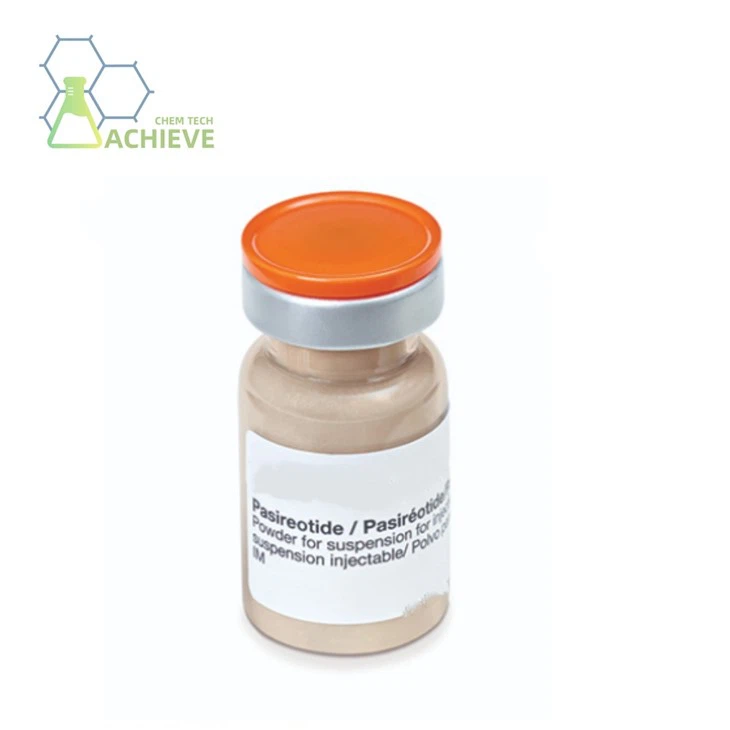

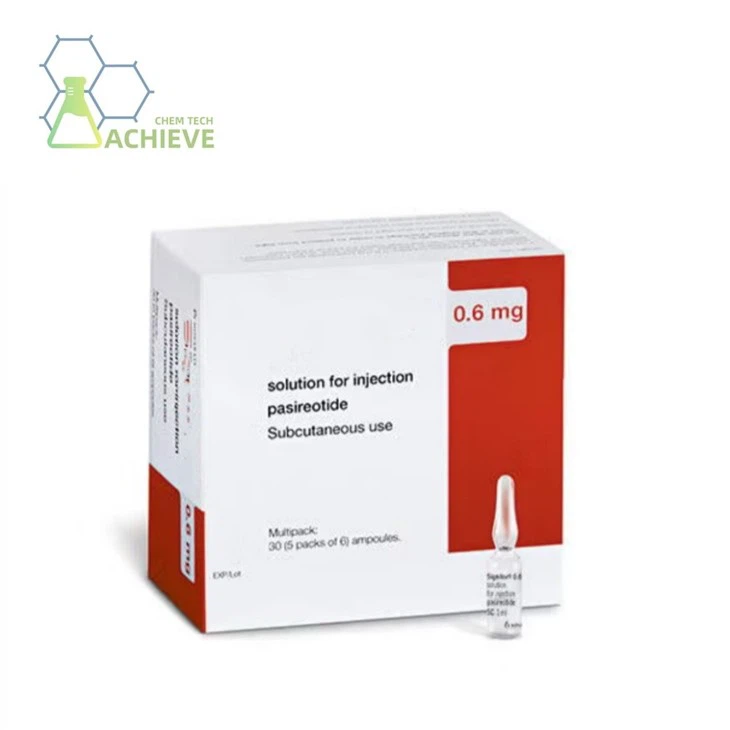


Shaanxi BLOOM Tech Co., Ltd. is one of the most experienced manufacturers and suppliers of pasireotide injection in China. Welcome to wholesale bulk high quality pasireotide injection for sale here from our factory. Good service and reasonable price are available.
As a specialized and targeted therapeutic formulation independently developed for the clinical intervention of refractory Cushing's disease, the core clinical value of pasireotide injection lies in offering a safe, controllable, stable and highly effective systematic treatment pathway for a specific subset of Cushing's disease patients. This targeted drug therapy is particularly applicable to adult patients who fail to reach ideal therapeutic goals after conventional surgical resection, suffer from postoperative disease recurrence due to residual tumor tissues.
Our Products
|
|
|


Pasireotide COA
 |
||
| Certificate of Analysis | ||
| Compound name | Pasireotide | |
| Grade | Pharmaceutical grade | |
| CAS No. | 396091-73-9 | |
| Quantity | 33g | |
| Packaging standard | PE bag+Al foil bag | |
| Manufacturer | Shaanxi BLOOM TECH Co., Ltd | |
| Lot No. | 202601090066 | |
| MFG | Jan 9th 2026 | |
| EXP | Jan 8th 2029 | |
| Structure |
|
|
| Item | Enterprise standard | Analysis result |
| Appearance | White or almost white powder | Conformed |
| Water content | ≤5.0% | 0.54% |
| Loss on drying | ≤1.0% | 0.42% |
| Heavy Metals | Pb≤0.5ppm | N.D. |
| As≤0.5ppm | N.D. | |
| Hg≤0.5ppm | N.D. | |
| Cd≤0.5ppm | N.D. | |
| Purity (HPLC) | ≥99.0% | 99.98% |
| Single impurity | <0.8% | 0.52% |
| Total microbial count | ≤750cfu/g | 95 |
| E. Coli | ≤2MPN/g | N.D. |
| Salmonella | N.D. | N.D. |
| Ethanol (by GC) | ≤5000ppm | 500ppm |
| Storage | Store in a sealed, dark, and dry place below -20°C | |
|
|
||
|
|
||
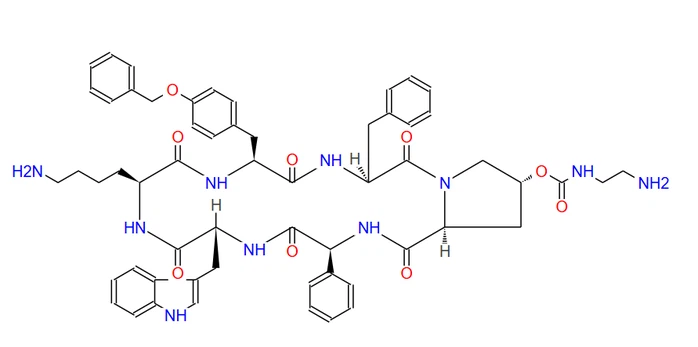


| Chemical Formula | C58H66N10O9 |
| Exact Mass | 1046.50 |
| Molecular Weight | 1047.23 |
| m/z | 1046.50 (100.0%), 1047.50 (62.7%), 1048.51 (19.3%), 1047.50 (3.7%), 1049.51 (3.1%), 1048.50 (2.3%), 1048.51 (1.8%), 1049.51 (1.2%) |
| Elemental Analysis | C, 66.52; H, 6.35; N, 13.38; O, 13.75 |

In standardized clinical diagnosis and treatment guidelines, transsphenoidal surgery is still recognized as the first-line and routine treatment for Cushing's disease. However, a considerable number of patients present with complex clinical conditions that limit surgical efficacy. For some cases, the tumor lesions are deeply hidden in the pituitary gland with ambiguous boundaries, making precise positioning and complete resection difficult. For other patients, the tumor exhibits aggressive invasive growth with a wide range of local infiltration into surrounding pituitary tissues and adjacent structures, which often leads to unavoidable residual tumor lesions even after maximal surgical resection.


In addition, elderly patients or those complicated with severe chronic underlying diseases involving the cardiovascular, pulmonary, hepatic and renal systems have poor surgical tolerance, making them unable to endure the physical trauma, stress response and potential perioperative complications brought by invasive surgical operations. Under these complicated clinical dilemmas, conventional surgical treatment fails to achieve thorough radical resection of lesions, effective long-term disease control and sustained relief of refractory clinical symptoms.
Accurate definition of suitable population
The application of Pasireotide Injection peptide has a clear target population and is only suitable for specific types of Cushing's disease patients. Its applicability can be specifically divided into the following three categories, each of which has distinct clinical characteristics and cannot achieve ideal treatment effects through conventional surgery:Patients who have not achieved clinical remission through surgical intervention. These patients are often affected by hidden lesions, wide tumor infiltration, or incomplete removal of diseased tissue during the surgical operation, resulting in ineffective control of abnormal hormone levels in the body after surgery, and persistent physical manifestations related to the disease that cannot be further improved through secondary surgery. This group of patients is one of the core adapted groups for parereotide intervention.


For those who experience a relapse of their condition after surgery. Although some patients have achieved short-term relief of their symptoms after the initial surgical treatment and their levels of related substances have returned to a reasonable range.
During the postoperative follow-up process, the condition may recur, abnormal secretion states may reappear, and the risk of reoperation is high and the benefits are limited.
This group of patients can control the progression of their condition and avoid further aggravation of the disease through the intervention of this.
A number of patients present clear contraindications to surgical treatment. Such cases usually result from advanced age, severe organic lesions involving the heart, lungs, liver and kidneys, or impaired blood coagulation function.
Their physical conditions cannot withstand the trauma brought by surgical procedures, so surgical intervention is not feasible for them. Hence, relevant medication therapy has become a vital intervention to relieve discomfort and control clinical symptoms for this group of patients.

Deep analysis of intervention mechanism
The intervention effect of Pasireotide Injection peptide on specific Cushing's disease lies in simulating the natural regulatory substances in the body to achieve precise suppression of abnormal secretion states. Its action pathway is clear and highly specific, which can be carried out from the following three aspects,targeting and binding to relevant receptors is crucial. It can accurately identify and bind to specific receptors at the site of the lesion.

This binding has a high affinity and can quickly occupy receptor binding sites, blocking the transmission of abnormal signals and laying the foundation for subsequent secretion regulation. Compared to traditional intervention methods, it has stronger targeting and less impact on normal tissues.It is necessary to curb the release of abnormal substances. By binding to receptors, this can directly inhibit the excessive release of key substances that cause Cushing's disease in diseased tissues, breaking the vicious cycle of "abnormal secretion aggravating the disease".
Gradually reducing the accumulation of this substance in the body, and alleviating the underlying causes of the disease from the root.It regulates the homeostasis of substances in the body. As the secretion of abnormal substances decreases, Pareto can further assist in regulating the metabolic balance of related substances in the body, promote the gradual recovery of the body to a normal physiological state, reduce various physical discomforts caused by abnormal substance accumulation, and help patients gradually return to a normal state of life.

The core manifestation of intervention benefits

For patients who have been formally diagnosed with Cushing's disease, this targeted therapeutic intervention can bring comprehensive and tangible clinical benefits, which are mainly reflected in three major aspects. It can effectively relieve a variety of typical symptoms caused by the disease, greatly improve patients' physical functions and mental wellbeing, and ultimately elevate their overall quality of life. This treatment produces long-lasting, stable and dependable therapeutic effects throughout the treatment cycle, and its specific advantages will be explained in detail in the following three points:
The gradual relief of physical abnormalities, as the level of abnormal substances in the body decreases, will gradually improve the discomfort caused by the disease, such as centripetal obesity, abnormal blood pressure, and blood sugar fluctuations. The skin condition, muscle strength, etc. will also gradually recover, reducing the physical pain caused by the disease.


The gradual recovery of substance homeostasis in the body, through precise regulation, can help patients gradually return to normal levels of related substances in the body, break the state of metabolic disorders, reduce the risk of various complications caused by long-term abnormal accumulation of substances, and provide protection for the long-term health of patients.
Effective relief of clinical symptoms and improved physical fitness bring a remarkable enhancement to patients' quality of life. This positive change helps regulate their mental state, sleep quality and dietary status, enabling them to gradually return to regular work and daily routines. It also greatly eases the psychological stress triggered by the illness and further lifts their overall well-being.


To sum up, as a novel specialized therapeutic option precisely tailored specifically for adult patients suffering from refractory Cushing's disease, Pasireotide Injection relies on its highly precise targeted neuroendocrine regulatory mechanisms to deliver a stable, safe, reliable and clinically effective long-term treatment solution. It serves as a viable alternative treatment pathway for three major distinct groups of patients: those who cannot receive radical curative surgical treatment, individuals experiencing obvious disease recurrence after incomplete surgery, as well as vulnerable patients with underlying physical conditions that make surgical intervention inappropriate.
In daily routine clinical practice, professional medical staff can fully give play to the unique core advantages of this targeted therapy by rigorously screening and accurately confirming the eligible applicable patient groups and closely following unified standardized clinical operation specifications. This prescription medication effectively helps patients relieve various persistent discomforts caused by the underlying disease and gradually restore balanced stable physical functions. In the long run, it also provides solid and important clinical support for long-term health maintenance and regular daily condition management of this special vulnerable patient population.

References
Anonymous Interpretation of International Pituitary Society's Consensus on the Diagnosis and Management of Cushing's Disease (Updated Edition) (II) - Drug [J]. Chinese Academy of Sciences Science and Technology Paper Pre release Platform (ChinaXiv), 2022, 1 (7): 1-12
Anonymous. Long-term efficacy and safety of subcutaneous pasireotide alone or in combination with cabergoline in Cushing's disease[J]. PMC, 2025, 105(9):3462-3470.
Hyperglycemia induced by pasireotide in patients with Cushing's disease or acromegaly(https://pmc.ncbi.nlm.nih.gov/articles/PMC4996868/)
Pasireotide Therapy of Multiple Endocrine Neoplasia Type 1–Associated Neuroendocrine Tumors in Female Mice Deleted for an Men1 Allele Improves Survival and Reduces Tumor Progression(https://pmc.ncbi.nlm.nih.gov/articles/PMC4870877/)
FAQ
- What is pasireotide used for?
This injectable formulation is primarily indicated for the treatment of Cushing's disease in adult patients who are ineligible for surgical procedures or have experienced treatment failure after surgery. Additionally, pasireotide injection is approved to manage acromegaly, a chronic endocrine disorder triggered by excessive growth hormone secretion, for patients who cannot undergo surgical intervention. Marketed under the brand name Signifor®, this medication is a prescription-only drug that must be used strictly under the assessment and supervision of a qualified healthcare provider.
- What is the difference between octreotide and pasireotide?
Octreotide acts as a selective agonist that mainly targets the SST2 receptor subtype, while pasireotide functions as a broad-spectrum pan-somatostatinergic agonist capable of binding to multiple somatostatin receptor subtypes [9]. In our preclinical research, we have for the first time verified through in vitro experiments using primary meningioma cell cultures that pasireotide exerts a more pronounced reduction in cell viability and delivers a markedly superior inhibitory impact on tumor cell proliferation when compared with octreotide.
- Is pasireotide safe to use long-term?
Long-acting pasireotide can deliver sustained improvements in biochemical indicators and tangible clinical benefits for a large number of patients diagnosed with Cushing's disease (CD). Throughout the entire course of long-term medication, this therapy demonstrates a favorable tolerability profile, and no unexpected adverse reactions or new safety risks have been detected during prolonged clinical use.
Hot Tags: pasireotide injection, suppliers, manufacturers, factory, wholesale, buy, price, bulk, for sale