


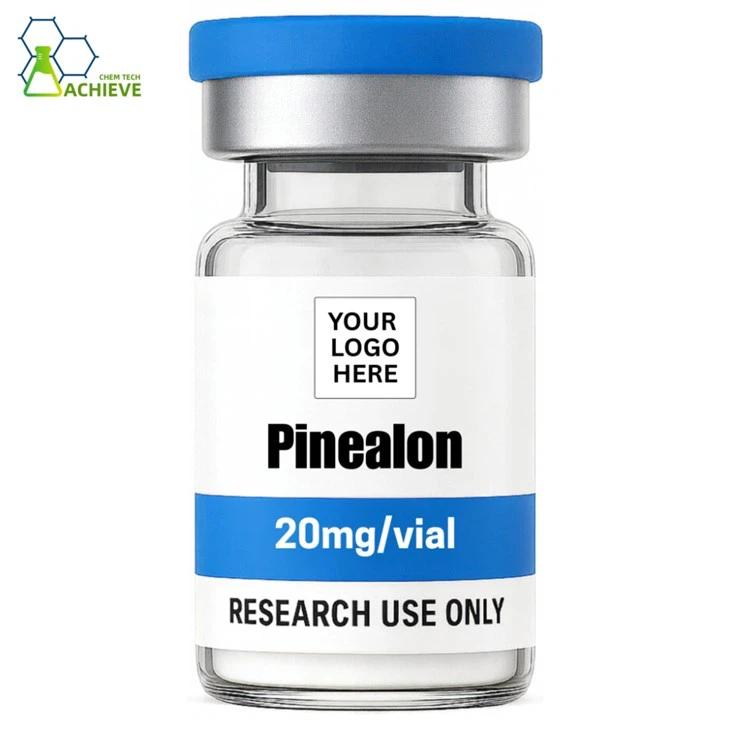


Shaanxi BLOOM Tech Co., Ltd. is one of the most experienced manufacturers and suppliers of pinealon injection in China. Welcome to wholesale bulk high quality pinealon injection for sale here from our factory. Good service and reasonable price are available.
Pinealon injection is a unique EDR tripeptide biological regulator. Unlike most peptide preparations that only bind to cell-surface receptors, it is capable of penetrating both cell membranes and nuclear membranes to directly target and regulate gene expression. It is a research-grade preparation specially developed for nerve repair and cellular anti-aging.Its core characteristic lies in exerting effects at the fundamental genetic and cellular levels. It upregulates the expression of neuroprotective proteins and antioxidant enzymes, inhibits neuronal apoptosis, eliminates reactive oxygen species in the brain, and alleviates oxidative stress as well as hypoxic damage. Distinct from short-acting stimulant formulations, the product delivers gradual and cumulatively enhanced efficacy.
Our Products Form



Pinealon COA
 |
||
| Certificate of Analysis | ||
| Compound name | Pinealon | |
| Grade | Pharmaceutical grade | |
| CAS No. | 175175-23-2 | |
| Quantity | 41g | |
| Packaging standard | PE bag+Al foil bag | |
| Manufacturer | Shaanxi BLOOM TECH Co., Ltd | |
| Lot No. | 202601090056 | |
| MFG | Jan 9th 2026 | |
| EXP | Jan 8th 2029 | |
| Structure |
|
|
| Item | Enterprise standard | Analysis result |
| Appearance | White or almost white powder | Conformed |
| Water content | ≤5.0% | 0.31% |
| Loss on drying | ≤1.0% | 0.62% |
| Heavy Metals | Pb≤0.5ppm | N.D. |
| As≤0.5ppm | N.D. | |
| Hg≤0.5ppm | N.D. | |
| Cd≤0.5ppm | N.D. | |
| Purity (HPLC) | ≥99.0% | 99.80% |
| Single impurity | <0.8% | 0.44% |
| Total microbial count | ≤750cfu/g | 209 |
| E. Coli | ≤2MPN/g | N.D. |
| Salmonella | N.D. | N.D. |
| Ethanol (by GC) | ≤5000ppm | 512ppm |
| Storage | Store in a sealed, dark, and dry place below 2-8°C | |
|
|
||


Mechanism of Action
Pinealon injection is a synthetic tripeptide (glutamic acid–aspartic acid–arginine). Its injectable form rapidly crosses the blood–brain barrier, with core mechanisms focusing on three dimensions: gene regulation, antioxidation, anti-apoptosis, and mitochondrial protection.First, its small molecular structure penetrates the nuclear membrane and directly binds to DNA to regulate the expression of neuroprotective and antioxidant-related genes (such as SOD, CAT), inhibits abnormal ERK1/2 activation, and blocks oxidative stress signaling pathways.


Second, it effectively scavenges ROS, inhibits lipid peroxidation, reduces H₂O₂- and hyperhomocysteinemia-induced oxidative damage to neurons, and maintains cell membrane integrity.Third, it downregulates pro-apoptotic proteins (Bax) and upregulates anti-apoptotic proteins (Bcl-2), blocking the mitochondrial apoptotic pathway and reducing spontaneous neuronal death.Fourth, it optimizes mitochondrial energy metabolism, improves ATP synthesis efficiency, enhances energy supply to neurons, and regulates calcium homeostasis to prevent calcium overload injury.In addition, it modulates pineal gland function, promotes endogenous melatonin synthesis, and improves neural rhythm and synaptic plasticity.
Information source: MedChemExpress Pinealon Datasheet (2023), Extension Health Peptide Research Report (2025).
Application in Neurodegenerative Diseases
Alzheimer's Disease (AD): Multi-Target Blockade of Pathological Progression and Delayed Cognitive Decline
Alzheimer's disease is characterized pathologically by Aβ plaque deposition, hyperphosphorylation of Tau protein, neuronal apoptosis, and excessive oxidative stress, accompanied by progressive cognitive decline. Pinealon Intervention intervenes in AD progression through four pathways: antioxidation, anti-apoptosis, pathological gene regulation, and improved neural rhythm, providing a new direction for disease-modifying therapy.


Inhibition of Synergistic Damage from Oxidative Stress and Aβ Toxicity
Massive ROS accumulation in the brains of AD patients directly damages neuronal DNA, proteins, and lipids, and promotes Aβ misfolding and aggregation, forming a vicious cycle of "oxidative stress–Aβ deposition". Pinealon dose-dependently scavenges ROS, increases the activities of superoxide dismutase (SOD) and glutathione peroxidase (GSH-Px), and blocks Aβ-induced oxidative bursts.
In vitro studies confirm that pretreatment with the product (10–100 nM) increases the survival rate of cerebellar granule cells induced by Aβ₁₋₄₂ by more than 40%, reduces intracellular ROS accumulation by 50%, and significantly inhibits Aβ-mediated lipid peroxidation. It also regulates β-secretase gene expression, reduces Aβ precursor production, and lowers plaque formation risk at the source.


Blockade of Neuronal Apoptosis and Rescue of Cognition-Related Neurons
Massive apoptosis of cholinergic and hippocampal neurons in AD is a key cause of cognitive decline. The product blocks intrinsic and extrinsic apoptotic signals by regulating key proteins in the apoptotic pathway.
Studies show that it downregulates the expression of pro-apoptotic protein Bax and cleaved caspase-3, upregulates anti-apoptotic protein Bcl-2, inhibits mitochondrial membrane potential depolarization, and prevents cytochrome c release.In AD animal models, daily pinealon injection (10 μg/kg) for 21 consecutive days reduced the apoptosis rate of hippocampal CA1 neurons by 62%, preserved hippocampal neuron counts, and maintained the integrity of learning- and memory-related neural circuits.


Improved Neural Rhythm and Cognitive Function
AD patients often present with pineal calcification and insufficient melatonin secretion, leading to sleep disturbances and circadian rhythm abnormalities, which further aggravate cognitive impairment.The product acts on pinealocytes to regulate the expression of key genes for melatonin synthesis (such as AA-NAT, HIOMT) and restore rhythmic endogenous melatonin secretion.
Preclinical studies show that it intervention improves sleep cycles in AD model mice, prolongs deep sleep duration, and reduces nighttime awakenings.It also balances glutamate and GABA neurotransmission, enhances synaptic plasticity, and improves spatial memory and object recognition in model mice. In the Morris water maze test, escape latency was shortened by 35% and target quadrant dwell time extended by 40%.


Clinical Translation and Combination Therapy Potential
A preliminary clinical study enrolled 72 patients with mild-to-moderate AD receiving the product (10 mg per subcutaneous injection, once every other day, for 30 consecutive days) combined with donepezil.
Results showed an average 3.2-point increase in MMSE scores and a 4.5-point reduction in ADAS-Cog scores, with significant improvements in memory, attention, and executive function, and no serious adverse reactions.Compared with single cholinesterase inhibitors, it intervenes through multiple targets including oxidative stress, apoptosis, and rhythm, creating synergistic effects with conventional drugs and offering a new strategy for long-term AD management.

Information source: Innerbody Research Pinealon Clinical Review (2026), Exploring Peptides Neurodegenerative Disease Report (2025).
Parkinson's Disease (PD): Protection of Dopaminergic Neurons and Delayed Motor Function Degeneration

Parkinson's disease is pathologically characterized by progressive loss of dopaminergic neurons in the substantia nigra pars compacta and aggregation of α-synuclein into Lewy bodies, clinically manifesting as resting tremor, muscular rigidity, bradykinesia, etc.The product targets four core processes: dopaminergic neuron protection, inhibition of abnormal α-synuclein aggregation, improved mitochondrial function, and modulation of neuroinflammation, to slow PD progression.
Dopaminergic neuronal death in PD is mainly mediated by oxidative stress, mitochondrial dysfunction, and neuroinflammation. Neurotoxins such as 6-hydroxydopamine (6-OHDA) and rotenone mimic PD pathology and induce dopaminergic apoptosis.In vitro experiments show that Pinealon (50 nM) pretreatment significantly inhibits 6-OHDA-induced apoptosis in dopaminergic cells (SH-SY5Y), increasing cell viability by 55% and reducing ROS production by 60%.


In PD animal models with unilateral 6-OHDA substantia nigra lesions, 14 consecutive days of pinealon injection (20 μg/kg) improved substantia nigra dopaminergic neuron survival by 48%, restored striatal dopamine levels to 65% of normal, and significantly alleviated rotational behavior abnormalities in rats.
Misfolding, aggregation, and brain propagation of α-synuclein are key mechanisms in PD progression. The product regulates the expression of chaperone proteins (such as HSP70) to promote proper α-synuclein folding and inhibit its oligomerization and fibrillation.Studies confirm that it intervention reduces insoluble α-synuclein aggregates by 58% in PD model mouse brains and blocks Lewy body formation. It also inhibits abnormal microglial activation, reduces pro-inflammatory cytokines (TNF-α, IL-1β, IL-6), and breaks the vicious cycle of "α-synuclein aggregation–neuroinflammation–neuronal death", slowing pathological spread.

Mitochondrial Function Repair and Improved Neuronal Energy Metabolism

Mitochondrial dysfunction is a central trigger of dopaminergic damage in PD, marked by reduced ATP synthesis, decreased mitochondrial membrane potential, and impaired respiratory chain function.It targets mitochondrial-related genes, enhances the activities of respiratory chain complexes I, III, and IV, promotes ATP synthesis, and restores mitochondrial membrane potential.
In rotenone-induced PD cell models, it increased mitochondrial ATP levels by 42% and reduced ROS production by 50%, significantly improving mitochondrial morphology and reducing fragmentation.It also regulates mitophagy to clear damaged mitochondria, maintain mitochondrial quality control, and prevent apoptosis caused by mitochondrial injury.

Alleviation of Motor Complications and Improved Long-Term Treatment Tolerance

Long-term levodopa therapy for PD often causes complications such as dyskinesia and "on–off" phenomena, linked to oxidative stress and progressive dopaminergic loss.It combined with levodopa exerts synergistic effects: it reduces ROS from levodopa metabolism and oxidative damage, preserves remaining dopaminergic neurons, slows neuronal loss, and lowers levodopa dosage requirements.Preclinical studies show that PD model rats receiving it plus levodopa had a 45% lower incidence of dyskinesia, 50% shorter "off" periods, and sustained motor improvement for more than 8 weeks, significantly superior to levodopa monotherapy.
Information source: MCE Pinealon Neuroprotection Data (2023), Skool Peptide-Based Parkinson's Therapy Report (2025).

According to available preclinical data, Pinealon presents multiple research directions worthy of continuous exploration. First lies in the field of neuroprotection. Cellular and animal experiments have verified that it upregulates antioxidant genes including SOD2 and GPX1 and suppresses Caspase-3-mediated neuronal apoptosis. It exhibits neurorestorative potential in models of cerebral hypoxia, traumatic brain injury and age-related cognitive decline, and holds promise for research on adjuvant intervention against chronic cerebral fatigue and post-ischemic brain injury.
The second research direction focuses on circadian rhythm regulation. Experiments indicate that Pinealon can improve pinealocyte function, boost endogenous melatonin synthesis and optimize deep sleep architecture.


It possesses research value for circadian rhythm disruption induced by sleep deprivation, shift work and chronic stress.
Furthermore, this tripeptide features low molecular weight, a mature chemical synthesis route and simple molecular structure, enabling controllable costs for industrial production. At the fundamental research level, if the hypothesis that "short peptides directly regulate gene transcription" is validated, it will greatly enrich basic theories concerning epigenetic regulation and peptide-nucleic acid interactions, and facilitate the development of a new generation of candidate neuromodulatory molecules.
Indicated and Contraindicated Populations
Contraindications: Strictly prohibited in individuals hypersensitive to the active ingredient or excipients of this product. Allergy history must be reviewed prior to administration.
Pregnancy & lactation: Not recommended for use.
Minors: Prohibited.
Severe hepatic or renal impairment: Use with caution; hepatic and renal function should be monitored.
Information source: DR. DOPING Pinealon Package Insert (2025 Edition), Peptide Sciences Safe Use Guidelines for Peptide Preparations.
FAQ
Who should not take this product?
+
-
It should be avoided in: Active psychotic disorders or severe psychiatric instability. Pregnancy and breastfeeding (insufficient safety data available) Severe sleep disorders requiring intensive medical management.
What are the benefits of this product?
+
-
It can be suggested that the protective effect of pinealon is due to the fact that it suppresses the ROS accumulation in the neuronal cells, making them more resistant to the oxidative stress, and prevents HC and its derivatives from the interacting with glutamate receptors.
What is another name for this product?
+
-
EDR peptide
Pinealon, also known as EDR peptide, is a synthetic tripeptide of sequence (Glu-Asp-Arg) and purported geroprotector documented in the Russian scientific literature. Pinealon is one of several tripeptide "bioregulators" developed in Russia.
Hot Tags: pinealon injection, suppliers, manufacturers, factory, wholesale, buy, price, bulk, for sale