




Shaanxi BLOOM Tech Co., Ltd. is one of the most experienced manufacturers and suppliers of c-peptide solution in China. Welcome to wholesale bulk high quality c-peptide solution for sale here from our factory. Good service and reasonable price are available.
C-peptide is a polypeptide fragment cleaved off when proinsulin is secreted by pancreatic β-cells. It is released into the bloodstream in equimolar amounts with beta-cell hormone, is not metabolized by the liver, and is mainly excreted by the kidneys. As a commonly used clinical detection reagent, c-peptide solution plays a vital role in the diagnosis, treatment guidance and prognostic evaluation of various diseases including polycystic ovary syndrome (PCOS), liver cirrhosis, chronic kidney disease and gestational diabetes mellitus.
Our Products Form


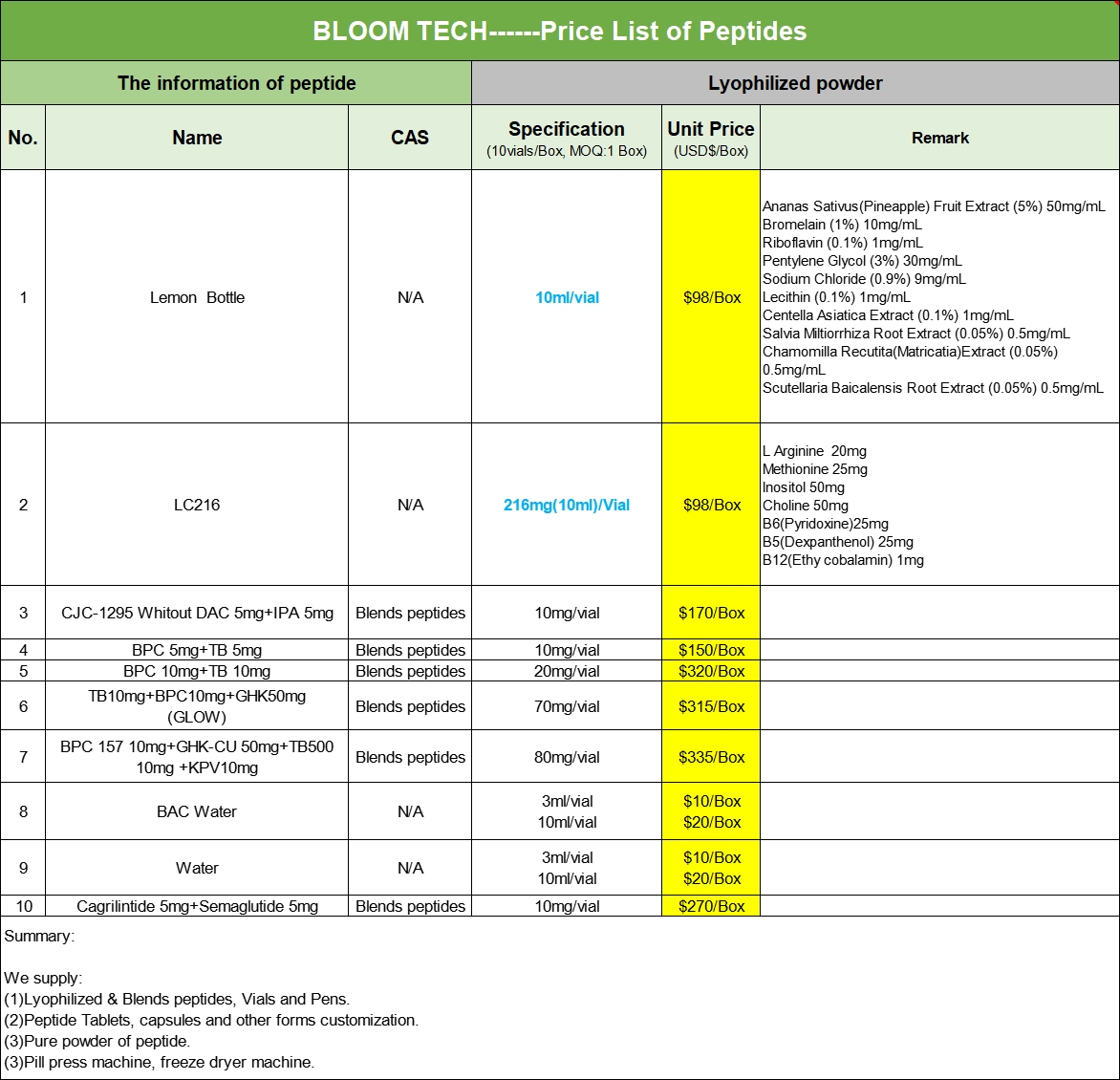

C-peptide COA



Application in Polycystic Ovary Syndrome (PCOS)

Polycystic ovary syndrome (PCOS) is the most common endocrine and metabolic disorder in women of childbearing age. By accurately detecting serum the peptide levels, c-peptide solution can effectively evaluate the degree of beta-cell hormone resistance in patients, providing a reliable basis for the formulation, adjustment and efficacy monitoring of clinical treatment regimens.
In terms of beta-cell hormone resistance assessment, serum the peptide levels detected by the product can directly reflect the total secretion of endogenous beta-cell hormone and avoid the interference of exogenous beta-cell hormone injection on test results, which is especially suitable for PCOS patients receiving beta-cell hormone therapy.
Clinical studies have shown that fasting and postprandial the peptide levels in PCOS patients are significantly higher than those in healthy women; the higher the peptide level, the more severe the beta-cell hormone resistance, showing a positive correlation with the Homeostatic Model Assessment for beta-cell hormone Resistance (HOMA-IR). For non-obese PCOS patients, traditional BMI indicators may fail to accurately assess beta-cell hormone resistance status, while it detection can serve as a more sensitive evaluation indicator to help identify potential metabolic abnormalities at an early stage. In addition, combined with glucagon stimulation test and the prodcut detection, the reserve function of pancreal β-cells can also be evaluated, providing a reference for disease severity grading.

Information Sources: BioArt Review: C-peptide in Polycystic Ovary Syndrome, Minfukang What Are the Normal Reference Values of C-peptide and Insulin.
Application in Liver Cirrhosis and Chronic Kidney Disease

Both liver cirrhosis and chronic kidney disease are organ function impairment diseases that affect in vivo metabolism and excretion, thereby interfering with the metabolic process of it and causing abnormal serum the peptide levels. The core application of the product detection in this field is to clarify the causes of pseudo-elevation of serum the peptide, guide the correct clinical interpretation of test results, prevent deviation in treatment plans due to misjudgment, and provide auxiliary reference for evaluating the severity of liver and kidney function damage.
The metabolic characteristics of the peptide determine the particularity of its detection in patients with abnormal liver and kidney function: the peptide does not undergo first-pass metabolism in the liver, so liver function damage in cirrhotic patients does not directly affect the metabolic clearance of the peptide.However, liver cirrhosis is often accompanied by blood sugar regulator resistance and hepatogenous diabetes, which increase blood sugar regulator secretion by pancreal β-cells and indirectly lead to elevated the peptide levels. In patients with chronic kidney disease, decreased renal excretory function significantly reduces the renal clearance rate of the peptide, resulting in serum the peptide accumulation and pseudo-elevation.


The more severe the renal function damage, the more obvious the amplitude of pseudo-elevation of the peptide. In clinical practice, interpreting the peptide test results without combining liver and kidney function status may misjudge pseudo-elevation as beta-cell hormone resistance or hyperfunction of pancreal β-cells, leading to unnecessary hypoglycemic treatment.In patients with liver cirrhosis, the interpretation of it test results shall be combined with liver function grading (e.g., Child-Pugh grading), blood glucose levels and beta-cell hormone test results.For cirrhotic patients complicated with hyperglycemia, elevated the peptide levels accompanied by increased beta-cell hormone levels indicate beta-cell hormone resistance and targeted hypoglycemic treatment is required.
Normal or low the peptide levels with elevated blood sugar regulator levels may result from decreased hepatic blood sugar regulator inactivation capacity, in which case priority should be given to treating liver cirrhosis itself rather than blind hypoglycemia. Furthermore, the peptide levels can assist in evaluating the prognosis of cirrhotic patients; persistently elevated C-peptide levels with poor blood glucose control indicate severe metabolic disorders and increased risk of long-term complications.


In patients with chronic kidney disease, c-peptide solution test results need to be corrected combined with renal function indicators such as estimated glomerular filtration rate (eGFR), creatinine and blood urea nitrogen. When eGFR < 60 ml/min/1.73m², the renal capacity to excrete the peptide decreases significantly, causing pseudo-elevation of serum the peptide. At this time, the normal reference range of the peptide should be adjusted according to the severity of renal function damage to avoid misjudgment of pancreal β-cell function.
Information Source: National Center for Biotechnology Information A Practical Review of C-Peptide Testing in Diabetes.
Application in Gestational Diabetes Mellitus (GDM)
Gestational glycuresis mellitus (GDM) refers to abnormal glucose metabolism first occurring or diagnosed during pregnancy, with a global prevalence of 7.1%-27.6%. Without timely and effective intervention, it will increase the risks of adverse pregnancy outcomes such as cesarean section, macrosomia and preeclampsia, as well as the long-term risks of type 2 diabetes in mothers and metabolic abnormalities in fetuses.


The solution detection can effectively distinguish the pathogenesis types of GDM (pancreal secretion deficiency or simple blood sugar regulator resistance), provide precise guidance for the formulation of individualized prenatal treatment regimens and postpartum follow-up, and make up for the deficiency of traditional blood glucose detection which only reflects blood glucose levels but cannot evaluate pancreal islet function.
In terms of pathogenesis type differentiation, by measuring C-peptide levels at each time point (0h, 1h, 2h) during fasting and oral glucose tolerance test (OGTT) and combining with blood glucose changes, the solution detection can clarify the pancreal islet function status of patients.
By constructing a dynamic trajectory model of the peptide in OGTT, clinical studies have identified two major metabolic subtypes of GDM:
Delayed Peak Type: The peptide levels rise slowly and peak at 120 minutes with a low peak value, indicating impaired secretory function of pancreal β-cells that cannot effectively cope with gestational blood sugar regulator resistance, classified as pancreal secretion deficiency type.
Early Hyper-response Type: C-peptide shows an obvious sharp peak at 60 minutes with a significantly elevated peak value followed by a rapid decline, indicating normal secretory function of pancreatic β-cells but severe blood sugar regulator resistance, classified as simple beta-cell hormone resistance type.

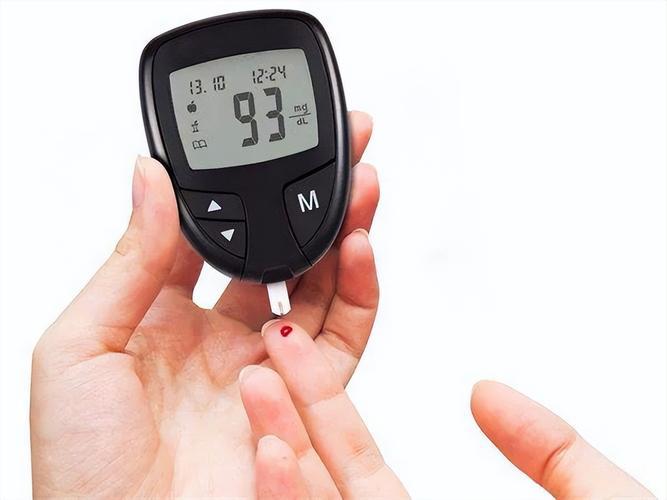
In terms of prenatal treatment guidance, individualized treatment regimens can be formulated based on the pathogenesis types distinguished by the peptide detection. For patients with simple beta-cell hormone resistance type GDM, diet control combined with exercise intervention is clinically prioritized. Reasonable control of total calorie intake and moderate exercise can improve blood sugar regulator sensitivity and reduce C-peptide and blood glucose levels. Regular the peptide detection can monitor therapeutic effects; a gradual drop in the peptide levels indicates improved blood sugar regulator resistance with no need for medication initiation.
If C-peptide levels remain persistently high and blood glucose is poorly controlled after diet and exercise intervention, blood sugar regulator or GLP-1 receptor agonist therapy can be administered. The peptide detection shall be used to adjust medication dosage during treatment to prevent hypoglycemia. For patients with pancreal secretion deficiency type GDM, pancreal β-cells cannot meet gestational metabolic demands, and simple diet and exercise intervention often yields poor efficacy. Early initiation of blood sugar regulator replacement therapy is required. C-peptide detection is adopted to evaluate the recovery of pancreatic islet secretory function and adjust blood sugar regulator dosage to ensure blood glucose is maintained within the normal range and reduce adverse pregnancy outcomes.

Information Sources: PMC Future clinical prospects of C-peptide testing in the early diagnosis of gestational diabetes, BMC Medicine Dynamic OGTT-derived C-peptide trajectories for metabolic heterogeneity and adverse pregnancy outcomes in gestational diabetes mellitus.
Notes on Scientific Research and Testing Quality Control
In clinical trials, C-peptide AUC (Area Under the Curve) serves as the core efficacy indicator. Uniform standards for blood collection time, specimen processing and detection reagents must be strictly implemented to minimize systematic errors.
Diagnostic kits shall be traceable with recombinant human C-peptide calibrators; the coefficient of variation (CV) of internal quality control shall be less than 10%, and external quality assessment shall comply with the standards of the National Center for Clinical Laboratories of the National Health Commission of the People's Republic of China.
Information Sources: BioArt 2025 Evolution of the Role of C-peptide in Diabetes Care; 2024 Inspection Quality Control Specifications issued by the National Center for Clinical Laboratories of the National Health Commission of the People's Republic of China.
FAQ
How to reduce high C-peptide?
+
-
Fasting and calorie restriction may be good strategies for lowering it levels if you have insulin resistance and/or are overweight. In 12 women with rheumatoid arthritis, calorie restriction and fasting decreased urine it levels by more than 50% during the fasting periods .
Is C-peptide important?
+
-
It is a sign that your body is producing insulin. A low level (or no it) indicates that your pancreas is producing little or no insulin. A low level may be normal if you have not eaten recently. Your blood sugar and insulin levels would naturally be low then.
Hot Tags: c-peptide solution, suppliers, manufacturers, factory, wholesale, buy, price, bulk, for sale