


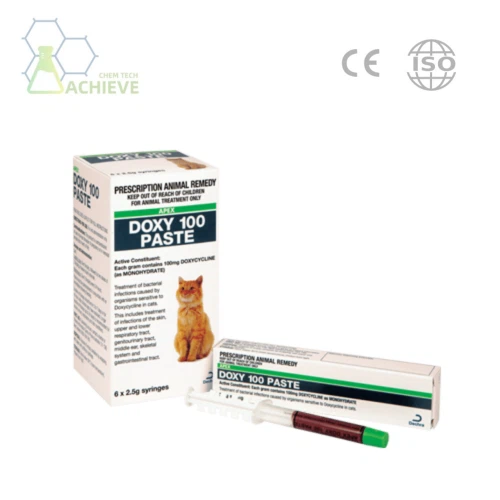


Doxycycline paste(Doxivetin), a topical formulation of the broad-spectrum antibiotic Doxivetin, has gained significant attention in both human and veterinary medicine for its efficacy in treating localized infections, inflammatory conditions, and periodontal diseases. This article provides an in-depth analysis of Doxivetin paste, covering its chemical properties, mechanisms of action, pharmaceutical formulations, clinical applications, safety profile, and emerging research trends. By examining its role in dermatology, dentistry, and veterinary practice, this review highlights the versatility and therapeutic potential of doxivetin paste while addressing challenges related to antibiotic resistance and optimal dosing strategies.
Our Products Form


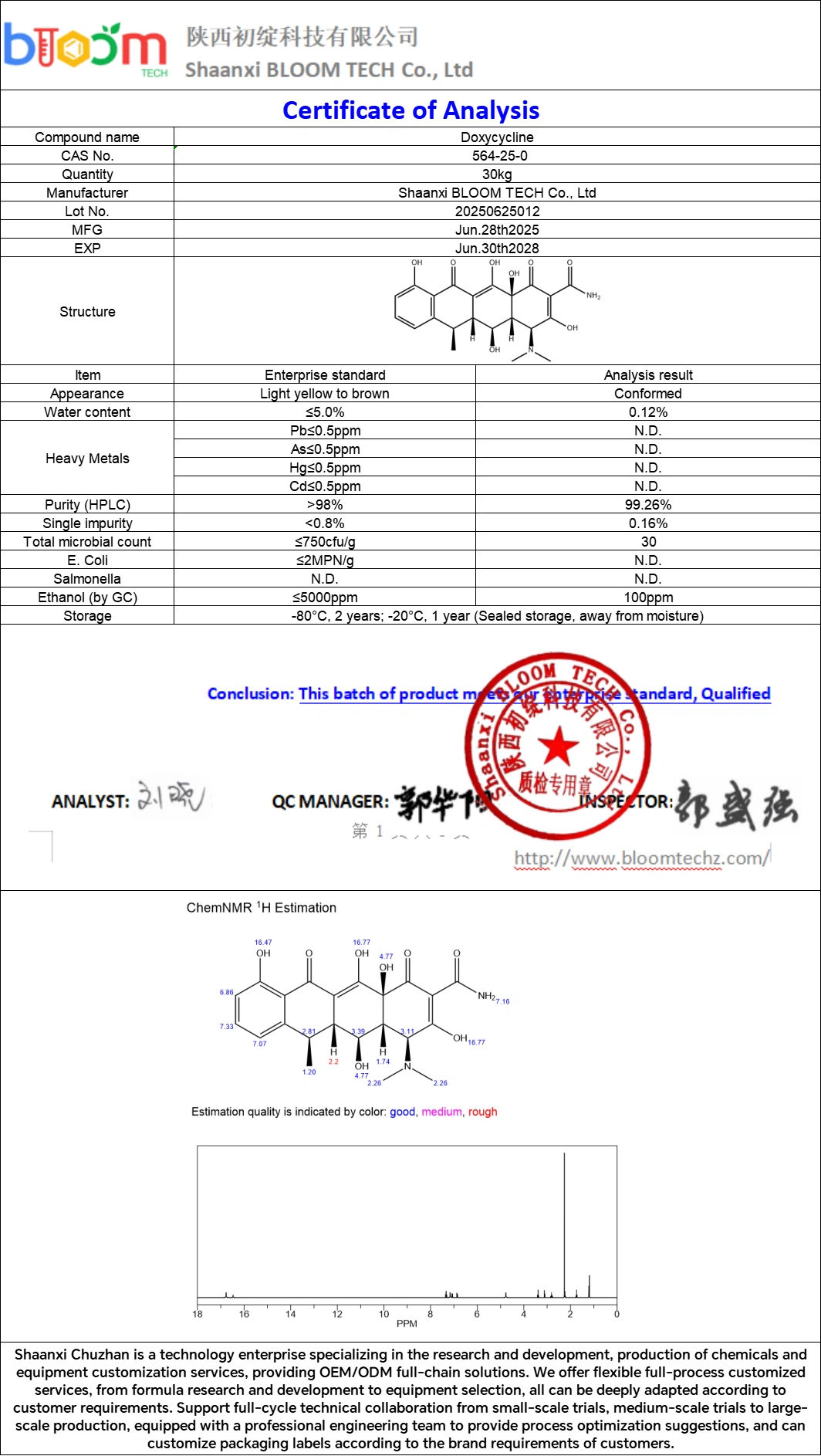
Doxycycline COA
Pharmacological Properties
Mechanism of Action
Doxivetin exerts its antibacterial effects through multiple mechanisms:
Protein Synthesis Inhibition: Binds reversibly to the 30S ribosomal subunit, preventing the attachment of aminoacyl-tRNA to the mRNA-ribosome complex. This disrupts peptide chain elongation, leading to bacterial growth arrest.
Membrane Permeability Alteration: Increases bacterial membrane permeability, causing leakage of intracellular contents and cell death.
Anti-Inflammatory Effects: Inhibits matrix metalloproteinases (MMPs) and tumor necrosis factor-alpha (TNF-α), reducing tissue inflammation and degradation independent of its antimicrobial action.
Pharmacokinetics
Absorption: Oral bioavailability exceeds 90% due to high lipid solubility and resistance to acid degradation. Peak plasma concentrations are achieved in 2–4 hours.
Distribution: Widely distributed in tissues, including lungs, liver, and kidneys, with high penetration into intracellular compartments. Crosses the blood-brain barrier in inflamed meninges.
Metabolism: Primarily metabolized in the liver, with bile excretion and enterohepatic recirculation. Approximately 20% is excreted renally.
Half-life: 12–18 hours in dogs and cats, allowing once- or twice-daily dosing.
Spectrum of Activity
Doxivetin is effective against:
Gram-positive bacteria: Staphylococcus aureus, Streptococcus pneumoniae, Clostridium spp.
Gram-negative bacteria: Escherichia coli, Haemophilus influenzae, Bordetella bronchiseptica.
Atypical pathogens: Mycoplasma, Chlamydia, Rickettsia, Leptospira.
Protozoa: Babesia, Plasmodium (in combination therapy).
Pharmaceutical Formulation

Doxivetin paste typically consists of:
Active Ingredient: Doxivetin hyclate or monohydrate (1–10% w/w).
Vehicle: Hydrophilic or hydrophobic bases (e.g., polyethylene glycol, petrolatum, or carboxymethyl cellulose) to control drug release and adhesion to mucosal surfaces.
Excipients: Preservatives (e.g., methylparaben), stabilizers, and pH adjusters to enhance shelf life and patient comfort.
Advantages Over Systemic Therapy
Targeted Action: Direct application reduces off-target effects.
Reduced Resistance Risk: Lower systemic exposure delays the emergence of resistant strains.
Improved Patient Compliance: Simplified dosing regimens (e.g., weekly applications for periodontitis).

Clinical Applications of Doxycycline Paste

Periodontal Disease
Periodontitis is a chronic inflammatory disease caused by bacterial biofilm and is the main indication for the use of docetaxel cream.
Mechanism in Periodontal Therapy:
Antibacterial Action: Targets Porphyromonas gingivalis, Treponema denticola, and other periodontopathogens.
Anti-resorptive Effects: Inhibits osteoclast activity, reducing alveolar bone loss.
Clinical Evidence:
A 2020 meta-analysis showed that subgingival doxivetin paste reduced probing depth by 1.2 mm and improved clinical attachment loss compared to placebo.
The PerioChip® (2.5 mg doxivetin hyclate) is FDA-approved for adjunctive periodontal therapy, with sustained release over 7–10 days.


Treatment Protocols:
Scaling and Root Planing (SRP): Followed by weekly or biweekly applications of doxivetin paste into periodontal pockets.
Combination Therapy: Used with systemic antibiotics in severe cases (e.g., aggressive periodontitis).
1) Acne Vulgaris
Role: Doxycycline paste reduces Propionibacterium acnes colonization and inflammation in comedonal and inflammatory acne.
Formulation: 1–2% gel applied once daily, often combined with benzoyl peroxide for synergistic effects.
2) Rosacea
Efficacy: Topical doxivetin (1.5% foam or gel) is FDA-approved for papulopustular rosacea, reducing erythema and lesions by 40–60% in clinical trials.
3) Infected Wounds and Ulcers
Application: Doxivetin paste promotes granulation tissue formation and prevents secondary infections in diabetic ulcers and pressure sores.

Veterinary Use

Equine Medicine: Treats dental infections, pododermatitis, and respiratory tract infections in horses.
Small Animals: Used for skin infections, otitis externa, and periodontal disease in dogs and cats.
Practical Tips for Pet Owners
Administration Techniques
Syringe Paste: Deposit the paste directly onto the tongue or mix with a small amount of wet food to mask the taste.
Compliance Aids: Use pill pockets or compound the paste into flavored treats (e.g., tuna for cats) if refusal occurs.
Storage: Keep paste at room temperature (<30°C), away from light and moisture. Discard unused portions after 28 days if not individually packaged.
Monitoring and Follow-Up
Clinical Signs: Track improvement in appetite, energy, and infection-specific symptoms (e.g., cough frequency, urine clarity).
Laboratory Tests: Recheck CBC and biochemistry (liver/kidney values) after 14 days of therapy in high-risk patients.
Reassessment: Schedule a follow-up visit 7–10 days after completing treatment to confirm resolution.
When to Contact Your Veterinarian
Persistent vomiting/diarrhea >48 hours after starting therapy.
Yellowing of gums, skin, or eyes (jaundice).
Unexplained bruising or bleeding.
Seizures or staggering gait.
Worsening of original symptoms (e.g., increased coughing, dyspnea).
Safety and Adverse Effects

Common Side Effects
Local Irritation: Burning, stinging, or discoloration at the application site (more common with higher concentrations).
Gastrointestinal Upset: Rare with topical use but may occur if ingested accidentally.
Contraindications
Hypersensitivity: Patients with a history of tetracycline allergy should avoid doxivetin paste.
Pregnancy: Category D risk due to potential fetal tooth discoloration and bone growth inhibition (contraindicated in the second and third trimesters).


Drug Interactions
Antacids/Iron Supplements: May reduce doxivetin absorption if applied concurrently; separate administration by 2 hours.
Retinoids: Concurrent use with isotretinoin increases the risk of intracranial hypertension (pseudotumor cerebri).
Emerging Research and Future Directions
Nanotechnology-Enhanced Formulations
Liposomal doxivetin: Improves penetration into biofilms and reduces dosing frequency.
Hydrogel Patches: Sustained-release systems for prolonged antimicrobial activity in periodontal pockets.
Antibiotic Stewardship
Resistance Monitoring: Studies are underway to assess the impact of topical doxivetin on nasal and oral microbiota.
Combination Therapies: Exploring synergies with probiotics, photodynamic therapy, or host modulation agents to enhance efficacy.
Expanding Indications
Oncology: Preliminary research suggests doxivetin may inhibit tumor-associated MMPs in squamous cell carcinoma.
Ophthalmology: Investigational use for corneal ulcers and dry eye disease.
Doxycycline paste represents a versatile and effective topical therapy for a wide range of infectious and inflammatory conditions. Its targeted action, favorable safety profile, and adaptability in formulation science make it a valuable tool in modern medicine. However, ongoing research is essential to optimize dosing strategies, mitigate resistance risks, and explore novel applications. Clinicians should weigh the benefits of localized therapy against potential side effects and ensure adherence to antibiotic stewardship principles to preserve the long-term efficacy of this important drug.
As pharmaceutical technology advances, the development of smart-release systems and combination therapies will likely expand the role of doxivetin paste in both human and veterinary healthcare, solidifying its position as a cornerstone of topical antimicrobial treatment.
Reduced Gastrointestinal Side Effects
Traditional oral doxivetin formulations are associated with a 10–15% incidence of gastrointestinal (GI) side effects, including vomiting, diarrhea, and anorexia. Paste formulations mitigate these risks through several mechanisms:
Bypassing Esophageal Irritation
Pill-Induced Esophagitis: Tablets can lodge in the esophagus, causing irritation and ulceration. Paste formulations slide easily into the stomach, reducing this risk.
Administration Technique: Following paste administration with a small volume of water ensures complete delivery to the stomach.
Lower Systemic Absorption for Localized Use
Topical Applications: When used for oral or dermal infections, paste achieves high local drug concentrations with minimal systemic absorption. This reduces the risk of systemic side effects like hepatotoxicity or renal tubular acidosis.
Case Example: A 2020 study in Equine Veterinary Journal found that topical doxivetin paste reduced the incidence of diarrhea in foals with Rhodococcus equi pneumonia compared to oral tablets.
Future Directions
Microneedle patches: Enhance transdermal delivery for acne scars by creating microchannels in the stratum corneum.
3D-printed scaffolds: Customizable for periodontal defects, releasing doxivetin in a controlled manner over weeks.
CRISPR-Cas9-modified bacteria: Engineer commensal skin bacteria to produce doxivetin locally, reducing reliance on topical applications.

Combination Therapies:

Doxycycline + BPO: Synergistic antibacterial and anti-inflammatory effects, with BPO preventing resistance development.
Doxycycline + Photodynamic Therapy (PDT): Eradicates resistant biofilms in periodontitis using light-activated porphyrins.
Doxycycline + Retinoids: Dual inhibition of sebogenesis (doxycycline) and keratinization (retinoids) for severe acne.
Localized delivery reduces selective pressure on commensal flora, aligning with WHO guidelines on antibiotic conservation.
Point-of-care testing: Rapid detection of C. acnes resistance genes (e.g., tet(K)) to guide personalized therapy.
It represents a paradigm shift in localized infection management, offering targeted efficacy with minimal systemic exposure. In acne, it rivals oral antibiotics in lesion reduction while avoiding dysbiosis and photosensitivity. In periodontitis, it enhances scaling and root planing outcomes by disrupting biofilms and modulating host responses. The innovation of future drug delivery and combination therapies will further consolidate their role in clinical practice. Clinicians should prioritize the use of this paste for mild to moderate acne and assisted periodontal care, striking a balance between therapeutic benefits and antimicrobial management.

Frequently Asked Questions
What is the solidified 'switch'? --Transform instantly when encountering water
+
-
Curing mechanism: Contact with aqueous body fluids triggers phase transition. Poly (DL lactide) in the paste matrix is dissolved in N-methyl-2-pyrrolidone. Once injected into the periodontal pocket and in contact with gingival crevicular fluid, the solvent rapidly diffuses, and the polymer immediately solidifies into a solid implant, locking the drug in the lesion and slowly releasing it. It is not "dry" in the traditional sense, but a liquid-solid phase transition caused by solvent exchange.
What is the "mathematical model" of drug release in the body?
+
-
Zero level release, continuous for 30 days at a constant rate. In vitro experiments have shown that it follows zero order release kinetics (R=0.971), meaning that the drug is released at a constant rate (rather than slowing down) every day, maintaining a local concentration of 3-5 mcg/mL for up to 30 days. This mechanism ensures the long-term stability of antibacterial concentration and avoids peak valley fluctuations.
What is the concentration of medication in the periodontal pocket of a dog?
+
-
Up to 250 μ g/mL, which is hundreds of thousands of times the serum concentration. After local application, the concentration of active drugs in gingival crevicular fluid can reach about 250 μ g/mL. In contrast, drugs in plasma reach their peak after 6 hours and quickly disappear, and cannot be detected after 24 hours (far below the systemic activity threshold). This huge concentration gradient is a manifestation of its precise treatment.
What does a high pH environment mean to it? --Photodegradation accelerator
+
-
Under alkaline conditions (pH 7.2), the half-life of photodegradation is rapidly shortened. Under simulated sunlight, the degradation rate of doxycycline accelerates with increasing pH. The degradation kinetics constant significantly increases from pH 4.0 to 7.2, and the half-life drops sharply from a few hours to several minutes to 6 hours. This means that in body fluids (with a neutral to alkaline pH), light exposure will cause it to quickly become ineffective.
Is the product after exposure to light more toxic than the original drug? --Yes, there is a toxic inflection point where the toxicity first increases and then decreases
+
-
The light products after pure ultraviolet irradiation are actually more toxic. Research has found that the toxicity of doxycycline to Vibrio fischeri increases first after UV photolysis, as the intermediate products generated still retain the core structure of the drug. Only by further oxidation (such as UV/hydrogen peroxide process) to thoroughly break down these intermediates, will the toxicity decrease. This suggests that incomplete light avoidance failure may result in products with greater environmental risks.
Hot Tags: doxycycline paste, suppliers, manufacturers, factory, wholesale, buy, price, bulk, for sale