


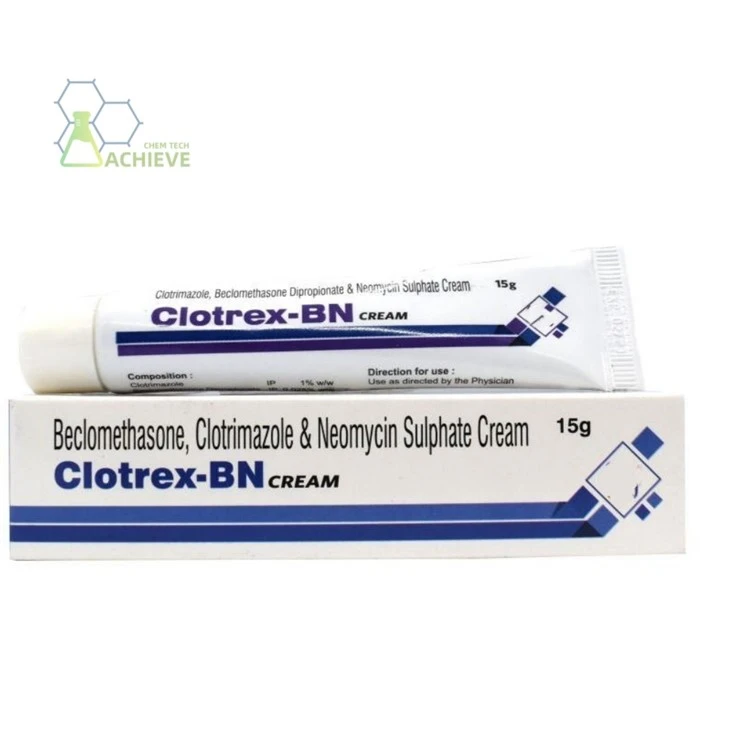


Neomycin sulphate ointment is a common topical antibiotic preparation belonging to the aminoglycoside antibiotic family and is widely used in the treatment of skin infections. Its main ingredient, neomycin sulfate, binds irreversibly to the bacterial ribosome 30S subunit and interferes with bacterial protein synthesis, thereby exerting a powerful bactericidal effect. It has good antibacterial activity against Gram-positive bacteria such as Staphylococcus aureus and Staphylococcus epidermidis, and Gram-negative bacteria such as Escherichia coli, Klebsiella, and Proteus, and also has a certain inhibitory effect on some tuberculosis bacteria.



Additional information of chemical compound:
| Product Name | Neomycin Sulphate Powder | Neomycin Sulphate Tablets | Neomycin Sulphate Injection | Neomycin Sulphate Ointment |
| Product Type | Powder | Tablet | Injection | Cream |
| Product Purity | ≥99% | ≥99% | ≥99% | ≥99% |
| Product Specifications | Customizable | Customizable | Customizable | Customizable |
| Product Package | Customizable | Customizable | Customizable | Customizable |
Our Product


Neomycin Sulphate +. COA
 |
||
Certificate of Analysis |
||
|
Compound name |
Neomycin Sulphate | |
|
CAS No. |
1405-10-3 | |
|
Grade |
Pharmaceutical grade | |
|
Quantity |
Customized | |
|
Packaging standard |
Customized | |
| Manufacturer | Shaanxi BLOOM TECH Co., Ltd | |
|
Lot No. |
20250109001 |
|
|
MFG |
Jan 12th 2025 |
|
|
EXP |
Jan 8th 2029 |
|
|
Structure |
|
|
| TEST STANDARD | GB/T24768-2009 Industry. Stnndard | |
|
Item |
Enterprise standard |
Analysis result |
|
Appearance |
White or almost white powder |
Conformed |
|
Water content |
≤4.5% |
0.30% |
| Loss on drying |
≤1.0% |
0.15% |
|
Heavy Metals |
Pb≤0.5ppm |
N.D. |
|
As≤0.5ppm |
N.D. | |
|
Hg≤0.5ppm |
N.D. | |
|
Cd≤0.5ppm |
N.D. | |
|
Purity (HPLC) |
≥99.0% |
99.5% |
|
Single impurity |
<0.8% |
0.48% |
|
Residue on ignition |
<0.20% |
0.064% |
|
Total microbial count |
≤750cfu/g |
80 |
|
E. Coli |
≤2MPN/g |
N.D. |
|
Salmonella |
N.D. | N.D. |
|
Ethanol (by GC) |
≤5000ppm |
400ppm |
|
Storage |
Store in a sealed, dark and dry place at-20 degrees |
|
|
|
||
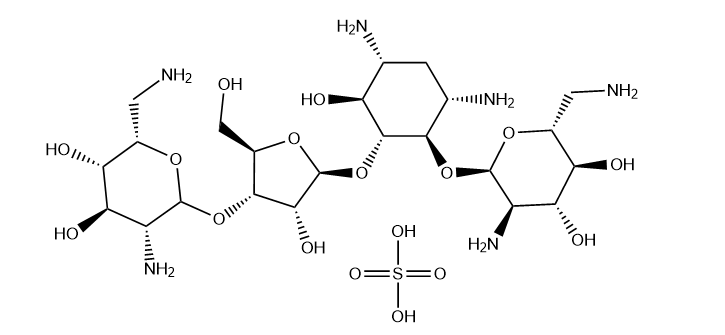


As a topical preparation of aminoglycoside antibiotics, neomycin sulphate ointment occupies an important position in the field of skin infection therapy due to its broad-spectrum antibacterial activity and low systemic absorption characteristics. Its core uses include primary and secondary skin infections, burn and ulcer management, auxiliary therapy of fungal infections and infection prevention in special scenarios.
It has a strong bactericidal effect on Gram-positive bacteria (such as Staphylococcus aureus, coagulase-negative Staphylococcus) and Gram-negative bacteria (such as Escherichia coli, Klebsiella, Proteus), and in vitro experiments show that it also has a certain inhibitory effect on Mycobacterium tuberculosis. This feature makes it one of the first choice drugs for primary skin infections:
Impules and folliculitis: For localized infections such as superficial folliculitis, deep abscesses and impetigo, the ointment can directly destroy bacterial cell wall synthesis, inhibit protein expression, and quickly relieve redness, swelling and pain symptoms. Clinical data show that the cure rate of impetigo treated with neomycin sulfate ointment alone is over 85%, and the course of therapy is usually 5-7 days.


Secondary infection of seborrheic dermatitis: For bacterial infections in areas with vigorous sebaceous gland secretion (such as the scalp and nasolabial folds), the ointment can reduce the synergistic pathogenicity of Malassezia and bacteria by regulating the balance of local flora. It is recommended to be used in combination with antifungal drugs, and the course of therapy is extended to 2 weeks to reduce the recurrence rate.
Propionibacterium acnes infection: For moderate inflammatory acne, the ointment can inhibit the biofilm formation of Propionibacterium acnes and reduce the release of inflammatory factors. It is necessary to avoid long-term use (no more than 4 weeks) to prevent the emergence of drug-resistant strains.
In secondary infection scenarios such as trauma and ulcers, the therapeutic effect is exerted through dual mechanisms:
Infectious eczematoid dermatitis: For patients with chronic eczema combined with Staphylococcus aureus infection, the ointment can quickly reduce the bacterial load in the skin lesions and reduce exudation and scabs. It is recommended to use it alternately with glucocorticoid drugs, use antibiotic ointment in the morning to control infection, and use hormone ointment at night to relieve inflammation.
Pressure sores and diabetic foot ulcers: For stage III-IV pressure sores or diabetic foot ulcers with Wagner grade 2 or above, ointment can prevent mixed infection of anaerobic bacteria (such as Bacteroides) and aerobic bacteria.


It needs to be combined with debridement and negative pressure wound therapy, and the course of therapy continues until the granulation tissue of the wound is fresh.
Secondary infection of radiation dermatitis: For grade III radiation dermatitis after radiotherapy for breast cancer, ointment can inhibit the colonization of opportunistic pathogens such as Pseudomonas aeruginosa. It is recommended to use it in combination with hydrocolloid dressings, change the dressing once a day, and the course of therapy should not exceed 14 days to avoid local irritation.
It has unique value in the therapy of burns and chronic ulcers:
Shallow II degree burns: For burn wounds with an area of <10% of the body surface area, ointment can form a protective drug film to prevent the invasion of Enterobacteriaceae (such as Klebsiella pneumoniae). It should be used immediately after debridement, and the dressing should be changed twice a day until the wound heals.
Venous ulcers: For ulcers secondary to varicose veins of the lower extremities, the ointment can inhibit the synergistic infection of Staphylococcus epidermidis and Proteus mirabilis. It is recommended to be used in combination with elastic bandage pressure therapy, and the course of therapy should continue until the ulcer diameter is reduced by more than 50%.
Postoperative wound infection: For those with secondary infection of clean surgical incisions, the ointment can reduce the colonization density of Staphylococcus aureus. It should be used after thorough debridement to avoid covering healthy skin tissue.

4. Auxiliary therapy of fungal infections

Although neomycin sulfate is a bacterial antibiotic, it has an indirect therapeutic effect on skin fungal infections:
Tinea corporis and tinea cruris: For tinea corporis caused by Trichophyton rubrum infection, the ointment can enhance the permeability of antifungal drugs (such as terbinafine) by destroying bacterial biofilms. It is recommended to be used in combination with antifungal creams, alternating between morning and evening, and the course of therapy lasts for 4 weeks.
Candidal intertriginous rash: For Candida albicans infection in the groin area of obese patients, the ointment can inhibit the overgrowth of Gram-positive bacteria and restore the local microecological balance. It needs to be used in combination with clotrimazole cream, with dressing changes twice a day for a course of 14 days.
Adjuvant therapy of onychomycosis: For distal lateral subungual onychomycosis, the ointment can reduce bacterial colonization in the nail bed and reduce the risk of secondary bacterial infection. It is recommended to be used in combination with amorolfine ointment for a course of 6 months.
It has preventive application value in specific medical scenarios:
Bowel preparation before colon surgery: Although oral neomycin sulfate tablets are the standard solution for preoperative preparation, for patients with perianal skin damage, local use of ointment can prevent surgical site infection (SSI). It is recommended to start using it 3 days before surgery, twice a day, covering 20 cm around the anus.
Adjuvant therapy of hepatic encephalopathy: For patients with cirrhosis and hepatic encephalopathy, the ointment can reduce the source of blood ammonia by inhibiting the growth of intestinal ammonia-producing bacteria.
It needs to be used in combination with lactulose oral solution, and the course of therapy continues until the consciousness improves.
Skin care for immunosuppressed patients: For organ transplant recipients or chemotherapy patients, ointment can be used to prevent bacterial colonization in skin folds. It is recommended to apply it to the armpits, groin and other areas once a day, and the course of therapy continues until immune function is restored.

Clinical research progress and future directions
Exploration of therapy for drug-resistant bacteria:
For methicillin-resistant Staphylococcus aureus (MRSA) infection, the combination of neomycin sulfate and fusidic acid or mupirocin is under study. Preliminary results show that synergistic effects can increase the cure rate by 15%-20%.
Development of new formulations:
Neomycin sulfate gel prepared by nanocrystal technology can significantly improve drug permeability, increase the drug concentration in the epidermis by 3 times, and shorten the course of therapy by 2-3 days.
Biomarker monitoring:
Studying the application value of urinary N-acetyl-β-D-glucosaminidase (NAGase) as an early nephrotoxicity marker is expected to achieve individualized evaluation of the safety of local medication.
Neomycin sulphate ointment has become an important tool for the therapy of skin infections due to its broad-spectrum antibacterial activity, low systemic toxicity and applicability in multiple scenarios. Clinical application requires strict control of indications and adherence to the principle of "short-term, local, and individualized". At the same time, medication monitoring and patient education should be strengthened to maximize efficacy and minimize risks. In the future, with the development of new preparations and combination drug regimens, its clinical value is expected to be further expanded.
FAQ
1. Q: What is the greatest hidden risk of neomycin ointment as an over-the-counter medication?
A: Its extremely high allergenic potential. It frequently triggers delayed allergic reactions, causing more severe erythema and itching at the treatment site. This "worsening with treatment" phenomenon is often mistaken for infection progression, leading to diagnostic and therapeutic confusion.
2. Q: Why is it actually ineffective against many common skin infections?
A: Its antimicrobial spectrum has critical limitations. It has limited activity against Staphylococcus aureus (especially drug-resistant strains)-the primary pathogen in current skin infections-yet remains effective against certain uncommon Gram-negative bacteria. This "temporal mismatch" makes it suboptimal for most community-acquired infections.
3. Q: In what non-routine scenarios is it still used by specialists?
A: Primarily in post-surgical wound care. For instance, after certain ophthalmic or otologic surgeries, its ointment formulation is used short-term. The primary purpose isn't potent antimicrobial action, but rather leveraging its lubricating base to prevent dressing adhesion and provide physical wound protection, with incidental prophylactic antimicrobial effects.
Hot Tags: neomycin sulphate ointment, suppliers, manufacturers, factory, wholesale, buy, price, bulk, for sale