


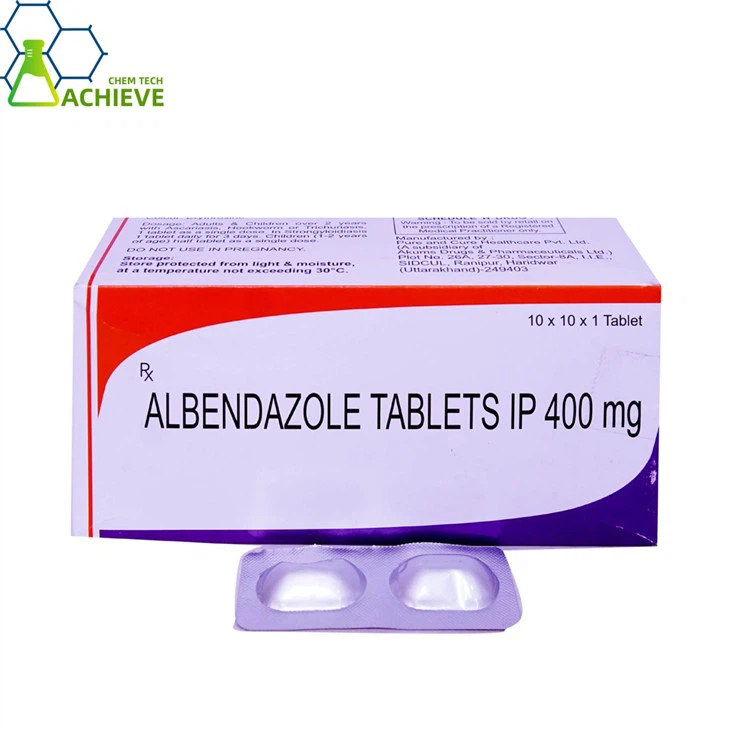

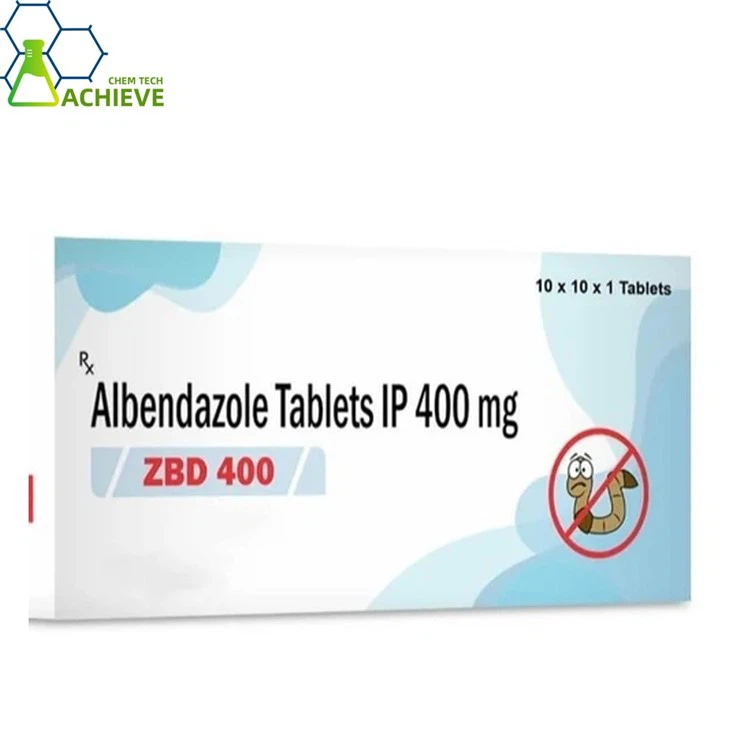


Albendazole Tablet 200mg is a highly effective, broad-spectrum anthelmintic widely used to treat various parasitic worm infections in humans. Its antiparasitic mechanism involves selectively inhibiting microtubule formation in parasites, which disrupts their essential cellular structures and metabolic processes, leading to progressive energy depletion and eventual death. Clinically, it is highly effective against a range of helminthic infections, including common intestinal nematodes such as pinworm and roundworm, as well as more severe tissue-invasive parasitic diseases like hydatid disease and neurocysticercosis.
At the same time, our company not only provides pure powders, but also tablets and suspension. If needed, please feel free to contact us at any time.
Our Products

Albendazole Powder

Albendazole Tablets

Albendazole Suspension
|
|
|


Albendazole COA

Comparison of Differences in Excipients of Generic Drugs
The core source of differences in excipients: The formulation design logic of original drugs and generic drugs
The selection of excipients for original drugs is based on long-term clinical validation and process optimization. The core objectives include:
Ensure drug stability: Use antioxidants (such as Brazilian palm wax) and pH regulators (such as lactose monohydrate) to delay the degradation of the main drug;
Optimize dissolution behavior: Employ super disintegrants (such as cross-linked carboxymethyl cellulose sodium) for rapid disintegration, combined with hydrophilic excipients (such as hydroxypropyl methylcellulose) to promote drug release;
Improve patient compliance: Use flavoring agents (such as saccharin sodium) to mask bitterness, and lubricants (such as magnesium stearate) to reduce swallowing resistance.
To control costs, generic drug manufacturers often make "economical substitutions" for excipients, for example:
Replace microcrystalline cellulose with common starch, although it can reduce the cost of the diluent, it may affect the hardness of the tablet;
Replace povidone (PVP) with sodium lauryl sulfate (SLS) as the wetting agent, although it can enhance dissolution, it may increase the risk of gastrointestinal irritation;
Omit the antioxidant in the original drug, resulting in a decrease in the stability of the drug under high temperature and high humidity conditions.
Empirical Analysis of Key Ingredient Differences

Discrepancies in disintegrating agent systems
The original drug (Albenza®) adopts a composite disintegration system of cross-linked carboxymethyl cellulose sodium (CCNa) and starch alcohol sodium. Its dissolution rate can reach over 90% within the pH range of 1.2-6.8. However, some generic drugs only use a single disintegrating agent (such as low-substituted hydroxypropyl cellulose), resulting in a 30%-50% delay in dissolution in the gastric acid environment and a 15%-20% reduction in bioavailability. For example, in the FDA dissolution curve comparison test, the 15-minute dissolution amount of an Indian generic drug was only 65% of the original drug, and it was required to optimize the prescription.
Discrepancies in lubricant selection
The original drug uses magnesium stearate as a lubricant, and its dosage is strictly controlled at 0.5%-1.0% to avoid affecting dissolution. However, some generic drugs, in order to reduce costs, use talcum powder instead, although it can reduce the friction coefficient, it may cause particles to be too large and block the tablet pores, resulting in a blocked penetration of the dissolution medium. Studies show that the dissolution rate of the generic drug containing talcum powder is 20%-30% slower than that of the original drug, especially in low-speed dissolution conditions (such as 50 rpm), the difference is more significant.


Discrepancies in coating materials
The original drug uses hydroxypropyl methylcellulose (HPMC) film coating, with a thickness controlled at 30-50 μm, which can both protect from light and moisture and disintegrate quickly. However, some generic drugs use polyvinyl alcohol (PVA) coating, although the cost is reduced by 40%, it has the following problems:
The coating layer becomes brittle and is prone to cracking during transportation;
The dissolution medium penetration speed slows down, resulting in delayed drug release;
It interacts with certain plastic bottle packaging, accelerating drug degradation.
For example, in the accelerated test (40°C/75%RH), after 6 months, the content of a domestic generic drug decreased to 85% of the labeled amount, while the original drug still maintained over 95%.
The Impact Path of Ingredient Differences on Clinical Efficacy

Dissolution behavior differences lead to fluctuations in blood drug concentration
Apidavir is a BCS II-class drug (low solubility, high permeability), and its dissolution rate is the rate-limiting step for absorption. Ingredient differences may lead to:
Tmax delay: The slow dissolution of the generic drug may cause the peak time to extend from the original drug's 2-3 hours to 4-6 hours;
Cmax reduction: Incomplete dissolution may lead to a 20%-30% decrease in peak concentration, affecting the killing effect on worm eggs;
AUC fluctuation: Differences in bioavailability may lead to a shortened duration of drug efficacy, requiring an increase in dosing frequency.
Increased gastrointestinal irritation
Some generic drugs use SLS and other strong surfactants as wetting agents, although they can enhance dissolution, they may damage the gastrointestinal mucosal barrier, resulting in an increased incidence of adverse reactions such as nausea and abdominal pain. Clinical data show that the incidence of gastrointestinal discomfort in the generic drug group (12.3%) is significantly higher than that in the original drug group (4.7%).


Stability issues lead to efficacy attenuation
Improper selection of ingredients may cause degradation of the drug during storage. For example, generic drugs without antioxidants may convert to inactive sulfone compounds under high-temperature conditions, resulting in an actual dosage that is insufficient. Studies show that such generic drugs, after being stored at 30°C/65%RH for 3 months, the content of the active ingredient decreases to 80% of the labeled amount, while the original drug still maintains over 98%.
Solutions and Industry Recommendations
Pharmaceutical companies of generic drugs must prove their equivalence to the original drugs through comparison of dissolution curves (with f2 factor ≥ 50) and bioequivalence tests (BE tests), rather than merely meeting basic indicators such as uniformity of content.
Establish mandatory standards for functional indicators of excipients (such as disintegration time and dissolution rate), rather than merely specifying the types and dosage ranges of excipients. For example, require disintegrants to completely disintegrate tablets within 5 minutes, and the dissolution rate to reach over 85% within 15 minutes.
Encourage domestic excipient enterprises to develop high-performance excipients (such as co-treated excipients, nano-excipients), reducing reliance on imported high-end excipients. For instance, developing a co-treated excipient of microcrystalline cellulose and cross-linked carboxymethyl cellulose sodium can simplify production processes and improve disintegration efficiency.
Conduct blood drug concentration monitoring and efficacy follow-up for patients using generic drugs, establish a database of excipient differences and clinical outcomes, and provide a basis for prescription optimization.
Multifaceted Synergy of Stability Enhancement Strategies
Given the photolabile and thermally sensitive nature of albendazole, the new tablets adopt a dual protection design:

Coating material upgrade
Polyvinyl alcohol-polyethylene glycol copolymer replaces the traditional hydroxypropyl methylcellulose, reducing the light transmittance to below 5%, and enhancing the light protection performance by 3 times.

Antioxidant optimization
The addition amount of antioxidants is increased from 0.1% to 0.3%, combined with vacuum packaging technology, the content retention rate of the drug in the 40℃/75%RH accelerated test over 6 months is increased from 85% to 98%.

pH regulator
A small amount of citric acid is added to stabilize the medium pH at 4.5-5.5, inhibiting the formation of albendazole sulfoxide compounds, and controlling the impurity content within 0.2%.
The technical path for form innovation: Function-oriented optimization of excipients
Albendazole tablets 200mg, as a broad-spectrum deworming drug, has continuously innovated its 200mg tablet formulation, always focusing on improving the drug's dissolution rate, stability, and patient compliance. The core lies in achieving a technological breakthrough through the optimization of functional excipients.
Precise Design of Dissolution Control System
Apidalizine belongs to BCS Class II drugs (low solubility, high permeability), and the dissolution rate is the rate-limiting step for absorption. Traditional tablets use a single starch as a disintegrant, resulting in limited dissolution efficiency. The new type of tablet achieves precise control through a "disintegrant + wetting agent + flow aid" ternary system:
Composite disintegrant: Cross-linked carboxymethyl starch sodium and low-substituted hydroxypropyl cellulose are mixed in a ratio of 3:1 to form a porous structure, which increases the water penetration speed by 40% and enables complete disintegration within 5 minutes;
Surfactant: Adding 0.5% sodium dodecyl sulfate (SLS) reduces the drug contact angle from 65° to 30°, significantly enhancing the wetting property;
Flow improver optimization: Silica reduces the powder angle of repose from 45° to 25°, improving the flowability and ensuring that the weight variation of the tablets is ≤ 3%.
Experimental data shows that this system enables the tablets to reach more than 90% dissolution within 15 minutes at a pH range of 1.2 - 6.8, which is 25 percentage points higher than traditional tablets.
Technological Innovations for Improving Patient Compliance
To address the problem of difficulty in swallowing traditional tablets, two innovative variations have been developed:
Oral dispersible tablets
Formed with a porous structure through freeze-drying process, they disintegrate in the mouth within 30 seconds and do not require drinking water; supplemented with sorbitol and citric acid to mask the bitterness of the drug, the acceptance rate among children increased by 60%.


Chewable tablets
Added 5% saccharin sodium and peppermint flavoring, masking the bitterness with sweet and sour flavors and cool sensation, with hardness controlled at 50-70N to ensure comfortable chewing.
Clinical feedback shows that the new formulation reduced the non-compliance rate of patients from 15% to 3%, and the treatment completion rate increased to 92%.
Deep Integration of Intelligent Manufacturing Technologies
Introducing process analysis technology (PAT) and feedback control systems in tablet production:
Near-infrared spectroscopy monitoring: Real-time collection of moisture and particle size data during the mixing, granulation, and drying processes of the materials, reducing the standard deviation of content uniformity from 3.5% to 1.2%;
Design space optimization: Through a 2³ full-factorial experimental design, determine the ranges of key parameters such as starch slurry concentration (12%-16%) and tablet pressing pressure (80-100 MPa) to ensure process robustness;
Continuous manufacturing technology: Adopting a wet granulation - fluidized bed drying - tablet pressing integrated production line, the production efficiency has increased by 40%, and the difference in dissolution curves between batches is ≤ 5%.
This technical path enables albendazole tablets 200mg production to conform to the QbD (Quality Derived from Design) concept, and the product release qualification rate reaches 99.9%.
Frequently Asked Questions
What parasites are killed by albendazole?
+
-
Albendazole is also sometimes used to treat infections caused by roundworms, hookworms, threadworm, whipworm, pinworm, flukes, and other parasites (a plant or animal that lives within another living organism to receive some benefit). Talk to your doctor about the risks of using this medication for your condition.
Is albendazole the same as ivermectin?
+
-
The active substances in Ivermectin/Albendazole, ivermectin and albendazole, act together to kill the parasites. Ivermectin targets the parasite's nervous and muscular systems, causing paralysis, while albendazole disrupts the parasite's metabolism and energy production.
Do worms come out after taking albendazole?
+
-
However, when albendazole was administrated orally, larval numbers increased to the maximum larval excretion point, where most larvae were driven out of the mucosa into the stool (Table 3). Albendazole had no effect on the excretion of A. lumbricoides, T. trichiura, and hookworm eggs (data not shown).
Can I buy albendazole over the counter?
+
-
Albendazole is used to treat infections caused by worms. It works by keeping the worm from absorbing sugar (glucose), so that the worm loses energy and dies. This medicine is available only with your doctor's prescription.
Hot Tags: albendazole tablets 200mg, suppliers, manufacturers, factory, wholesale, buy, price, bulk, for sale