


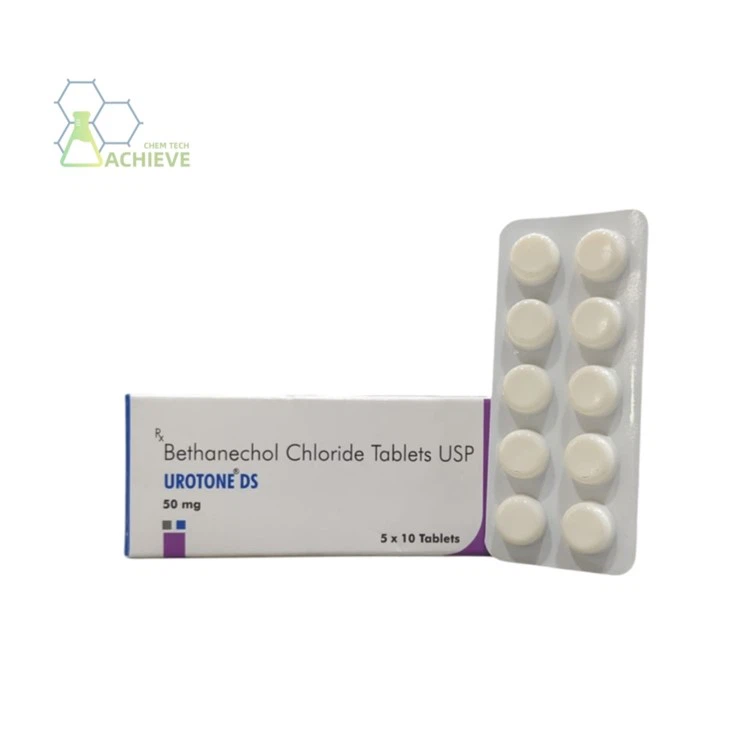


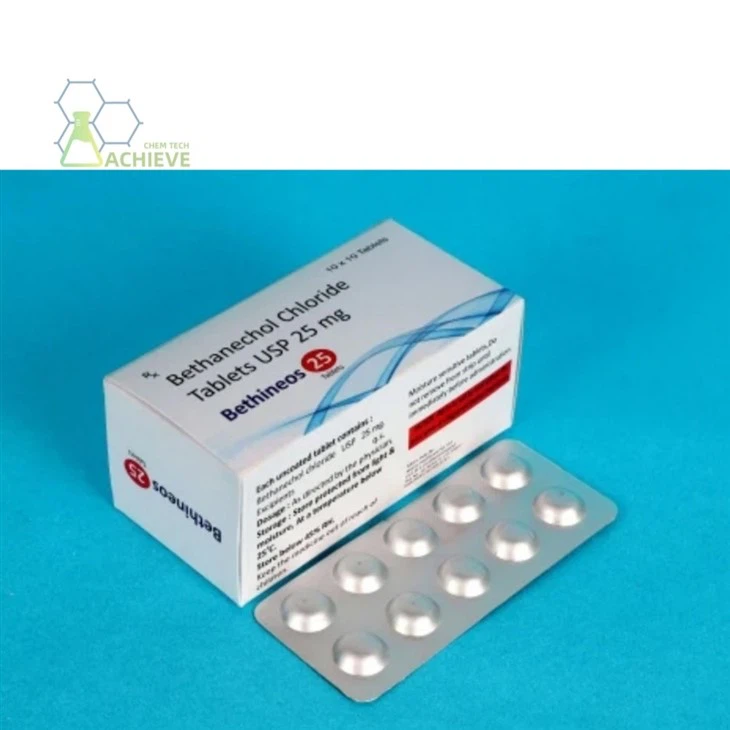

Bethanechol Tablets, The Chinese name can be translated as Bechlorpene Tablets, and common product names include Duvoid, Myotonachol, Ureecholine, etc. Its common name is bethanechol or bethanechol chloride, and its Chinese pronunciation is similar to "be then e-kole". By acting on cholinergic receptors, it exerts a series of pharmacological effects, mainly including promoting smooth muscle contraction in the urinary and gastrointestinal systems, increasing glandular secretion, etc. Clinically, the drug is mainly used to treat postoperative urinary retention, neurogenic bladder, gastroparesis, functional dyspepsia and other diseases. However, Bethanchol may also cause some adverse reactions, such as gastrointestinal reactions, cardiovascular reactions, and interact with other drugs.
(1) Classification of drugs
It belong to the category of genitourinary cholinergic agents, primarily acting by activating cholinergic receptors.
(2) Formulation and Specifications
This drug is supplied in the form of oral tablets, with common specifications including 5mg, 10mg, 25mg, 50mg, etc. Tablets of different specifications can meet the medication needs of different patients, and doctors will choose the appropriate dosage based on the specific situation of the patient.
(3) Storage conditions
Bethanechol Tablets should be stored at room temperature within the temperature range of 68 ° F to 77 ° F (approximately 20 ° C to 25 ° C). Appropriate storage conditions can ensure the quality and stability of drugs, ensuring that they exert their intended therapeutic effects within their expiration date

Our product



Additional information of chemical compound:
| Product Name | Bethanechol Cream | Bethanechol Injection | Bethanechol Tablets |
| Product Type | Cream | Injection | Tablets |
| Product Purity | ≥99% | ≥99% | ≥99% |
| Product Specifications | Customizable | Customizable | Customizable |
| Product Package | Customizable | Customizable | Customizable |
Our Product


Bethanechol+. COA
 |
||
Certificate of Analysis |
||
|
Compound name |
Bethanechol | |
|
CAS No. |
590-63-6 | |
|
Grade |
Pharmaceutical grade | |
|
Quantity |
Customized | |
|
Packaging standard |
Customized | |
| Manufacturer | Shaanxi BLOOM TECH Co., Ltd | |
|
Lot No. |
20250109001 |
|
|
MFG |
Jan 12th 2025 |
|
|
EXP |
Jan 8th 2029 |
|
|
Structure |
|
|
| TEST STANDARD | GB/T24768-2009 Industry. Stnndard | |
|
Item |
Enterprise standard |
Analysis result |
|
Appearance |
White or almost white powder |
Conformed |
|
Water content |
≤4.5% |
0.30% |
| Loss on drying |
≤1.0% |
0.15% |
|
Heavy Metals |
Pb≤0.5ppm |
N.D. |
|
As≤0.5ppm |
N.D. | |
|
Hg≤0.5ppm |
N.D. | |
|
Cd≤0.5ppm |
N.D. | |
|
Purity (HPLC) |
≥99.0% |
99.5% |
|
Single impurity |
<0.8% |
0.48% |
|
Residue on ignition |
<0.20% |
0.064% |
|
Total microbial count |
≤750cfu/g |
80 |
|
E. Coli |
≤2MPN/g |
N.D. |
|
Salmonella |
N.D. | N.D. |
|
Ethanol (by GC) |
≤5000ppm |
400ppm |
|
Storage |
Store in a sealed, dark and dry place at-20 degrees |
|
|
|
||


Diseases of the urinary system
Postoperative urinary retention: The operation may affect the normal function of the bladder, resulting in urinary retention. It can help patients urinate, relieve symptoms of urinary retention, and reduce complications caused by urinary retention, such as urinary system infection, by promoting the contraction of bladder detrusor.
Neurogenic bladder dysfunction: Certain neurological disorders, such as spinal cord injury, multiple sclerosis, etc., may affect the nerve innervation of the bladder, leading to bladder dysfunction. It can improve bladder emptying function, alleviate patients' difficulty urinating symptoms, and enhance their self-care ability.
Gastrointestinal diseases
Postoperative abdominal distension: After surgery, patients may experience slowed gastrointestinal motility due to anesthesia, surgical procedures, and other factors, leading to abdominal distension. Bethanechol Tablets can stimulate smooth muscle contractions in the gastrointestinal tract, promote gastrointestinal peristalsis, accelerate gas expulsion, alleviate bloating symptoms, and facilitate postoperative recovery of gastrointestinal function in patients.
Other causes of gastrointestinal dysfunction such as functional dyspepsia, it may also improve gastrointestinal motility, alleviate patients' symptoms, and enhance gastrointestinal digestion and absorption function.

There are a type of drug with cholinergic properties, and its main component, betamethacholine (carbamoylcholine, chlorocholine), can mimic the effect of acetylcholine on cholinergic receptors, thereby exerting a series of pharmacological effects. This drug is mainly used in clinical practice to treat certain specific urinary and gastrointestinal diseases, improving patients' symptoms by regulating the function of related organs.
(1) Cholinergic receptor types
Cholinergic receptors mainly include muscarinic receptors (mAChR) and nicotinic receptors (nAChR). MAChR can be further divided into subtypes such as M1, M2, M3, M4, M5, etc., which are widely distributed in the central nervous system and surrounding tissues, such as smooth muscles, glands, etc. NAChR mainly exists in neuromuscular junctions and autonomic ganglia. Bethanchol mainly acts on mAChR, especially the M2 and M3 receptor subtypes.
(2) Binding and activation with receptors
After binding to mAChR, Bethanchol can mimic the action of acetylcholine and activate receptors. When the receptor is activated, it triggers a series of intracellular signal transduction processes. For example, in smooth muscle cells, activated mAChR activates phospholipase C (PLC) through G protein coupling mechanism, which further catalyzes the hydrolysis of phosphatidylinositol diphosphate (PIP2) to produce diacylglycerol (DAG) and inositol triphosphate (IP3). IP3 can mobilize intracellular calcium stores to release calcium ions, causing an increase in intracellular calcium concentration and triggering smooth muscle contraction.

Effects on the urinary system

(1) Smooth muscle contraction of bladder
In the urinary system, Bethanchol can promote bladder smooth muscle contraction. There are abundant mAChRs distributed on the smooth muscle of the bladder. When Bethanchol binds to these receptors, it activates the receptors and triggers the aforementioned signal transduction process, leading to contraction of the bladder smooth muscle. This contraction effect can increase bladder pressure and promote urine excretion. For some diseases such as dysuria and urinary retention caused by the relaxation of bladder smooth muscle, Bethanchol can improve the urination function by enhancing the contractility of bladder smooth muscle.
(2) The impact on the urethral sphincter
In addition to its effect on bladder smooth muscle, Bethanchol may also have some impact on the urethral sphincter.
The contraction and relaxation of the urethral sphincter are crucial for the normal excretion of urine. Bethanchol may regulate the tension of the urethral sphincter, coordinate the functions of the bladder and urethra, and facilitate the smooth discharge of urine. However, further research is needed to clarify its specific mechanism of action and degree of impact on the urethral sphincter.
(3) Clinical application
In clinic, Bethanechol Tablets is commonly used to treat postoperative urinary retention, neurogenic bladder and other diseases. For postoperative patients, factors such as anesthesia and surgical trauma may lead to bladder smooth muscle paralysis and difficulty urinating. Bethanchol can help patients restore spontaneous urination function by promoting bladder smooth muscle contraction. For patients with neurogenic bladder, Bethanchol can regulate the neuromuscular function of bladder, improve the urine storage and urination function of bladder, and reduce the occurrence of urinary incontinence and retention.

Effects on the gastrointestinal tract

(1) Smooth muscle contraction of gastrointestinal tract
Bethanchol also has a significant contractile effect on the smooth muscles of the gastrointestinal tract. MAChR is also distributed on the smooth muscles of the gastrointestinal tract. Bethanchol binds to these receptors, activates them, and triggers intracellular signal transduction, leading to the contraction of gastrointestinal smooth muscles. This contraction effect can promote the peristalsis of the gastrointestinal tract, accelerate the digestion and emptying of food. For some digestive disorders and gastroparesis caused by insufficient gastrointestinal motility, Bethanchol can improve gastrointestinal motility by enhancing the contractility of smooth muscles in the gastrointestinal tract.
(2) Increased glandular secretion
In addition to promoting smooth muscle contraction in the gastrointestinal tract, Bethanchol can also stimulate glandular secretion in the gastrointestinal tract.
Bethanchol activates mAChR on glandular cells, promoting the secretion of various digestive fluids such as saliva, gastric acid, intestinal flGastrointestinal glands include salivary glands, gastric glands, intestinal glands, etc. The digestive fluids they secrete are crucial for the digestion and absorption of food.uid, etc. These digestive juices can increase the digestive enzymes and water content in the gastrointestinal tract, which helps with the digestion of food and the absorption of nutrients.
(3) Clinical application
In clinical practice, it can be used to treat diseases such as gastroparesis and functional dyspepsia. Patients with gastroparesis may experience delayed gastric emptying due to gastric motility disorders, leading to symptoms such as nausea, vomiting, and bloating. Bethanchol can improve gastric emptying function and alleviate symptoms in patients by promoting smooth muscle contraction and increasing gastric juice secretion. For patients with functional dyspepsia, Bethanchol can regulate the motility and secretion function of the gastrointestinal tract, improve the digestive capacity of the gastrointestinal tract, and alleviate the symptoms of indigestion in patients.

Gland secretion
Bethanechol Tablets (chlorobutylcholine tablets) as a direct-acting anticholinergic drug, has a significant impact on glandular secretion. Its mechanism of action and effects mainly manifest in the following aspects:
Direct stimulating effect on glandular secretion
Chlorobutinecholine directly stimulates the secretion activities of exocrine glands by activating muscarinic acetylcholine receptors (M receptors). Specifically, it manifests as:
Salivary glands: Chlorobuculine can significantly increase saliva secretion and alleviate dry mouth symptoms caused by radiotherapy or medication. This effect is commonly used in clinical practice to relieve salivary gland dysfunction, such as reduced saliva after radiotherapy for head and neck tumors.
Gastric glands: Chlorobuculine can stimulate the secretion of gastric acid by gastric wall cells and enhance gastric fluid secretion. This effect may have therapeutic value in patients with gastric motility disorders or insufficient gastric acid secretion, but it should be noted that it may aggravate gastric ulcers or reflux symptoms.
Other glands: Chlorobuculine can also promote the secretion of exocrine glands such as sweat glands and tear glands, but its clinical application is less often focused on these glands alone.
Comparison with Acetylcholine (ACh) Mechanism
Chlorobuculine is structurally similar to acetylcholine (ACh), but has the following key differences:
Stability: Chlorobutylcholine is a quaternary ammonium compound and is not easily decomposed by cholinesterase, thus its duration of action is significantly longer than that of acetylcholine. This characteristic enables it to continuously stimulate gland secretion without the need for frequent administration.
Blood-brain barrier permeability: The quaternary ammonium structure of chlorobutylcholine limits its ability to penetrate the blood-brain barrier, resulting in a smaller impact on the central nervous system and reducing the potential central side effects (such as tremors, anxiety) caused by acetylcholine.
Receptor selectivity: Chlorobutylcholine mainly acts on M receptors and has a weak effect on nicotinic acetylcholine receptors (N receptors), thus providing a more specific stimulation of gland secretion.
Adenoid Secretion-related Indications in Clinical Applications
The adenoid secretion stimulating effect of chlorobutylcholine is mainly used in the following scenarios in clinical practice:

Salivary gland dysfunction
For instance, dry mouth caused by radiotherapy or medication, chlorobutynine can improve the quality of life of patients by increasing saliva secretion.

Gastroparesis
In patients with insufficient gastric motility, chlorobutynine may indirectly improve digestive function by stimulating gastric acid secretion and gastric peristalsis.

Postoperative urinary retention
Although its main effect is bladder detrusor muscle contraction, the increase in glandular secretion (such as saliva) may serve as an indirect indicator of the drug's efficacy.
FAQ
1. Why is it swallowed instead of being taken sublingually?
After oral administration, betanechol needs to be absorbed through the intestinal tract to avoid directly stimulating the cholinergic receptors in the throat, thereby preventing sudden bronchospasm or bradycardia. Sublingual administration may trigger a systemic cholinergic crisis.
2. What are the risks of taking it together with magnesium-containing stomach medications?
Taking magnesium-containing antacids simultaneously may significantly accelerate the intestinal absorption of bethanechol, intensify the contraction of the intestinal smooth muscle, and cause cramp-like abdominal pain or diarrhea. It is recommended to take them at least 2 hours apart.
3. Why might there be a "cooling sensation" after taking the medicine?
Benzacine can activate the cholinergic receptors in peripheral blood vessels, causing transient dilation of skin blood vessels and secretion of sweat glands, resulting in heat loss from the body surface and causing a feeling of coldness. This effect is particularly pronounced when the environmental temperature is low.
4. What special warnings should be given to patients with glaucoma?
Even for closed-angle glaucoma, the systemic cholinergic effects of betahistine may alter the aqueous humor dynamics and potentially affect intraocular pressure. During medication use, it is necessary to closely monitor changes in intraocular pressure, rather than solely relying on the "open-angle/ closed-angle" classification to determine safety.
Hot Tags: bethanechol tablets, suppliers, manufacturers, factory, wholesale, buy, price, bulk, for sale