


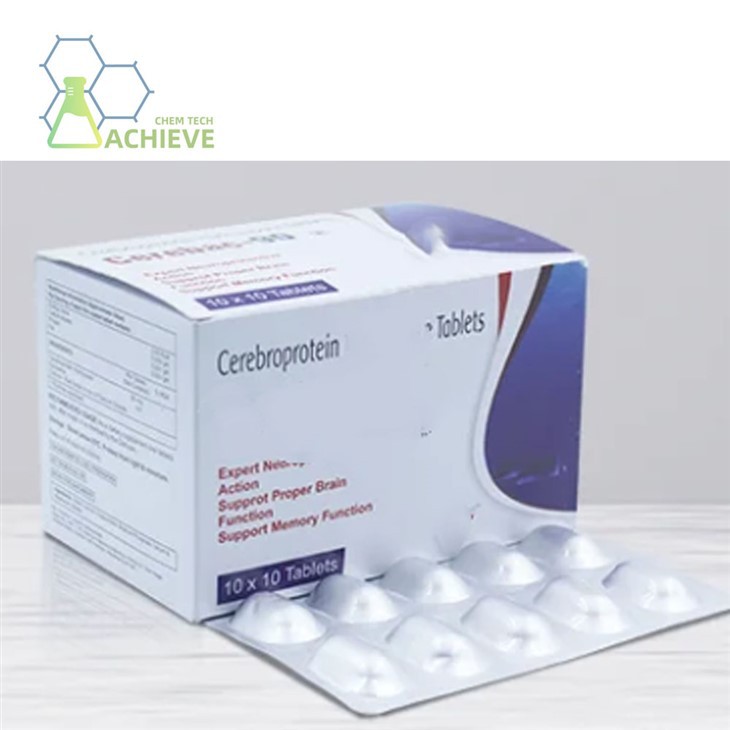

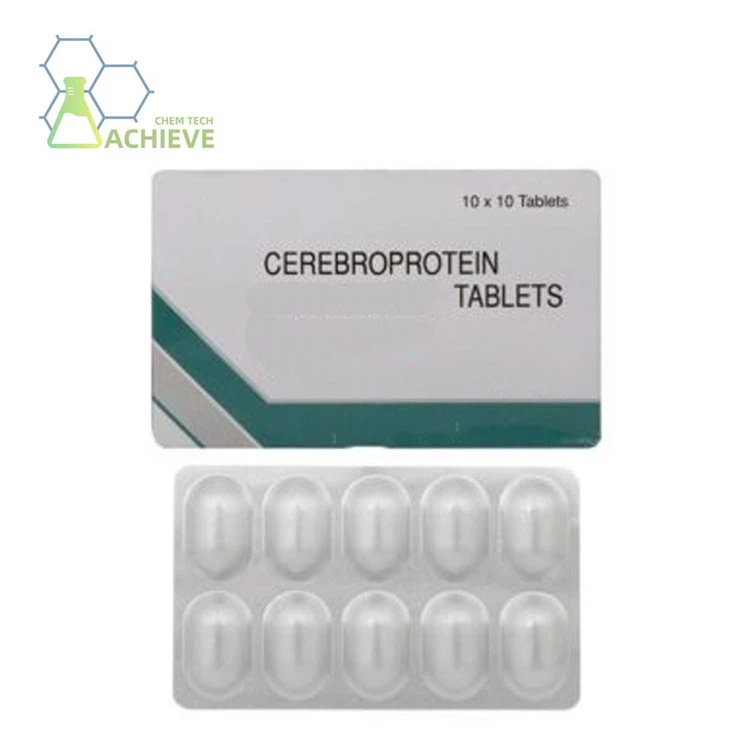
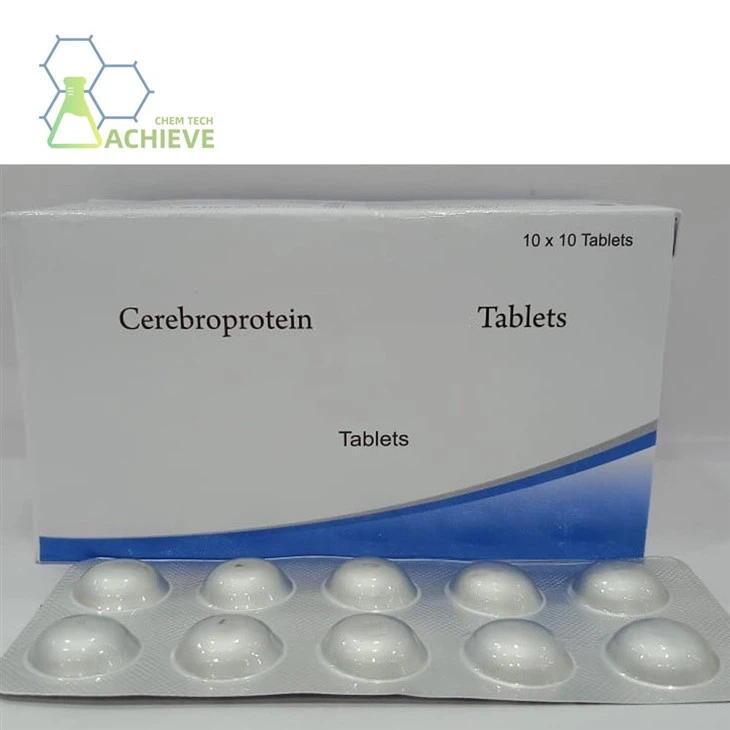
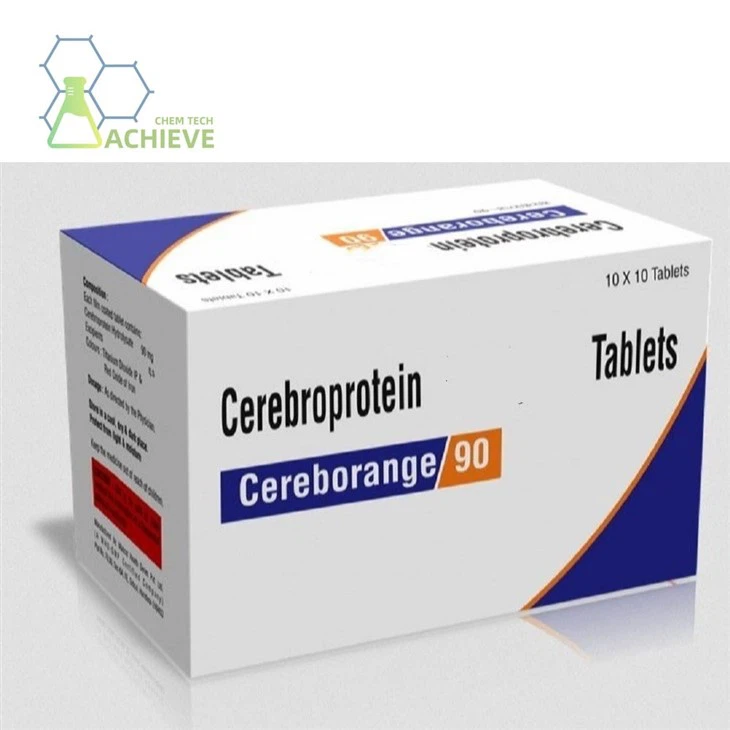


Shaanxi BLOOM Tech Co., Ltd. is one of the most experienced manufacturers and suppliers of cerebrolysin tablets in China. Welcome to wholesale bulk high quality cerebrolysin tablets for sale here from our factory. Good service and reasonable price are available.
Cerebrolysin Tablets are a peptide mixture purified from pig brain extract, mainly used to improve brain function. They are widely used in the adjuvant therapy of neurodegenerative diseases, cerebrovascular diseases, and brain injuries. It can protect nerve cells, reduce oxidative stress damage, inhibit neuronal apoptosis pathways (such as downregulating caspase-3 activity), enhance neuronal tolerance to pathological states such as ischemia and hypoxia, and reduce neuronal mortality after brain injury. It can also promote nerve repair and regeneration, activate the expression of nerve growth factor (NGF) and brain-derived neurotrophic factor (BDNF) in the brain, stimulate synaptic formation and neuronal protrusion growth, and improve the connectivity function of damaged neural circuits. Regulating brain metabolism and signaling pathways, enhancing the utilization of glucose and oxygen in the brain, promoting ATP synthesis to improve energy supply; Simultaneously regulating the glutamate glutamine cycle, balancing levels of excitatory neurotransmitters, and reducing neurotoxic damage.
Our products
|
|
|
|
|




| Product Name | Cerebrolysin Tablets | Cerebrolysin Capsule | Cerebrolysin Injection |
| Product Type | Tablet | Capsules | liquid |
| Product Purity | ≥99% | ≥99% | ≥99% |
| Product Specifications | 10mg/40mg/100mg | 10mg/40mg/100mg | 1ml/2ml/5ml/10ml |
| Product Form | Take Orally | Take Orally | Organic synthesis |
Cerebrolysin COA
 |
||
| Certificate of Analysis | ||
| Compound name | Cerebrolysin | |
| Grade | Pharmaceutical grade | |
| CAS No. | 12656-61-0 | |
| Quantity | 337.3kg | |
| Packaging standard | 25kg/drum | |
| Manufacturer | Shaanxi BLOOM TECH Co., Ltd | |
| Lot No. | 202501090045 | |
| MFG | Jan 9th 2025 | |
| EXP | Jan 8th 2028 | |
| Item | Enterprise standard | Analysis result |
| Appearance | White or almost white powder | Conformed |
| Water content | ≤5.0% | 0.47% |
| Loss on drying | ≤1.0% | 0.28% |
| Heavy Metals | Pb≤0.5ppm | N.D. |
| As≤0.5ppm | N.D. | |
| Hg≤0.5ppm | N.D. | |
| Cd≤0.5ppm | N.D. | |
| Purity (HPLC) | ≥99.0% | 99.90% |
| Single impurity | <0.8% | 0.47% |
| Total microbial count | ≤750cfu/g | 70 |
| E. Coli | ≤2MPN/g | N.D. |
| Salmonella | N.D. | N.D. |
| Ethanol (by GC) | ≤5000ppm | 500ppm |
| Storage | Store in a sealed, dark, and dry place below 2-8°C | |
|
|
||


Cerebrolysin Tablets is a peptide mixture extracted from pig brain protein, consisting of low molecular weight peptides (80%) and free amino acids (20%) as its core components. These components exert neuroprotective and neurotrophic effects by simulating the functions of endogenous neurotrophic factors in the human body, such as BDNF and NGF. Although the mainstream dosage form of Cerebrolysin is currently injectable (including intravenous drip and intramuscular injection), its use is expected to revolve around neurodegenerative diseases, cerebrovascular diseases, traumatic brain injury, and cognitive dysfunction if it exists in tablet form.
Scientific Principles: How Peptide Mixtures Simulate Neurotrophic Factor Function
The mechanism of action of Cerebrolysin is based on its similarity to endogenous neurotrophic factors in the human body, and it exerts its effects through the following pathways:
Penetrating the blood-brain barrier: Its low molecular weight allows it to directly enter brain tissue and bind to Trk receptors on neurons.
Activate signaling pathways: Promote synapse formation, axonal growth, and neurotransmitter synthesis through pathways such as PI3K/AKT. For example, BDNF (brain-derived neurotrophic factor) is one of the key factors simulated by Cerebrolysin, which enhances neuronal survival and synaptic plasticity by activating TrkB receptors.
Inhibit cytotoxicity: Reduce the cytotoxic effects of excitatory amino acids (such as glutamate) and protect neurons from damage. Animal experiments have shown that Cerebrolysin can reduce glutamate levels and decrease neuronal death after cerebral ischemia.
Regulating the expression of neurotrophic factors: Upregulating the expression of endogenous factors such as BDNF and NGF to provide a supportive microenvironment for damaged neurons. Preclinical studies have confirmed that Cerebrolysin can increase the content of BDNF in brain tissue and promote nerve repair.
Promote the differentiation of neural stem cells: stimulate the differentiation of neural stem cells into functional neurons, accelerate neural repair. Animal models have shown that Cerebrolysin can promote the proliferation and differentiation of neural stem cells after traumatic brain injury.
If Cerebrolysin exists in tablet form, its core components and mechanism of action are expected to be consistent with injections, but it needs to be absorbed through the intestine and enter the bloodstream before penetrating the blood-brain barrier. This process may reduce bioavailability, but oral convenience is its potential advantage.
Indications: Covering neurodegenerative diseases, cerebrovascular diseases, and traumatic brain injury
Alzheimer's disease is characterized by the deposition of beta amyloid protein and excessive phosphorylation of tau protein, leading to neuronal death and cognitive decline. Cerebrolysin works through the following mechanisms:
Reducing β - amyloid deposition: Preclinical studies have shown that Cerebrolysin can lower β - amyloid levels in the brains of transgenic mice and reduce plaque formation.
Inhibiting tau protein phosphorylation: By regulating kinase activity such as GSK-3 β, reducing tau protein hyperphosphorylation, and protecting the neuronal skeleton.
Improving cognitive function: Multiple small-scale clinical trials have shown that Cerebrolysin has a cognitive improvement effect on patients with mild to moderate Alzheimer's disease. For example, a randomized controlled trial (RCT) involving 200 patients showed that after 6 months of treatment, the MMSE score (Mini Mental State Examination) in the Cerebrolysin group increased by 2.1 points compared to the placebo group (p<0.05).

vascular dementia

Vascular dementia is caused by cerebral vascular disease leading to cerebral tissue ischemia and hypoxia, manifested as cognitive decline. Cerebrolysin works through the following mechanisms:
Improve brain metabolism: increase glucose utilization and oxygen uptake in brain tissue, alleviate ischemia and hypoxia injury.
Reduce inflammatory response: lower the levels of inflammatory factors such as IL-6 and TNF - α, and alleviate neuroinflammation.
Promote neural repair: stimulate the differentiation of neural stem cells and accelerate the repair of damaged neurons. A randomized controlled trial involving 150 patients showed that after 3 months of treatment, the MMSE score in the Cerebrolysin group increased by 1.8 points compared to the placebo group (p<0.05).
Acute ischemic stroke is caused by cerebral artery occlusion leading to ischemic necrosis of brain tissue, manifested as limb dysfunction, language disorders, etc. Cerebrolysin works through the following mechanisms:
Neuroprotection: Reduce glutamate release after ischemia, inhibit cell apoptosis, and protect neurons.
Promote functional recovery: Used in combination with neurological rehabilitation training to enhance neural plasticity and accelerate functional recovery. A randomized controlled trial involving 500 patients showed that after 3 months of treatment, the Barthel index (Activities of Daily Living Scale) of the Cerebrolysin combined rehabilitation group increased by 10.2 points compared to the rehabilitation group alone (p<0.01).
Safety: When used in combination with thrombolytic drugs (such as rt PA), it is safe and does not increase the risk of bleeding.

Cerebral arteriosclerosis and post-stroke sequelae

Cerebral arteriosclerosis is caused by the decrease of cerebral blood flow caused by atherosclerosis, which is manifested as dizziness, memory loss, etc. Cerebrolysin Tablets improves brain metabolism and alleviates symptoms. Preclinical studies have shown that Cerebrolysin can increase ATP content in brain tissue and improve energy metabolism.
Stroke sequelae include limb paralysis, language disorders, etc. Cerebrolysin promotes nerve repair and improves function. A randomized controlled trial involving 300 patients showed that after 6 months of treatment, the Fugl Meyer score (motor function scale) in the Cerebrolysin group increased by 8.5 points compared to the placebo group (p<0.01).
Traumatic brain injury, including concussion, cerebral contusion and laceration, can lead to cognitive impairment, motor disorders, etc. Cerebrolysin works through the following mechanisms:
Reduce neuronal death: inhibit cell apoptosis and protect damaged neurons.
Promote functional recovery: stimulate the differentiation of neural stem cells and accelerate nerve repair. Animal experiments have shown that Cerebrolysin can promote motor function recovery after traumatic brain injury.
Clinical evidence: A randomized controlled trial (RCT) involving 100 patients with traumatic brain injury showed that after 3 months of treatment, the GOS score (Glasgow Outcome Scale) in the Cerebrolysin group increased by 0.8 levels compared to the placebo group (p<0.05).

Other cognitive impairments

As age increases, brain tissue gradually shrinks and cognitive function declines. Cerebrolysin improves cognitive functions such as memory and attention by enhancing brain metabolism. Preclinical studies have shown that Cerebrolysin can increase BDNF levels in the brain tissue of elderly rats and improve cognitive function.
Chemotherapy drugs can damage neurons, leading to "chemotherapy brain" symptoms such as memory loss and lack of concentration. Cerebrolysin alleviates symptoms by reducing neuroinflammation. At present, the evidence is limited and further research is needed.
Potential advantages: oral convenience and long-term feasibility of use
If Cerebrolysin Tablets exists in tablet form, its potential advantages include:
Oral convenience
No injection required, patients can take medication on their own, improving treatment compliance. Especially suitable for elderly patients or those with limited mobility.
Long term feasibility of use
Injections require frequent medical attention, while tablets are more suitable for long-term maintenance treatment, especially for patients with chronic neurodegenerative diseases. For example, Alzheimer's disease patients require long-term treatment, and tablets can reduce the number of medical visits and lower the economic burden.
Cost effectiveness
The production and storage costs of oral preparations may be lower than those of injections, reducing the economic burden on patients. Injections need to be stored in refrigeration, while tablets can be stored at room temperature to reduce logistics costs.
Improved safety
Injections may cause local reactions (such as pain, redness, and swelling) or allergic reactions, while tablets absorbed through the intestine may reduce such risks. For example, the incidence of allergic reactions to injections is 0.5% -1%, while tablets may be lower.
However, tablet form may also face challenges:
Reduced bioavailability
Intestinal absorption and first pass effects may reduce the amount of drugs entering brain tissue. For example, if the oral bioavailability of BDNF is less than 1%, dosage form optimization (such as nanotechnology) is needed to improve absorption rate.
Delayed onset
Injections can quickly enter brain tissue, while tablets take longer to reach effective concentration. For example, injections take several hours to take effect, while tablets may take several days.
Individual differences
Intestinal absorption is influenced by factors such as diet and gut microbiota, which may lead to fluctuations in therapeutic efficacy. For example, a high-fat diet may reduce drug absorption rates.
Cerebrolysin tablets represent a paradigm shift in neurological therapeutics, merging the precision of biologic agents with the convenience of oral formulations. Their multimodal action addresses the complex pathophysiology of stroke, dementia, and TBI, offering clinically meaningful improvements in functional outcomes. While further research is needed to optimize dosing regimens and explore combination strategies, current evidence supports their integration into standard care protocols. As neurology transitions toward disease-modifying therapies, Cerebrolysin tablets stand as a testament to the potential of neurotrophic interventions in restoring brain health.
Hot Tags: cerebrolysin tablets, suppliers, manufacturers, factory, wholesale, buy, price, bulk, for sale