




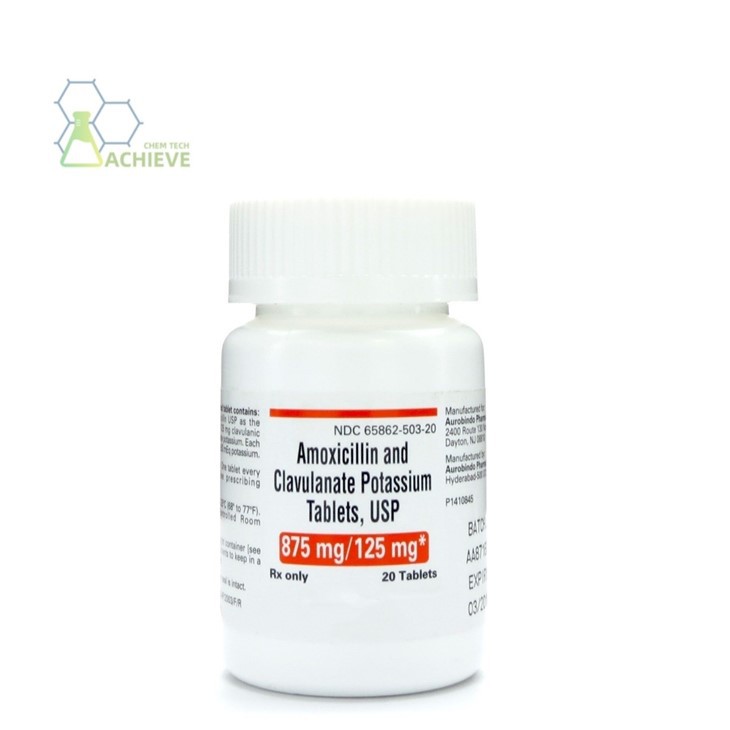
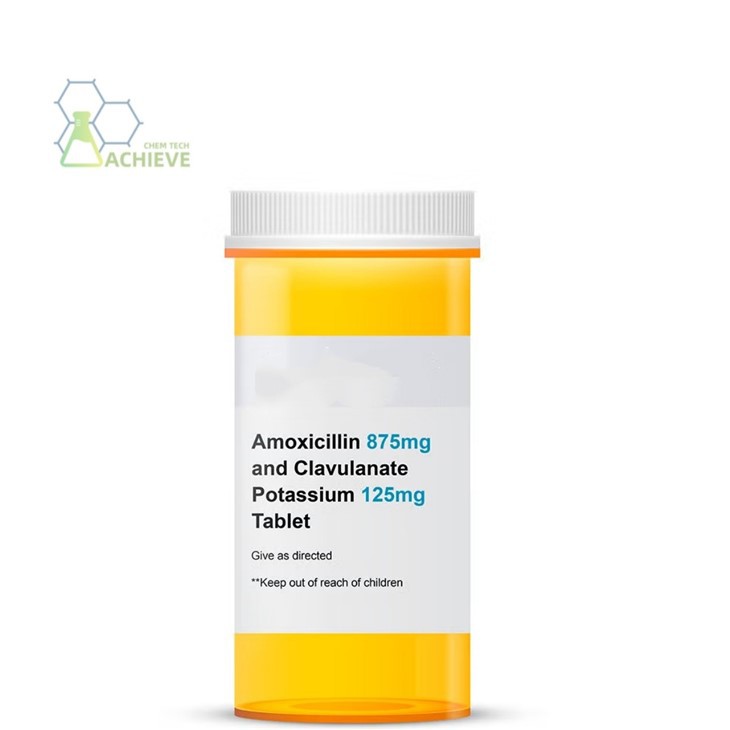
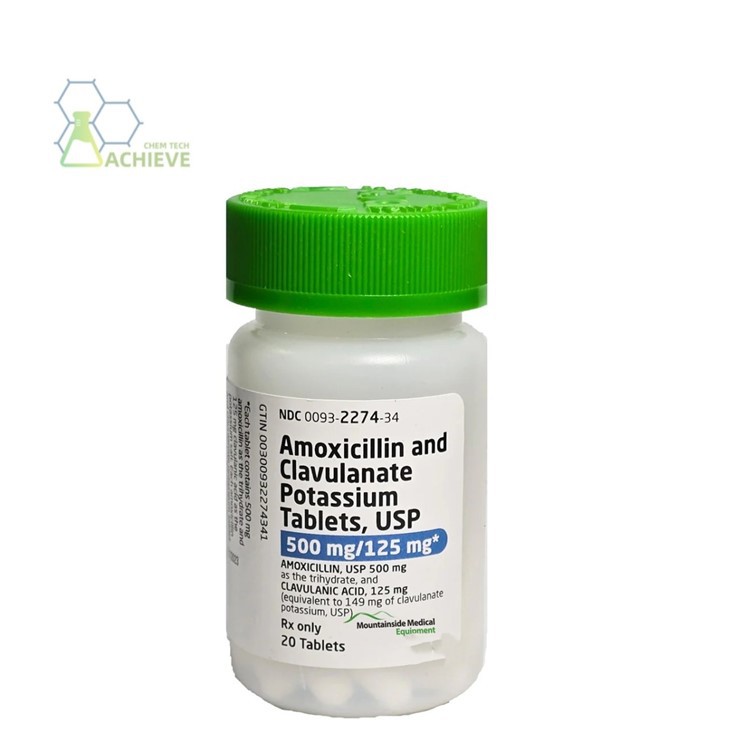
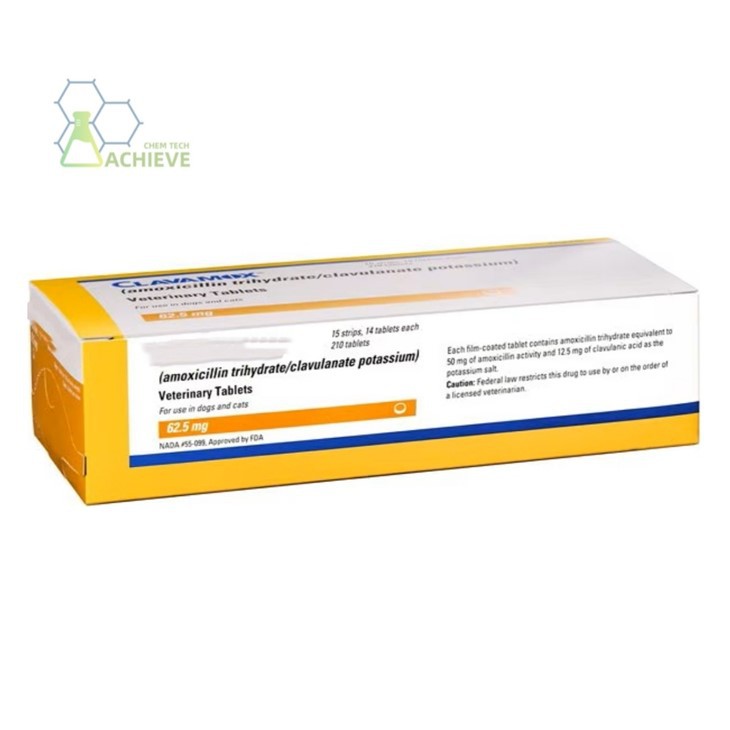
Shaanxi BLOOM Tech Co., Ltd. is one of the most experienced manufacturers and suppliers of amoxicillin and clavulanate potassium tablets in China. Welcome to wholesale bulk high quality amoxicillin and clavulanate potassium tablets for sale here from our factory. Good service and reasonable price are available.
Amoxicillin and clavulanate potassium tablets are a broad-spectrum beta lactam antibiotic compound preparation, composed of amoxycillin (ampicillin) and clavulanic acid potassium (beta lactase inhibitor) in a scientific ratio (commonly 4:1 or 7:1), which synergistically expands the antibacterial spectrum and enhances the efficacy against enzyme producing bacterium. This preparation has become the first-line choice for clinical treatment of enzyme producing bacterial infections due to its high efficiency, economy, and wide applicability.



Additional information of chemical compound:
| Product Name | Amoxicillin And Clavulanate Potassium Injection | Amoxicillin And Clavulanate Potassium Tablets | Amoxicillin And Clavulanate Potassium Suspension |
| Product Type | Injection | Tablet | Liquid |
| Product Purity | ≥99% | ≥99% | ≥99% |
| Product Specifications | Customizable | Customizable | Customizable |
| Product Package | Customizable | Customizable | Customizable |
Our product


Amoxicillin and clavulanate potassium tablets are compound preparations composed of amoxycillin (a beta lactam antibiotic) and potassium clavulanate (a beta lactam enzyme inhibitor), which synergistically break through bacterial resistance barriers and achieve broad-spectrum coverage of enzyme producing bacterium. It has a wide range of applications, covering multiple types of infections. The following provides a systematic analysis from multiple dimensions.
The antibacterial spectrum of product extends to Gram positive bacterium, Gram negative bacterium, and some anaerobic bacterium, especially suitable for infections caused by β - lactase producing strains. Specific indications include:(1)Lower respiratory tract infection
Community acquired pneumonia: caused by Streptococcus pneumoniae, Haemophilus influenzae (enzyme producing strains), and Moraxella catarrhalis (almost all enzyme producing strains).


Research has shown that the standard dose (875 mg/125 mg, twice daily) can cover over 90% of Streptococcus pneumoniae (including penicillin intermediate sensitive strains) and Haemophilus influenzae.
Acute exacerbation of chronic bronchitis: For enzyme producing bacterial infections, the course of treatment is usually 7-10 days, which can significantly reduce the failure rate of bacterial clearance (from 30% using amoxycillin alone to less than 5%).
Acute sinusitis: Covering Streptococcus pneumoniae, Haemophilus influenzae, and Moraxella catarrhalis, especially suitable for areas with an enzyme producing bacterial prevalence of>10% or patients with resistance risk factors (such as age ≥ 65 years, recent antibiotic use history).
(2) Urinary tract infection
Complex urinary tract infection: caused by Escherichia coli (ESBL producing strain) and Klebsiella genus.


Amoxycillin and clavulanic acid potassium protect amoxycillin from enzymatic hydrolysis by clavulanic acid, reducing the MIC value against ESBL producing bacterium from>256 μ g/mL to 8-16 μ g/mL and increasing the bacterial clearance rate to 70% -80%.
Asymptomatic bacteriuria: suitable for preventing enzyme producing bacterium infections in pregnant women or those planning to undergo urological surgery.
(3) Skin and soft tissue infections
Animal bites: covered with Pasteurella multocida (a common bacterium in cat bites), aerobic bacterium (such as Staphylococcus aureus), and anaerobic bacterium (such as Bacteroidetes). Research has shown that the infection rate of cat and dog bites treated with product is 40% lower than that of amoxycillin alone.
Diabetes foot infection: combined with local debridement, it can cover the enzyme producing Staphylococcus aureus, streptococcus and anaerobic bacterium, reducing the risk of amputation.


Acute otitis media: the preferred medication for children, especially suitable for areas where enzyme producing bacterium are prevalent. The standard dose can cover over 95% of Streptococcus pneumoniae and Haemophilus influenzae.
Tonsillitis: Targeting Group A β - hemolytic streptococcus and enzyme producing Staphylococcus aureus, a 10 day treatment course can reduce recurrence.
(5) Bone and joint infections
Osteomyelitis: As part of combination therapy, covering enzyme producing Staphylococcus aureus and Gram negative bacterium, requires surgical debridement and long-term intravenous treatment.
Abdominal infection
Secondary peritonitis: When combined with metronidazole, it covers aerobic bacterium (such as Escherichia coli) and anaerobic bacteria (such as Bacteroides fragilis), reducing the incidence of abdominal abscess.

Pathogenic Coverage: Expansion from Non Enzyme Producing Bacterium to Enzyme Producing Bacterium

The addition of clavulanic acid expands the antibacterial spectrum of amoxycillin from "non enzyme producing bacterium" to "enzyme producing bacteria", including:
(1)Gram-positive bacterium
Aerobic bacterium: Staphylococcus aureus (enzyme producing strain), Streptococcus faecalis, Staphylococcus epidermidis, Streptococcus pyogenes, Streptococcus pneumoniae (penicillin intermediate sensitive strain).
Anaerobic bacterium: Clostridium, Streptococcus, and Streptococcus.
(2) Gram-negative bacterium
Aerobic bacterium: Escherichia coli (ESBL producing strain), Klebsiella genus, Proteus mirabilis, Proteus mirabilis, Haemophilus influenzae (enzyme producing strain), Moraxella catarrhalis (almost all enzyme producing strain), Neisseria gonorrhoeae, Bordetella pertussis.
Anaerobic bacterium: Bacteroidetes genus (including Bacteroidetes fragilis), Clostridium genus.


(3) Special bacterial strains
Pathogen of cat scratch disease: Bartonella henselae (sensitive in vitro, but limited clinical experience).
Helicobacter pylori: When combined with proton pump inhibitors and clarithromycin, the eradication rate can reach 80% -90%.
(1) The transition between empirical therapy and targeted therapy
Community acquired pneumonia: Initial empirical treatment uses amoxycillin potassium (875 mg/125 mg, twice daily), covering Streptococcus pneumoniae and Haemophilus influenzae; If pathogen testing indicates atypical pathogens (such as mycoplasma), macrolides should be used in combination.


Urinary tract infection: The initial treatment is based on local resistance data. If the prevalence of ESBL producing bacterium is greater than 20%, amoxycillin clavulaate potassium combined with aminoglycosides can be directly used; If the pathogen is clearly identified as Escherichia coli (ESBL producing strain), it needs to be adjusted to carbapenems based on drug sensitivity results.
For example, in the treatment of complex urinary tract infections caused by ESBL producing Escherichia coli, amoxycillin clavulanate potassium (875 mg/125 mg, twice daily) and ciprofloxacin (500 mg, twice daily) can be used in combination, increasing the bacterium clearance rate to over 90%.
Multidrug resistant bacterium infections: such as Pseudomonas aeruginosa infection, there are ineffective, and anti Pseudomonas β - lactams (such as cefotaxime, piperacillin/tazobactam) should be used.


(2) Combination therapy for drug-resistant bacterial infections
ESBL bacterium infection: Amoxicillin and clavulanate potassium tablets can be used in combination with other non beta lactam antibiotics (such as aminoglycosides and fluoroquinolones) to enhance bactericidal efficacy through different mechanisms of action.
(3) Course optimization
Acute otitis media: The standard course of treatment for children is 10 days, which can reduce the recurrence rate (from 20% of a 5-day course to less than 10%).
Skin and soft tissue infection: The treatment course is usually 7-14 days, which needs to be adjusted according to the severity of the infection and the healing situation. For example, the infection of diabetes foot needs to be prolonged to 2-4 weeks and combined with local debridement.


(4) Drug resistance control and medication standards
Strictly grasp the indications: avoid using it for viral infections (such as common cold and flu) and non bacterium infectious diseases (such as allergic rhinitis).
Foot therapy medication: Even if symptoms improve rapidly, complete the entire treatment process (such as 7-10 days for pneumonia) to reduce the pressure of selecting drug-resistant bacterium.
Local medication restrictions: Avoid using product for local administration in the eyes or ears, as it may cause allergic reactions and the development of drug-resistant bacterium.

In 1962, scientists at Beecham (UK) synthesized amoxicillin, an aminopenicillin with broad-spectrum activity, excellent oral absorption, and high plasma concentrations. It was launched in the UK in 1972 and quickly became a first-line broad-spectrum antibiotic in clinical practice. However, bacteria producing β-lactamase could hydrolyze its β-lactam ring, leading to drug resistance. Resistant strains such as Staphylococcus aureus and Haemophilus influenzae surged, resulting in a sharp decline in therapeutic efficacy. Antibiotic resistance became a major challenge in anti-infective therapy during the 1970s.
In 1971, researchers isolated Streptomyces clavuligerus from soil samples in South America. Between 1972 and 1976, a team at Beecham discovered that the metabolites of this strain contained a potent β-lactamase inhibitor, which was named clavulanic acid in 1976. Although it had weak intrinsic antibacterial activity, it could bind to the serine residue at the active site of β-lactamase and irreversibly inhibit enzymatic activity, thereby protecting amoxicillin from degradation. This discovery provided a key solution to overcome antibiotic resistance.
Beecham selected the combination of amoxicillin and clavulanic acid to develop a compound preparation. A US patent was filed in 1979. Between 1981 and 1982, the combination tablet was first launched in the UK under the brand name Augmentin. It received US FDA approval in 1984. Clinical studies confirmed its efficacy against enzyme-producing resistant bacteria, with an expanded antibacterial spectrum and significantly enhanced activity.
In 1988, this combination was registered and launched in China. Subsequently, various ratio tablets were introduced, including 2:1, 4:1, 7:1, and 14:1, suitable for adults, children, and different types of infections. In 2002, the FDA approved a high-ratio 16:1 (2000/125 mg) tablet. To date, amoxicillin and clavulanate potassium tablets remain a core medicine worldwide for the treatment of respiratory, urinary tract, skin and soft tissue infections. It pioneered the "antibiotic + enzyme inhibitor" combination therapy and revolutionized anti-infective treatment.

Related Substances Test
Degradation products and related substances are determined by high performance liquid chromatography. Phosphate buffer solution is used as the mobile phase, separation is performed on a C18 column, and the detection wavelength is 230 nm. The limits for individual impurities and total impurities are calculated by the external standard method. The contents of amoxicillin polymers, clavulanic acid degradation products and other related impurities are strictly controlled to ensure medication safety.
Assay
The contents of the two components are determined simultaneously by high performance liquid chromatography. The column is packed with octadecylsilyl silica gel, gradient elution is adopted, and the detection wavelength is 220 nm. An appropriate amount of powder is taken, dissolved and diluted to volume, then injected. The percentage contents of amoxicillin and clavulanate potassium relative to the labeled amount are calculated respectively from the peak areas by the external standard method. The limits for both components shall be 90.0% to 110.0% of the labeled amount.
Dissolution and Uniformity Test
Dissolution is determined by the paddle method, using water as the dissolution medium, at a rotation speed of 75 rpm. The dissolution amount within 45 minutes shall be not less than 80% of the labeled amount. Content uniformity is also tested, and the deviation of single-dose content shall comply with pharmacopoeial requirements to ensure accurate dosage in each tablet.
FAQ
Is it a strong antibiotic?
+
-
By itself, clavulanate potassium only has weak antibacterial activity, but when used together with amoxicillin, it extends its spectrum so that it may be used to treat infections caused by beta-lactamase-producing organisms. Amoxicillin/clavulanate belongs to the drug class called penicillins.
What is the main side effect of it?
+
-
Augmentin (amoxicillin / clavulanate) is a widely-used antibiotic that treats bacterial infections. It's generally safe and effective, but it can come with some side effects. Diarrhea, nausea and vomiting, and skin rashes are common Augmentin side effects.
What to avoid while taking it?
+
-
It's best to avoid combining Augmentin and alcohol or other medications that can upset your stomach. Augmentin can increase the risk of bleeding if you take it with warfarin (Coumadin, Jantoven). And it can increase the risk of skin rashes if you take it with allopurinol (Zyloprim).
Hot Tags: amoxicillin and clavulanate potassium tablets, suppliers, manufacturers, factory, wholesale, buy, price, bulk, for sale