




Shaanxi BLOOM Tech Co., Ltd. is one of the most experienced manufacturers and suppliers of capromorelin tablets in China. Welcome to wholesale bulk high quality capromorelin tablets for sale here from our factory. Good service and reasonable price are available.
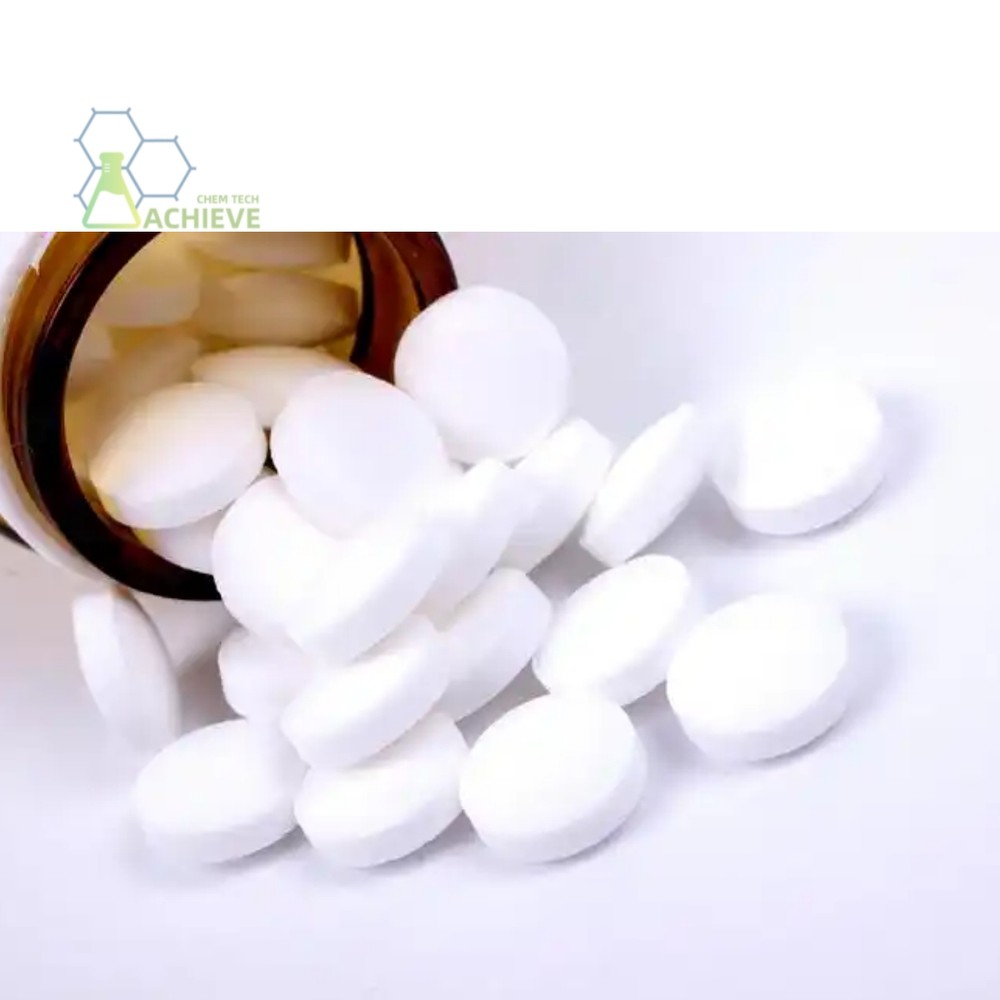
Capromorelin tablets is a pyrazoline pyridine dipeptide compound, chemically named (S) - O-phenylmethyllactaldehyde-N - (tert butoxycarbonyl) hydrazone, with a specific chemical structure that allows it to effectively bind to the growth hormone secretagogue receptor (GHSR) in the body. Its chemical structural formula is C28H35N5O4, CAS 193273-66-4, and molecular weight is 505.61. Its tartrate form (Capromerelin tartrate) has good solubility and bioavailability, which facilitates effective absorption through oral route. This chemical property enables it to function better in the body, providing a foundation for subsequent pharmacological actions and mechanisms. It has high oral activity and is an agonist of the growth hormone releasing peptide (Ghrelin) receptor, which can mimic the action of endogenous Ghrelin and stimulate appetite. Capromerelin Tablet are tablet made of Capromerelin for easy administration and dosage adjustment.
Formulation form and specifications:
In tablet form, common specifications may vary by manufacturer and region, but are typically expressed in milligrams of Capromerelin per tablet. Tablet of different specifications can meet the needs of dogs and cats with different weights and conditions, and veterinarians can choose the appropriate dosage based on the specific situation of the pet.
indication:
Mainly used to treat loss of appetite in dogs and cats, especially those caused by chronic diseases or age-related sexual dysfunction. It can significantly increase the appetite and food intake of dogs and cats, helping to improve their nutritional status and weight management.
Our product

Additional information of chemical compound:
| Product Name | Capromorelin Tablet | Capromorelin Oral Solution |
| Product Type | Tablet | Solution |
| Product Purity | ≥99% | ≥99% |
| Product Specifications | Customizable | Customizable |
| Product Package | Customizable |
Customizable |
Capromorelin +. COA
 |
||
Certificate of Analysis |
||
|
Compound name |
Capromorelin | |
|
CAS No. |
193273-66-4 | |
|
Grade |
Pharmaceutical grade | |
|
Quantity |
Customized | |
|
Packaging standard |
Customized | |
| Manufacturer | Shaanxi BLOOM TECH Co., Ltd | |
|
Lot No. |
20250109001 |
|
|
MFG |
Jan 12th 2025 |
|
|
EXP |
Jan 8th 2029 |
|
|
Structure |
|
|
| TEST STANDARD | GB/T24768-2009 Industry. Stnndard | |
|
Item |
Enterprise standard |
Analysis result |
|
Appearance |
White or almost white powder |
Conformed |
|
Water content |
≤4.5% |
0.30% |
| Loss on drying |
≤1.0% |
0.15% |
|
Heavy Metals |
Pb≤0.5ppm |
N.D. |
|
As≤0.5ppm |
N.D. | |
|
Hg≤0.5ppm |
N.D. | |
|
Cd≤0.5ppm |
N.D. | |
|
Purity (HPLC) |
≥99.0% |
99.5% |
|
Single impurity |
<0.8% |
0.48% |
|
Residue on ignition |
<0.20% |
0.064% |
|
Total microbial count |
≤750cfu/g |
80 |
|
E. Coli |
≤2MPN/g |
N.D. |
|
Salmonella |
N.D. | N.D. |
|
Ethanol (by GC) |
≤5000ppm |
400ppm |
|
Storage |
Store in a sealed, dark and dry place at-20 degrees |
|
|
|
||


Capromorelin tablets is a selective growth hormone secretion agonist (GHSR agonist) that has demonstrated unique application value in the medical field, especially in pet medicine.
(1) Promote the secretion of growth hormone
Capromerelin selectively stimulates the release of growth hormone by binding to growth hormone secretion receptors in the hypothalamus and pituitary gland. In rat pituitary cells, Capromerelin stimulates the secretion of growth hormone (GH) with an EC50 of 3 nM, demonstrating strong secretion promoting activity. This effect can activate various metabolic processes in the body, such as protein synthesis, fat metabolism, and skeletal muscle growth. For patients or animals with growth hormone deficiency, Capromerelin can supplement the deficiency of endogenous growth hormone, promote normal growth, development, and metabolism of the body.
(2) Improve appetite
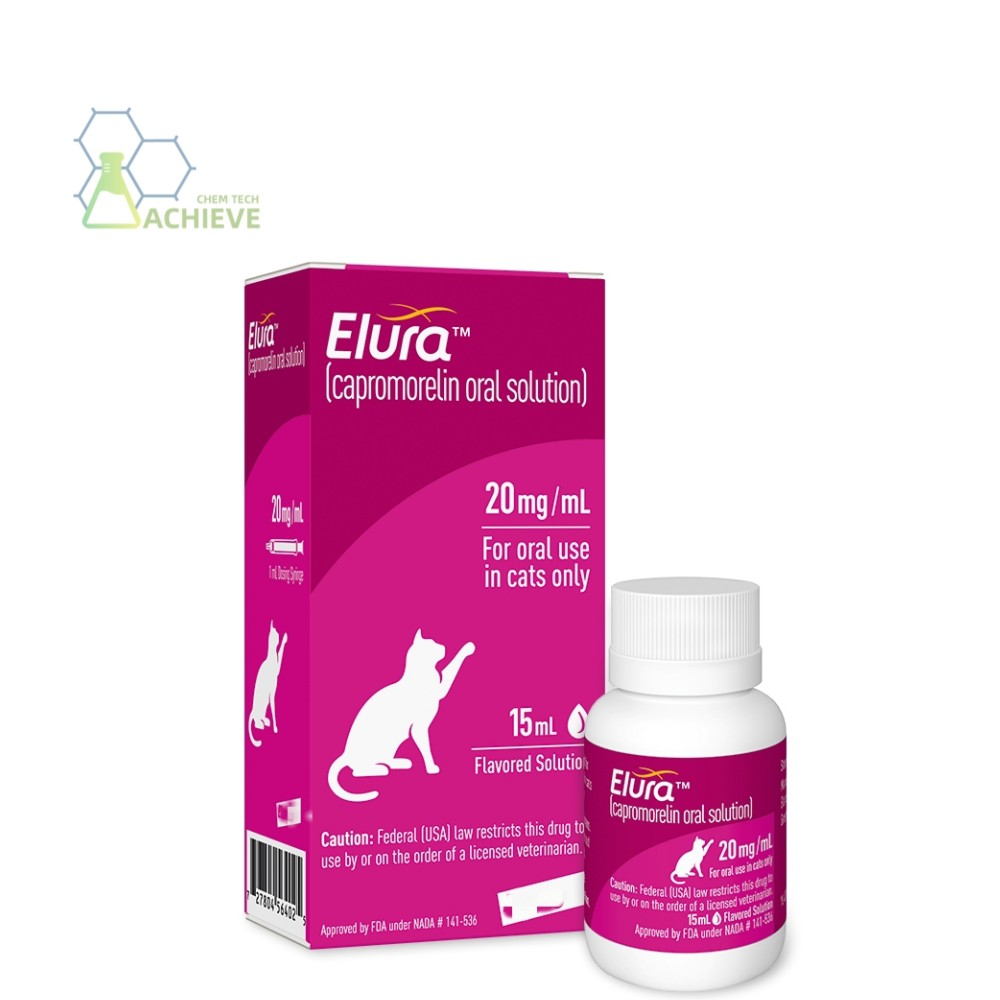
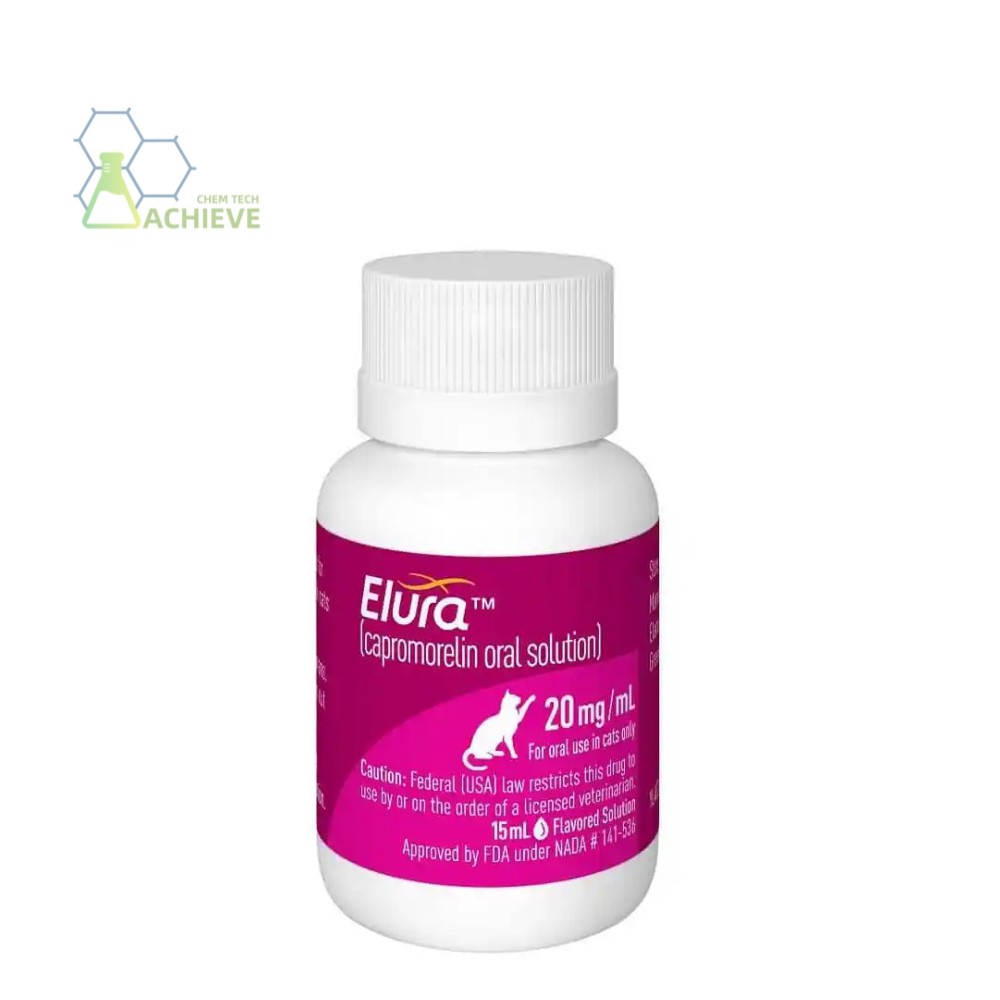
Capromerelin, as a ghrelin receptor agonist, can mimic the effects of ghrelin. Gastric ghrelin is commonly referred to as the "hunger hormone" because it is released from the stomach during meal intervals and acts on the hypothalamus, triggering strong food seeking behavior. Capromerelin increases the spontaneous food intake of animals by activating the ghrelin receptor. For example, in cats with chronic kidney disease (CKD), Capromorelin oral solution (Elura) is labeled for managing weight loss while also increasing the cat's food intake and improving its nutritional status.


(3) Increase muscle mass
Due to Capromerelin promoting the secretion of growth hormone, growth hormone plays an important role in muscle synthesis. It can stimulate the proliferation and differentiation of muscle cells, increase protein synthesis, reduce protein breakdown, thereby helping to increase muscle mass. This is particularly important for elderly animals or animals with muscle loss due to illness, as it can improve their physical strength and quality of life.
(4) Improve physical strength
The increased secretion of growth hormone can also improve the physical strength of animals. Growth hormone can increase the body's energy metabolism level, enhance muscle strength and endurance. Capromerelin promotes the secretion of growth hormone, making animals more energetic during activities and improving their daily and physical abilities.
(1) Combined with GHSR
Capromerelin specifically binds to GHSR in the hypothalamus and pituitary gland, which is a key step in its pharmacological action. GHSR is a G protein coupled receptor that activates intracellular signaling pathways when capromorelin binds to it.
(2) Activate signal transduction pathway
After binding to GHSR, Capromerelin activates the intracellular phospholipase C (PLC) signaling pathway. After activation, PLC catalyzes the hydrolysis of phosphatidylinositol diphosphate (PIP2) to produce diacylglycerol (DAG) and inositol triphosphate (IP3). DAG can activate protein kinase C (PKC), while IP3 can promote intracellular calcium ion release.


The changes in the se signaling molecules further trigger a series of intracellular reactions, ultimately leading to an increase in the secretion of growth hormone.
(3) Regulating metabolic processes
After the secretion of growth hormone increases, it will act on tissues such as liver, muscle, and fat, regulating various metabolic processes. In the liver, growth hormone can promote protein synthesis and gluconeogenesis; In muscles, it can promote the growth and repair of muscle cells; In adipose tissue, growth hormone can promote fat breakdown and reduce fat accumulation. These metabolic regulatory effects collectively promote the growth and development, muscle gain, and physical improvement of animals.
(1) Treatment of growth hormone deficiency
capromorelin tablets can be used as a therapeutic drug for growth retardation and short stature caused by growth hormone deficiency in humans and animals. By promoting the secretion of growth hormone, it helps patients or animals achieve normal levels of growth and development.
(2) Managing sarcopenia and weight loss in elderly animals
As they age, elderly animals often experience muscle loss and weight loss. Capromorelin can increase the appetite of elderly animals, promote growth hormone secretion, increase muscle mass, improve weight management, and enhance the quality of life of elderly animals.
(3) Management of chronic diseases in pets
In chronic diseases of pets, such as chronic kidney disease in cats, animals often experience problems such as loss of appetite and weight loss. Capromorelin can be used to manage these symptoms, increase pet food intake, improve nutritional status, and contribute to disease recovery and overall pet health.


Kaprelin is a growth hormone releasing peptide agonist that can be used to treat insulin resistance in mammals.
Step A
First, inorganic or organic bases (such as TEA, DMAP, hydroxides or carbonates, preferably TEA) are added, and then the amino protecting group (preferably (Boc) 2O) is added to a solution of 4-oxo-piperidine-3-carboxylic acid ethyl ester hydrochloride in a reactive inert organic solvent (such as IPE, THF, dichloromethane and EtOAc, preferably IPE and water) with or without water as a co solvent. Stir the above mixture for approximately 1 to 24 hours, preferably overnight, and under nitrogen. Separate the organic phase and perform post-treatment according to standard methods known to those skilled in the art. Then, concentrate to obtain the desired product in crystalline form.
Step B
Add inorganic or organic bases (such as TEA, DMAP, hydroxides or carbonates, preferably lithium carbonate) to a solution of 4-oxo-piperidine-1,3-dicarboxylic acid 1-tert butyl ester 3-ethyl ester in an organic solvent (such as THF, IPE, alcohol, DNF or DMSO, preferably DMF), and then add benzyl bromide. Heat the mixture to approximately 25 to 100 ℃, preferably 60 ℃; And stir for about 1 to 24 hours, preferably 20 hours. Then, the reaction mixture is cooled to room temperature and extracted with organic solvents (such as IPE, toluene, THF, or EtOAc) and subjected to post-treatment according to standard methods known to those skilled in the art to obtain the desired compound.
Step C
Add methylhydrazine to a solution of 3-benzyl-4-oxo-piperidine-1,3-dicarboxylic acid 1-tert-butyl-3-ethyl ester in an organic solvent (such as alcohol, THF, or toluene) at approximately 0 ° C to room temperature, followed by the addition of acid (such as sulfuric acid, hydrochloric acid, acetic acid, or TsOH, preferably acetic acid). Slowly heat the reaction mixture to about 40 to 100 ℃, preferably about 65 ℃, and stir for about 3 to 10 hours, preferably about 7.5 hours. After cooling to room temperature, the organic layer was washed with 10% sodium bicarbonate and subjected to post-treatment and concentration according to standard methods known to those skilled in the art to obtain the desired compound.
Step D
Mix the concentrated solution obtained from step C with an organic solvent such as IPE, cool to approximately -10 to 10 ℃ (preferably 0 ℃), repeat the introduction of acid (such as MeSO3H, TFA, or HCl, preferably HCl gas), and stir at room temperature until complete hydrolysis. After concentrating the mixture, add an organic solvent (such as dichloromethane, IPE, or THF), and then add a base (such as hydroxide, carbonate, preferably NH4OH). Then, extract the mixture with dichloromethane, IPE, or THF and concentrate to obtain the desired compound.
Step E
Add L-tartaric acid to a solution of 3a-benzyl-2-methyl-2,3a, 4,5,6,7-hexahydro-pyrazolo [4,3-c] pyridin-3-one in a mixture of acetone/water (1% to 11% water, preferably 5% water/acetone). Heat the mixture to 25 to 60 ℃, preferably around 50 ℃, and stir, preferably overnight. Cool the reaction mixture to a preferred temperature of approximately 10 to 15 ℃, filter out the precipitate, wash with cold acetone/water, and dry to obtain the desired compound.
Step G
Mix 2-aminoisobutyric acid, base (such as hydroxide, preferably 1N NaOH), (Boc) 2O, and organic solvent (such as THF, IPE, or dioxane) together and stir overnight at room temperature. Dilute the above reaction mixture with an organic solvent (such as ethyl acetate) and adjust the pH to approximately 3 to 7 by adding an aqueous solution of acid, such as HCl. Separate the organic phase and perform post-treatment according to standard methods known to those skilled in the art to obtain the desired compound.
Step H
To a solution of 2-amino-3-benzyloxypropionic acid in water and inorganic or organic base (preferably TEA), add a solution of 2,5-dioxopyrrolidin-1-yl ester of 2-tert-butoxycarbonylamino-2-methylpropionic acid in an organic solvent (such as THF). Stir the reaction mixture, preferably overnight, and preferably at room temperature under nitrogen. Add an aqueous solution of acid, taking 10% citric acid solution as an example, to the mixture. Stir the mixture for a few minutes, then dilute it with an organic solvent such as ethyl acetate. Separate the organic phase and perform post-treatment according to standard methods known to those skilled in the art. Then, concentrate to obtain the capromorelin tablets in crystalline form.
Steps F and I
Add the base of TEA as an example to a solution of 3a - (R) - benzyl-2-methyl-2,3a, 4,5,6,7-hexahydro-pyrazolo [4,3-c] pyridin-3-one, L-tartrate in an organic solvent (such as ethyl acetate) at approximately -78 to 20 ℃, preferably around -66 ℃. Stir the compound for 1 to 24 hours, preferably about 1.5 hours. After removing the precipitated salt, 3-benzyloxy-2- (2-tert-butoxycarbonylamino-2-methylpropionylamino) propionic acid and a base such as TEA are added at approximately -50 to 0 ℃, preferably around -35 ℃; Then, a peptide coupling agent is added, preferably a 50% solution of 1-propanephosphonic acid cyclic anhydride (PPAA) in ethyl acetate. Stir the reaction mixture at approximately -50 to 0 ℃, preferably approximately -20 ℃ to approximately -27 ℃, for approximately 1 to 6 hours, preferably approximately 2 hours; Then, slowly raise the temperature to the preferred level of approximately 0 ℃. Pour the reaction mixture into water and extract it with organic solvents such as IPE. Then, separate the organic phase and perform post-treatment according to standard methods known to those skilled in the art to obtain the desired compound.
Step J
TFA is added to a solution of {1- [2- (3a - (R) - benzyl-2-methyl-3-oxo-2,3,3,3,4,6,7-hexahydro-pyrazolo [4,3-c] pyridin-5-yl) -1- (R) - benzyloxymethyl-2-oxo-ethylcarbamoyl] -1-methyl-ethyl} carbamate tert butyl ester in an organic solvent (such as dichloromethane) at approximately -10 to 10 ℃, preferably 0 to 5 ℃, and the temperature is preferably maintained below approximately 5 ℃. Then, raise the temperature to room temperature. Stir the mixture for about 1 to 6 hours, preferably about 3 hours. Replace dichloromethane with other organic solvents such as ethyl acetate. Then, adjust the pH of the mixture to approximately 7 to 9, preferably 8, using an alkaline aqueous solution such as a saturated sodium bicarbonate solution, and perform post-treatment according to standard methods known to those skilled in the art to obtain the desired compound.

Usage and precautions
Usage method:
The usage of Capromerelin is relatively simple. The appropriate dosage is usually determined based on the weight and condition of the dog or cat, and then the tablet is directly administered orally to the dog or cat. Before administration, it should be ensured that dogs and cats can swallow the tablts normally. If necessary, the tablts can be mixed with a small amount of food before administration. After administration, the reactions and appetite changes of dogs and cats should be observed in order to adjust the dosage or treatment plan in a timely manner.
Dose adjustment:
Veterinarians will adjust the dosage of Capromorelin based on the weight, condition, and appetite improvement of dogs and cats. The initial dose is usually low, and then gradually adjusted to the appropriate maintenance dose based on the therapeutic effect. During the dose adjustment process, it is necessary to closely monitor the appetite, weight, and overall health status of dogs and cats.
Administration time:
It is recommended to administer Capromerelin before meals to fully utilize their appetite stimulating effects. But the specific administration time can also be adjusted according to the eating habits of dogs and cats and the advice of veterinarians.
Observe the reaction:
After administration, the reactions and appetite changes of dogs and cats should be closely observed. If dogs or cats experience serious adverse reactions or have poor appetite, they should seek medical attention promptly. At the same time, it is necessary to regularly monitor the weight, blood routine, biochemical indicators, etc. of dogs and cats to evaluate the effectiveness and safety of treatment.
Drug interactions:
When using Capromerelin, attention should be paid to their interactions with other medications. At present, there is relatively little research on the interaction between Capromerelin and other drugs, but if other drugs are used simultaneously, veterinary or pharmacist advice should be consulted to avoid potential drug interactions.
Storage conditions:
Capromerelin should be stored in a cool, dry, and dark place to avoid the impact of high temperature and humidity on drug quality. At the same time, keep the medication out of reach of children and pets to ensure medication safety.
Capromorelin tablets, as a selective growth hormone secretion agonist, activates the signaling pathway by binding to GHSR, promotes growth hormone secretion, and has various pharmacological effects such as improving appetite, increasing muscle mass, and improving physical strength. In clinical applications, it can be used to treat growth hormone deficiency, manage muscle loss and weight loss in elderly animals, and manage chronic diseases in pets. However, attention should be paid to its safety and interactions with other drugs during use to ensure the safe and effective use of the medication. With the continuous deepening of research on Capromorelin, its application prospects in the medical field will become even broader.
Future research will focus on expanding indications (e.g., cachexia, sarcopenia), optimizing formulations (e.g., tablets), and exploring translational applications in human medicine. As the demand for precision veterinary care grows, capromorelin is poised to remain a cornerstone of therapeutic strategies for improving the quality of life of companion animals worldwide.
Hot Tags: capromorelin tablets, suppliers, manufacturers, factory, wholesale, buy, price, bulk, for sale