





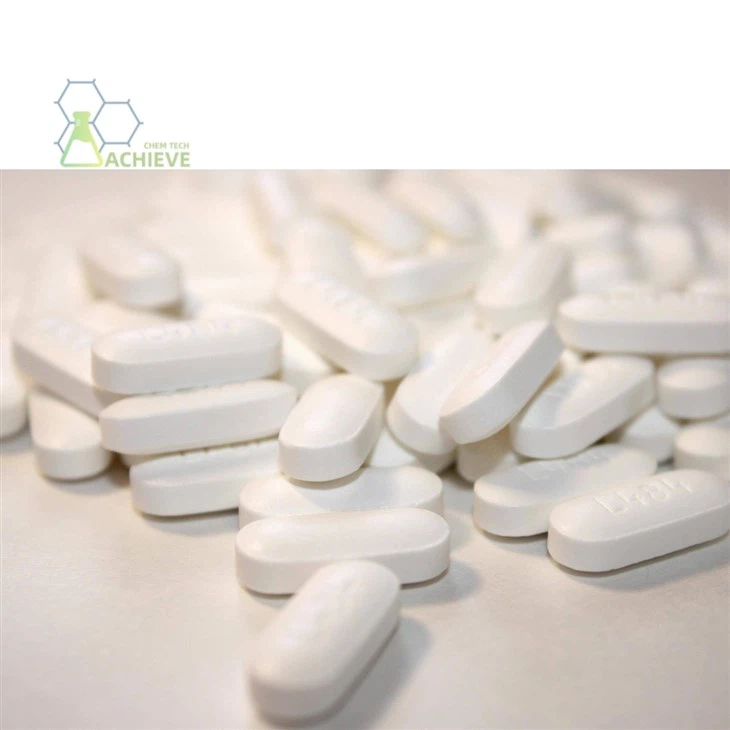
Ketoconazole tablet 100 mg, the main active ingredient is ketoconazole, with the chemical name 1-acetyl-4- [4- [2- (2,4-dichlorophenyl) -2- (1H-imidazol-1-methyl) -1,3-dioxolane-4-methoxy] phenyl] piperazine. Its molecular formula is C26H28Cl2N4O4, with a molecular weight of 531.44. Ketoconazole tablets are usually white tablets with a specification of 0.2 grams per tablet. As a representative imidazole broad-spectrum antifungal drug, it has played an important role in clinical treatment, but it has also attracted a lot of attention due to potential risks.

Ketoconazole typically appears as a white to off white crystalline powder, odorless or with a weak characteristic odor. Its crystal morphology is regular, the texture is delicate, and a typical crystal structure can be observed under a microscope. This appearance feature is closely related to its chemical structure. The imidazole ring, dioxane ring, benzene ring and other structural units contained in ketoconazole molecules form a stable crystal structure through covalent bonds and intermolecular forces.
The morphology of crystalline powder not only affects the purity detection of drugs, but is also closely related to the preparation process and drug release characteristics of the formulation. For example, in cream preparation, the crystalline morphology of ketoconazole may affect its dispersion uniformity in the matrix, thereby affecting the drug's penetration efficiency on the skin surface.
Our product




Additional information of chemical compound:
| Product Name | Ketoconazole powder | ketoconazole Table |
| Product Type | Powder | Table |
| Product Purity | HPLC≥99.0% | ≥99% |
| Product Specifications | 100g/1kg/etc. | Customizable |
| Product Package | PE/Al foil bag/ paper box for Pure powder |
100 tablets/Bottle 80 bottles/Box |
|
|
|


Ketoconazole +. COA
 |
||
Certificate of Analysis |
||
|
Compound name |
Ketoconazole | |
|
CAS No. |
65277-42-1 | |
|
Grade |
Pharmaceutical grade | |
|
Quantity |
Customized | |
|
Packaging standard |
Customized | |
| Manufacturer | Shaanxi BLOOM TECH Co., Ltd | |
|
Lot No. |
20250109001 |
|
|
MFG |
Jan 12th 2025 |
|
|
EXP |
Jan 8th 2028 |
|
|
Structure |
 |
|
| TEST STANDARD | GB/T24768-2009 Industry. Stnndard | |
|
Item |
Enterprise standard |
Analysis result |
|
Appearance |
White or almost white powder |
Conformed |
|
Water content |
≤4.5% |
0.30% |
| Loss on drying |
≤1.0% |
0.15% |
|
Heavy Metals |
Pb≤0.5ppm |
N.D. |
|
As≤0.5ppm |
N.D. | |
|
Hg≤0.5ppm |
N.D. | |
|
Cd≤0.5ppm |
N.D. | |
|
Purity (HPLC) |
≥99.0% |
99.5% |
|
Single impurity |
<0.8% |
0.48% |
|
Residue on ignition |
<0.20% |
0.064% |
|
Total microbial count |
≤750cfu/g |
80 |
|
E. Coli |
≤2MPN/g |
N.D. |
|
Salmonella |
N.D. | N.D. |
|
Ethanol (by GC) |
≤5000ppm |
400ppm |
|
Storage |
Store in a sealed, dark and dry place at-20 degrees |
|
|
|
||
|
|
||



Pharmacological mechanism and antibacterial spectrum
Ketoconazole tablet 100 mg exerts antifungal effects through multiple mechanisms. The core mechanism is to interfere with the activity of fungal cytochrome P-450, thereby inhibiting the biosynthesis of ergosterol, the main sterol on the fungal cell membrane. This process not only damages the structure of fungal cell membranes, but also changes their permeability, leading to the leakage of important intracellular substances. In addition, ketoconazole can inhibit the biosynthesis of fungal triglycerides and phospholipids, as well as the activity of oxidases and peroxidases, leading to the accumulation of hydrogen peroxide in cells, ultimately resulting in cellular microstructural degeneration and cell necrosis.
Ketoconazole has broad-spectrum antibacterial activity and is effective against various deep-seated and superficial fungi. Specifically, it has antibacterial activity against deep-seated infectious fungi such as Candida, Chromogenic Fungi, Sphingosporum, Histoplasma, and Sporothrix, as well as against superficial fungi such as Trichophyton. However, ketoconazole has relatively poor effects on fungi such as Aspergillus, Burkholderia sporogenes, certain dark colored fungi, and Mucor genus. The broad spectrum of this antibacterial spectrum makes ketoconazole potentially valuable for the treatment of various fungal infections.

Clinical application and indications
Ketoconazole is widely used in clinical practice, covering the treatment of various systemic fungal infections and skin fungal infections.

(1) Systemic fungal infection
Candidiasis: including chronic cutaneous and mucosal candidiasis, oral candidiasis, urinary tract candidiasis, etc. Ketoconazole has also shown good therapeutic effects on chronic and recurrent vaginal candidiasis that is ineffective in local treatment.
Deep fungal diseases: such as dermatitis blastomycosis, coccidiomycosis, tissue cytoplasmic mycosis, chromogenic mycosis, para coccidiomycosis, etc. These diseases are usually caused by deep-seated fungi and are difficult to treat. Ketoconazole, as an effective antifungal drug, provides a new option for the treatment of these diseases.
(2) Skin fungal infection
Superficial fungal diseases: such as tinea pedis, tinea pedis, tinea corporis, tinea crus, pityriasis versicolor, etc. These diseases are caused by skin fungi and yeast, manifested as symptoms such as itching, redness, and flaking of the skin. Ketoconazole effectively alleviates these symptoms by inhibiting fungal growth and reproduction.
Stubborn skin fungal infections: Ketoconazole can be used as a treatment option for severe stubborn skin fungal infections that are ineffective with local treatment or oral administration of oxytetracycline, or are difficult to receive oxytetracycline treatment.

In addition, ketoconazole tablet 100 mg can also be used to treat and control dandruff and related desquamation, scaling, itching, as well as seborrheic dermatitis and other diseases. Although these diseases do not belong to fungal infections, ketoconazole can also alleviate symptoms to some extent through its anti-inflammatory and immunosuppressive effects.

Adverse reactions and risk monitoring
Ketoconazole may cause various adverse reactions during the treatment process and requires close monitoring and timely treatment.

(1) Hepatotoxicity
Hepatotoxicity is one of the most serious adverse reactions of ketoconazole. It can cause an increase in serum aminotransferase, manifested as symptoms such as jaundice, dark urine color, and abnormal fatigue. The incidence of hepatotoxicity is about 0.01%, but once it occurs, the consequences can be severe, and even death cases have been reported. Hepatitis like cases also occur in children. Therefore, before using ketoconazole, patients need to undergo liver function assessment and regularly monitor liver function indicators during treatment. If abnormal liver function is found, medication should be stopped in a timely manner and corresponding treatment measures should be taken.
(2) Gastrointestinal reactions
Gastrointestinal reactions are one of the common adverse reactions of ketoconazole, manifested as nausea, vomiting, poor appetite, abdominal pain, diarrhea, indigestion and other symptoms. These symptoms are usually mild and can self resolve after discontinuation of medication. But for patients with severe symptoms, symptomatic treatment can be given, such as the use of antiemetic drugs, gastric mucosal protectants, etc.
(3) Endocrine system response
Ketoconazole can inhibit the synthesis of testosterone and adrenal cortex hormones, leading to endocrine system reactions such as breast development and semen deficiency in males. These reactions usually gradually recover after discontinuation of medication, but for patients with severe symptoms, endocrine therapy may be necessary.


(4) Skin irritation
When using ketoconazole topically, there may be a burning and itching sensation on the skin of the medication site, and some may experience skin irritation symptoms such as contact dermatitis. These symptoms are usually mild and can self resolve after discontinuation of medication. But for patients with severe symptoms, local anti-inflammatory and anti allergic treatment can be given.
(5) Other adverse reactions
Ketoconazole may also cause other adverse reactions such as rash, dizziness, drowsiness, and photophobia. The incidence of these adverse reactions is relatively low, but once they occur, they also need to be dealt with promptly.
Drug interactions and medication safety
Ketoconazole interacts with multiple drugs, which may affect the efficacy and safety of the drugs.
(1) Interaction with anticoagulant drugs
When ketoconazole is used together with anticoagulants such as warfarin, coumarin, and indanedione derivatives, its effect can be enhanced, leading to prolonged prothrombin time. Therefore, during the use of ketoconazole, if anticoagulants need to be used simultaneously, the patient's coagulation function should be closely monitored, and the dosage of anticoagulants should be adjusted according to prothrombin time.
(2) Interaction with Cyclosporine
When cyclosporine and ketoconazole are used simultaneously, the blood concentration of the former may increase, and the risk of nephrotoxicity may also increase. Therefore, during the use of ketoconazole, if cyclosporine needs to be used simultaneously, the blood concentration of cyclosporine should be monitored, and the dose of cyclosporine should be adjusted based on the monitoring results.
(3) Interaction with acid making drugs, etc
When antacids, anticholinergic drugs, antispasmodics, histamine H2 receptor blockers, omeprazole, sucralfate, etc. are used simultaneously, the absorption of ketoconazole tablet 100 mg can be significantly reduced. Therefore, these drugs should be administered 2 hours after taking ketoconazole to avoid drug interactions.
(4) Interactions with other drugs
Ketoconazole may also interact with various drugs such as antiarrhythmic drugs, antidepressants, antifungal drugs, antihistamines, and hypoglycemic drugs. Therefore, before using ketoconazole, patients should inform their doctors of other medications they are currently taking. Doctors will assess the risk of drug interactions based on specific circumstances and adjust the medication plan accordingly.
Ketoconazole tablets are a potent antifungal agent with a well-established role in the treatment of severe systemic mycoses and refractory superficial infections. While their use has declined with the advent of safer alternatives, they remain an important therapeutic option in specific clinical scenarios. Clinicians must weigh the potential benefits against the risks of hepatotoxicity, endocrine disturbances, and drug interactions when prescribing ketoconazole tablets. Close monitoring of liver function, adrenal status, and cardiac parameters is essential to ensure safe and effective therapy. As research continues to uncover new applications, ketoconazole may find renewed relevance in the management of complex fungal infections and hormone-dependent malignancies.
It is remain a valuable option for managing severe systemic and refractory superficial fungal infections, particularly in settings where alternative therapies are unavailable. However, their use is limited by significant hepatotoxicity, endocrine disturbances, and drug interactions, necessitating strict adherence to prescribing guidelines and close monitoring. Clinicians must weigh the potential benefits against the risks and consider safer alternatives whenever possible. As antifungal therapy continues to evolve, ketoconazole's role is likely to further diminish, reserved for select cases where its unique properties offer a distinct advantage.
Frequently Asked Questions
What is the danger of ketoconazole?
+
-
Ketoconazole may cause liver damage, sometimes serious enough to require liver transplantation or to cause death. Liver damage may occur in people who do not already have liver disease or any other conditions that increase the risk that they will develop liver damage.
Is ketoconazole safe for skin?
+
-
If you use too much. If you use too much ketoconazole shampoo or cream, or use it more often than you need to, it may make your skin irritated or red, although any redness may be less obvious on brown or black skin.
How quickly does ketoconazole work?
+
-
Ketoconazole cream and shampoo usually take 2 to 4 weeks to work for dandruff, scaly and dry or greasy skin (seborrhoeic dermatitis), jock itch and sweat rash. Athlete's foot and some other skin infections can take up to 6 weeks to get better.
How long do you leave ketoconazole on skin?
+
-
Wet the skin and apply the medication to the areas to be cleansed. Massage gently into the skin working it into a full lather. Leave in place for 5 minutes.
Hot Tags: ketoconazole tablet 100 mg, suppliers, manufacturers, factory, wholesale, buy, price, bulk, for sale, 2 chloro 3 5 6 triphenylpyrazine, CAS 243 28 7, benzo b naphtho 2 1 d furan 10 ylboronic acid, CAS 1821210 57 4, Anthracene 1 2 3 4 5 6 7 8 d8 9 bromo 10 phenyl , 7 10 dichlorobenzo c acridin