




Shaanxi BLOOM Tech Co., Ltd. is one of the most experienced manufacturers and suppliers of triclabendazole tablets in China. Welcome to wholesale bulk high quality triclabendazole tablets for sale here from our factory. Good service and reasonable price are available.
Triclabendazole tablets is a derivative of benzimidazole, with the chemical name 5-Chloro-6- (2,3-dichlorophenoxy) -2-methylthio-1H-benzimidazole. Its molecular formula is C14H9Cl3N2OS and its molecular weight is 359.66 g/mol. The physical properties of its white crystalline powder determine the particularity of its formulation process: wet granulation is required to improve the flowability of the powder, and aluminum foil blister packaging is used to avoid light storage. As the only specific drug approved by the FDA for the treatment of Fasciola hepatica, its clinical positioning focuses on infections caused by Fasciola hepatica and Fasciola gigantica, covering both acute and chronic phases of treatment.
Our product




Additional information of chemical compound:
| Product Name | Triclabendazole Powder | Triclabendazole Tablets | Triclabendazole Injection |
| Product Type | Powder | Tablet | Injection |
| Product Purity | ≥99% | ≥99% | ≥99% |
| Product Specifications | Customizable | Customizable | Customizable |
| Product Package | Customizable | Customizable | Customizable |
Our Product


Triclabendazole +. COA
 |
||
Certificate of Analysis |
||
|
Compound name |
Triclabendazole | |
|
CAS No. |
68786-66-3 | |
|
Grade |
Pharmaceutical grade | |
|
Quantity |
Customized | |
|
Packaging standard |
Customized | |
| Manufacturer | Shaanxi BLOOM TECH Co., Ltd | |
|
Lot No. |
20250109001 |
|
|
MFG |
Jan 12th 2025 |
|
|
EXP |
Jan 8th 2029 |
|
|
Structure |
|
|
| TEST STANDARD | GB/T24768-2009 Industry. Stnndard | |
|
Item |
Enterprise standard |
Analysis result |
|
Appearance |
White or almost white powder |
Conformed |
|
Water content |
≤4.5% |
0.30% |
| Loss on drying |
≤1.0% |
0.15% |
|
Heavy Metals |
Pb≤0.5ppm |
N.D. |
|
As≤0.5ppm |
N.D. | |
|
Hg≤0.5ppm |
N.D. | |
|
Cd≤0.5ppm |
N.D. | |
|
Purity (HPLC) |
≥99.0% |
99.5% |
|
Single impurity |
<0.8% |
0.48% |
|
Residue on ignition |
<0.20% |
0.064% |
|
Total microbial count |
≤750cfu/g |
80 |
|
E. Coli |
≤2MPN/g |
N.D. |
|
Salmonella |
N.D. | N.D. |
|
Ethanol (by GC) |
≤5000ppm |
400ppm |
|
Storage |
Store in a sealed, dark and dry place at-20 degrees |
|
|
|
||


Background and Milestones of Drug Development
The development of triclosan began in the 1980s. In response to the shortcomings of traditional deworming drugs (such as albendazole) in treating children's worms, the introduction of triclosan oxygen side chains through structural optimization significantly enhanced the targeting of parasite microtubule systems. In 1998, the European Union first approved its use in the field of veterinary medicine; In 2019, the FDA approved its indications for human use based on data from multicenter clinical trials, marking a critical leap from animal to human use for the drug.
Global Epidemiological Needs
Fascioliasis is distributed globally, with high incidence in tropical and subtropical regions, and an estimated number of infections exceeding 2.4 million. In epidemiological investigations in countries such as Vietnam, Peru, and Bolivia, the proportion of patients in the acute phase reached 35%, with characteristic symptoms including fever, liver pain, and elevated eosinophils; Chronic patients mainly present with cholangitis and cirrhosis. The approval of trichlorothiazide fills the gap in human anti Fasciola treatmnt, especially for pediatric patients (≥ 6 years old) with significant clinical value.

Triclabendazole tablets are a class of benzimidazole derivative drugs, with a core focus on the treatmnt of parasitic infections, particularly in the field of schistosomiasis, where they hold an irreplaceable clinical position. use
1.1 Disease background and epidemiological characteristics
Fascioliasis is a parasitic disease caused by Fasciola hepatica and Fasciola gigantica, with over 2.4 million infections worldwide, mainly prevalent in tropical and subtropical regions such as Vietnam, Peru, and Bolivia. Its transmission route is ingestion of water or plants contaminated with larvae (such as water celery), and the worm develops into adults in the biliary tract, causing acute phase fever, liver pain, and serious complications such as chronic phase cholangitis and cirrhosis.
1.2 The therapeutic mechanism and advantages of trichlorobenzothiazole
Trichloronazole achieves deworming through a dual mechanism of action:
Tubulin inhibition: binds to parasite β - tubulin, blocks microtubule polymerization, and leads to loss of parasite motility. Experiments have shown that at a concentation of 10 μ g/mL, the activity of juvenile insets can be completely inhibited within 24 hours, and the activity ability of adult insets decreases by 80% within 48 hours.


Enzyme system interference: inhibits the release of hydrolytic proteases from the inset body, disrupts nutrient absorption and metabolic waste excretion. Scanning electron microscopy observation showed that after medication, the surface membrane of the inset showed pore like damage, and ATPase activity decreased by 60%.
Its clinical advantages are significant:
Broad spectrum insecticidal activity: Effective against both adult and juvenile worms, especially more sensitive to juvenile worms (1 μ g/mL can inhibit 90% of juvenile worm microtubule formation).
Outstanding safety: Children (≥ 6 years old) have good tolerance and a low incidence of adverse reactions (mostly mild gastrointestinal symptoms).
Convenient medication: The FDA approved regimen is 10 mg/kg orally, twice daily with a 12 hour interval for a 2-day course. The 250 mg tablet can be accurately divided into 125 mg half tablets to meet the needs of patients with different body weights.
1.3 Clinical evidence and efficacy verification
Key experiment: The Phase III trial in Vietnam included 50 patients in the acute phase. After 3 months of treatmnt with triclosan, the fecal egg conversion rate reached 92%, which was significantly better than the control group (76%).
Dose response relationship: Multi center studies have confirmed that the cure rate of 20 mg/kg divided administration is 88%, while the 5 mg/kg group is only 50%, establishing 10-20 mg/kg as the effective dose range.
Drug resistance monitoring: No drug-resistant strains have been found globally, but the treatmnt failure rate in some areas of Peru has risen to 15%, which may be related to insufficient patient compliance or co infection.

Extended Application: From Single Disease to Multiple Parasitic Infections

2.1 Mixed infection treatment
Trichloronazole is also effective against intestinal parasites such as roundworms, whipworms, pinworms, and tapeworms, and its mechanism includes:
Glucose uptake inhibition: interferes with the energy metabolism of the parasite, leading to death.
Neural conduction blockade: triggers sustained spasmodic contractions of muscles, promoting the expulsion of worms.
For example, in an epidemiological survey in Peru, patients with schistosomiasis combined with roundworm infection who received treatmnt with trichloronazole had a clearance rate of over 90% for both parasites.
2.2 Extended applications in the field of animal use
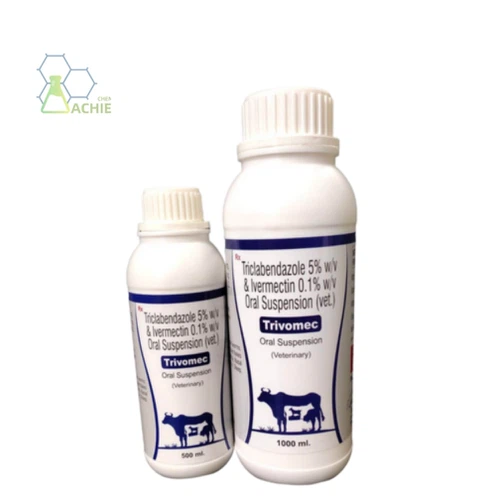
As an efficient anthelmintic for animals, triclosan is widely used in the treatmnt of liver fluke disease in ruminant animals such as cattle and sheep
Pharmacokinetic advantages: The peak blood drug concentation reaches 15 μ g/mL 24-36 hours after oral administration, with a half-life of about 22 hours. Its bioavailability is 5-20 times that of other benzimidazole drugs.
Medication plan: For cattle, take a single oral dose of 12 mg/kg body weight, and for sheep, take a single oral dose of 10 mg/kg body weight. The cure rate exceeds 95%.

Potential research direction: From existing uses to innovative applications

4.1 Construction of Drug Resistance Monitoring Network
Establish a global genomic database of Fasciola hepatica and track the mutation sites of the β - tubulin gene through whole genome sequencing technology, providing molecular epidemiological evidence for clinical medication. For example, the increasing failure rate of treatmnt in some areas of Peru suggests the need to strengthen local drug resistance monitoring.
4.2 Optimization of Combination Therapy Plan
Combined use with nitrozotocinide: can shorten the treatmnt course to 1 day and increase the cure rate to 95%. Its mechanism may be related to nitrozotocinide disrupting the redox balance of the parasite.
Sequential treatmnt with artemether: can reduce the recurrence rate to 5%, suitable for patients with mixed infections.
4.3 Development of new formulations
Nanocrystal technology: High pressure homogenization is used to prepare nanosuspensions with a particle size of less than 200 nm, which can increase bioavailability by 2.6 times and reduce gastrointestinal irritation.
Transdermal patch: Utilizing microneedle array technology for non-invasive drug delivery, animal experiments have shown that the time to reach blood drug concentation standards has been shortened to 30 minutes.
4.4 Exploration of anti-tumor potential
Recent studies have found that triclabendazole tablets (40-160 μ M concentation) can induce apoptosis of breast cancer cells (MCF-7, MDA-MB-231), and induce cell death by activating caspase-3. In a nude mouse transplant tumor model, intraperitoneal injection at doses of 20-100 mg/kg showed anti-tumor activity, providing a new direction for drug secondary development.

As a milestone drug in the treatmnt of Fasciola hepatica, triclosan tablets have core applications covering both acute and chronic phases, and have been expanded to include mixed infections and veterinary use. Through dose optimization, special population management, and combination therapy strategies, its clinical value continues to deepen. In the future, with the improvement of drug resistance monitoring networks and the development of new formulations, triclosan is expected to play a greater role in parasitic disease control and tumor treatmnt, contributing a key force to global public health.

Preparation process and quality control
Key process parameters
Wet granulation: Hydroxypropyl cellulose is used as the adhesive to control the particle size D90 ≤ 180 μ m, ensuring that the difference in tablet weight during compression is less than 5%.
Coating technology: using Obadai II gastric soluble film coating, increasing weight by 3%, can effectively block light and improve swallowing compliance.
Stability study: After accelerated testing at 40 ℃/75% RH for 6 months, the total amount of relevant substances increased by 0.8%, which meets the requirements of ICH guidelines (≤ 2%).
Quality Standard System
Content determination: HPLC method is used, with acetonitrile water (60:40) as the mobile phase, detection wavelength of 254 nm, and content range of 95.0% -105.0% of the labeled amount.
Regarding substances: Single impurities should not exceed 1.0%, total impurities should not exceed 3.0%, with a focus on sulfoxide metabolites (not exceeding 0.5%).
Dissolution rate: Under the condition of 50 rpm using the paddle method, triclabendazole tablets the dissolution rate should not be less than 85% within 30 minutes.
Hot Tags: triclabendazole tablets, suppliers, manufacturers, factory, wholesale, buy, price, bulk, for sale