






Shaanxi BLOOM Tech Co., Ltd. is one of the most experienced manufacturers and suppliers of 1-phenyl-1,2-propanedione cas 579-07-7 in China. Welcome to wholesale bulk high quality 1-phenyl-1,2-propanedione cas 579-07-7 for sale here from our factory. Good service and reasonable price are available.
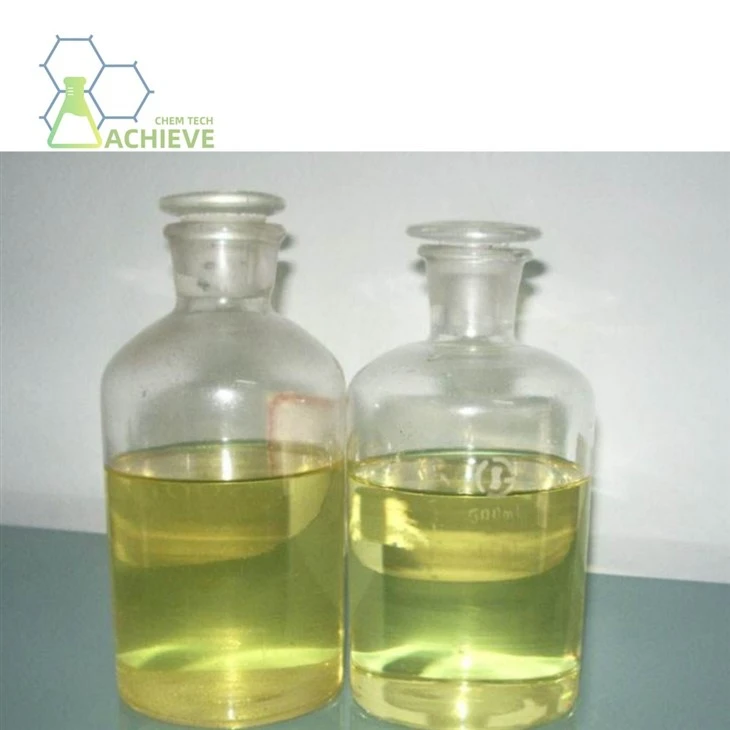
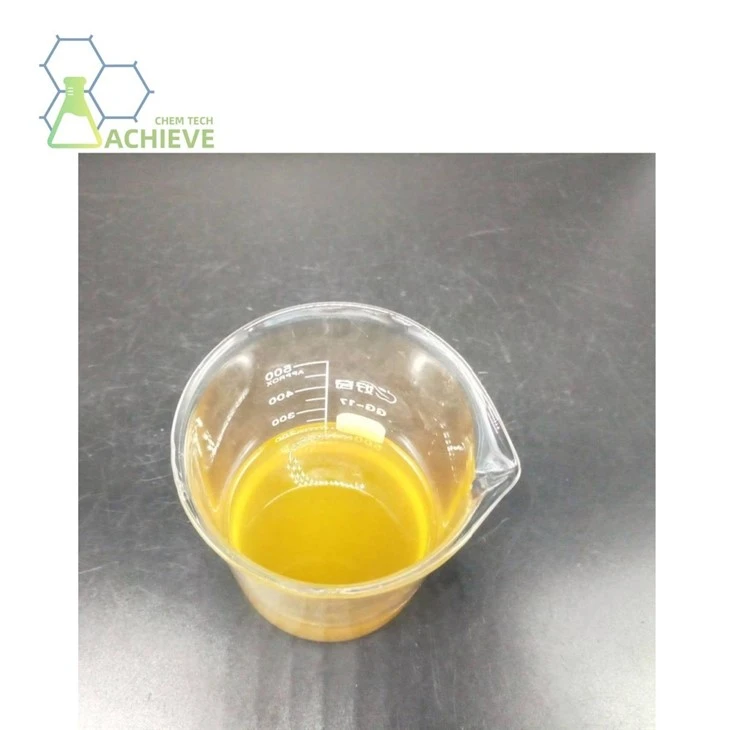
1-Phenyl-1,2-Propanedione, molecular formula C9H8O2, CAS 579-07-7, At room temperature and pressure, it appears as a transparent yellow liquid with a specific odor and is described as having a butter honey aroma. This substance is insoluble in water, but soluble in various organic solvents, including chloroform, hexane (trace), methanol (trace), etc. This solubility makes it widely applicable in organic synthesis and separation processes, making it an important organic compound with a wide range of application fields. It is a hydrogen abstraction type low toxicity photoinitiator that can be applied in the polymerization reaction of dental materials. Under light conditions, this substance can trigger the polymerization of dental materials, thereby achieving solidification. In addition, it can also be applied in packaging printing for food and medicine, unaffected by molecular migration. It is an important intermediate for synthesizing complex heterocyclic compounds. Through specific chemical reactions, it can be converted into bioactive pharmaceutical molecules for the treatment of diseases.
|
|
|


|
Chemical Formula |
C9H8O2 |
|
Exact Mass |
148 |
|
Molecular Weight |
148 |
|
m/z |
148 (100.0%), 149 (9.7%) |
|
Elemental Analysis |
C, 72.96; H, 5.44; O, 21.60 |

1-Phenyl-1,2-Propanedione (CAS number: 579-07-7), also known as methylphenylacetophenone or acetobenzoyl, is an organic compound with a unique chemical structure and properties. In the food industry, it is particularly widely used as a food additive and intermediate.
Application as a food additive

1. Improve food flavor and taste
It has a unique aroma and taste, and can be used as a food additive to improve the flavor and taste of food. It can be added to beverage, gel, pudding and other foods to give them more rich aroma and unique taste, so as to meet consumers' needs for food taste and flavor.
Specific example: In certain brands of beverages, it is used as a flavoring agent to enhance the aroma and taste of the drink. Consumers can clearly feel the flavor enhancement of beverages with added substances, making them more tempting and delicious.
2. Enhance food stability
It can also be added as an antioxidant or stabilizer to food to enhance its stability. It can prevent food from undergoing oxidation and spoilage during processing, storage, and transportation, thereby extending the shelf life and shelf life of food.
Specific example: In baked goods, it can be used as an antioxidant to prevent product deterioration caused by oil oxidation. By adding this substance, baked goods can maintain a more crispy texture and enticing color, while extending their shelf life.

Application as a synthetic intermediate

1. Synthesis of complex heterocyclic compounds
It is an important organic synthesis intermediate that can be used to synthesize various complex heterocyclic compounds. These heterocyclic compounds have a wide range of applications in the food industry, such as as as spices, preservatives, antioxidants, etc.
Specific example: Through specific chemical reactions, it can be converted into spice components with specific aromas. These spice ingredients can be used to season food such as meat, seafood, vegetables, etc., giving the food a richer aroma and taste.
2. Synthetic food additives
It can also be used as an intermediate for synthesizing other food additives. For example, it can participate in the synthesis of certain sweeteners, thickeners, emulsifiers, etc., which have a wide range of applications in the food industry.
Specific example: In the synthesis process of certain sweeteners, it participates as a key intermediate in the reaction. Through specific chemical reaction steps, compounds with sweet taste properties can be obtained, which can be used as food additives to reduce the sugar content of food while maintaining its sweetness.

Application in specific types of food

1. Beverage industry
In the beverage industry, it is mainly used as a seasoning and aroma enhancer. It can increase the aroma level and taste complexity of beverages, making them more tempting and delicious. At the same time, it can also act as an antioxidant to prevent beverages from undergoing oxidative deterioration during storage.
Specific example: In some carbonated beverages, it is used as one of the seasonings. By synergizing with other seasonings, carbonated beverages can be endowed with unique aroma and taste. In addition, it can also prevent carbonated beverages from losing their original aroma and taste due to oxidation during storage.
2. Baking industry
In the baking industry, 1-Phenyl-1,2-propanedione is mainly used as an antioxidant and bread improver. It can prevent baked goods from oxidizing and deteriorating during processing and storage, while improving the taste and texture of bread.
Specific example: Adding an appropriate amount of this substance during bread making can extend the shelf life of bread and improve its taste. By preventing oil oxidation and maintaining the stability of the internal structure of bread, it can maintain a more crispy texture and enticing color.


3. Meat products industry
In the meat industry, it is mainly used as a spice and preservative. It can increase the aroma and taste complexity of meat products, while preventing spoilage and deterioration during storage and transportation.
Specific example: In some sausage and ham products, it is used as one of the spice ingredients. By synergizing with other spices, meat products can be endowed with unique aroma and taste. Meanwhile, it can also serve as a preservative to extend the shelf life of meat products and prevent spoilage caused by microbial contamination.
4. Dairy industry
In the dairy industry, it is mainly used as a flavoring agent and antioxidant. It can increase the aroma and taste complexity of dairy products, while preventing oxidation and spoilage during storage.
Specific example: In some yogurt and cheese products, it is used as one of the seasonings. By synergizing with other seasonings, dairy products can be endowed with a richer aroma and unique taste. At the same time, it can also prevent the oxidation and deterioration of fats and proteins in dairy products, thereby extending the shelf life of dairy products.


5. Candy industry
In the candy industry, it is mainly used as a sweetener and aroma enhancer. It can increase the sweetness level and aroma complexity of candies, making them more tempting and delicious.
Specific example: In some hard candy and gummy products, it is used as one of the sweeteners. By synergizing with other sweeteners, candies can be endowed with richer sweetness and aroma. At the same time, it can also serve as a fragrance enhancer to increase the aroma level and complexity of candies.

1-Phenyl-1,2-Propanedione is a transparent yellow liquid used in the synthesis of opioid receptor agonists for gastrointestinal diseases. It can also be used for enantioselective hydrogenation of pyrrolidone on platinum colloids.
It is isolated from the young ephedra (Ephedra family) and is a precursor for the biosynthesis of ephedrine alkaloids. This article uses phenylacetone as the starting material and reacts with ethyl nitrite under the action of hydrogen chloride to obtain the intermediate 1-phenyl1,2-propanedione-2-oxime; 1-phenyl-1,2-propynedione-2-oxime was hydrolyzed in a mixed solution of formaldehyde, hydrochloric acid, and ethanol to obtain 1-phenyl-1,2-propynedione.

Experimental operation:
(1) In a 2000 liter reaction vessel, 800 kg of ethanol and 400 kg of phenylacetone were added. Under ice water cooling, 78 kg of dry hydrogen chloride gas was introduced, and 242 kg of ethyl nitrite was introduced while maintaining a temperature of 30-35 ℃. After completion, the reaction was continued at this temperature for 2 hours, stopped, and ethanol was evaporated under reduced pressure to obtain the crude product. Add 700kg of toluene for recrystallization to obtain 310kg of 1-phenyl1,2-propanedione-2-oxime with a yield of 63.8%.
(2) In a 1000 liter reaction vessel, 200kg of hydrochloric acid, 200kg of formaldehyde aqueous solution, and 200kg of ethanol were added. Under ice water cooling, 200kg of 1-phenyl-1,2-propynedione-2-oxime was added in batches at a temperature below 15 degrees. The addition process was exothermic. After addition, the reaction was stirred at room temperature for 20 hours, extracted with 400kg of dichloromethane, and then washed once with saturated sodium bicarbonate solution and water to remove dichloromethane. The crude product 1-phenyl-1,2-propynedione was obtained. 133.5kg of yellow liquid 1-phenyl-1,2-propynedione was obtained by vacuum distillation, with a yield of 73.5%.

1-Phenyl-1,2-propanedione (1-Phenyl-1,2-Propandione, CAS No. 579-07-7) is an important organic compound. Its discovery and research process is closely linked to the development of organic chemistry. The following outlines its discovery history from four stages: early exploration, structure determination, synthesis method optimization, and modern application research.
The discovery of 1-phenyl-1,2-propanedione can be traced back to the research on natural products in the late 19th century to the early 20th century. At that time, scientists isolated various compounds with biological activity from plants, and some of these substances had structures related to phenylpropiondione compounds. For example, components containing benzene rings and diketone structures were detected in some plant metabolites, providing clues for subsequent synthesis research. However, due to the limitations of the separation and analysis techniques at that time, the early studies mainly focused on the activity screening of crude extracts from natural products, and the specific structure and properties of 1-phenyl-1,2-propanedione were not yet clear.

Structural Determination: Breakthroughs in Spectroscopy and Chemical Characterization
In the mid-20th century, with the rapid development of spectroscopic techniques (such as infrared spectroscopy, nuclear magnetic resonance spectroscopy, etc.), scientists were able to determine the structure of organic compounds more precisely. The structure of 1-phenyl-1,2-propanedione was confirmed through the following key steps:
Molecular formula derivation
Through elemental analysis and mass spectrometry determination, its molecular formula was determined to be C₉H₈O₂, with a molecular weight of 148.16.
Functional group identification
The infrared spectrum shows a stretching vibration peak of the carbonyl group (C=O) (approximately 1700 cm⁻¹), combined with the signals of the benzene ring and methylene in the nuclear magnetic resonance spectrum (¹H NMR and ¹³C NMR), it is confirmed that it contains a phenyl and 1,2-diketone structure.
Stereochemical study
Through X-ray diffraction or chiral spectroscopy techniques, the molecular configuration was further clarified, laying the foundation for subsequent asymmetric synthesis research.
Optimization of synthesis methods: From laboratory to industrial production
The synthesis method of 1-phenyl-1,2-propanedione has undergone a transformation from inefficient to efficient, and from laboratory scale to industrial production, mainly divided into the following stages:
Early synthetic route: In the early 20th century, scientists prepared 1-phenyl-1,2-propanedione by oxidizing benzyl ketone. For example, using selenium dioxide (SeO₂) as the oxidant, the methyl group in benzyl ketone was oxidized to a carbonyl group, generating the target product. However, this method had a low yield and the selenium compound was highly toxic, limiting its application.
Improved oxidation method: In the mid-20th century, researchers developed more efficient oxidation systems, such as using chromic acid (H₂CrO₄) or manganese dioxide (MnO₂) as oxidants, which increased the yield and selectivity. Additionally, electrochemical oxidation was also applied to the synthesis of this compound, achieving directional oxidation of benzyl ketone by controlling the electrode potential.
Catalytic asymmetric synthesis: In the early 21st century, with the development of asymmetric catalytic technology, scientists achieved asymmetric synthesis of 1-phenyl-1,2-propanedione. For example, using chiral catalysts (such as kina alkaloid derivatives) modified on the surface of platinum catalysts, through a pressurized reactor under 5 bar pressure and 0-25℃ conditions, enantioselective hydrogenation was achieved, generating optically active 1-hydroxy-1-phenylpropane, which could be further oxidized to obtain the target product.
Modern application research: From basic research to interdisciplinary applications
With a deeper understanding of the properties of 1-phenyl-1,2-propanedione, its application fields have continuously expanded:
Organic Synthesis Intermediate: As an important organic synthesis intermediate, 1-phenyl-1,2-propanedione can be used to synthesize various fragrances, medicines, and pesticides. For instance, its derivative 1-phenyl-1,2-propanedione-2-(O-ethoxycarbonyl oxime) (CAS number 65894-76-0) is a photoinitiator and is widely used in the fields of photo-curing coatings and inks.
Bioactivity Research: Studies have shown that 1-phenyl-1,2-propanedione and its derivatives possess biological activities such as antibacterial, anti-inflammatory, and anti-tumor properties. For example, as a metabolite of eukaryotes, it is produced in plant metabolic reactions and participates in the biosynthesis precursor of ephedrine alkaloids.
Material Science Applications: Utilizing its photoluminescence and redox properties, 1-phenyl-1,2-propanedione is used to prepare functional materials, such as photochromic materials and electrochemical sensors.
Hot Tags: 1-phenyl-1,2-propanedione cas 579-07-7, suppliers, manufacturers, factory, wholesale, buy, price, bulk, for sale, Adrenochrome Powder, Paliperidone powder, Medetomidine HCl, phenacetin crystal, Peptide, Norepinephrine Powder CAS 51 41 2