




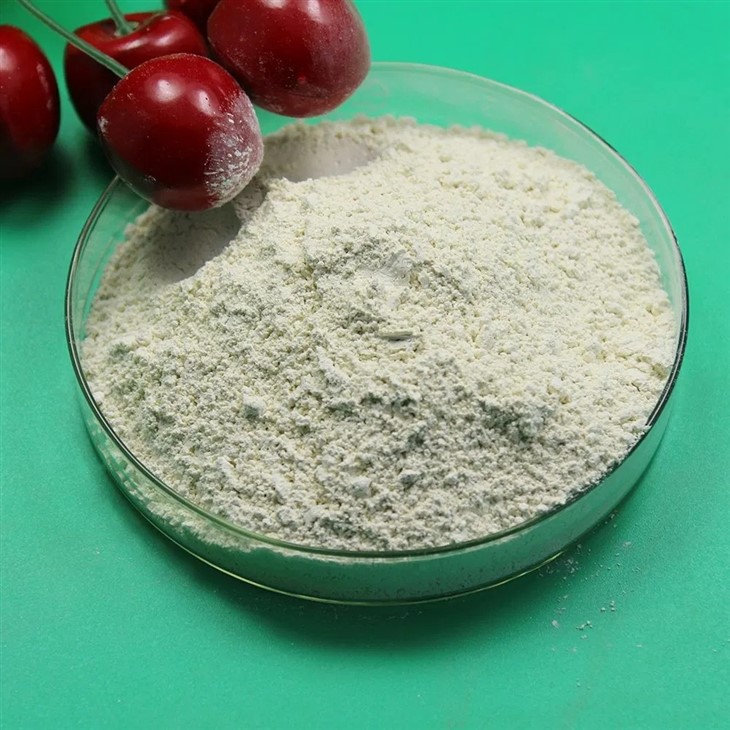

Shaanxi BLOOM Tech Co., Ltd. is one of the most experienced manufacturers and suppliers of thidiazuron cas 51707-55-2 in China. Welcome to wholesale bulk high quality thidiazuron cas 51707-55-2 for sale here from our factory. Good service and reasonable price are available.
Thidiazuron, commonly abbreviated as TDZ, is a potent and versatile plant growth regulator belonging to the class of phenylurea compounds. It is primarily used in agriculture and horticulture to promote cell division and differentiation in plants. With its ability to stimulate cell proliferation, TDZ is highly effective in tissue culture applications, where it aids in the rapid multiplication of plant cells, tissues, and organs.This growth regulator is particularly favored for its capacity to induce shoot formation and elongation, making it a key component in micropropagation protocols. It works by interacting with specific receptors on plant cells, triggering a cascade of biochemical reactions that ultimately lead to enhanced growth and development.
Unlike some other growth regulators, TDZ tends to be more stable under a wide range of conditions, allowing for more consistent results in tissue culture experiments.Moreover, TDZ has been found to be effective in promoting bud break and flowering in certain plant species, making it a valuable tool in controlling plant phenology. Its use in plant propagation can significantly shorten the time required to produce genetically uniform seedlings, thus accelerating the breeding and commercialization of new varieties.

|
|
|


| Chemical Formula | C9H8N4OS |
| Exact Mass | 220.04 |
| Molecular Weight | 220.25 |
| m/z | 220.04 (100.0%), 221.05 (9.7%), 222.04 (4.5%), 221.04 (1.5%) |
| Elemental Analysis | C, 49.08; H, 3.66; N, 25.44; O, 7.26; S, 14.56 |

Thidiazuron acts as an endosorbent defoliant primarily used in cotton cultivation. Its main function is to facilitate the shedding of leaves from the cotton plant, which is particularly beneficial during the harvest season. By removing the leaves, it makes it easier for machines to pick the cotton bolls, thereby increasing the efficiency of the harvesting process. This not only saves time but also reduces the labor costs associated with manual harvesting. Additionally, defoliation can improve the quality of the harvested cotton by reducing the amount of trash (leaves, stems, and other plant debris) that gets mixed in with the cotton fibers.

Promotion of Bud Differentiation
TDZ is widely used in plant tissue culture to promote bud differentiation. It has been found to be particularly effective in inducing adventitious buds or lateral buds directly on the cultivated stem tips by removing apical dominance.

Apical Dominance
Apical dominance is a phenomenon in plants where the growing point or apex of a plant inhibits the growth of lateral buds or branches. This is due to the production of auxin by the apex, which suppresses the growth of lateral buds.
TDZ's Role in Removing Apical Dominance
TDZ, as a cytokinin, counteracts the effects of auxin and promotes the growth of lateral buds. By applying TDZ to the stem tips of cultivated plants, researchers can effectively remove apical dominance and induce the formation of adventitious or lateral buds.
Adventitious Bud Formation
Adventitious buds are buds that form on parts of the plant that are not normally bud-bearing, such as the stem. The induction of adventitious buds is a critical step in many plant tissue culture protocols, as it allows for the multiplication of plants from a single explant.
Lateral Bud Formation
Lateral buds are buds that form on the sides of the stem, and their growth is normally suppressed by apical dominance. TDZ can promote the growth of these lateral buds, leading to increased branching and plant fullness.


Applications in Plant Tissue Culture
The ability of TDZ to remove apical dominance and induce adventitious and lateral bud formation makes it a valuable tool in plant tissue culture. It can be used to propagate difficult-to-grow species, increase the multiplication rate of plants, and improve the quality of regenerated plants.
Concentration and Application Methods
The effectiveness of thidiazuron in promoting bud differentiation depends on the concentration used and the method of application. Researchers typically test a range of concentrations to find the optimal level for their specific plant species and tissue culture protocol. TDZ can be applied directly to the stem tips, incorporated into the culture medium, or used in combination with other growth regulators to achieve the desired results.

Enhancement of Plant Regeneration

Callus is an undifferentiated mass of cells that can differentiate into various plant tissues. TDZ can stimulate the formation of callus from explants (pieces of plant tissue used in tissue culture) by promoting cell division and proliferation. The formation of callus is often the first step in many plant tissue culture protocols, as it provides a source of cells that can be induced to differentiate into specific plant tissues or organs.
As previously mentioned, TDZ is effective in inducing adventitious buds, which are buds that form on parts of the plant that are not normally bud-bearing.
The formation of adventitious buds is critical for plant regeneration, as it allows for the multiplication of plants from a single explant.
Somatic embryogenesis is a process by which embryos form directly from somatic (non-reproductive) cells. TDZ can stimulate the formation of somatic embryos in some plant species, providing an alternative pathway for plant regeneration. Somatic embryos can be germinated to produce complete plants, which can then be transferred to soil for further growth and development.


The ultimate goal of plant tissue culture is to regenerate complete, healthy plants that can be used for various purposes, such as agriculture, horticulture, and biotechnology. TDZ's ability to stimulate the formation of callus, adventitious buds, and somatic embryos enhances the efficiency and reliability of plant regeneration protocols. By promoting cell division, differentiation, and organogenesis (the formation of organs from cells or tissues), TDZ helps to ensure the successful regeneration of plants from tissue culture.
As with bud differentiation, the effectiveness of TDZ in enhancing plant regeneration depends on the concentration used and the method of application. Researchers typically optimize the concentration of TDZ based on their specific plant species and tissue culture protocol. TDZ can be applied directly to explants, incorporated into the culture medium, or used in combination with other growth regulators to achieve the desired results.


Cytokinin Signal Activation and CKX Inhibition
TDZ is a phenylurea-type compound. Unlike adenine-derived natural cytokinins, it binds to and activates histidine kinase receptors (CRE1/AHK4), triggering the two-component phosphorelay pathway. Through AHP proteins and type-B response regulators, it upregulates genes associated with cell division and shoot differentiation. Its high potency stems mainly from inhibition of cytokinin oxidase (CKX), which slows the degradation of endogenous cytokinins and elevates the steady-state levels of active cytokinins such as zeatin and isopentenyladenine in tissues.
This amplifies cytokinin signaling, making TDZ far more effective than conventional cytokinins such as BA at equivalent concentrations.
Crosstalk among Multiple Hormone Pathways
TDZ remodels endogenous hormone homeostasis to establish a synergistic regulatory network. It increases endogenous auxin concentrations and alters auxin polar transport; the concentration gradient of auxin and cytokinin jointly determines cell fate toward callus, adventitious shoots or somatic embryos.


Meanwhile, TDZ downregulates gibberellin biosynthetic genes and upregulates catabolic genes, suppressing longitudinal cell elongation and promoting cell dedifferentiation and organogenesis. In cotton defoliation applications, TDZ stimulates ethylene production and accelerates abscission layer formation to enable orderly leaf shedding, exhibiting dual effects on tissue regeneration and defoliation.
Cell Fate Reprogramming and Concentration-Dependent Responses
Low concentrations of TDZ preferentially promote axillary bud proliferation; moderately higher concentrations induce callus formation, adventitious shoots and even somatic embryogenesis.
Excessively high concentrations frequently cause abnormal plantlets, vitrification or growth arrest.Rather than merely acting as an exogenous hormone substitute, TDZ reactivates cellular totipotency by modulating transcriptional networks linked to the shikimate pathway, secondary metabolism and cell cycle progression. No single receptor-centered model fully accounts for its broad-spectrum activity. Researchers propose that beyond receptor activation, its action involves coupled metabolic processes and intracellular conjugate storage mechanisms.


Its synthesis follows the core strategy of "preparing key intermediates first, followed by condensation reactions". The mainstream method is the condensation of 5-amino-1,2,3-thiadiazole with phenyl isocyanate, while several optimized routes are also available.
I. Preparation of the Key Intermediate: 5-Amino-1,2,3-thiadiazole
5-Amino-1,2,3-thiadiazole is the key intermediate for the synthesis of thidiazuron. It is industrially prepared by ammonolysis, which features high yield, simple operation and suitability for large-scale production. The specific process is as follows: 20 g of 5-chloro-1,2,3-thiadiazole is added to 60–70 mL of liquid ammonia and stirred continuously for 3.5 hours. The chlorine atom is displaced via ammonolysis to yield 5-amino-1,2,3-thiadiazole, with a yield of up to 93.2%. It can also be prepared in laboratories by the diazomethane method, which is slightly more complex but meets the demand for small-batch intermediates.
II. Main Synthetic Route: Condensation Method (Industrial Preferred)
This method is the preferred route for industrial production of TDZ at present, owing to mild reaction conditions, controllable costs and high product purity. The core step is the catalytic condensation of the intermediate with phenyl isocyanate. The specific procedure is: under stirring, 5-amino-1,2,3-thiadiazole is added to butanone solvent and stirred until fully dissolved; then phenyl isocyanate and a small amount of triethylamine catalyst are added, and the reaction is maintained at 60–65 °C for 3–4 hours. After cooling to 15–25 °C, stirring is continued for 1 hour to ensure complete conversion. Filtration affords crude TDZ as a filter cake, which can be simply purified to a purity of over 98% with a yield exceeding 92%.
III. Auxiliary Synthetic Routes and Process Optimization
In addition to the mainstream route, various auxiliary synthetic methods exist. In laboratories, tetrahydrofuran is commonly used as the solvent and triethylamine as the catalyst. 5-Amino-1,2,3-thiadiazole reacts with phenyl isocyanate in a water bath at 8–16 °C for 24 hours, giving a yield of over 88%, though the solvent cost is relatively high. Another route uses diethyl carbonate as the starting material and proceeds through five steps including hydrazinolysis, addition and cyclization, but the overall yield is only 31.21%, requiring further process optimization. Industry has further reduced costs by optimizing raw material ratios and solvent recovery, promoting the large-scale application of TDZ.

Stability Analysis
Thermal stability
Thidiazuron remains stable below 200℃ and can stably exist in aqueous solution (pH 1-14) at room temperature (25℃) for more than 24 days, indicating its strong heat resistance and hydrolysis resistance. However, under light conditions, it will rapidly transform into the photosensitive isomer 1-phenyl-3 -(1,2, 5-thiadiazole-3-yl) urea, so it needs to be stored away from light.
Chemical stability
pH adaptability: Stable within the pH range of 5 to 9. No decomposition was observed in the accelerated storage test (54℃ for 14 days), making it suitable for both conventional agricultural and laboratory environments.
Solvent compatibility: Readily soluble in polar solvents such as dimethyl sulfoxide (DMSO), dimethylformamide (DMF), and acetone, slightly soluble in methanol, aliphatic hydrocarbons, and aromatic hydrocarbons, and almost insoluble in water (solubility is only 20 mg/L at 20℃). Solubility data provide a reference for preparing stock solutions. For example, the solubility in DMSO reaches 100 mg/mL (ultrasonic dissolution assistance is required).
Storage conditions
Short-term storage: The powder can be stored for 3 years at -20℃ and for 2 years at 4℃. When stored in solvents, it is valid for 6 months at -80℃ and 1 month at -20℃.
Long-term storage: It should be sealed, kept away from light, and stored in an environment of 0-6℃ to avoid repeated freezing and thawing which may cause product failure. Portioning and storage can reduce the risk of degradation.

I. Late 1960s
The first synthesis of TDZ dates back to 1967, successfully prepared by a research team at Schering AG, Germany. At that time, no clear application purpose was assigned to it, and it was only archived as a novel urea derivative. The team constructed the target product via condensation reactions using 1,2,3‑thiadiazole compounds as the core skeleton, and preliminarily identified its chemical structure as 1‑phenyl‑3‑(1,2,3‑thiadiazol‑5‑yl)urea, laying a structural foundation for subsequent research.

II. 1970s
In the 1970s, researchers accidentally discovered during screening tests for plant growth regulators that TDZ exhibited strong cytokinin activity and remarkable defoliant effects. Unlike traditional adenine‑based cytokinins, it could effectively mimic cytokinin responses without containing a purine ring. In 1976, Schering registered it as a cotton defoliant under the code SN 49537, formally establishing its agricultural application. Relevant studies confirmed that it could controllably induce leaf abscission, facilitating mechanical cotton harvesting without affecting crop maturation.
III. From the 1980s to the Present
In the early 1980s, Schering patented its synthetic route and plant growth regulatory uses, promoting large‑scale production. The product was registered and launched in the United States in 1982, and gradually introduced to many countries worldwide. Later researchers further uncovered its multifunctional applications: it not only acts as a defoliant but also promotes plant tissue culture, extends the vase life of cut flowers, and even shows certain antibacterial activity. Although the European Union suspended its agricultural use in 2008 due to environmental and health assessments, it remains widely applied in the United States, Australia and other countries, becoming a highly valuable synthetic plant growth regulator in agricultural production.

FAQ
What is the function of the thidiazuron?
+
-
Thidiazuron (TDZ) is a diphenylurea synthetic herbicide and plant growth regulator used to defoliate cotton crops and to induce regeneration of recalcitrant species in plant tissue culture.
How to dissolve thidiazuron?
+
-
Thidiazuron is soluble in organic solvents such as ethanol, DMSO, and dimethyl formamide (DMF). The solubility of thidiazuron in these solvents is approximately 1, 15, and 30 mg/ml, respectively. Thidiazuron is sparingly soluble in aqueous buffers.
What is TDZ in chemistry?
+
-
Thidiazuron (TDZ) is defined as a phenyl urea derivative that functions as a plant growth regulator with auxin- and cytokinin-like activity, and is utilized as an elicitor in plant cell and tissue culture.
What is thidiazuron in plant tissue culture?
+
-
Thidiazuron, more commonly known as TDZ, is a cytokinin-like growth regulator. It is absorbed through plant leaves and promotes shoot regeneration. When used as a tissue culture media supplement, TDZ greatly facilitates the culture of woody and other recalcitrant plant species.
Hot Tags: thidiazuron cas 51707-55-2, suppliers, manufacturers, factory, wholesale, buy, price, bulk, for sale, Clascoterone Powder CAS 19608 29 8, lidocaine hydrochloride powder, chondroitin sulfate powder, tetracaine hcl, Meglumine powder, Loperamide Hydrochloride Powder CAS 34552 83 5