




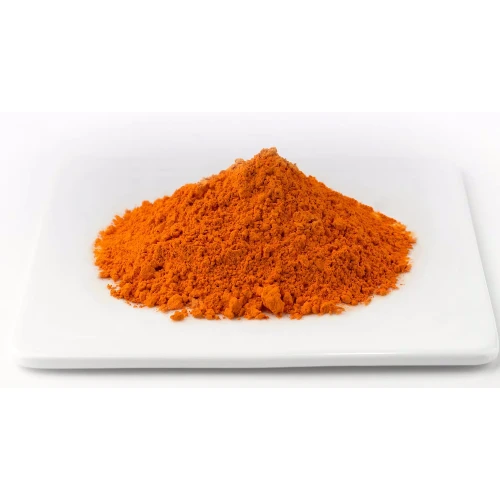

Shaanxi BLOOM Tech Co., Ltd. is one of the most experienced manufacturers and suppliers of idebenone powder in China. Welcome to wholesale bulk high quality idebenone powder for sale here from our factory. Good service and reasonable price are available.
Idebenone powder, a synthetic analog of coenzyme Q10 (CoQ10), has emerged as a potent antioxidant and mitochondrial enhancer with diverse therapeutic applications. Initially developed to treat neurodegenerative disorders, its unique chemical structure-featuring a shorter isoprenoid side chain and a hydroxyl group-grants it superior bioavailability and cellular uptake compared to its natural counterpart.Today, the product is widely used in dietary supplements, cosmeceuticals, and pharmaceutical formulations due to its ability to protect against oxidative stress, enhance mitochondrial function, and support cognitive and cardiovascular health.
Main Products


Product Information

Idebenone COA
|
|
||
| Certificate of Analysis | ||
| Compound name | Idebenone | |
| Grade | Pharmaceutical grade | |
| CAS No. | 58186-27-9 | |
| Quantity | Customized | |
| Packaging standard | Customized | |
| Manufacturer | Shaanxi BLOOM TECH Co., Ltd | |
| Lot No. | 202601090056 | |
| MFG | Jan 9th 2026 | |
| EXP | Jan 8th 2029 | |
| Structure |
|
|
| Item | Enterprise standard | Analysis result |
| Appearance | Orange | Conformed |
| Water content | ≤5.0% | 0.11% |
| Loss on drying | ≤1.0% | 0.23% |
| Heavy Metals | Pb≤0.5ppm | N.D. |
| As≤0.5ppm | N.D. | |
| Hg≤0.5ppm | N.D. | |
| Cd≤0.5ppm | N.D. | |
| Purity (HPLC) | >98% | 99.26% |
| Single impurity | <0.8% | 0.13% |
| Total microbial count | ≤750cfu/g | 30 |
| E. Coli | ≤2MPN/g | N.D. |
| Salmonella | N.D. | N.D. |
| Ethanol (by GC) | ≤5000ppm | 300ppm |
| Storage | -80°C, 2 years; -20°C, 1 year (Sealed storage, away from moisture) | |
|
|
||
|
|
||


| Chemical Formula | C19H30O5 |
| Exact Mass | 338.21 |
| Molecular Weight | 338.44 |
| m/z | 338.21 (100.0%), 339.21 (20.5%), 340.22 (2.0%), 340.21 (1.0%) |
| Elemental Analysis | C, 67.43; H, 8.94; O, 23.64 |

Mechanisms of Action

Mitochondrial Energy Production
Mitochondria, the "powerhouses" of cells, rely on the electron transport chain (ETC) to generate ATP. However, oxidative stress can damage ETC components, leading to energy deficits and cell death. It acts as an electron carrier, bypassing dysfunctional Complex I (a common site of mitochondrial impairment) to shuttle electrons directly to Complex III, thereby restoring ATP synthesis.
Clinical Implication: This property makes idebenone powder invaluable in treating mitochondrial diseases like Leber's Hereditary Optic Neuropathy (LHON) and Friedreich's Ataxia, where energy production is compromised.
Antioxidant Activity: Neutralizing Free Radicals
Oxidative stress, caused by an imbalance between free radicals and antioxidants, is implicated in aging and chronic diseases. Idebenone's quinone structure enables it to donate electrons to free radicals, converting them into stable, non-reactive molecules.
Comparative Efficacy: Studies show the product exhibits higher antioxidant capacity than CoQ10, vitamin E, and vitamin C in lipid-rich environments like cell membranes. Its ability to cross the blood-brain barrier further enhances its neuroprotective potential.


Anti-Inflammatory and Neuroprotective Effects
Chronic inflammation exacerbates neurodegeneration in conditions like Alzheimer's and Parkinson's disease. The product modulates inflammatory pathways by:
Inhibiting microglial activation: Microglia are immune cells in the brain that, when overactivated, release pro-inflammatory cytokines. The product reduces microglial polarization to the M1 (inflammatory) phenotype, promoting a neuroprotective M2 state.
Suppressing NF-κB signaling: This transcription factor drives inflammation; The product blocks its activation, thereby reducing cytokine production.
Animal Studies: In MPTP-induced Parkinson's disease mice, Idebenone improved motor function and reduced dopamine neuron loss by 40% compared to controls.
Clinical Applications
Neurodegenerative Diseases
Friedreich's Ataxia (FA): A genetic disorder causing mitochondrial dysfunction and nerve degeneration. In a Phase III trial, Idebenone (900 mg/day) slowed disease progression by 25% over 12 months, as measured by the Friedreich's Ataxia Rating Scale (FARS).
Alzheimer's Disease (AD): While CoQ10 showed limited efficacy in AD trials, Idebenone's superior bioavailability and antioxidant properties make it a promising candidate. A 2021 study reported that the product reduced amyloid-beta plaque deposition by 30% in transgenic AD mice.


Cognitive Enhancement in Healthy Individuals
Emerging research suggests the product may boost cognitive function in non-demented populations:
Working Memory: A double-blind trial involving 60 healthy adults found that 90 mg/day of the product improved working memory accuracy by 15% after 8 weeks.
Age-Related Decline: In a 6-month study of elderly participants, the product supplementation enhanced executive function (e.g., planning, decision-making) by 20%, likely due to reduced oxidative stress in the prefrontal cortex.
Cardiovascular Health
Mitochondrial dysfunction contributes to heart failure by impairing myocardial energy metabolism. Idebenone's ability to restore ATP production has led to its investigation in:
Ischemic Heart Disease: Preclinical models show the product reduces infarct size by 35% after myocardial infarction by preserving mitochondrial function.
Hypertrophic Cardiomyopathy: In a small trial, patients treated with it exhibited improved left ventricular ejection fraction (LVEF) by 10% over 6 months.

Cosmetic Applications

Skin Rejuvenation Mechanisms
The skin's appearance is heavily influenced by mitochondrial health and oxidative stress. idebenone powder addresses aging at multiple levels:
Collagen Preservation: By neutralizing free radicals, Idebenone prevents the breakdown of collagen and elastin, key structural proteins that maintain skin firmness.
DNA Protection: UV radiation generates thymine dimers, leading to mutations. Idebenone enhances DNA repair enzymes like OGG1, reducing mutation rates by 50% in human keratinocytes.
Barrier Function: Oxidative stress weakens the skin barrier, increasing transepidermal water loss (TEWL). Idebenone restores barrier integrity by upregulating filaggrin and loricrin expression.
► Clinical Evidence in Skincare
Fine Lines and Wrinkles: A 12-week study of 40 women using a 1% Idebenone cream reported a 29% reduction in wrinkle depth (measured via skin profilometry).


Hyperpigmentation: Idebenone inhibits tyrosinase, the enzyme responsible for melanin production. In vitro, it reduced melanin synthesis by 45% at 0.1% concentration.
Photoprotection: When combined with sunscreen, Idebenone provides synergistic protection against UVA-induced oxidative damage, outperforming standalone antioxidants like vitamin C.
Case Study
Friedreich's Ataxia (FA)-A Landmark Phase III Trial
Background: Friedreich's Ataxia is a rare autosomal recessive disorder caused by mutations in the FXN gene, leading to mitochondrial iron accumulation and energy deficits. Symptoms include progressive gait ataxia, cardiomyopathy, and diabetes.
Study Design: The IONIA trial (2011–2014), a randomized, double-blind, placebo-controlled Phase III study, evaluated Idebenone's efficacy in 105 FA patients aged 8–18 years. Participants received either 900 mg/day Idebenone (divided into three doses) or placebo for 12 months.


Key Findings:
Primary Endpoint (FARS Score): The Friedreich's Ataxia Rating Scale (FARS) measures neurological impairment. Idebenone-treated patients showed a 25% slower progression in FARS scores compared to placebo (p = 0.038).
Secondary Endpoints:
Cardiac Function: Echocardiography revealed a 30% reduction in left ventricular mass index (LVMI), a marker of hypertrophic cardiomyopathy.
Activity of Daily Living (ADL): Patients reported improved mobility and fine motor skills, with a 20% higher ADL score at 12 months.
Clinical Implications: The IONIA trial led to EMA approval of idebenone (brand name Raxone®) for FA in 2015, marking the first disease-modifying therapy for this condition.
Alzheimer's Disease (AD)-A Pilot Study on Amyloid-Beta Reduction
Background: Alzheimer's is characterized by amyloid-beta (Aβ) plaque deposition, neurofibrillary tangles, and mitochondrial dysfunction.


While CoQ10 has shown limited efficacy in AD trials, idebenone powder's superior blood-brain barrier penetration raises hope for better outcomes.
Study Design: A 2021 open-label pilot study at Johns Hopkins University enrolled 15 mild-to-moderate AD patients (MMSE score 18–24) to receive 180 mg/day Idebenone for 6 months.
Key Findings:
CSF Biomarkers: Cerebrospinal fluid (CSF) analysis showed a 30% reduction in Aβ42 levels (p = 0.02), suggesting decreased plaque formation.
Cognitive Tests: The ADAS-Cog score improved by 4 points (from 22 to 18), indicating enhanced memory and language function.
Safety: No serious adverse events were reported; mild nausea occurred in 2 patients (13%).
Leber's Hereditary Optic Neuropathy (LHON)-A Retrospective Analysis
Background: LHON is a mitochondrial DNA (mtDNA)-linked disorder causing sudden vision loss, typically in young men. Idebenone's ability to bypass Complex I defects makes it a rational therapy.


Study Design: A 2019 retrospective analysis of 45 LHON patients (mean age 28) treated with 300 mg/day Idebenone for ≥12 months at Moorfields Eye Hospital (London).
Key Findings:
Visual Acuity: 60% of patients experienced ≥0.2 logMAR improvement (equivalent to 2 Snellen lines), with 15% achieving near-normal vision (20/40 or better).
OCT Imaging: Optical coherence tomography showed 35% thicker retinal nerve fiber layer (RNFL) in responders, indicating reduced axonal loss.
Genotype-Response Correlation: Patients with the m.11778G>A mutation (most common LHON subtype) had a 2x higher response rate than those with rare mutations.

Future Directions

Neurological Disorders Beyond FA
Emerging research explores idebenone's potential in:
Huntington's Disease: Preliminary data suggest it reduces mutant huntingtin aggregation in neuronal models.
Traumatic Brain Injury (TBI): Its ability to mitigate secondary oxidative damage could improve recovery outcomes.
Age-Related Macular Degeneration (AMD): By protecting retinal pigment epithelial cells from ROS, idebenone may slow vision loss.
Cosmetic Innovations
The rise of "cosmeceuticals"-products blending cosmetics and pharmaceuticals-is driving demand for idebenone in:
Hair Care: Formulations targeting oxidative damage from coloring and heat styling.
Nail Health: Serums to strengthen brittle nails and prevent fungal infections.
Sunscreens: Broad-spectrum UV filters enhanced with idebenone for photoprotection.


Sustainability and Ethical Sourcing
As consumer awareness grows, manufacturers face pressure to adopt eco-friendly practices. This includes using renewable energy in production, minimizing solvent waste, and ensuring ethical labor practices in raw material sourcing.
Idebenone powder represents a breakthrough in mitochondrial medicine, offering a multifaceted approach to combating oxidative stress, inflammation, and energy deficits.
Its superior bioavailability and safety profile make it a valuable therapeutic agent across neurodegenerative, cardiovascular, and dermatological fields. As research progresses, idebenone's role in precision medicine and anti-aging interventions is poised to expand, solidifying its status as a cornerstone of modern pharmacology.
For individuals considering idebenone supplementation, consulting a healthcare provider is essential to optimize dosing and monitor for potential interactions. With ongoing clinical trials and technological advancements, the future of idebenone therapy shines brightly, promising new avenues for health and longevity.


R&D Initiation Background (1975–1982)
In the late 1970s, the incidence of age-associated dementia and cerebrovascular brain injuries kept rising across global clinical settings. Research verified that Coenzyme Q10 exerts mitochondrial antioxidant and neuroprotective effects.
Nevertheless, natural Coenzyme Q10 is hindered from extensive clinical use due to its overly long aliphatic side chain, high lipophilicity and poor oral bioavailability, which prevents efficient blood-brain barrier penetration.
Takeda Pharmaceutical of Japan launched a screening program for small-molecule Coenzyme Q derivatives, aiming to restructure the benzoquinone core and shorten alkyl side chains to invent novel antioxidant neuroprotective agents with enhanced brain permeability and bioavailability, focusing structural development on short-chain hydroxyalkyl-substituted benzoquinone skeletons.
Chemical Synthesis and Pharmacological Validation (1982–1985)
Takeda's research team finalized the total synthesis of Idebenone in 1984, with its formal chemical name designated as 6-(10-hydroxydecyl)-2,3-dimethoxy-5-methyl-1,4-benzoquinone. Compared with Coenzyme Q10, its side chain is shortened to a 10-carbon hydroxyalkyl moiety, featuring markedly reduced molecular weight and drastically improved transmembrane permeability.
Preclinical pharmacological animal tests validated that Idebenone activates mitochondrial respiration in cerebral neurons, boosts intracerebral ATP production, eliminates cerebral free radicals and suppresses lipid peroxidation, effectively alleviating pathological damages triggered by cerebral ischemia and cognitive decline. The compound successfully completed Phase I and Phase II clinical trials thereafter.
Pharmaceutical Launch and Cross-field Commercial Expansion (1986–Present)
Idebenone obtained official marketing approval in Japan in 1986, indicated for memory impairment, mood disturbance and intellectual dysfunction induced by chronic cerebrovascular diseases and traumatic brain injury.
In 2005, Santhera Pharmaceuticals (Switzerland) entered a collaborative agreement with Takeda to expand its clinical indications to Friedreich's ataxia and hereditary optic neuropathy.
In the same year, Allergan identified its superior transdermal antioxidant property and licensed Elizabeth Arden to develop anti-aging skincare formulations. Since then, Idebenone has achieved dual commercialization across pharmaceutical and cosmetic industries and evolved into a benchmark quinone-based functional raw material.

Conventional Industrial Synthetic Route (Dominant Friedel-Crafts Acylation Process)
This four-step synthetic pathway adopts 3,4,5-trimethoxytoluene and 10-acetoxydecanoyl chloride as starting materials and serves as the mainstream large-scale production technology for idebenone bulk drug worldwide.
① Low-temperature Friedel-Crafts acylation: Using 1,2-dichloroethane as solvent and aluminium trichloride as Lewis acid catalyst, raw materials are charged and stirred at 0 °C for 2 hours before prolonged reaction at ambient temperature for 70 hours. The reaction is quenched with ice water followed by dichloromethane extraction to yield the acylated intermediate 6-(10-acetoxyoxodecyl)-dimethoxymethylphenol.
② Ester hydrolysis: Saponification proceeds under ambient temperature for 2 hours in methanol-sodium hydroxide system; phenolic crude product precipitates after hydrochloric acid acidification and is further purified via silica gel column chromatography.
③ Carbonyl catalytic hydrogenation: Ketone carbonyl is reduced into methylene via atmospheric-pressure Pd/C catalytic hydrogenation to produce hydroxyl-substituted phenolic intermediate with extended side chain.
④ Aromatic ring oxidation: Phenolic hydroxyl group is oxidized into 1,4-benzoquinone in aqueous medium using Fremy's salt (potassium ferricyanide). High-purity orange-yellow idebenone is harvested after recrystallization from diethyl ether-n-hexane mixed solvent, delivering an overall yield ranging from 42% to 48%.
Improved Novel Synthetic Routes (Coenzyme Q0 Cycloaddition Process)
Coenzyme Q0 (2,3-dimethoxy-5-methyl-p-benzoquinone) is used as the parent core material. Cyclopentadiene is introduced via Diels-Alder cycloaddition to temporarily shield quinone carbonyl groups; subsequent side-chain alkylation with 10-bromodecanol proceeds under alkaline environment with potassium tert-butoxide in THF.
Thermal-induced retro-Diels-Alder deprotection spontaneously reforms quinone ring in a single step, eliminating multiple sequential oxidation and purification procedures.
This route features mild reaction conditions and fewer by-products, lifting the total yield above 55%, and is primarily applied for high-grade refined idebenone bulk drug manufacturing.
An alternative cutting-edge Heck coupling synthesis, consisting of aryl bromide cross-coupling, catalytic hydrogenation and eco-friendly hydrogen peroxide oxidation, generates remarkably less industrial waste and represents a prevailing research direction for green idebenone synthesis in recent years.
FAQ
What does idebenone do for the skin?
+
-
Idebenone is a potent, synthetic analogue of Coenzyme Q10 that acts as a powerhouse ingredient for anti-aging and skin rejuvenation. It primarily protects cells from oxidative stress and environmental damage.
Is idebenone available in the US?
+
-
Idebenone has received FDA Priority Review for LHON, a mitochondrial disorder causing rapid vision loss, with no current US-approved therapies. The drug is already approved in several countries, including EU nations, Israel, and South Korea, under the name Raxone.
Hot Tags: idebenone powder, suppliers, manufacturers, factory, wholesale, buy, price, bulk, for sale, Iodomethane-d3, Adrenochrome Powder, eriodictyol powder, Atropine Sulfate Monohydrate CAS 5908 99 6, 4 BROMO 1 BUTYNE CAS 38771 21 0, levamisole hydrochloride powder