




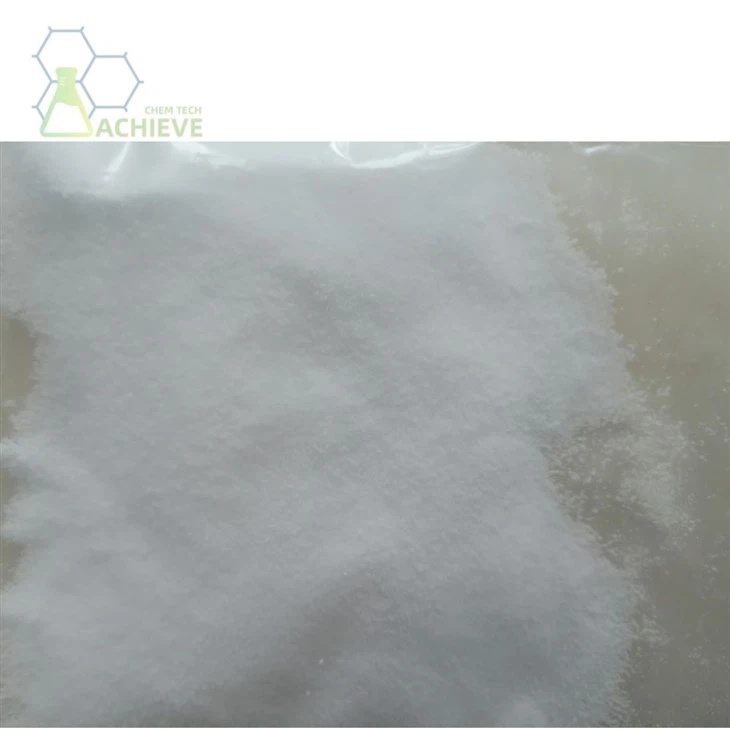


Phenibut HCl powder 25kg, Its molecular formula is C₁₀H₁₄ClNO₂ and the molecular weight is 215.68. The appearance is a white crystalline powder. This compound is a phenyl derivative of γ-aminobutyric acid (GABA), and due to its strong lipophilicity, it can effectively penetrate the blood-brain barrier. It mainly functions as a GABA-B receptor agonist and also affects dopamine receptors and antagonizes β-phenylethylamine (PEA). This substance was first developed in Russia in the 1960s and is used as a prescription drug in some countries and regions. Common application directions include anxiety management, mood regulation, sleep support, and the auxiliary improvement of vestibular dysfunction. The conventional single oral dose is usually within the range of 250 to 500 milligrams, with a half-life of approximately 5 hours. The specific effects and tolerance vary due to individual differences. Currently, this substance is mostly circulated in the international market in the form of research chemicals or raw materials for dietary supplements, and its legal status varies depending on the regulatory policies of different countries and regions. When using it, it is necessary to make a reasonable judgment based on one's own situation.

|
Product Name |
Phenibut HCL Powder |
|
Product Type |
Powder |
|
Product Purity |
100g/1kg/etc. |
|
Product Form |
Organic synthesis |
|
|
 |
|


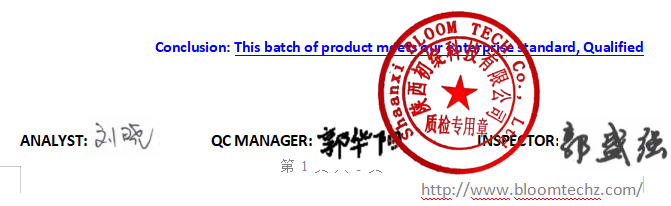
Phenibut COA
 |
|
|
|
|


Phenibut HCL Powder 25kg is a precise and specialized compound with clear application scope and stable physical and chemical properties. Thanks to its stable molecular structure and clear physiological action mechanism, it mainly serves in formal fields such as life science research, early-stage pharmaceutical development, physical and chemical analysis calibration, and laboratory supporting research within the global compliant chemical application system. All usage scenarios strictly follow various chemical management norms and industry usage guidelines, and it demonstrates practical value as a professional research raw material.
In the field of basic research in life sciences, this compound is an important experimental raw material for exploring the mechanisms related to the central nervous system. Leveraging its unique biological activity characteristics, it is widely applied in experimental work related to the exploration of neural physiological mechanisms. Universities and professional research institutions can use this substance to conduct research on the transmission laws of neurotransmitters,


carry out systematic experimental observations on the physiological effects related to neural regulation, clarify the logical relationship between the substance's action pathways and physiological reactions, assist researchers in improving the basic theoretical framework of the neurosciences, provide a stable and reliable experimental platform for academic research related to the regulation of human physiological functions, and promote the steady progress of related topics in the field of basic life sciences.
In the early-stage research and development field of the pharmaceutical industry, CAS 1078-21-3 benzodipropionic acid hydrochloride powder has a mature and compliant application space. During the preclinical research stage of new drugs, it can be used as a reference experimental raw material to participate in the pharmacological activity comparison experiments of neuroregulatory candidate drugs,


assisting researchers in conducting experiments such as screening of drug action targets and comparison of molecular effects, and helping to optimize the molecular structure and efficacy of new medicinal compounds. At the same time, it can be applied to drug metabolism simulation experiments, building standardized experimental sample models,
clarifying the metabolic rules of similar substances, providing strong support for the pharmaceutical research team to shorten the early-stage research cycle and improve the experimental data of research, and facilitating the research process of new regulatory drugs in the pharmaceutical field.


In the fields of physical and chemical testing and standard calibration, high-purity Phenibut HCL Powder can be used as professional standard substances. Relying on its precise and stable component content, it can be applied to calibrate laboratory testing instruments, adjust parameters of liquid chromatography, mass spectrometry and other precision detection equipment, and also be used for purity testing of similar organic compounds and qualitative and quantitative analysis experiments of component determination. In the quality inspection of chemical raw materials and the verification of component content of experimental reagents, it serves as a reference sample for comparison, unifying the internal experimental testing standards of the industry, improving the accuracy and uniformity of various physical and chemical experimental data, and ensuring that the results of various analysis and detection experiments are scientific and referential.

Phenibut HCL Powder 25kg, as a specific substance, is usually only used for scientific research or drug certification applications. Under legal and compliant research purposes, its use must strictly follow relevant scientific research norms and guidelines, and there is no difference in conventional use methods for the general public like ordinary drugs. The following are the key points of possible use methods from a scientific perspective:
Preparation of reserve solution

01
Determine target concentration and solvent
Determine the target concentration of the reserve solution according to experimental requirements, such as 1 mM, 5 mM, or 10 mM. Non nitroprusside hydrochloride is easily soluble in water, so water is a commonly used solvent.

02
Calculate the required solute mass
Calculate the required mass of non nitroprusside hydrochloride based on the target concentration and solvent volume. For example, to prepare 100 mL of 1 mM stock solution, the required mass of non nitroprusside hydrochloride is 0.1 mmol × 215.68 g/mol=21.568 mg (215.68 g/mol is the molecular weight of non nitroprusside hydrochloride).

03
Dissolve solutes
Accurately weigh the calculated mass of non nitroprusside hydrochloride and add it to an appropriate amount of solvent, such as water. Shake or stir to fully dissolve it.

04
Constant volume
Transfer the dissolved solution to a volumetric flask and dilute with solvent to the desired volume, such as 100 mL.

05
Packaging and preservation
Pack the prepared reserve solution into small bottles to avoid repeated freezing and thawing. When stored at -80 ° C, it is recommended to use within 6 months; When stored at -20 ° C, it is recommended to use within one month.
Preparation method of animal experimental reserve solution
1.Preliminary preparation
(1) Clarify experimental requirements: Based on the experimental purpose, consult relevant literature or conduct preliminary experiments to determine the dosage of non nitroprusside hydrochloride in animal experiments, usually in mg/kg units. For example, when studying its effects on anxiety behavior in mice, different dose groups such as 10 mg/kg, 30 mg/kg, and 50 mg/kg may need to be established.
(2) Calculate the required concentration of the reserve solution: Based on the number of experimental animals, body weight range, and administration volume, calculate the concentration of the required reserve solution. Assuming there are 20 mice in the experiment with an average body weight of 20 g and a dosage volume of 200 μ L/mouse, if the dosage is set to 30 mg/kg, the dosage for each mouse is 30mg/kg × 0.02kg=0.6mg, and the total dosage for 20 mice is 0.6mg × 20=12mg. If it is planned to dilute the stock solution to the appropriate working concentration for administration, a higher stock solution concentration, such as 100 mg/mL, can be set first to facilitate subsequent dilution according to actual needs.
(3)Ensure that the purity of Phenibut HCL Powder 25kg meets the experimental requirements, generally reaching over 99%. Prepare a suitable solvent, usually choosing physiological saline or sterile water. Physiological saline is closer to the physiological environment inside animals and can reduce the impact of solvent differences on experimental results; Aseptic water is relatively easy to operate, but attention should be paid to its possible impact on physiological indicators such as osmotic pressure in animals.
(4)Reagent: Ensure that the purity of non nitroprusside hydrochloride meets the experimental requirements, generally reaching over 99%. Prepare a suitable solvent, usually choosing physiological saline or sterile water. Physiological saline is closer to the physiological environment inside animals and can reduce the impact of solvent differences on experimental results; Aseptic water is relatively easy to operate, but attention should be paid to its possible impact on physiological indicators such as osmotic pressure in animals.
(5)Cleaning and disinfection: Clean and disinfect all experimental equipment to avoid impurities and microbial contamination that may affect the quality of the reserve solution. You can rinse the equipment with deionized water, wipe it with 75% ethanol for disinfection, and finally dry it in a super clean workbench for later use.
2.Preparation steps
Accurately weigh non nitroprusside hydrochloride
Accurately weigh the required mass of non nitroprusside hydrochloride using a high-precision electronic balance. For example, to prepare 100 mL of stock solution with a concentration of 100 mg/mL, it is necessary to weigh 100 mL x 100 mg/mL=10000 mg=10 g of non nitroprusside hydrochloride. During the weighing process, attention should be paid to avoiding the loss and contamination of the medicine. The medicine spoon can be used carefully and operated on the weighing paper.

Dissolve solutes

Add the weighed non nitroprusside hydrochloride salt to an appropriate amount of solvent. If using a volumetric flask for preparation, a small amount of solvent (about 1/3-1/2 of the total volume) can be added first, and gently stirred with a glass rod to promote dissolution. If dissolution is difficult, a magnetic stirrer can be used for stirring and heating appropriately (but temperature control should be taken into account to avoid the decomposition of non nitroprusside hydrochloride). For example, during the dissolution process, the beaker can be placed on a magnetic stirrer, set the appropriate stirring speed and temperature (generally not exceeding 40 ° C), and observe the dissolution until it is completely dissolved.
Solvent selection considerations
Physiological saline: Its advantage is that it can maintain an osmotic pressure similar to that of animals, reduce interference with their physiological state, and is suitable for experiments that are sensitive to osmotic pressure. For example, when studying the effects of drugs on the cardiovascular system of animals, using physiological saline as a solvent is more appropriate.


Aseptic water: The operation is relatively simple and the cost is low. But if there are strict requirements for the osmotic pressure of the solution in the experiment, or if the experiment time is long, it may be necessary to consider using physiological saline, because sterile water may cause an imbalance in osmotic pressure in the animal's body, affecting the experimental results.
isochoric
Transfer the initially dissolved solution to a volumetric flask. Wash the beaker and glass rod multiple times with a small amount of solvent, and transfer the washing solution to the volumetric flask to ensure that all solutes are transferred. Then, add solvent to the volumetric flask 1-2 cm below the scale line, and use a dropper with a rubber head to gradually add solvent until the concave liquid level is tangent to the scale line. During the process of sizing, it is important to keep the line of sight level with the scale line to avoid errors.

Packaging and preservation

Divide the prepared reserve solution into sterile centrifuge tubes or reagent bottles, with the volume of each tube or bottle determined according to experimental requirements. During the packaging process, attention should be paid to avoiding contamination, and sterile operating techniques can be used. After the packaging is completed, label it with information such as the name, concentration, and preparation date of the stock solution.The storage conditions are crucial for the stability of the reserve solution.
Generally speaking, non nitroprusside hydrochloride stock solution should be stored in a sealed manner to avoid exposure to light and high temperatures. When stored at -80 ° C, it is recommended to use within 6 months; When stored at -20 ° C, it is recommended to use within one month. Regularly conduct quality testing on the reserve solution, such as concentration testing, purity testing, etc., to ensure that its quality meets experimental requirements.

3.quality control
Concentration detection
Accurate methods such as high-performance liquid chromatography (HPLC) are used to detect the concentration of the reserve solution. Compare the test results with the theoretical concentration and calculate the concentration deviation.
If the deviation is within the allowable range (generally not exceeding ± 5%), the reserve solution can be used normally; If the deviation is significant, the cause needs to be analyzed and reconfigured.
For example, if the concentration of the reserve solution is found to be lower than the theoretical value through HPLC detection, it may be due to incomplete dissolution or loss during the transfer process. In this case, the solute should be re weighed and prepared.
Purity testing
Use appropriate methods to detect the purity of the reserve solution, such as mass spectrometry analysis, nuclear magnetic resonance, etc. Ensure that the purity meets the experimental requirements.
If the purity does not meet the standard, investigate the cause and take corresponding measures, such as re purifying the solute or optimizing the preparation process.
Stability testing
Regularly conduct stability testing on the reserve solution and observe its changes in appearance, concentration, purity, etc. under different storage conditions.
Adjust storage conditions or usage period based on test results. For example, if it is found that the concentration of the reserve solution decreases significantly after being stored at -20 ° C for a period of time, it may be considered to shorten the service life under this condition or switch to -80 ° C storage.
Frequently Asked Questions
What does phenibut HCl do?
+
-
Phenibut (beta-phenyl-gamma-aminobutyric acid HCl) is a neuropsychotropic drug that was discovered and introduced into clinical practice in Russia in the 1960s. It has anxiolytic and nootropic (cognition enhancing) effects. It acts as a GABA-mimetic, primarily at GABA(B) and, to some extent, at GABA(A) receptors.
How long does it take to feel phenibut?
+
-
There is minimal information regarding phenibut's pharmacokinetics and inter- actions. After oral administration, users report onset usually within 2-4 hours with full effect at 4-6 hours and duration as long as 15-24 hours. Concomitant use of phenibut with other sedating drugs may potentiate sedation.
What is the magic pill for anxiety?
+
-
Propranolol is a beta blocker first approved by the FDA in 1967 to treat heart conditions and high blood pressure. Today, many clinicians also prescribe it off-label for short-term, situational anxiety because it calms the body's stress response.
Is phenibut a benzo?
+
-
As a GABA agonist, symptoms of phenibut resemble those caused by substances such as benzodiazepines and barbiturates. However, phenibut does not show up on any standard drug tests, and no commercial tests are available for its detection.
Hot Tags: phenibut hcl powder 25kg, suppliers, manufacturers, factory, wholesale, buy, price, bulk, for sale, Alizarin Red Powder CAS 130 22 3, Methylergonovine Maleate Salt CAS 57432 61 8, Octreotide Acetate Powder, Diphenhydramine Hydrochloride Powder CAS 147 24 0, articaine hydrochloride powder, isoflurane powder