




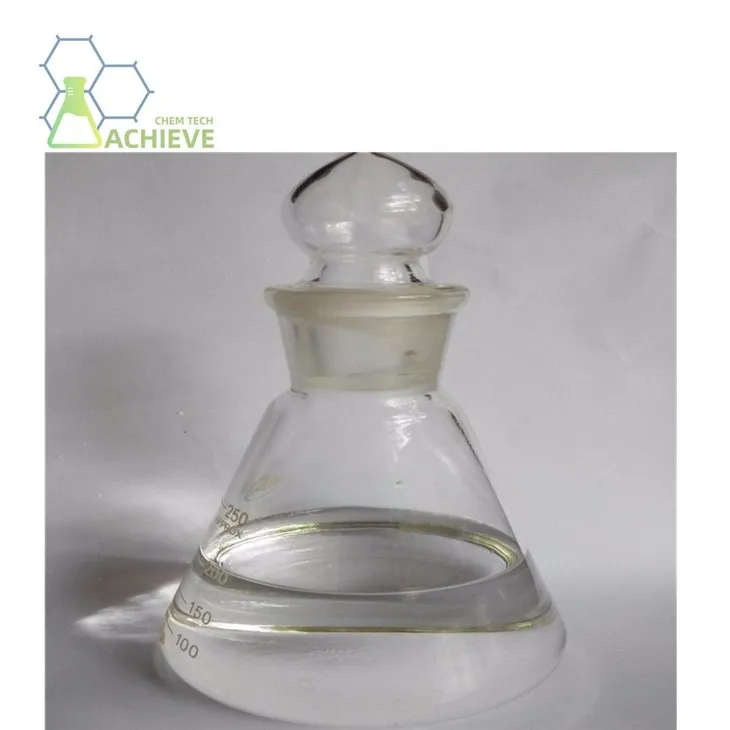
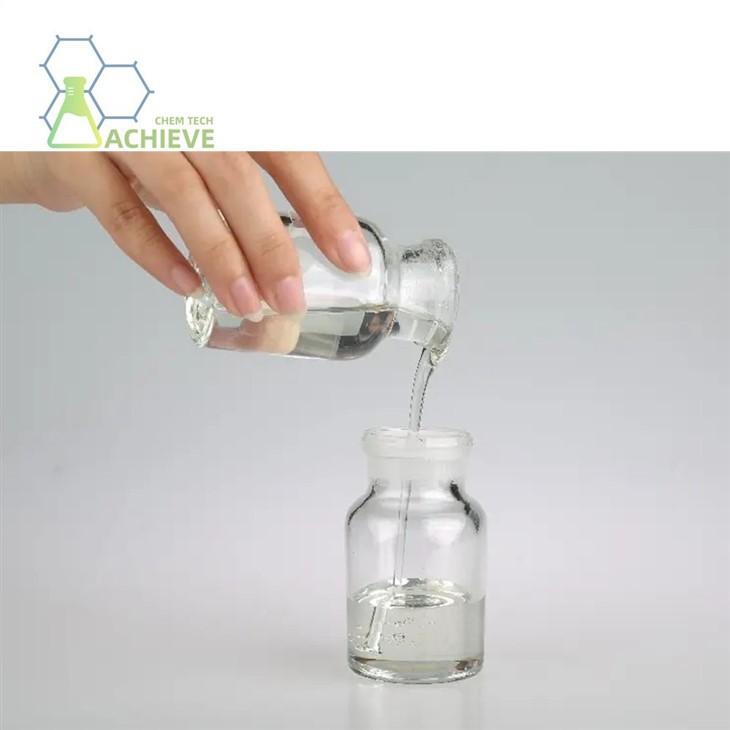
Shaanxi BLOOM Tech Co., Ltd. is one of the most experienced manufacturers and suppliers of quinoline solution cas 91-22-5 in China. Welcome to wholesale bulk high quality quinoline solution cas 91-22-5 for sale here from our factory. Good service and reasonable price are available.
Quinoline solution is an organic compound that is a colorless liquid at room temperature, but when exposed to light, it gradually turns pale yellow and further brown, with a strong odor. It is also a hygroscopic liquid that is easily soluble in hot water but difficult to dissolve in cold water. It can also be dissolved in organic solvents such as ethanol, ether, and carbon disulfide. It has a slightly higher density than water, a higher boiling point, and a certain refractive index. It can undergo substitution reactions with halogens, metal halides, etc. to generate corresponding derivatives. It can be used to synthesize various fuels and is also an important component of many drugs. It has insecticidal and bactericidal activities and can be used in the preparation of pesticides. It can also be used to prepare fluorescent whitening agents and has certain application value in the fields of chemical engineering, materials, etc. However, it has certain toxicity and irritation, and safety precautions should be taken when using it. Appropriate protective equipment should be worn to avoid direct contact with the skin and inhalation of steam.

Additional information of chemical compound:
|
Chemical Formula |
C9H7N |
|
Exact Mass |
129.06 |
|
Molecular Weight |
129.16 |
|
m/z |
129.06 (100.0%), 130.06 (9.7%) |
|
Elemental Analysis |
C, 83.69; H, 5.46; N, 10.84 |
|
Melting point |
-17--13 °C (lit.) |
|
Boiling point |
113-114 °C/11 mmHg (lit.) 237 °C (lit.) |
|
Density |
1.093 g/mL at 25 °C (lit.) |
|
Storage conditions |
Store below +30°C. |
|
|
|


1.Harm to human health
acute poisoning
- Short term exposure to quinoline vapor may cause corrosion of the nose, eyes, and respiratory tract, resulting in symptoms such as pain, redness, and difficulty breathing.
- May cause neurological symptoms such as dizziness, nausea, vomiting, and in severe cases, may lead to loss of consciousness.
Long term exposure
- Long term exposure or inhalation of it may cause damage to organs such as the liver and kidneys, leading to abnormal liver function and decreased kidney function.
- It may also be related to the occurrence of certain cancers, although the specific mechanism is not fully understood, studies have shown that it has certain carcinogenicity.
Skin contact
- It may cause skin irritation or corrosion, resulting in symptoms such as redness, swelling, pain, and itching.
- Long term exposure may lead to the occurrence of skin cancer.
2.Environmental hazards
Water pollution
- It is not easily biodegradable and may persist in water for a long time, posing a threat to aquatic organisms.
- May affect the ecological balance of water bodies and disrupt the living environment of aquatic organisms.
Soil pollution
- Its residue in the soil may lead to soil pollution, affecting the growth and yield of crops.
- Residues may enter the human body through the food chain, posing a potential threat to human health.
3.Other hazards
Fire and explosion risks
This substance is flammable and explosive, and safety regulations must be strictly followed during storage and use to prevent fire and explosion accidents.
Sensitivity to specific populations
Pregnant women, children and other specific populations are more sensitive to it, and may experience more serious health problems after exposure.
Storage method
- Cool and ventilated warehouse: Quinoline solution should be stored in a cool and ventilated warehouse environment to maintain its chemical stability.
- Keep away from sources of fire and heat: Storage areas should be kept away from sources of fire and heat to reduce the risk of fire.
- Sealed container: Use specialized containers with good sealing performance to store quinoline, preventing leakage and volatilization.
- Safety signs and warning signs: Clear safety signs and warning signs should be set up in the storage area to remind personnel to pay attention to safety.
- Firefighting equipment: Equip with appropriate types and quantities of firefighting equipment for use in emergency situations.
- Leakage emergency response equipment: The storage area should be equipped with leakage emergency response equipment and suitable containment materials for rapid response in case of leakage.
- Explosion proof electrical appliances, ventilation, and lighting equipment: Use explosion-proof electrical appliances, ventilation, and lighting equipment to reduce the risk of fire and explosion.
- Emergency evacuation routes and risk relief areas: Set up emergency evacuation routes and necessary risk relief areas to ensure the safe evacuation of personnel in emergency situations.
- Personal protective equipment: including appropriate safety goggles, chemical protective gloves, personal respiratory protective equipment, chemical protective clothing, and chemical resistant shoes to protect the safety of operators.
- Inert adsorbent material: Use inert adsorbent material to absorb and treat the leaked organic compound during leakage, in order to reduce its impact on the environment.
What should be done?
1.Eye/facial protection:Face masks and safety goggles that have been tested and approved by official standards such as NIOSH (USA) or EN 166 (EU) should be used to protect the eyes and face.
2.Skin protection:
- Appropriate protective gloves should be worn to prevent skin contact. Gloves must be inspected before use to ensure that there are no leaks or penetrations. If gloves are planned to be reused, they should be cleaned and thoroughly dried before being removed. Suggest confirming the glove's resistance to chemicals with the glove supplier based on specific usage situations.
- Chemical protective clothing should be worn to protect the body from the harm of quinoline.
3.Respiratory protection:If ventilation is insufficient, respiratory protective equipment should be worn. Dust or fog proof respirators approved by NIOSH/Masha or respirators that comply with European standard EN 149 should be used.
4.Other protective measures:Smoking, eating, and drinking are prohibited on the work site. After work, it should be thoroughly cleaned. Work clothes should not be taken to non work areas. Contaminated clothing should be stored separately and washed before use. Maintain good personal hygiene habits.
5.The storage area should be equipped with suitable containment materials: The storage area should be equipped with emergency response equipment for leaks and suitable containment materials to respond quickly in the event of a leak.
6.Provide sufficient local exhaust: When dealing with the Quinoline solution, it should be strictly sealed and sufficient on-site exhaust should be provided to reduce the concentration of steam in the air.
7.Smoking and open flames are prohibited: Clear safety signs and warning signs should be set up in the storage area to prohibit smoking and open flames.

The stability of quinoline solution is influenced by multiple factors such as chemical structure, environmental factors (temperature, light, pH value, solvent), packaging form and usage conditions. The following analysis is conducted from three dimensions: chemical properties, environmental sensitivity, packaging and usage methods, and optimization suggestions are put forward in combination with stability research methods.
Chemical Structure and Basic Stability
Quinoline (C₉H₇N) is a nitrogen-containing heterocyclic aromatic compound. The conjugated system of the benzene ring and the pyridine ring in its molecular structure endows it with certain stability, but the lone pair of electrons on the nitrogen atom makes it weakly basic (pKa≈4.85), and it is prone to react with strong acids and strong oxidants. In addition, quinoline may undergo isomerization or decomposition under light or high temperature conditions, generating pyridine or aniline derivatives.
Stability performance
Under normal temperature and light-proof conditions: Quinoline solution can remain stable for several months to a year in a sealed container (for example, the shelf life of commercially available quinomolyblimone solution is 365 days).
Chemical degradation pathways: It is prone to protonation under acidic conditions, and oxidation or hydrolysis may occur in alkaline environments, generating colored impurities or precipitates.
The Impact of Environmental Factors on Stability
Temperature
High temperatures accelerate the thermal motion of molecules and increase the rate of degradation reactions. For instance, quinoline may partially decompose when boiling at 237.7℃, and long-term exposure to an environment above 40℃ will significantly reduce the content of active components in the solution.
Suggestion: The storage temperature should be controlled at 2-8℃ (refrigerated) or below 25℃ (room temperature), and repeated freezing and thawing should be avoided.

Lighting
The conjugated system in quinoline molecules is sensitive to ultraviolet light. Light exposure may trigger photo-oxidation reactions, generating quinone or peroxide impurities.
Case: A certain study shows that the active ingredient content of quinoline solution decreases by 15% within 72 hours under ultraviolet radiation and yellow precipitate is produced.
Suggestion: Use brown glass bottles for packaging and store away from light. If light transmission operation is required, the intensity and duration of the light should be controlled.

pH value
Quinoline's stability decreases in acidic (pH<4) or alkaline (pH>9) environments. Protonated salts are prone to form under acidic conditions, and ring-opening degradation may occur in alkaline environments.
Data support: In the buffer solution with pH=7, the degradation rate of quinoline is the lowest. When pH=2 or 12, the degradation rate exceeds 20% within 24 hours.
Suggestion: When preparing solutions, use a neutral buffer system and avoid sharing containers with strong acid/strong base drugs.

Solvents and Impurities
Quinoline is readily soluble in organic solvents such as ethanol and ether, but its solubility in water is relatively low (about 0.6g/100mL, at 20℃). Partial degradation may occur in aqueous solutions due to hydration, while organic solvents may introduce impurities such as plasticizers.
Optimization plan: Select solvents based on application
In analytical chemistry, anhydrous ethanol or acetone is preferred.
In biological experiments, solvent toxicity needs to be taken into account, and DMSO can be used as a solubilizer.

The Impact of Packaging and Usage Methods

Packaging materials
Multi-dose packaging (such as plastic bottles and glass bottles) is prone to contamination by microorganisms, moisture and oxygen after repeated opening. For instance, after an eye drop bottle is opened, the humidity inside the bottle may rise from 30% to 70%, accelerating the hydrolysis of quinoline.
Improvement measures
Adopt high-barrier packaging (such as aluminum-plastic blister + double aluminum bag);
Add antibacterial agents (such as benzalkonium chloride) or desiccants (such as silica gel).
Stability in use
Stability studies should be conducted by simulating actual usage scenarios for temporarily formulated or multi-dose drugs. For instance, a certain injection solution requires that it be stored at 2-8℃ for no more than 24 hours after dilution, or at 25℃ for no more than 6 hours.
Research method:
Accelerated stability test: Placed at 40℃/75%RH for 6 months, it is equivalent to predicting the stability at room temperature for 2 years.
In-use stability test: Simulate operations such as bottle opening, dilution, and portioning to detect the content of active ingredients, pH value, and microbial load.

Strategies for Enhancing Stability
Formula optimization
Add antioxidants (such as vitamin C) or metal ion chelating agents (such as EDTA) to inhibit oxidative degradation;
Adjust the pH to a stable range (such as pH=5-7) to reduce the risk of protonation or hydrolysis.
Process control
Sterilization process selection: Avoid high-temperature and high-pressure sterilization. Give priority to aseptic filtration or irradiation sterilization.
Filling environment control: Fill under nitrogen protection to reduce the risk of oxidation.
Storage and Transportation
Short-term storage: Refrigerate at 2-8℃, avoid freezing.
Long-term storage: Freeze at -20℃ and aliquot into small doses to minimize repeated freezing and thawing.
Industry Regulation and Standards
Chinese Pharmacopoeia
Some preparations are required to investigate the stability in clinical preparation and use, such as the guiding principles for stability test of raw materials and preparations.
ICH Guidelines
It is recommended to use the ASAP model (Accelerated Stability Assessment Procedure) to predict long-term stability and shorten the R&D cycle.
WHO standard
It is recommended that multi-dose packaged drugs undergo in-use stability tests at the end of the shelf life to ensure controllable quality after opening.
Hot Tags: quinoline solution cas 91-22-5, suppliers, manufacturers, factory, wholesale, buy, price, bulk, for sale, Methylergonovine Powder CAS 113 42 8, Benzobarbital CAS 744 80 9, Tetracaine hydrochloride powder, phenacetin crystal, Chrysophanic Acid CAS 481 74 3, Alizarin Red Powder CAS 130 22 3