






Shaanxi BLOOM Tech Co., Ltd. is one of the most experienced manufacturers and suppliers of rifampicin powder cas 13292-46-1 in China. Welcome to wholesale bulk high quality rifampicin powder cas 13292-46-1 for sale here from our factory. Good service and reasonable price are available.
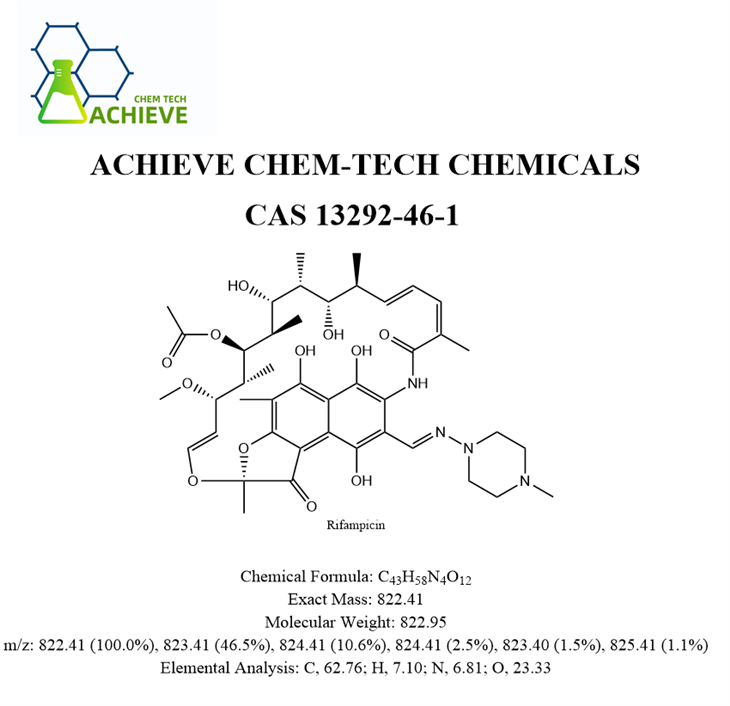
If the rifampicin powder is placed under an electron microscope, it does not present as an inert substance at all, but rather a grand chemical fortress. Its unique naphthoquinone core and piperazine bridge chain form a complex spatial structure, just like a meticulously crafted molecular key. Its antibacterial power stems from this - it can embed into the β subunit active pocket of the pathogen's RNA polymerase with almost irreversible precision, like a copper lock completely locking the core gear of the transcription machine, stopping the extension of the RNA chain, and ultimately achieving a fatal strike against the Mycobacterium tuberculosis.
However, this fortress itself is also the battlefield: its well-known hepatoprotective enzyme induction property is actually caused by its molecular structure acting as a "deceptive signal", strongly activating the human P450 enzyme system. This behavior of opening a path for its own metabolism unexpectedly accelerates the degradation of many combined drugs, becoming a troublesome double-edged sword in clinical combinations.

|
|
|


| Chemical Formula | C43H58N4O12 |
| Exact Mass | 822.41 |
| Molecular Weight | 822.95 |
| m/z | 822.41 (100.0%), 823.41 (46.5%), 824.41 (10.6%), 824.41 (2.5%), 823.40 (1.5%), 825.41 (1.1%) |
| Elemental Analysis | C, 62.76; H, 7.10; N, 6.81; O, 23.33 |
On a more microscopic level, its orange-red color is not accidental; it is the capture and release of specific light waves by its quinone chromophore, and this property has also been explored in the laboratory for photodynamic antibacterial therapy, allowing this ancient antibiotic to regain its directionally lethal killing power under laser irradiation.

application in tuberculosis treatment
Rifampicin powder exerts its antibacterial effect by inhibiting the DNA-dependent RNA polymerase, thereby blocking the synthesis of mRNA and subsequently halting the production of proteins required for bacterial growth and replication. This mechanism is particularly effective against Mycobacterium tuberculosis, the causative agent of tuberculosis.
Combination Therapy
Rifampicin is not typically used alone in the treatment of tuberculosis due to the risk of developing drug resistance. Instead, it is combined with other Anti-TB drugs such as isoniazid, ethambutol, pyrazinamide, and streptomycin. This combination therapy, known as the PIERS regimen (Pyrazinamide, Isoniazid, Ethambutol, Rifampicin, and Streptomycin), is effective in both the initial and retreatment phases of tuberculosis, including tuberculous meningitis.


Dosage and Administration
The dosage of rifampicin varies depending on the patient's age, weight, and the stage of the disease. It is usually administered orally, and the peak blood concentration is reached within 1.5 to 4 hours after ingestion. The treatment duration may last from 6 months to 2 years or even longer, depending on the severity and responsiveness of the infection.
Advantages
Rifampicin is highly effective against Mycobacterium tuberculosis.
It has good oral absorption and distribution in most tissues and body fluids, including the cerebrospinal fluid during meningitis.
It can be used in combination with other Anti-TB drugs to enhance the overall effectiveness of the treatment and delay the emergence of drug resistance.


Limitations
Mycobacterium tuberculosis can develop resistance to rifampicin if used alone for a prolonged period.
Rifampicin can cause a harmless red-orange discoloration of the urine, which may cause concern among patients.
It has potential interactions with other drugs, so patients should inform their healthcare providers about all medications they are taking.
application in other mycobacterial infections
Rifampicin acts by inhibiting the bacterial DNA-dependent RNA polymerase, which is essential for transcription and, consequently, bacterial growth. This mechanism of action makes it effective against a wide range of mycobacteria, including NTM.
1. Mycobacterium szulgai Infection
Case Study: In a reported case of skin infection caused by Mycobacterium szulgai, a 7-year-old girl presented with a plaque on the left side of her face. After tissue culture and identification, the patient was treated with a combination of rifampicin, isoniazid, and ethambutol. The patient's condition improved significantly following treatment.
Efficacy: Rifampicin's ability to inhibit mycobacterial growth was crucial in this case, contributing to the successful treatment outcome.


Background: CLGS is a skin infection in dogs caused by a specific type of NTM. The infection is characterized by the formation of subcutaneous nodules, which can vary in size and appear anywhere on the dog's body but are most common on the head and ears.
Treatment: Although culture-based diagnosis is challenging for CLGS, rifampicin has been used as part of a combination therapy for treating this infection.
The recommended treatment includes a combination of rifampicin and clarithromycin, with topical formulations containing rifampicin and clofazimine also being evaluated.
Efficacy: Rifampicin's role in the treatment of CLGS is to inhibit the growth of the causative NTM, thereby allowing the immune system to clear the infection and promote healing.


Rifampicin powder is often used in combination with other antibiotics to treat mycobacterial infections. The combination therapy enhances the efficacy of treatment by targeting different aspects of the bacterial life cycle and reducing the risk of resistance development.
Common Combinations: Rifampicin is frequently combined with isoniazid, ethambutol, and pyrazinamide in the treatment of tuberculosis. For NTM infections, it may be combined with clarithromycin, clofazimine, and other antibiotics depending on the specific causative organism.
preventive & off-label uses
Preventive Effects
Rifampicin is used for prophylaxis in high-risk close contacts of patients with Neisseria meningitidis infections. By inhibiting the growth of the meningococcus, Rifampicin can help prevent the spread of meningococcal disease, which can be severe and even fatal. This preventive use is particularly important in outbreak situations or in populations with a high risk of exposure to the meningococcus.

Off-Label Uses
In addition to its approved indications, Rifampicin has been explored for several off-label uses, including:

Mycobacterium avium intracellulare complex (MAC) infection
Rifampicin, often in combination with other antibiotics, has been used to treat MAC infections, which can cause lung disease and other complications in patients with compromised immune systems.
Brucellosis
Rifampicin has shown efficacy in treating brucellosis, a bacterial infection caused by Brucella species that can affect humans and animals.
Severe staphylococcal bone and joint infections
In cases of severe staphylococcal infections involving bones and joints, Rifampicin may be used in combination with other antibiotics to enhance treatment outcomes.
Prosthetic valve endocarditis caused by coagulase-negative staphylococci
Rifampicin has been used off-label to treat prosthetic valve endocarditis caused by coagulase-negative staphylococci, which can be difficult to treat due to their resistance to multiple antibiotics.


Autoimmune Cholestatic Liver Disease and Primary Biliary Cirrhosis (PBC)
Rifampicin has been reported to have a relieve itching effect in patients with autoimmune cholestatic liver disease and PBC. However, it should be noted that its mechanism of action and effectiveness in these conditions require further clinical verification.

Rifampicin powder is a core broad-spectrum antibiotic API, which is mainly produced by semi-synthetic method based on natural rifamycin derivatives. This synthesis process combines microbial fermentation precursor and chemical modification, with mild reaction conditions and high product purity, which is the mainstream industrial production route at present. The whole process is divided into three key steps: precursor oxidation activation, formylation cyclization modification and final condensation purification.
Precursor Oxidation Activation
The primary raw material for synthesis is rifamycin SV, a natural metabolite obtained by microbial fermentation. Firstly, rifamycin SV is oxidized to rifamycin S with oxidants such as sodium hypochlorite in a controlled temperature environment of 30-60℃.
This step converts the hydroxyl active group of the precursor into a carbonyl group, improving the chemical reactivity of the intermediate and laying a foundation for subsequent modification reactions.
The reaction system strictly controls the reagent ratio to avoid excessive oxidation leading to by-product generation, and the oxidation efficiency directly determines the final product yield.
Formylation and Cyclization Reaction
The activated rifamycin S undergoes formylation reaction with formaldehyde and tert-butylamine in DMF solvent system. Under the weak acid regulation of acetic acid and molecular sieve auxiliary, the cyclization reaction occurs stably to generate 3-formyl tert-butylamine rifamycin S.
This step constructs the characteristic oxazine ring structure of rifampicin, optimizes the molecular steric configuration, and endows the product with specific antibacterial activity. The one-pot synthesis technology is usually adopted in industrial production, which omits intermediate separation and purification, simplifies the process and reduces material loss.
Reduction, Condensation and Purification
The formylated intermediate is first reduced by vitamin C to restore the active reaction site, then undergoes nucleophilic condensation reaction with 1-methyl-4-aminopiperazine, the key amine reagent.
After the reaction is completed, the crude rifampicin product is obtained by cooling crystallization and alcohol solvent elution. Finally, activated carbon decolorization, azeotropic distillation and recrystallization are carried out to remove residual impurities and unreacted raw materials.
After drying and crushing, high-purity rifampicin that meets pharmaceutical standards is prepared. The whole process has stable reaction selectivity, and the purified product has high purity and good solubility, meeting clinical pharmaceutical application requirements.

Discovery of the Natural Rifamycin Scaffold (1957–1963)
In 1957, Piero Sensi's team at Italy's Lepetit Laboratories isolated Amycolatopsis mediterranei (originally named Streptomyces mediterranei) from pine forest soil along the French Riviera.
Fermentation of this organism yielded a new class of ansamycin antibiotics named rifamycins, after the popular French film Rififi. The natural mixture contained multiple components.
Rifamycin B displayed relatively weak activity yet served as the fundamental scaffold for structural modification. Chemical transformation produced rifamycin SV, which possessed anti-tuberculosis activity but suffered from poor oral absorption; it could only be administered by injection or topically, limiting its clinical utility.
Semisynthetic Modification and the Birth of Rifampicin (1963–1966)
Researchers conducted extensive derivative screening based on the rifamycin core, aiming to improve oral bioavailability and in vivo half-life. In 1965, Maggi and colleagues condensed 3-formylrifamycin S with 1-amino-4-methylpiperazine to obtain rifampicin. Their findings were formally published in 1966, confirming favorable oral absorption and potent antimycobacterial activity. This semisynthetic breakthrough overcame the delivery limitations of earlier rifamycins and laid the foundation for short-course chemotherapy.
Clinical Adoption and Industrial Production (Post-1968)
Rifampicin entered clinical use in 1968. Combined with isoniazid and other agents, it shortened the conventional 18-month tuberculosis treatment course to 9 months and markedly improved cure rates. In China, the Sichuan Industrial Institute of Antibiotics completed synthetic development in 1972. Multiple pharmaceutical plants achieved large-scale manufacturing in 1974, producing brick-red crystalline rifampicin to support national tuberculosis control. Thereafter, rifampicin became a core first-line anti-tuberculosis drug, and it is also used for leprosy and infections caused by drug-resistant Gram-positive bacteria.
FAQ
What is rifampicin used to treat?
+
-
Rifampin, also known as rifampicin, belongs to the antimicrobial class of drugs. This medication is used to manage and treat diverse mycobacterial infections and gram-positive bacterial infections.
What is the most common side effect of rifampin?
+
-
Common side effects include nausea, vomiting, diarrhea, and upset stomach. Rifampin can cause your body fluids, like your urine (pee), saliva, tears, and sweat, to turn a red-orange color. This color change is normal and not harmful, but it can stain contact lenses or dentures permanently.
Is rifampin a strong antibiotic?
+
-
Rifampin stands out as a powerful antibiotic with a wide range of applications, from treating tuberculosis to preventing meningitis.
When is the best time to take rifampin?
+
-
Rifampin works best on an empty stomach; take it 1 hour before or at least 2 hours after a meal. If you have difficulty swallowing the capsule, you may empty its contents into applesauce or jelly. Take rifampin exactly as directed. Do not take more or less of it or take it more often than prescribed by your doctor.
Hot Tags: rifampicin powder cas 13292-46-1, suppliers, manufacturers, factory, wholesale, buy, price, bulk, for sale, chondroitin sulfate powder, Atomoxetine Hydrochloride Powder CAS 82248 59 7, Best Phenibut powder, tetramisole hydrochloride powder, colchicine powder, paracetamol powder