


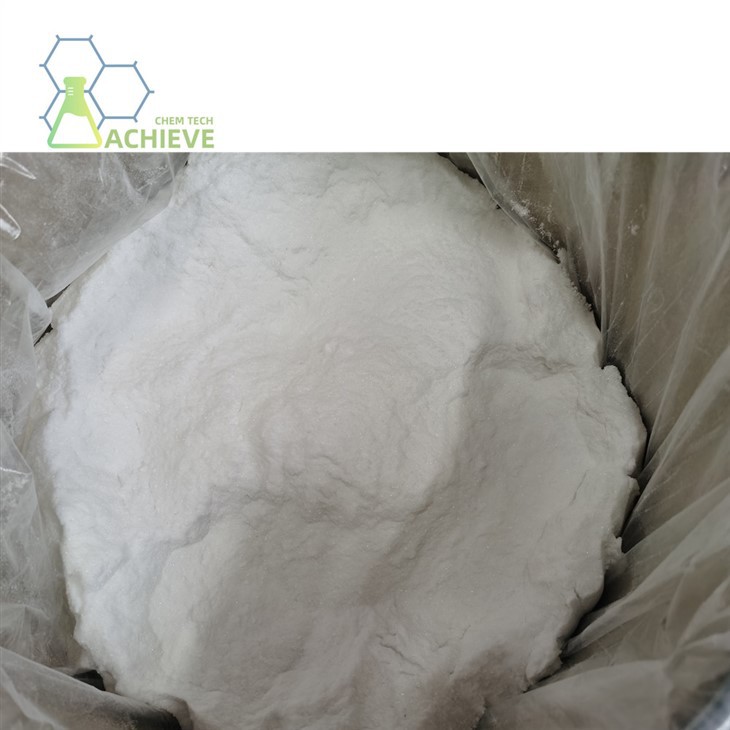


Shaanxi BLOOM Tech Co., Ltd. is one of the most experienced manufacturers and suppliers of sodium naphthalene-1-acetate cas 61-31-4 in China. Welcome to wholesale bulk high quality sodium naphthalene-1-acetate cas 61-31-4 for sale here from our factory. Good service and reasonable price are available.
From the perspective of the intersection of organometallic chemistry and plant physiology, sodium naphthalene-1-acetate is far from being a simple plant growth regulator. Its core mechanism lies in its unique aromatic ring structure and carboxymethyl side chain, which enables it to precisely mimic the spatial conformation and electron distribution of plant endogenous auxin (such as indole-3-acetic acid), thereby "deceiving" and occupying the binding sites of related receptor proteins (such as TIR1/AFB Auxin co-receptor). This highly specific binding triggers a complex series of signal cascades, ultimately leading to the activation or inhibition of specific Auxin Response Factor (ARF) transcription factors, thereby dramatically reprogramming the gene expression profile of plants. Its least common application might be seen in plant tissue culture for inducing the "dedifferentiation" process of callus formation: it manipulates cell cycle proteins and epigenetic modifications (such as DNA methylation) to force highly differentiated somatic cells to revert to an original, totipotent stem cell state, providing key technical support for the asexual reproduction of rare species and the preservation of genetic resources. Moreover, its sodium salt form is not an accidental choice. The water-soluble sodium ions significantly enhance its mobility within the plant vascular bundles, ensuring the uniformity and predictability of the biological effects, which is itself a sophisticated design in formulation science.
|
Chemical Formula |
C16H17N3O4S |
|
Exact Mass |
347 |
|
Molecular Weight |
347 |
|
m/z |
347 (100.0%), 348 (17.3%), 349 (4.5%), 349 (1.4%), 348 (1.1%) |
|
Elemental Analysis |
C, 55.32; H, 4.93; N, 12.10; O, 18.42; S, 9.23 |
|
|
|


High purity alpha sodium naphthalene-1-acetate belongs to auxin plant growth regulators and has three major functions. The first is to promote the formation of adventitious roots and roots, so it can be used to promote seed rooting and cuttings rooting, but excessive concentration can also inhibit rooting. The second is to promote the enlargement of fruits and root tubers, so it can be used as an enlargement agent. Field experiments have shown that it can significantly increase yield and improve quality in kiwifruit, grapes, watermelons, cucumbers, tomatoes, peppers, eggplants, pears, and apples. At the same time, it promotes rapid cell expansion, and the growth rate of processed eggplants undergoes miraculous changes. The mushroom effect is particularly significant and does not reduce the quality of the fruit. The third is to prevent falling flowers and fruits, with anti falling function. In addition, it also has the functions of general auxin, such as promoting growth, promoting chlorophyll synthesis, and promoting the differentiation of buds and flower buds. Therefore, it has the function of promoting flowering and fruiting, promoting lush branches and leaves, increasing yield, improving quality, and enhancing crop resistance to drought, cold, and lodging.
In the field of agriculture

Plant growth regulation
Promote rooting
Sodium naphthylacetate, as an auxin plant regulator, can enter the plant body through leaves, tender epidermis, and seeds, and be transported to the vigorously growing parts with nutrient flow, significantly promoting the development of root tips and inducing the formation of adventitious roots. For example, before grape cutting, dipping the branches in 100-200mg/L of medicinal solution can stimulate rooting, accelerate germination, and make the plants grow stronger; When transplanting trees, dipping the roots in the same concentration of medicinal solution can help promote rooting and improve survival rate; Soaking the base of tea, mulberry, oak, and water fir cuttings in 10-15 mg/L of medicinal solution for 24 hours can also effectively promote rooting.
For sweet potato cultivation, tie the potato seedlings together, soak the base 1 inch deep in 10-20mg/L liquid medicine, soak for 6 hours, and then transplant the seedlings; Alternatively, dip the seedlings in 80-100mg/L of medicinal solution for 1 inch and 3 seconds, and then immediately plant them. This can improve the survival rate and promote the expansion of potato chunks, thereby increasing yield.


Promote fruit enlargement and root tuber growth
Sodium naphthylacetate can be used as an swelling agent, which can rapidly promote cell division and expansion, significantly promoting the swelling of fruits and tubers. Field experiments have shown that crops such as kiwifruit, grapes, watermelons, cucumbers, tomatoes, peppers, eggplants, pears, and apples can significantly increase yield and improve quality. For example, for radish and cabbage, soaking them in 15-30mg/L of medicinal solution for 12 hours, then removing them and rinsing them with clean water 1-2 times. After drying, sowing can promote fruit swelling and increase yield;
Spraying 40-60mg/L of medicinal solution on the stem of citrus fruits 15 days before harvesting can effectively prevent fruit drop and increase yield; During the young fruit stage, apples, pears, and red dates should be sprayed with a whole plant solution of 15-20mg/L. Starting from 45 days before harvesting, spraying should be done every 15 days for 2-3 consecutive times. This not only promotes growth, but also prevents fruit drop before harvesting and increases yield.


Prevent falling flowers and fruits
Sodium naphthalene acetate has anti drop function, which can enhance the elongation ability of pollen tubes, facilitate pollination and fruit setting, and effectively prevent flower and fruit shedding. For example, soaking or spraying watermelons with 20-30mg/L of medicinal solution during the initial flowering of female flowers can increase the fruit set rate; Starting from the peak flowering period of cotton plants, spraying 1-8mg/L of chemical solution on the leaves every 10-15 days for three consecutive times can effectively prevent the shedding of buds and bells; Spraying whole plants of chili peppers at a concentration of 20mg/L during flowering can prevent flower drop and promote pepper formation.
Promote flowering and early maturity
Sodium naphthalene-1-acetate can promote plant metabolism, making the leaves darker green and thicker, while also promoting early flowering. It can also accelerate fruit development, make fruits mature early, and thus achieve increased yield and income. For example, when planting wheat, soak the seeds in a 10-20mg/L solution for 6-12 hours before sowing; Spraying appropriate amounts of medicinal solution before jointing and during tillering can promote tillering and increase the rate of ear formation. At the same time, it can also improve the salt alkali resistance of wheat, increase the thousand grain weight and grain number per ear, resist dry hot winds, and ultimately achieve yield increase.


Enhance plant stress resistance
Sodium naphthalene acetate can enhance the drought resistance, cold resistance, disease resistance, salt alkali resistance, and resistance to dry and hot winds of plants. For example, in the rice seedling field, the use of 3-10mg/L of liquid medicine for foliar spray helps regulate the growth of rice and improve its stress resistance; Soak the seeds of corn and millet in a solution of 20-30mg/L for 12 hours, then rinse with clean water and sow; During the growth period, foliar spraying with a concentration of 15-20mg/L can stimulate the growth of these crops, increase yield, and enhance their adaptability to the environment.
Industrial sector
(1) Synthetic dyes and organic synthesis intermediates
Sodium naphthyl acetate can be used as a synthetic dye and organic synthesis intermediate in industry, participating in various chemical reactions, and is an important raw material for the synthesis of certain organic compounds. In industrial applications, the dosage and usage of sodium naphthylacetate need to be determined according to specific production processes and product requirements. It is usually added to the reaction system in a certain proportion to participate in chemical reactions or used as an auxiliary agent.
(2) Metal preservatives
Sodium naphthylacetate has certain properties and can be used as a metal preservative to inhibit microbial growth on metal surfaces. The specific usage and dosage depend on the product type, production process, and desired effect.

Chemical industry field

Sodium naphthalene acetate is mainly used in the chemical industry for the production of plant growth regulators, pesticides, and other products. It can be used as a raw material or intermediate to participate in the synthesis of compounds with specific functions. In chemical production, the dosage and usage of sodium naphthylacetate also need to be determined according to specific production processes and product requirements, and may be added to the production process in the form of solutions, powders, or granules.
Textile industry
(1) Softener
Sodium naphthalene acetate can be used as a softener in the textile industry. It can penetrate into cotton fibers, forming a special structure that reduces the force between fibers, thereby increasing the softness of cotton. For example, sodium naphthylacetate is dissolved in water, applied to textiles by spraying or impregnating, and then dried to ensure its full penetration into the fibers, making cotton fabrics smoother and more elastic, and improving the overall quality of cotton fabrics.
(2) Improve fiber performance
Sodium naphthalene acetate can also improve the dyeing performance of fibers, enhance the quality and added value of textiles. When using sodium naphthyl acetate, it is necessary to master the correct concentration, liquid spraying method, and post spraying treatment method to ensure achieving the desired effect.

Medical field (non-traditional use speculation)

Although common sources currently emphasize its applications in agriculture, industry, and other fields, Sodium naphthalene-1-acetate is speculated from its chemical properties that it may also have potential uses in the pharmaceutical industry. For example, its ability to promote cell division and growth may have certain research value in tissue engineering, wound healing, and other fields. However, there is currently no widely recognized and mature pharmaceutical application, and it is still in the stage of theoretical speculation, requiring further research and verification.
Food industry (non-traditional use speculation)
There is information that sodium naphthalene is mainly used as a preservative, acidifier, and flavoring agent in food additives. It can inhibit the growth of microorganisms in food, extend the shelf life of food, and give food a certain acidity and special flavor. When adding sodium naphthyl acetate to food, its dosage should be strictly controlled, generally ranging from 0.01% to 0.1% of the total amount of food. However, there is some controversy over this use, as sodium naphthylacetate has a certain degree of toxicity and its use in food requires strict compliance with relevant regulations and safety standards. Currently, it is less commonly used in actual food production.

Compound use

(1) Compound with sodium nitrophenol
Sodium naphthyl acetate can be used in combination with sodium nitrophenolate to produce flower retention and fruit expansion agents, which are currently good regulators on the market. These two ingredients can enhance each other, broaden the efficacy of the drug spectrum, and reduce the concentration of use. They have both the effect of sodium nitrophenol and sodium naphthylacetate, achieving twice the result with half the effort.
(2) Compound with dwarfing hormone and choline chloride
Sodium naphthylacetate, when combined with dwarfism and choline chloride, can inhibit vigorous growth, promote fruit enlargement and the growth and enlargement of tubers and tubers.
(1) Compound with fertilizer
The compound application of sodium naphthalene and fertilizer significantly enhances the permeability and vitality of root cells, making root absorption faster and utilization more thorough, resulting in robust and balanced plant growth. If combined with fertilizers such as urea, potassium dihydrogen phosphate, boric acid, manganese sulfate, etc., it can improve fertilizer utilization efficiency, promote plant root development, prevent lodging, increase yield, and increase income.
(2) Compound with herbicide glyphosate
The combination of sodium naphthylacetate and herbicide glyphosate results in faster and more thorough weed control.

In the modern history of world agricultural development, research on the synthesis method of sodium naphthalene-1-acetate began very early and achieved certain research results.
Since the 1960s, foreign countries have started its application research and mechanism analysis. And we have gained further understanding and recognition of its role in regulating plant growth.
Due to the backwardness of the industrial system and the technological blockade imposed by foreign countries, research on naphthylacetic acid started relatively late in China. It was not until the mid-1970s that naphthylacetic acid began production in Anyang, Henan. China's understanding, knowledge, production, and application of naphthylacetic acid and its derivatives are far behind the world.
With the reform and opening up, our industrial system has gradually improved, research capabilities have gradually increased, and investment in agricultural technology has been increasing year by year. We have also made significant progress in the research and application of plant growth regulators. Especially in recent years, the practical research and application of plant growth regulators have gradually increased in China. Many plant growth regulators have moved from laboratories to factories and fields, completing the transformation of technology into productivity. In this context, naphthylacetic acid and sodium naphthylacetate have shown excellent practical and optimization effects in practical applications, gradually being accepted and recognized by the market. Sodium naphthylacetate has excellent plant growth regulation effects and is highly favored by researchers and farmers. Many domestic enterprises can produce sodium naphthalene acetate. It is worth noting that China's chemical industry started relatively late compared to foreign countries, but has strong momentum and enormous potential. The research and application of various plant growth regulators have gradually caught up with developed countries, but the gap still exists.
Due to its good application effect and good compatibility, sodium naphthalene can be used in combination with various plant growth regulators. So in practical life, the application scope is relatively wide. I believe it will also play an important role in the future.
Frequently Asked Questions
Can it dissolve in oil? What are the 'hidden skills' in agriculture?
+
-
Can it! It has a unique water oil dual solubility. This means that it can be formulated as a water agent and also dissolved in organic solvents to make emulsion. This characteristic allows it to penetrate the waxy plant epidermis and be transported through vascular bundles, making it easier for the plant to absorb and utilize as a whole than pure water-soluble analogues such as IAA sodium salt.
Will it 'cling on' in the soil? How long will it remain?
+
-
No, it degrades quickly. The half-life in soil is usually only a few days to two weeks, making it a biodegradable pesticide. But in crops such as legumes, their metabolic dynamics need to be monitored: studies have shown that residual levels are high in the early stages (1-7 days) after spraying, and then rapidly decrease. Therefore, it is necessary to strictly control the safety interval and dosage.
Will it "fight" when it encounters strong oxidants? What are the risks?
+
-
Yes, the risk is significant. It is extremely unstable when in contact with strong oxidants and may undergo violent reactions. It can participate in free radical reactions and generate intermediate products such as naphthyl methyl radicals in an oxidizing environment (such as the presence of hydroxyl radicals), so it must be avoided from mixing with potassium permanganate, peroxides, etc. in the laboratory or production.
Will its powder harm the eyes? How serious is it?
+
-
Yes, it is highly stimulating. According to GHS classification, 75% of notifications indicate severe eye irritation (H319), and 25% indicate permanent eye damage (H318). Dust goggles must be worn when handling powders, and once they enter the eyes, they should be immediately rinsed with water and seek medical attention.
Can it help plants "resist cold" under low temperature and weak light?
+
-
Can it! The unpopular application is stress induction. Research has shown that under low temperature and low light stress, spraying appropriate concentrations (such as 5 mg/L) of α - naphthyl sodium acetate can significantly increase the chlorophyll content and net photosynthetic rate of pepper seedlings, enhance the activities of SOD and CAT antioxidant enzymes, and increase the levels of endogenous hormones (IAA, iPA), thereby alleviating stress damage.
Hot Tags: sodium naphthalene-1-acetate cas 61-31-4, suppliers, manufacturers, factory, wholesale, buy, price, bulk, for sale, diphenylcarbazide reagent, CAS 58164 04 8, 12H benzofuro 2 3 a carbazole, 4 4 5 5 tetramethyl 2 triphenylen 2 yl 1 3 2 dioxaborolane, 2 1 1 biphenyl 4 yl 4 4 bromophenyl 6 phenyl 1 3 5 triazine, Dibenzothiophene 6 bromo 3 chloro