




Shaanxi BLOOM Tech Co., Ltd. is one of the most experienced manufacturers and suppliers of tubercidin cas 69-33-0 in China. Welcome to wholesale bulk high quality tubercidin cas 69-33-0 for sale here from our factory. Good service and reasonable price are available.
Tubercidin (a tuberculosis-killing antibiotic) is a nucleoside antibiotic produced by Streptomyces. Its structure is highly similar to adenine nucleoside, with the core difference being that the carbon atom at the 7th position of the adenine ring is replaced by a nitrogen atom. This subtle yet crucial structural change enables it to be mistakenly recognized by cells as a normal nucleoside and incorporated into the synthesizing RNA and DNA chains, thereby severely interfering with the synthesis and function of nucleic acids and ultimately inhibiting cell proliferation. This compound exhibits broad-spectrum biological activity, including significant antibacterial, antifungal, antiprotozoal, and antitumor effects. Therefore, it is often used as a classic molecular tool in biomedical research to explore nucleic acid metabolism and related cellular processes. However, due to its strong toxicity to host cells, its direct clinical application is greatly limited. Researchers are currently working to develop more selective derivatives based on its structure.

|
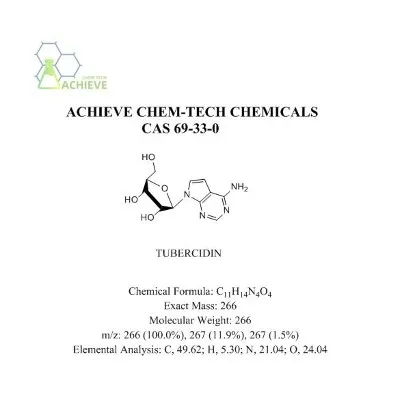
Chemical Formula |
C11H14N4O4 |
|
Exact Mass |
266 |
|
Molecular Weight |
266 |
|
m/z |
266 (100.0%), 267 (11.9%), 267 (1.5%) |
|
Elemental Analysis |
C, 49.62; H, 5.30; N, 21.04; O, 24.04 |
|
|
|

As a nucleoside antibiotic with significant biological activity, Tubercidin has shown broad application prospects in medical, scientific research, and potential other fields.
(1) Targeting Mycobacterium tuberculosis
It has a significant inhibitory effect on Mycobacterium tuberculosis (BCG), with a minimum inhibitory concentration (MIC) of less than 1 μ g/ml (source: ChemicalBook, Baidu Baike). This means that at very low concentrations, it can effectively inhibit the growth of Mycobacterium tuberculosis, thus showing great potential in the treatment of tuberculosis. Tuberculosis, as a chronic infectious disease caused by mycobacterium tuberculosis, poses a serious threat to human health. Therefore, tuberculin has important application value in the treatment and prevention of tuberculosis.


(2) Broad spectrum antibacterial effect
In addition to its inhibitory effect on Mycobacterium tuberculosis, it also exhibits certain antibacterial activity against various other microorganisms. For example, it also has a weak inhibitory effect on rice blast pear shaped spores and Candida albicans. These findings provide possibilities for the application of tuberculin in a wider range of antibacterial treatments.
It has also shown certain potential in the field of anti-cancer. Research has shown that tuberculin can inhibit the growth of mouse NF sarcoma cells, as well as tumor cells such as sarcoma 180 and Ehrlichen ascites cancer in animals. This discovery provides new ideas for its application in cancer treatment. Although further research is needed to verify its anti-cancer efficacy and safety, this potential use undoubtedly brings new hope to the field of cancer treatment.


In addition to the main purposes mentioned above, it may also have other medical purposes. For example, it can be used as a research chemical to explore metabolic pathways and disease mechanisms within organisms. In addition, with the continuous deepening of product research, people may also discover new applications in other medical fields.
As a nucleoside antibiotic, its unique molecular structure and biological activity make it an important tool in biochemical research. Scientists can use tuberculin to study biological processes such as DNA replication, RNA synthesis, and protein translation, thus revealing the mysteries of life.


It also has important application value in the field of drug research and development. Due to its significant antibacterial and anticancer activities, scientists can use it as a lead compound for structural optimization and modification to develop new drugs with higher activity and lower toxicity. These new drugs are expected to play an important role in the treatment of tuberculosis, cancer and other serious diseases.
Although there are currently no clear reports indicating the direct application of tuberculin in the agricultural field, its broad-spectrum antibacterial activity provides the possibility for its application in agricultural pest and disease control. In the future, further research and exploration can be conducted to develop agricultural fungicides or biopesticides based on tuberculin.


With the increasingly serious problem of environmental pollution, people are paying more and more attention to how to effectively treat and repair polluted environments. The antibacterial activity of tuberculin may have certain application value in the field of environmental protection. For example, it can be used to treat harmful substances in environmental media such as wastewater and soil contaminated by pathogenic microorganisms; It can also be used as a part of bioremediation agents to promote natural restoration and ecological balance of polluted environments.

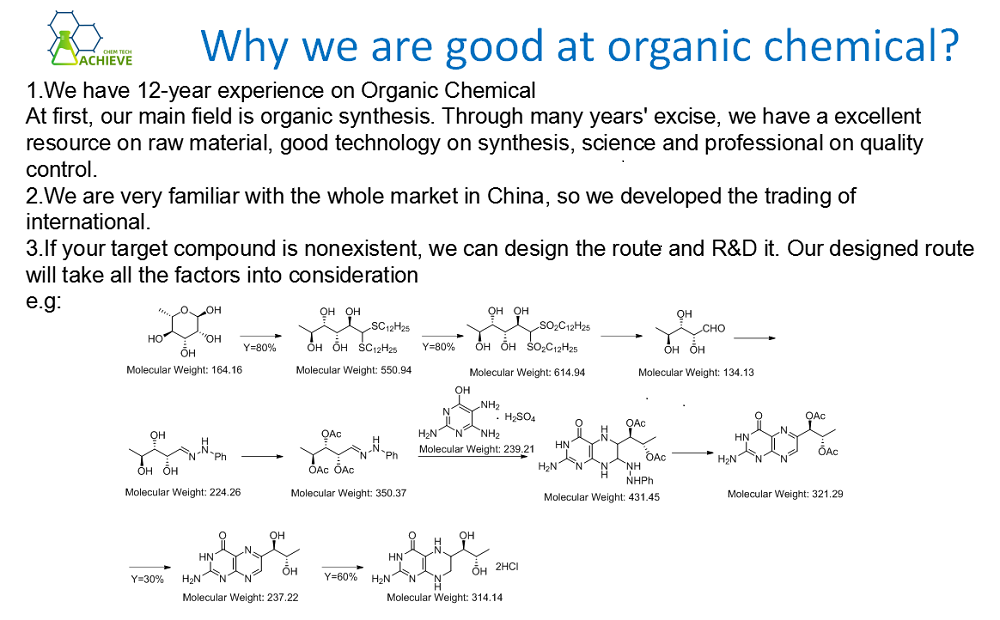
The common synthesis methods of Tubercidin are a complex field of organic synthesis chemistry. 7-Deazaadenosine is a natural product of pyrrole [2,3-d] pyrimidine nucleoside with significant anti schistosomiasis, antibacterial, and anti-tumor activities. The following is a detailed description of its common synthesis methods:
Specific synthesis methods
1. Synthesis of tuberculin through 4-chloropyrrolidone pyrimidine
This is a common synthesis route, and the specific steps may vary depending on laboratory and reaction conditions. However, generally speaking, this route starts with 4-chloropyrrolidone pyrimidine and gradually constructs the framework structure of tuberculin through a series of substitution, addition, cyclization and other reaction steps. In this process, it is necessary to choose appropriate catalysts, solvents, and reaction conditions to ensure the smooth progress of the reaction and the purity of the product.
2. Synthesis method with Vorbr ü ggen glycosylation reaction as the key step
Another more efficient synthesis method is the Vorbr ü ggen glycosylation reaction promoted by microwave as the key step. This method uses 6-chloro-7-bromo-pyrrole [2,3-d] pyrimidine and 1-O-acetyl-2,3,5-O-tribenzoyl - β - D-furan ribose as raw materials, and completes the total synthesis of tuberculin with high overall yield through three steps of reaction (source: Masahashi Scientific Research). The advantage of this method is that it utilizes the advantages of microwave heating, which can significantly improve the reaction rate and yield, while reducing the generation of by-products.
The specific steps may include:
Step 1: 6-chloro-7-bromo-pyrrole [2,3-d] pyrimidine reacts with appropriate protective groups to protect its active site.
Step 2: Use Vorbr ü ggen glycosylation reaction to introduce the glycosyl portion onto the pyrrolidone pyrimidine framework, forming glycosidic bonds. This step is crucial for the entire synthesis process, requiring precise control of reaction conditions to ensure the efficiency and selectivity of glycosidic bond formation.
Step 3: Remove protective groups and perform necessary post-treatment steps to obtain pure tuberculin killing products.
Optimization and improvement of synthesis methods
In practical applications, optimization and improvement of synthesis methods are key to increasing yield and reducing costs. Scientists typically achieve this goal through the following pathways:
(1) Screening catalysts and solvents:
Choosing appropriate catalysts and solvents can significantly improve reaction rate and yield, and reduce the generation of by-products.
(2) Optimize reaction conditions:
Including optimizing parameters such as temperature, pressure, and reaction time to ensure that the reaction proceeds under optimal conditions.
(3) Improved post-processing steps:
By improving the post-processing steps, the purity and yield of the product can be increased, and the generation of waste can be reduced.
(4) The adoption of new technologies
Such as microwave heating and ultrasonic assistance, can significantly improve reaction efficiency and yield, and shorten reaction time.
Diluted old Tubercidin has the efficacy and role of tuberculin test positive determination, diagnosis of tuberculosis, evaluation of tuberculosis immune status, tuberculosis latent infection screening, tuberculosis infection control monitoring, etc.
1. Positive determination of tuberculin test
By injecting a certain amount of tuberculin, observe whether the body experiences hypersensitivity reactions to determine the presence of Mycobacterium tuberculosis infection.

2. Diagnosis of tuberculosis
Tuberculin was injected into the skin of patients to observe their skin reaction to help diagnose tuberculosis.

3. Evaluation of tuberculosis immune status
Evaluate the immune status and potential risks of individuals by detecting the intensity of their immune response to tuberculin.

4. tuberculosis latent infection screening
The test aims to find asymptomatic but potentially infectious tuberculosis infected persons.

5. Monitoring of tuberculosis infection control
Identify newly infected or recurrent cases through regular check ups and take corresponding measures to prevent transmission.

What are the side effects of this compound?
Tubercidin (also known as 7-deaza-adenosine, Chinese name for tuberculin) is an adenosine analogue and belongs to nucleoside antibiotics. It can be incorporated into DNA to inhibit polymerase, thereby suppressing DNA replication and RNA/protein synthesis. In addition, it also has antifungal and antiviral activity. However, its use is also accompanied by some side effects, and the following is a detailed summary of its side effects:

1.Serious side effects
Hepatorenal toxicity: Some studies suggest that it may cause damage to the liver and kidneys. In animal experiments, injecting 5mg/kg Tubercidin into mice daily for 4 consecutive days resulted in mouse death, which may be related to its damage to the liver and kidneys.
Other serious adverse reactions may include hypersensitivity reactions, sepsis, rhabdomyolysis, hepatotoxicity, cardiomyopathy, etc.
2.Common side effects
Digestive system reactions: such as nausea, vomiting, constipation, diarrhea, etc.
Neurological response: Symptoms such as fatigue, headache, and insomnia may occur.
Respiratory system response: Some patients may experience difficulty breathing.
Musculoskeletal system reactions, such as joint pain and muscle pain, are also common side effects.


3.Abnormal laboratory examination
Abnormal liver function indicators: Elevated levels of ALT (alanine aminotransferase) and AST (aspartate aminotransferase) indicate possible impairment of liver function.
Abnormal kidney function indicators, such as elevated creatinine, may indicate impaired kidney function.
Other abnormal indicators include elevated ALP (alkaline phosphatase), hypoalbuminemia, elevated creatine phosphokinase, elevated bilirubin, anemia, neutropenia, thrombocytopenia, etc. The abnormalities in these indicators may further support the inference of liver or kidney dysfunction.
4.Precautions for use
Before use, a comprehensive physical examination should be conducted to assess the patient's liver and kidney function and other relevant indicators.
During treatment, patients' liver and kidney function, blood routine, and other indicators should be regularly monitored to promptly detect and address potential side effects.
If any discomfort or suspected side effects occur, seek medical attention immediately and inform the doctor that the compound is being used.

Frequently Asked Questions
Is its name misleading? --Can kill tuberculosis bacteria, but not clinical anti tuberculosis drugs
+
-
Yes, it is a compound with a "name spoiler" but a "identity reversal".
It does have strong inhibitory activity against Mycobacterium tuberculosis, with a minimum inhibitory concentration (MIC) of less than 1 μ g/mL. Cold truth: It has never become a clinical anti tuberculosis drug due to its strong toxicity (LD50 in mouse veins is only 45 μ g/kg), but instead has become an important tool for RNA polymerase inhibitors and glycolysis research (such as Trypanosoma) due to its unique 7-deazapurine structure. The name is history, and its purpose is scientific research.
How does its' deadly disguise 'occur in the human body?
+
-
It will be mistaken for adenosine, invited into the metabolic cycle, and then self destruct.
Tuberculin is an analogue of adenosine (7-deadenoadenosine), whose structure replaces N-7 in adenosine with C-7. Cold mechanism: After entering the cell, it is phosphorylated by adenosine kinase to form one, two, and three phosphate forms. These phosphorylation products will be incorporated into DNA and RNA, inhibiting polymerase and blocking nucleic acid and protein synthesis - it utilizes the cell's "mistake" mechanism to carry out suicide attacks.
How toxic is it? --There are significant differences in species and pathways
+
-
The toxicity data presents a dual face of "species differences" and "pathway dependence".
Species differences: The oral LD50 for mice is 28.3 mg/kg, for rats it is 16 mg/kg, and for dogs it is 48 mg/kg.
Pathway dependence: The LD50 of intraperitoneal injection in mice is 6 mg/kg, while intravenous injection only requires 45 μ g/kg - the toxicity of intravenous injection is 133 times that of intraperitoneal injection and 628 times that of oral administration.
Cold logic: The route of administration determines life and death, and intravenous exposure requires extreme caution.
Hot Tags: tubercidin cas 69-33-0, suppliers, manufacturers, factory, wholesale, buy, price, bulk, for sale, pontocaine, Medetomidine hydrochloride, Sapropterin Hydrochloride, Xylazine hydrochloride, IPTG reagent, paracetamol powder