



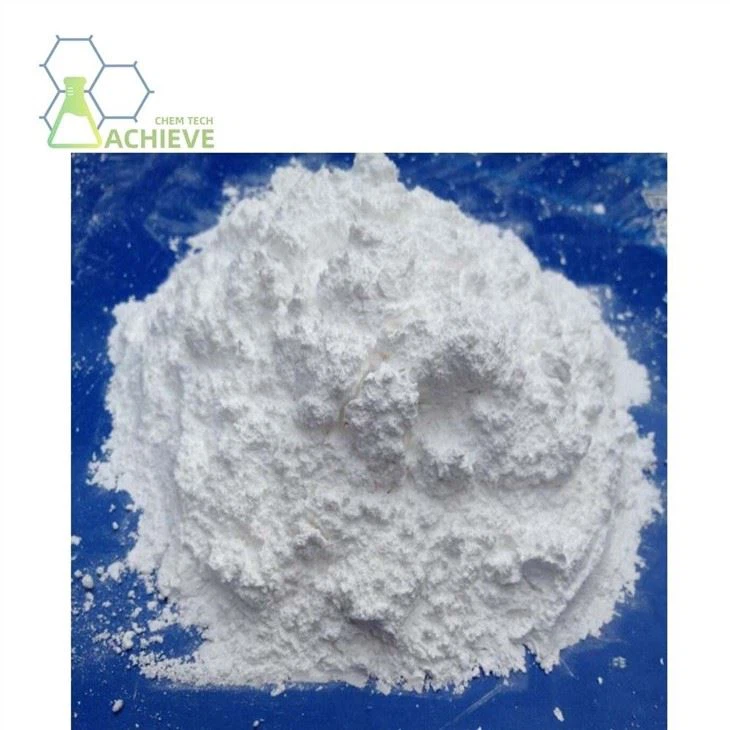


Shaanxi BLOOM Tech Co., Ltd. is one of the most experienced manufacturers and suppliers of glabridin powder cas 59870-68-7 in China. Welcome to wholesale bulk high quality glabridin powder cas 59870-68-7 for sale here from our factory. Good service and reasonable price are available.
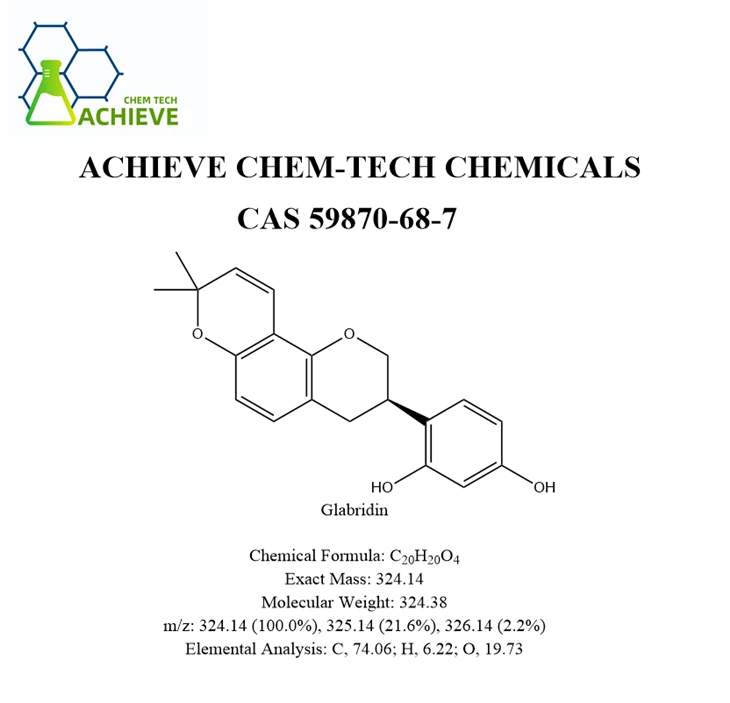
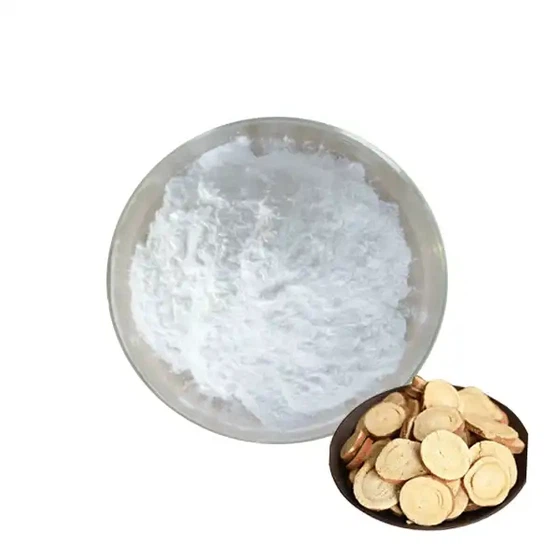
Glabridin powder is a kind of flavonoids, with low content of brown powder and high content of white powder. Molecular formula C20H20O4, CAS 59870-68-7. Insoluble in water, soluble in butanediol, propylene glycol and other organic solvents. Extracted from a precious plant called Glycyrrhiza glabra, Glycyrrhiza glabra is known as "whitening gold" because of its powerful whitening effect. It can eliminate free radicals and melanin at the bottom of muscles. It is a holy thing for skin whitening and anti-aging. Glycyrrhizin has a strong free radical scavenging effect, vitamin C, vitamin E and β- Carotene is recognized as the king of antioxidant and anti-aging. Glycyrrhizin has the same anti-aging ability as vitamin E. it is a natural antioxidant. It is reported that the antioxidant effect of its antioxidants is significantly better than that of BHA and BHT. It is reported in the literature that licorice can be used to reduce the corticosteroids of infectious skin diseases and strengthen the role of steroids.

 |
 |
|
Chemical Formula |
C20H20O4 |
|
Exact Mass |
324.14 |
|
Molecular Weight |
324.38 |
|
m/z |
324.14 (100.0%), 325.14 (21.6%), 326.14 (2.2%) |
|
Elemental Analysis |
C, 74.06; H, 6.22; O, 19.73 |

Glabridin powder is a flavonoid compound extracted from the root of Glycyrrhiza glabra L., with a chemical formula of C ₂ ₀ H ₂ ₀ O ₄ and a molecular weight of 324.37. As a natural plant active ingredient, it has multiple effects such as whitening, antioxidant, anti-inflammatory, and immune regulation, and is widely used in cosmetics, medicine, food, and other fields. The following provides a detailed analysis from three dimensions: core efficacy, application scenarios, and technological progress.
1. Whitening and spot lightening: the "golden ingredient" that inhibits melanin production
Guanggancao Ding blocks the melanin synthesis pathway by inhibiting tyrosinase activity. Tyrosinase is a key enzyme in melanin production, and glycyrrhizin can reduce its activity by more than 50%. At the same time, it reduces the expression of dopa pigment isomerase (TRP-2), thereby reducing melanin deposition from the source. Its whitening effect is mild and long-lasting. Clinical data shows that after continuous use of skincare products containing 0.5% glycyrrhizin for 8 weeks, the average pigmentation area of the subjects decreased by 32%, and the skin brightness increased by 2.1 color levels. Compared to traditional whitening agents such as hydroquinone and arbutin, glycyrrhizin has lower irritation and is suitable for sensitive skin and pigmentation problems such as melasma and sunspots.


2. Antioxidant protection: a natural scavenger of free radicals
The antioxidant capacity of Guanggancao Ding is equivalent to that of vitamin E. The phenolic hydroxyl groups in its molecular structure can capture free radicals and inhibit lipid peroxidation reactions. In cell experiments, glycyrrhizin can significantly reduce the levels of reactive oxygen species (ROS) induced by ultraviolet radiation, protecting the integrity of cell membranes. Animal experiments have shown that oral administration of glycyrrhizin can increase serum superoxide dismutase (SOD) activity by 35%, reduce malondialdehyde (MDA) content by 28%, and effectively delay skin photoaging.
3. Anti inflammatory repair: a "natural medicine" for inflammatory skin diseases
Guanggancao Ding reduces the release of inflammatory factors (such as IL-6 and TNF - α) by inhibiting the NF - κ B signaling pathway, alleviating symptoms such as skin redness, swelling, and itching. Clinical studies have shown that after 4 weeks of treatment with a cream containing 1% glycyrrhizic acid, the itching score of eczema patients decreased by 67% and the skin lesion area decreased by 54%. Its anti-inflammatory mechanism is similar to that of glucocorticoids, but without hormone dependent risk, and is suitable for chronic inflammatory skin diseases such as acne and rosacea.


4. Immune regulation: a "biological regulator" that enhances the body's defense ability
Guanggancao Ding can activate macrophage phagocytic function, promote T lymphocyte proliferation, and enhance the body's specific immune response. Experiments have shown that Guanggancao Ding can increase the serum IgG level of mice by 42% and enhance their resistance to influenza virus. In the medical field, it is used to assist in the treatment of herpes zoster, herpes simplex and other viral infectious diseases, shorten the course of disease and reduce the risk of sequelae.
5. Anti glycation and anti-aging: a versatile tool for delaying skin aging
Guanggancao Ding can inhibit the generation of advanced glycation end products (AGEs), reduce collagen cross-linking, and maintain skin elasticity. In vitro experiments showed that after treatment with glycyrrhizin, the collagen synthesis of skin fibroblasts increased by 29%, and the rupture of elastic fibers decreased by 41%. Long term use of skincare products containing glycyrrhizin can significantly improve skin sagging, fine lines, and other issues.

Application scenarios and product forms

1. Cosmetics field: Core ingredients for whitening and anti-aging
Whitening product: Guangliquorice is the standard ingredient of high-end whitening essence and face cream, and the recommended addition amount is 0.001% -3%. For example, an international brand "Photogenic Whitening essence" contains 0.5% phosglycyrrhizin, which works together with nicotinamide to achieve a synergistic whitening effect.
Sunscreen products: Guanggancao Ding can inhibit UV induced pigmentation and is often combined with physical sunscreen agents such as titanium dioxide and zinc oxide to increase SPF value and reduce "phototoxicity" reactions.
Anti aging products: The combination of glycyrrhizin and ingredients such as hyaluronic acid and peptides can enhance skin barrier function and reduce wrinkle depth. An anti-aging face cream contains 2% phosglycyrrhizin, and clinical tests show that the wrinkle volume decreases by 18% after 8 weeks.
2. Pharmaceutical field: multi-target therapeutic drugs
Dermatologic drugs: Guangliquiridine gel is used to treat eczema and contact dermatitis, and its anti-inflammatory effect is equivalent to 1% hydrocortisone, but there is no hormone side effect.
Liver disease adjuvant therapy: Guanggancao Ding can inhibit liver inflammation and promote liver cell repair, and is commonly used as an adjuvant therapy for chronic hepatitis and fatty liver. Clinical data shows that after combined treatment with glycyrrhizin, patients' ALT levels decreased by 35% and liver fibrosis scores improved by 21%.
Cardiovascular protection: glycyrrhizin can reduce the formation of atherosclerotic plaque by inhibiting the oxidation of low-density lipoprotein (LDL). Animal experiments have shown that glycyrrhizin can reduce serum cholesterol levels in mice by 22% and delay the progression of arteriosclerosis.


3. Food and Health Products: Emerging Applications of Functional Ingredients
Functional food: Guanggancao Ding has been developed into oral whitening capsules, anti glycation drinks, and other products. For example, a certain brand of "whitening drink" contains 50mg of glycyrrhizic acid, and after continuous consumption for 12 weeks, the skin tone uniformity of the subjects increased by 19%.
Health products: Glabridin powder uralensis extract is combined with vitamins C and E to produce antioxidant health products, which are used to delay aging and enhance immunity. Experiments have shown that Guanggancao Ding can increase serum SOD activity in elderly people by 28% and reduce levels of inflammatory factors by 34%.
How it works
Inhibition of tyrosinase
human tyrosinase is an essential enzyme, which can regularly produce melanin and turn skin or eyes from brown to black. We know that skin exposure to ultraviolet light will cause some reactions (such as inflammation). Because the phospholipid membrane of skin tissue is destroyed by reactive oxygen species induced by ultraviolet light, this histological change is manifested as erythema and pigmentation. Reactive oxygen species is a substance that can cause skin pigmentation, so inhibiting its formation can inhibit the formation of melanin. Glycyrrhizin is the most expensive and effective whitening ingredient among all whitening ingredients. According to materia medica China, the whitening effect of glycyrrhizin is 232 times that of ordinary vitamin C, 16 times higher than hydroquinone, and 1164 times that of arbutin. Therefore, glycyrrhizin is called "whitening gold".
Anti inflammatory effect
the anti-inflammatory activity of glycyrrhizin was verified through experiments. Guinea pigs were irradiated with UV to cause pigmentation, and then smeared with 0.5% glycyrrhizin solution. It was found that glycyrrhizin reduced skin inflammation caused by UV stimulation. A value is used to represent erythema on the skin. By recording the a value (colorimeter reading) of glycyrrhizin before and after irradiation, the degree of inflammation reduction can be calculated. The researchers studied the inhibition of cyclooxygenase activity by photoglycyrrhizin. Cyclooxygenase is an enzyme that converts arachidonic acid into prostaglandins, which are inflammatory factors. Compared with the control group (using the current cyclooxygenase inhibitor, ninhydrin), glycyrrhizin alone can inhibit cyclooxygenase. It is believable that glycyrrhizin can reduce inflammation by inhibiting cyclooxygenase and affecting the production of arachidonic acid.
Cosmetic application
glycyrrhizin has excellent anti-inflammatory, antioxidant and anti melanin effects, so it is used as an ingredient in all kinds of cosmetics and medical care products (such as face cream, lotion, shower gel, etc.). It can be made into whitening face cream, and such patented products have been put on the market.
synthetic method
The synthesis of glabridin powder often starts from relatively simple aromatic or heterocyclic compounds. One approach, as described in recent literature, involves using 2,4-dimethoxybromobenzene and diethyl malonate as the starting materials. This method aims to provide a cost-effective and high-yielding route to glabridin.
Iodide-Catalyzed Coupling Reaction:
In an argon atmosphere, 2,4-dimethoxybromobenzene, diethyl malonate, a catalyst such as copper(I) iodide, an additive like 2-pyridinecarboxylic acid, and a base (e.g., potassium carbonate) are reacted in a suitable solvent (e.g., 1,4-dioxane) at elevated temperatures (around 100°C) for several hours. This step results in the formation of a key intermediate.
Key Points:
Solvent mass: 2-8 times the mass of 2,4-dimethoxybromobenzene.
Molar ratios: Catalyst to bromobenzene (1:50–1:10), base to bromobenzene (1:1–5:1), additive to bromobenzene (1:25–1:5).
Reduction Reaction:
The intermediate obtained from the coupling reaction is then subjected to a reduction reaction using a reducing agent like lithium aluminum hydride in tetrahydrofuran (THF) at room temperature. This step further modifies the intermediate structure.
Key Point:
Molar ratio of reducing agent to intermediate (e.g., 1:1–4:1).
Bromination Reaction:
The reduced intermediate is then brominated using N-bromosuccinimide (NBS) and a phosphorus reagent (e.g., triphenylphosphine) in dichloromethane at controlled temperatures (0°C to 50°C). This step introduces a bromine atom, which is crucial for subsequent transformations.
Key Point:
Molar ratios of NBS:triphenylphosphine:intermediate (e.g., 2–10:2–10:1).
Nucleophilic Substitution and Friedel-Crafts Reaction:
The brominated intermediate is then reacted with another compound (e.g., 2,2-dimethyl-dihydro-5H-chromen-5-one) in the presence of a base (e.g., potassium carbonate) and a suitable solvent (e.g., N,N-dimethylformamide or dimethyl sulfoxide) to form a more advanced intermediate.
Subsequently, a Friedel-Crafts reaction using an acid catalyst (e.g., aluminum chloride) further modifies this intermediate.
Debromination and Final Steps:
The final steps involve debromination of the intermediate, often using a reagent like boron tribromide, to yield glabridin. This step requires careful control of temperatures and reaction times to avoid side reactions.
Hot Tags: glabridin powder cas 59870-68-7, suppliers, manufacturers, factory, wholesale, buy, price, bulk, for sale, SYN AKE powder, PERFLUOROOCTYL TRIETHOXYSILANE, L Selenomethionine powder, 4-Butylresorcinol powder, 4 Butylresorcinol powder