


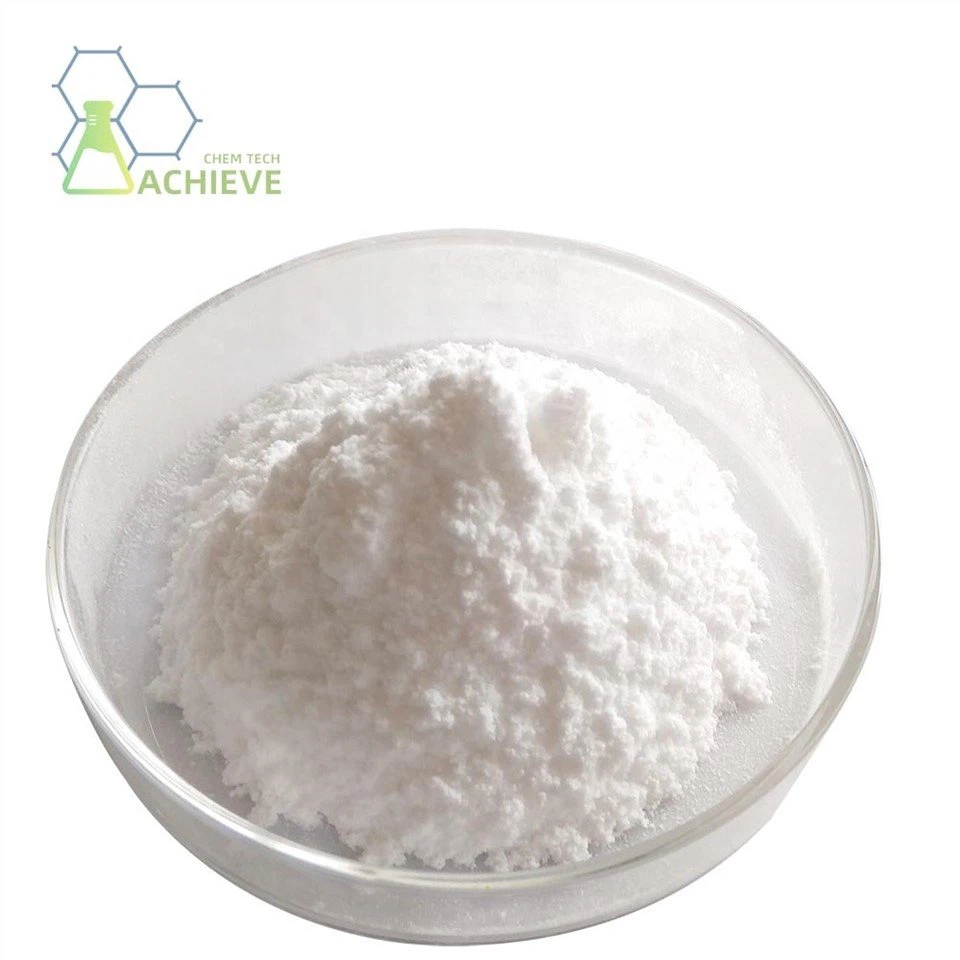


Glycyrrhizic acid ammonium salt, also known as Monoammonium glycyrrhizinate, is a compound derived from the roots of the licorice plant (Glycyrrhiza glabra). Its CAS number is 53956-04-0, and it has a molecular formula of C42H65NO16 with a molecular weight of approximately 839.96-856.99 depending on the hydration state.
This compound possesses various pharmacological activities, including anti-inflammatory, anti-allergic, anti-gastric ulcer, and anti-hepatitis effects. Scientific studies have demonstrated its ability to regulate immune responses by reducing the production of inflammatory cytokines such as TNF-α and IL-1β, and modulating nuclear factor-kappa B (NF-κB) signaling pathway.
Physically, it appears as a white crystalline powder with a density of 1.43g/cm³ and a melting point around 209ºC. Its boiling point is 971.4ºC at 760mmHg, and the flash point is 288.1ºC. It is slightly soluble in water, very slightly soluble in anhydrous ethanol, and practically insoluble in acetone, but it dissolves in dilute solutions of acids and alkali hydroxides.
The compound is stable under normal temperatures and pressures and should be stored sealed at 2-8ºC for optimal preservation. It is widely used in the pharmaceutical industry for the treatment of respiratory conditions, liver diseases, and as a general health supplement due to its multiple therapeutic benefits.

|
|
|


| Chemical Formula | C30H49NO4 |
| Exact Mass | 487.37 |
| Molecular Weight | 487.73 |
| m/z | 487.37 (100.0%), 488.37 (32.4%), 489.37 (2.7%), 489.37 (2.4%) |
| Elemental Analysis | C, 73.88; H, 10.13; N, 2.87; O, 13.12 |

Hepatoprotective Effects
- Treatment of Liver Diseases: It is primarily used in the treatment of various liver conditions such as chronic migratory hepatitis, chronic active hepatitis, liver toxicity, and early stages of cirrhosis. It exhibits anti-inflammatory and anti-hepatotoxic effects, helping to reduce liver damage and promote liver cell regeneration.
- Lowering Alanine Aminotransferase (ALT) Levels: It has been shown to lower ALT levels, an indicator of liver injury, by restoring liver cell function and preventing fatty degeneration.
Antiviral and Antitoxin Properties
- Antiviral Activity: It exhibits antiviral properties, making it useful in combating viral infections.
- Detoxification: It has strong detoxifying effects against various toxins, including diphtheria toxin, tetanus toxin, snake venom, and pufferfish poison.


Respiratory Diseases
-
Antiviral effect
Ammonium glycyrrhizinate has antiviral effects and can inhibit virus replication and transmission. It can reduce virus replication by inhibiting the activity of viral replication enzymes, blocking the synthesis of viral RNA.
In clinical practice, ammonium glycyrrhizinate has been used to treat viral infections such as influenza and has achieved certain therapeutic effects. -
Immune regulatory effect
Ammonium glycyrrhizinate has a regulatory effect on the immune system, which can enhance the body's immunity and improve resistance. It can increase the activity of lymphocytes, enhance the body's cellular and humoral immune capabilities, thereby resisting viral and bacterial infections.
Other Therapeutic Uses
- It has been used to treat digestive tract infections, oral ulcers, and gastric ulcers due to its anti-inflammatory and ulcer-healing properties.
- It exhibits similar effects to adrenal corticosteroids, making it useful in certain hormonal conditions.

other applications
Glycyrrhizic acid ammonium salt, beyond its established uses in pharmaceuticals, demonstrates promising applications in research and development, cosmetics, and potentially in the food industry. Its unique biological properties and versatility continue to attract the attention of scientists and researchers, who are actively exploring new avenues for its utilization. With ongoing research and development, the future looks bright for this versatile compound.
- Content Determination and Identification: It is utilized in scientific research for content determination and identification purposes. It serves as a reference compound for analytical methods, allowing researchers to accurately quantify and characterize it in various samples.
- Pharmacological Experiments: In pharmacological studies, this compound plays a crucial role in investigating its biological activities and mechanisms of action. Researchers employ it to study its anti-inflammatory, antiviral, antioxidant, and antitumor effects, among others.
- Skin Care Products: It has found its way into cosmetics due to its excellent anti-inflammatory, antioxidant, and skin-conditioning properties. It is used in various skin care products such as toners, serums, and creams to help soothe irritated skin, reduce redness, and promote a healthy skin barrier.
- Safety and Regulation: Its use in cosmetics is regulated by various authorities, with recommended concentrations generally kept low to ensure safety. For instance, the United States Cosmetic Ingredient Review (CIR) has deemed it safe for use in cosmetics at concentrations up to 0.1%.
- Flavor Enhancer: Although not as prevalent as its pharmaceutical applications, it has been explored as a natural flavor enhancer in some food products due to its intense sweetness. However, its primary use in food remains limited due to cost and regulatory considerations.
- Drug Delivery Systems: With its amphiphilic nature, it has shown promise as a carrier material for drug delivery systems. It can enhance the solubility and bioavailability of hydrophobic drugs, potentially improving their therapeutic efficacy.
- Other Therapeutic Areas: Further research is ongoing to explore the potential of it in other therapeutic areas, such as neuroprotection, immunomodulation, and the treatment of metabolic disorders.

 |
 |
 |
synthesis method
The synthesis of glycyrrhizic acid ammonium salt involves several key steps, including raw material preparation, ammonium salt formation through neutralization and precipitation, purification through filtration, washing, and recrystallization, and finally, drying and storage of the final product. This process ensures the production of a highly pure ammonium salt of glycyrrhizic acid suitable for use in various applications, particularly in the pharmaceutical industry.
Glycyrrhizic Acid Extraction: The starting material, glycyrrhizic acid, is typically extracted from the roots and rhizomes of licorice plants (Glycyrrhiza uralensis Fisch.), which are rich in this compound. Extraction methods may involve the use of water or ethanol as solvents, followed by concentration and purification steps.
Acidification and Extraction:
The crude glycyrrhizic acid is often subjected to acidification with hydrochloric acid or sulfuric acid, which facilitates its extraction into an organic solvent such as ethanol. This step helps to remove impurities and concentrate the glycyrrhizic acid.
Neutralization and Precipitation:
The acidic extract is then neutralized by the addition of ammonia or ammonium hydroxide. This neutralization results in the formation of the ammonium salt of glycyrrhizic acid, which precipitates out of solution. The pH is adjusted to around 7.2–7.5 to ensure complete precipitation.
Filtration and Washing:
The precipitated ammonium salt is filtered and washed with an appropriate solvent, such as ethanol or ice-cold acetic acid, to remove any residual impurities. This step improves the purity of the product.
Recrystallization:
Further purification may involve recrystallization from a suitable solvent, such as 75% ethanol with activated carbon for decolorization. This process yields highly pure glycyrrhizic acid ammonium salt in the form of white crystals.
Drying and Storage: The purified ammonium salt is dried to remove any remaining solvent and stored in a cool, dry place to maintain its stability.
Treating eczema and dermatitis
Clinical efficacy analysis of compound ammonium glycyrrhizinate in the treatment of eczema and dermatitis
Eczema dermatitis belongs to a delayed type of allergic reaction, so antihistamines are commonly used in clinical treatment. Among them, mizolastine is a commonly used H1 receptor antagonist with high anti allergic activity, but there are obvious adverse reactions. Long term use can also lead to serious adverse reactions such as decreased neutrophil count. In recent years, literature research on compound ammonium glycyrrhizinate has reported a total effective rate of over 80.00% in treating eczema and dermatitis. Therefore, this study investigated the clinical efficacy of compound ammonium glycyrrhizinate. The results showed that the total effective rate of compound ammonium glycyrrhizinate was as high as 90.48%, consistent with literature reports, and the efficacy was better than that of mizolastine. It can be concluded that compound ammonium oxalate is more effective in treating eczema and dermatitis.
Compound ammonium oxalate is a commonly used anti allergic drug with adrenal cortex like effects. It not only has good immune regulatory effects, but also can inhibit the release of inflammatory mediators induced by delayed type hypersensitivity reactions, thereby exerting strong anti-inflammatory and anti allergic effects. In recent years, clinical studies on compound ammonium oxalate have found that it can completely cure eczema and dermatitis, with a low recurrence rate and high medication safety. In this study, it was also found that the recurrence rate and incidence of adverse reactions were relatively low after treatment with compound ammonium oxalate, indicating that the treatment effect of compound ammonium oxalate is reliable.
Treating herpes zoster in the elderly
Combination therapy of famciclovir and compound ammonium glycyrrhizinate for the treatment of elderly herpes zoster
In summary, the treatment of eczema and dermatitis with compound ammonium glycyrrhizinate is reliable, with low recurrence rate, high safety, and high application value. Herpes zoster is caused by varicella zoster virus (VZV) infection. It has the characteristics of being neurotropic and skin friendly, causing inflammation or necrosis of the invaded ganglion, resulting in neuropathic pain, followed by blisters, arranged along a certain peripheral nerve distribution, generally not exceeding the midline. Elderly people suffer from physiological decline. The low immune system and slow response of the body make the symptoms of herpes zoster atypical, which can easily delay the condition and prolong the course of the disease, often leading to persistent neuropathic pain in up to 30% to 50% of patients. Elderly patients are prone to producing high concentrations of anti VZV antibodies, which are directly related to the degree and duration of pain.
Acyclovir has always been considered to have a strong inhibitory effect on herpes virus and a definite therapeutic effect on herpes zoster. But its bioavailability is low, half-life is short, medication frequency is high, elderly patients have poor compliance, and traditional antiviral therapy has no therapeutic effect on neuropathic pain. There is still debate regarding the treatment of corticosteroids. Some people advocate that early administration of prednisone to elderly patients can alleviate inflammation, prevent toxicity and damage to ganglia and nerve fibers, and reduce postherpetic neuralgia. But some people also believe that the use of corticosteroids during the acute phase may spread the virus and prolong the course of the disease.
FAQ
1. What is ammonium glycyrrhizinate?
Ammonium glycyrrhizinate is the salt form obtained by treating glycyrrhizic acid extracted from licorice with ammonia water. It is a more water-soluble and more stable active ingredient, and is widely used in the pharmaceutical, cosmetic and food industries.
2. What are the main purposes?
Mainly acting as an anti-inflammatory, anti-allergic, liver-protecting and immune-regulating agent, it is commonly found in oral hepatitis supportive treatment drugs, topical skin ointments (such as eczema), high-end skin care products (for soothing and repairing), and some food additives.
3. What should be noted when using it?
As a raw material, it cannot be used directly. It needs to be formulated into the specified dosage form and concentration by a professional manufacturer. Long-term or excessive use may lead to pseudo-aldosteronism (such as elevated blood pressure, edema, and low blood potassium), and it must be used in accordance with the regulations under the guidance of a doctor or professional.
Hot Tags: glycyrrhizic acid ammonium salt cas 53956-04-0, suppliers, manufacturers, factory, wholesale, buy, price, bulk, for sale, 4-Bromotetraphene, CAS 1547491 57 5, 4 Methylpropiophenone, CAS 7397 93 5, 4 4 4 4 6 diphenyl 1 3 5 triazin 2 yl phenyl naphthalen 1 yl biphenyl 4 carbonitrile, N7 dibenzo b d thiophen 3 yl N2 N2 N7 triphenyldibenzo b d thiophene 2 7 diamine