




Shaanxi BLOOM Tech Co., Ltd. is one of the most experienced manufacturers and suppliers of quinone dioxime cas 105-11-3 in China. Welcome to wholesale bulk high quality quinone dioxime cas 105-11-3 for sale here from our factory. Good service and reasonable price are available.
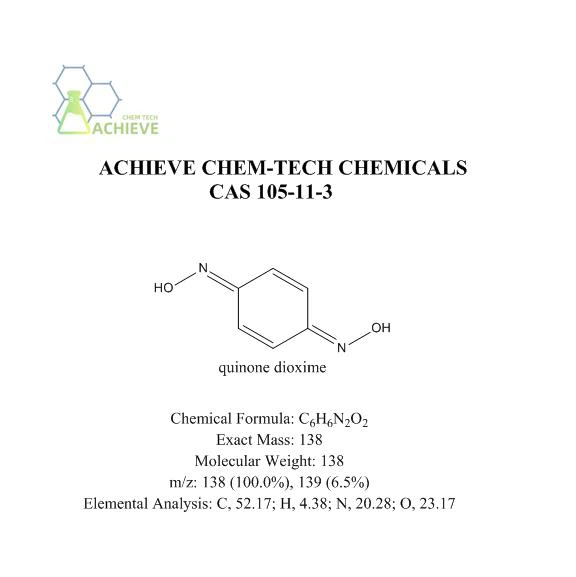
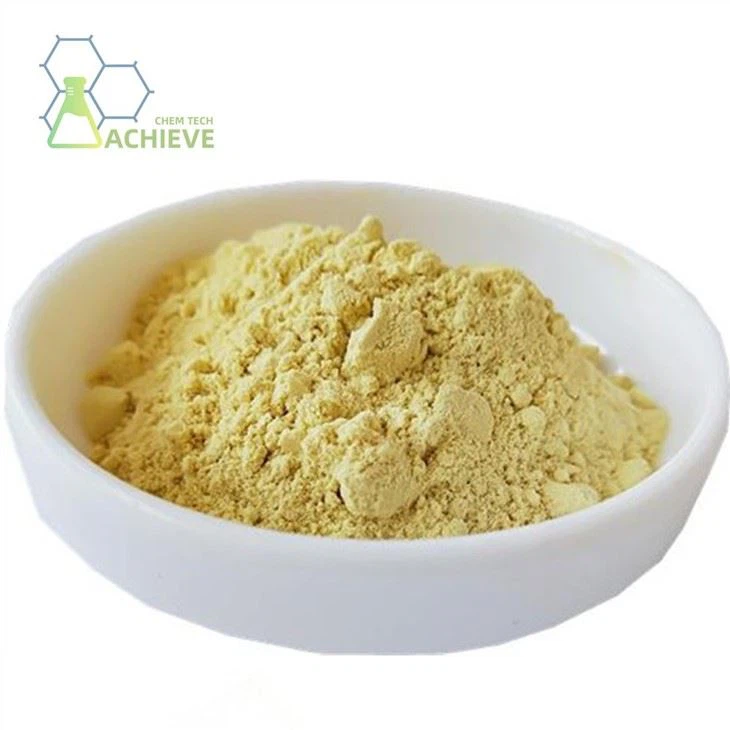
Quinone Dioxime, molecular formula C6H6N2O2, CAS 105-11-3, light yellow to brown crystal or powder. Easily soluble in ethanol, acetic acid, and ethyl acetate, soluble in hot water, insoluble in cold water, benzene, and gasoline. Flammable and toxic, operators should wear synthetic rubber gloves and dust masks to prevent skin contact and inhalation, keep away from open flames and high-temperature heat sources, and store in a cool and ventilated place. Used as a reagent for determining nickel and a vulcanizing agent for rubber, as well as a vulcanizing agent for butyl rubber, natural rubber, butadiene styrene rubber, etc.
It is easy to disperse in the compound, with fast vulcanization speed, high tensile strength, heat resistance, weather resistance, ozone resistance and electrical insulation performance. It can be used as polymerization inhibitor of acrylic acid, which can improve the thermal resistance of polyester fiber tire cord, hot-melt adhesive of metallic glass chemicalbook, cross-linking regulator of olefin copolymer, organic monomer stabilizer, self vulcanizing adhesive, and rubber products that prevent nuclear radiation, It can activate oxidants (such as pb304 and PB02), but the criticality is low and tends to scorch. Adding some anti scorching agents, thiuram and thiazole accelerators can reasonably and effectively improve the safety and reliability of the operation method. It pollutes the rubber. Adding about five parts of titanium dioxide can avoid and greatly improve the pollution. It is especially suitable for butyl rubber, natural rubber, styrene butadiene rubber, polysulfide rubber, ethylene propylene rubber, etc. with high tensile strength and fast curing rate.

|
Chemical Formula |
C6H6N2O2 |
|
Exact Mass |
138 |
|
Molecular Weight |
138 |
|
m/z |
138 (100.0%), 139 (6.5%) |
|
Elemental Analysis |
C, 52.17; H, 4.38; N, 20.28; O, 23.17 |
|
|
|


Melting point 243 ° C (Dec.) (lit.), Boiling point 253.51 ° C (rough estimate), Density 1,49 g/cm3, Refractive index 1.5100 (estimate), Flash point ° C, Sealed in dry, room temperature, Solubility: soluble0.1g/10 ml, clear, Acidity coefficient (PKA) 9.12 ± 0.20 (predicted), Form solid, Color white, Water solubility<0.01 g/100 ml at 22.5 º C, BRN 2043234, Stable Incompatible with strong acids, strong oxidizing agents. InChIKeyLNHURPJLTHSVMU-CGXWXWIYSA-N.

The process of synthetic Quinone Dioxime: 1. Preparation of sodium phenolate solution: mix 5%-20% NaOH solution with phenol solution and sodium nitrite solution to prepare sodium phenolate solution, and add soda ash in the middle. The weight of added soda ash is 1/10 of the weight of NaOH; 2. Prepare p-benzoquinone MONOOXIME, transfer sodium phenol solution to 28%-32% acid solution through conduit, and add sodium nitrite solution to carry out nitrosation reaction. The whole process is carried out under the premise of -3 ℃ -5 ℃; 3. Washing solution: wash the prepared p-benzoquinone MONOOXIME to neutral with pure water, and measure the decomposition point; 4) Preparation of p-benzoquinone hydroxime: add water into the prepared p-benzoquinone monoxime, mix it evenly, control the temperature at 45 ℃ -62 ℃, and pour hydroxylamine into it for oximation Preparation of P - benzoquinone hydroxime Its advantages are: high yield of chemical reaction, 98% purity of planned substance and 20.26% or more nitrogen content in p-benzoquinone dioxime.


1,4-benzoquinone oxime (CAS number 105-11-3), also known as p-benzoquinone oxime, is a light yellow to brown crystalline powder with the chemical formula C ₆ H ₆ N ₂ O ₂ and a molecular weight of 138.12. Its unique chemical properties make it widely applicable in the rubber industry, analytical chemistry, materials science, and emerging fields. The following systematically elaborates on its core uses from three dimensions: technical principles, application scenarios, and industry value.
Quinone Dioxime is an indispensable vulcanizing agent in the rubber industry, especially suitable for the vulcanization process of butyl rubber, natural rubber, styrene butadiene rubber, and polysulfide "ST" type rubber. Its mechanism of action is based on the cross-linking reaction between the oxime group (- C=NOH) in the molecule and the double bond of the rubber molecular chain, forming a three-dimensional network structure, thereby significantly improving the physical properties of rubber.
Technical advantages:
Efficient vulcanization: It is easy to disperse in the rubber material, has a fast vulcanization speed, and can shorten the production cycle by more than 30%. For example, in the manufacturing of butyl rubber airtight layers, adding 1.5% 1,4-benzoquinone oxime can shorten the vulcanization time from 20 minutes to 12 minutes.


Performance improvement: The tensile strength of vulcanized rubber is increased by 20% -40%, and its heat resistance (strength retention rate ≥ 85% after 72 hours of thermal aging at 180 ℃), ozone resistance (no cracks after 48 hours at an ozone concentration of 50pphm), and electrical insulation performance (volume resistivity ≥ 1 × 10 ¹⁵Ω· cm) are significantly better than traditional sulfurization systems.
Process adaptability: When synergistically treated with oxidants such as Pb ∝ O ₄ and PbO ₂, the activation effect is enhanced, which can reduce the sulfurization temperature by 10-15 ℃ and reduce energy consumption.
Typical applications:
Airbag manufacturing: Rubber coating used for automotive airbags to ensure elasticity within a temperature range of -40 ℃ to+120 ℃.
Water tire production: As an inner lining vulcanizing agent, it improves the water resistance and dimensional stability of water tires.
Wire and cable: added to the insulation layer to ensure that the cable can work continuously for 1000 hours at 150 ℃ without breakdown.
Precautions for operation:
The critical temperature is relatively low (about 120 ℃), and the vulcanization temperature needs to be controlled to avoid burning. Anti scorching agents (such as phthalic anhydride, anti scorching agent NA) or accelerators (such as thiuram and thiazole) can be added to improve safety.
Adding five parts of titanium dioxide can effectively improve the appearance of rubber, which is polluting.

Analytical Chemistry: Nickel Determination Reagents and Metal Analysis

As a highly selective chromogenic agent in analytical chemistry, it is widely used for qualitative and quantitative analysis of nickel and other metal ions. The reaction principle is based on the formation of stable complexes between oxime groups and metal ions, which can be detected by colorimetric or spectrophotometric methods.
Key reactions:
Nickel determination: In an ammonia buffer solution with pH 9-10, it forms a red complex with Ni ² ⁺, with a maximum absorption wavelength of 520nm, a molar absorptivity of ε=1.2 × 10 ⁴ L · mol ⁻¹ · cm ⁻¹, and a detection limit of 0.01 μ g/mL.
Cobalt separation: Generate a yellow precipitate with Co ² ⁺ in an acetic acid buffer solution at pH 5-6 for cobalt nickel separation.
Copper iron extraction: In organic solvents such as chloroform, it preferentially forms extractable complexes with Cu ² ⁺ and Fe ³ ⁺, achieving selective separation of metal ions.
Technical Indicators:
Selectivity: In a 1mol/L HCl solution, Fe ³ ⁺ can be quantitatively precipitated without interfering with coexisting ions such as Cu ² ⁺ and Zn ² ⁺.
Sensitivity: The linear range for detecting nickel by colorimetric method is 0.05-5 μ g/mL, with a correlation coefficient R ² ≥ 0.999.
Stability: The complex can exist stably for 24 hours at room temperature and is suitable for batch analysis.
Application example:
Electroplating solution analysis: Quickly determine the Ni ² ⁺ content in nickel plating solution to control the quality of electroplating.
Environmental monitoring: Detect the concentration of nickel ions in industrial wastewater, in compliance with environmental standards (GB 8978-1996).
Materials research: Analyze the distribution of nickel in alloys to guide material design.

Materials Science: Functional Additives and Modifiers

As a multifunctional additive in materials science, it can improve the thermal stability, mechanical properties, and processing performance of polymers. Its mechanism of action is based on the synergistic effect of nitroso (- NO) and hydroxylamine (- NHOH) groups in the molecule, which can capture free radicals or react with polymer chains.
Typical applications:
Polyester fiber modification: Adding 0.5% 1,4-benzoquinone oxime to polyester fibers used in tire curtains can reduce the thermal shrinkage rate from 3.5% to 1.8% and improve the dimensional stability of the fibers.
Acrylic acid polymerization inhibitor: As a polymerization inhibitor, it extends the storage period of acrylic monomers to more than 12 months, reducing raw material waste in the production process.
Adhesive adjustment: In self curing adhesives, control the vulcanization speed to prevent spontaneous vulcanization during storage.
Technical advantages:
Thermal stability: Heating at 200 ℃ for 2 hours, with a mass loss rate of ≤ 5%, suitable for high-temperature processing environments.
Compatibility: Good compatibility with polar polymers such as polyester and acrylic, without affecting transparency.
Environmental friendliness: Replace traditional lead stabilizers and comply with RoHS directive requirements.
Emerging fields: Biotechnology and Energy Storage

With the development of green chemistry and biotechnology, their applications in emerging fields are gradually expanding, demonstrating enormous market potential.
1. Biological synthesis research:
As a substrate or inhibitor of enzyme catalyzed reactions, study its interaction mechanism with oxidoreductases. For example, in laccase catalytic systems, it can act as an electron acceptor to enhance reaction selectivity.
Precursors used for synthesizing biodegradable materials, such as modifiers of polyhydroxyalkanoates (PHA).
2. Lithium battery electrolyte additives:
Improve the stability of the electrode/electrolyte interface and suppress lithium dendrite growth. Experiments have shown that adding 0.5% of this substance can increase the capacity retention rate of lithium-ion batteries from 82% to 89% after 500 cycles.
As a film-forming additive, Quinone Dioxime forms a stable SEI film on the negative electrode surface, reducing interfacial impedance.
3. 3D printing materials:
As a crosslinking agent for photosensitive resin, it improves the mechanical strength of printed parts. In the stereolithography (SLA) process, adding can increase the bending strength of the product by 25%.

Hot Tags: quinone dioxime cas 105-11-3, suppliers, manufacturers, factory, wholesale, buy, price, bulk, for sale, Methyltrialkylammonium Chloride, Additive, Antioxidant 1520, Thioacetamide Solution CAS 62 55 5, 2 BROMO 1 PHENYL PENTAN 1 ONE CAS 49851 31 2, 4 Phenoxyphenylboronic Acid CAS 51067 38 0