




Shaanxi BLOOM Tech Co., Ltd. is one of the most experienced manufacturers and suppliers of 1-methyl-4-piperidone cas 1445-73-4 in China. Welcome to wholesale bulk high quality 1-methyl-4-piperidone cas 1445-73-4 for sale here from our factory. Good service and reasonable price are available.
Announcement
We don't supply all kinds of chemicals of piperidine series, even which is able to get piperidine or piperidone chemcials!
No matter it is banned or not! We Don't supply!
If it is in our webiste, it is only for check the information of chemical compound.
Mar. 25th 2025
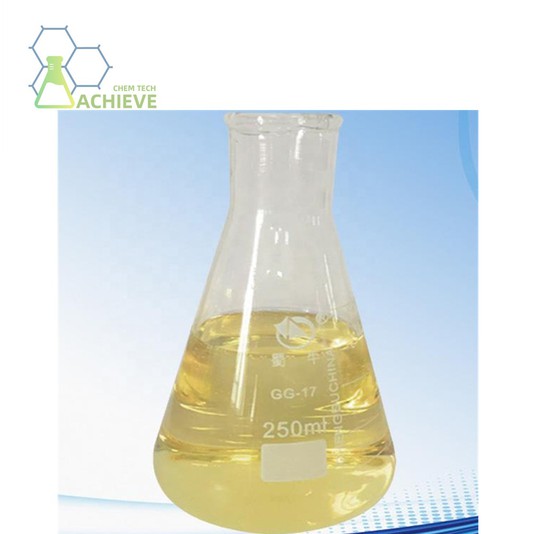
1-Methyl-4-piperidone (N-methyl-4-piperidone, C₆H₁₁NO) is an important six-membered nitrogen-containing heterocyclic ketone compound. At room temperature, it is a colorless to pale yellow liquid with a mixture of amine and ketone odors. Its boiling point is 80 - 82 °C/12 mmHg, and its density is 1.00 g/cm³. It is easily soluble in water, ethanol, and chloroform. Its structural feature is the ketone group (C=O) at the 4th position of the piperidine ring and the methyl substitution on the nitrogen atom, which gives it the properties of both ketone (such as nucleophilic addition, reduction) and weak basicity of a tertiary amine (pKa ~7.5). This compound is mainly prepared through the catalytic oxidation of N-methylpiperidine or the dehydrogenation of 1-methyl-4-hydroxypiperidine. It is a key intermediate for the synthesis of various drugs (such as anticholinergic agents, anti-Parkinson drugs). In organic synthesis, the ketone group can be reduced to a hydroxyl group or a methylene group, and can also participate in condensation reactions to construct complex heterocycles; the nitrogen atom can be further alkylated to form quaternary ammonium salts. Due to its irritancy to the skin and mucous membranes, protective equipment must be worn during operation, and storage should be protected from light and sealed. Industrially, it is often stabilized by increasing its stability in the form of a hydrochloride salt (white crystals, melting point 218 - 220 °C), and is widely used in the fields of medicine, pesticides, and functional materials.

Additional information of chemical compound:
|
Chemical Formula |
C6H11NO |
|
Exact Mass |
113.08 |
|
Molecular Weight |
113.16 |
|
m/z |
113.08 (100.0%), 114.09 (6.5%) |
|
Elemental Analysis |
C, 63.69; H, 9.80; N, 12.38; O, 14.14 |
|
|
|

Standard operating procedures during the experiment


I. Storage and Transportation Specifications
1-Methyl-4-piperidone should be stored under refrigerated conditions in a sealed container. The recommended temperature range is 0 - 6℃. During transportation, an ultra-low temperature ice pack should be used to maintain a low-temperature environment. The storage container should be sealed with an inert gas (such as argon) to prevent contact with oxygen and moisture in the air, which could cause oxidation or deliquescence. Improper storage conditions (such as high temperature or exposure to light) may lead to decomposition of the compound, affecting the subsequent experimental results.
II. Personal Protective Equipment (PPE) Requirements
Experimental personnel must wear complete personal protective equipment, including protective glasses, laboratory coats, and chemical-resistant gloves. The protective glasses must comply with the ANSI standard to prevent liquid splashes from entering the eyes; the laboratory coat should be long-sleeved and made of anti-static material to avoid direct skin contact with the compounds; the chemical-resistant gloves should be made of nitrile or chloroprene rubber, with a thickness of no less than 0.11mm, to ensure good protective performance against the compounds. In case of accidental contact, immediately rinse with plenty of water and seek medical assistance.
III. Experimental Environment and Ventilation Requirements
All operations involving 1-methyl-4-piperidone should be conducted in a fume hood. The air velocity of the fume hood should be maintained at 0.5 - 0.8 m/s to ensure that volatile gases and irritating odors are effectively removed. If the reaction produces irritating gases (such as hydrogen chloride), an additional gas absorption device, such as an alkali solution absorption bottle, should be equipped to further reduce environmental pollution and personnel exposure risks. The experimental area should be kept clean and should not be mixed with flammable or explosive substances.
IV. Standard Operating Procedures
Solubility treatment: 1-methyl-4-piperidone is soluble in common organic solvents (such as ethanol, dichloromethane, ethyl acetate, etc.), but its solubility in water is relatively low. When preparing the solution, an appropriate solvent system should be selected according to the reaction requirements. For example, in the Michael addition reaction, ethanol or methanol is usually used as the solvent to facilitate the uniform mixing of reactants; in chromatographic purification, a mixed solvent of ethyl acetate and petroleum ether may be chosen to optimize the separation effect.
Reaction monitoring: During the synthesis process, the reaction progress should be monitored by thin-layer chromatography (TLC), nuclear magnetic resonance (NMR), or high-performance liquid chromatography (HPLC). For example, in the synthesis of l League piperidine derivatives, TLC can be used to track the consumption of raw materials and the formation of products, ensuring complete reaction; NMR can provide information on the structure of the compound and verify the purity of the product. If the reaction is incomplete or by-products are produced, the reaction conditions (such as temperature, time, raw material ratio, etc.) need to be adjusted in time to improve yield and purity.
Purification and separation: After the reaction is completed, the product needs to be purified by extraction, distillation, or chromatography, etc. For example, in the synthesis of 1-methyl-4-piperidone hydrochloride, the reaction solution needs to be reduced to near dryness under reduced pressure to obtain the crude product; the crude product is then purified by recrystallization or chromatography to obtain a high-purity product. During the purification process, the temperature and solvent dosage need to be strictly controlled to avoid product decomposition or loss.
V. Waste Disposal Specifications
Wastes containing 1-methyl-4-piperidone should be treated as hazardous chemicals and cannot be casually dumped. The waste liquid generated during the experiment should be collected in dedicated containers and handed over to professional institutions for recycling or harmless treatment. During the handling process, local environmental protection regulations must be strictly followed to ensure that the waste is properly disposed of and the environment is not polluted.
VI. Emergency Response Measures
Leakage handling: In case of liquid leakage, quickly cover it with sand or adsorption materials to prevent the spread; the leakage area should be rinsed with a large amount of water and the rinsing water should be collected for harmless treatment.
Personnel exposure handling: If personnel's skin comes into contact with the compound, immediately rinse with a large amount of water and change the contaminated clothing; if eyes are exposed, rinse with flowing water for at least 15 minutes and seek medical assistance; if inhaling volatile gases, quickly transfer to an area with fresh air, keep the respiratory tract unobstructed, and seek medical assistance.
Fire handling: The flash point of 1-methyl-4-piperidone is 58℃. In case of fire, use dry powder fire extinguisher or carbon dioxide fire extinguisher for firefighting; avoid using water or foam fire extinguishers to prevent the fire from spreading.
The correlation between structural characteristics and solvent performance
Molecular Structure Characteristics
The molecular formula of 1-methyl-4-piperidone is C₆H₁₁NO. Its structure consists of a six-membered piperidine ring, with a carbonyl group (C=O) at the 4th position and a methyl (-CH₃) substituent at the 1st position. This structural characteristic endows it with the following key properties:

Polarity characteristics
The carbonyl group is a strong polar group, causing the molecule as a whole to exhibit a certain degree of polarity. Meanwhile, the methyl group, as a non-polar group, has a modulation effect on polarity, forming a "polar - non-polar" balanced structure.

Spatial steric hindrance
The methyl substituent is located adjacent to the nitrogen atom of the piperidine ring, which may have a spatial shielding effect on the reactivity of other positions on the ring, affecting the interaction between the solvent molecules and the ring.

Hydrogen bond ability
The oxygen atom of the carbonyl group can act as a hydrogen bond acceptor and form hydrogen bonds with hydrogen bond donors in solvent molecules (such as water, alcohols), enhancing solubility.
Solvent performance characteristics
Based on the above structural characteristics, the solvent performance of 1-methyl-4-piperidone exhibits the following features:
Water solubility
The polarity of the carbonyl group and its hydrogen bond receptor ability enable it to form hydrogen bonds with water molecules, thus exhibiting certain water solubility. However, the non-polar characteristic of the methyl group weakens this effect, resulting in its lower water solubility compared to pure polar compounds (such as alcohols), but higher than completely non-polar compounds (such as hydrocarbons).
Organic solvent solubility
In organic solvents, the solubility of 1-methyl-4-piperidone is significantly influenced by the polarity of the solvent. In polar solvents (such as ethanol, ethyl acetate), the dipole-dipole interaction between the carbonyl group and the solvent molecules enhances solubility; in non-polar solvents (such as hexane, toluene), the non-polar characteristic of the methyl group plays a dominant role, but the solubility is still limited by the polarity of the carbonyl group.
Mixed solvent behavior
In polar-nonpolar mixed solvents, the solubility of 1-methyl-4-piperidone shows a non-linear change. For example, in ethanol-water mixed solvents, as the water proportion increases, solubility first rises and then decreases, which is related to the formation and destruction of hydrogen bond networks.
Mechanism of the Correlation between Structural Characteristics and Solvent Properties
Polarity matching principle
The solubility of 1-methyl-4-piperidone follows the "like dissolves like" principle. Its polarity lies between pure polar and non-polar, so it is more soluble in polar organic solvents (such as chloroform, dichloromethane) rather than pure water or pure hydrocarbon solvents.
Hydrogen bond network regulation
The hydrogen bond receptor ability of the carbonyl group enhances its solubility in solvents containing hydrogen bond donors. For example, in methanol, the carbonyl group forms hydrogen bonds with the hydroxyl group of methanol, significantly increasing solubility.
Spatial steric hindrance effect
The spatial shielding effect of the methyl substituent may limit the approach of solvent molecules to other positions of the piperidine ring, thereby affecting the overall solubility. This effect is more significant in non-polar solvents because non-polar solvent molecules need to more closely surround the solute molecule to overcome the entropy reduction.
Hot Tags: 1-methyl-4-piperidone cas 1445-73-4, suppliers, manufacturers, factory, wholesale, buy, price, bulk, for sale, 2 Chloro 4 6 dimethoxypyrimidine, Additive, Bromocyclohexane CAS 108 85 0, 4-Fluorophenylacetone CAS 459-03-0, 1 4 Dibromobenzene 98 , squaric acid treatment