




Shaanxi BLOOM Tech Co., Ltd. is one of the most experienced manufacturers and suppliers of 1-isopropyl-4-piperidone cas 5355-68-0 in China. Welcome to wholesale bulk high quality 1-isopropyl-4-piperidone cas 5355-68-0 for sale here from our factory. Good service and reasonable price are available.
Announcement
We don't supply all kinds of chemicals of piperidine series, even which is able to get piperidine or piperidone chemcials!
No matter it is banned or not! We Don't supply!
If it is in our webiste, it is only for check the information of chemical compound.
Mar. 25th 2025
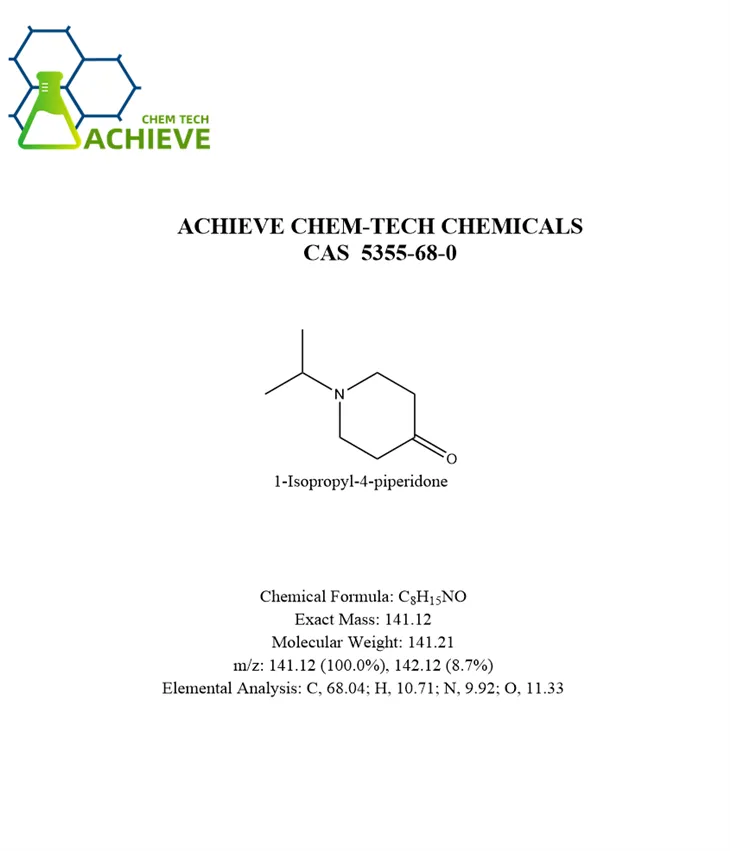
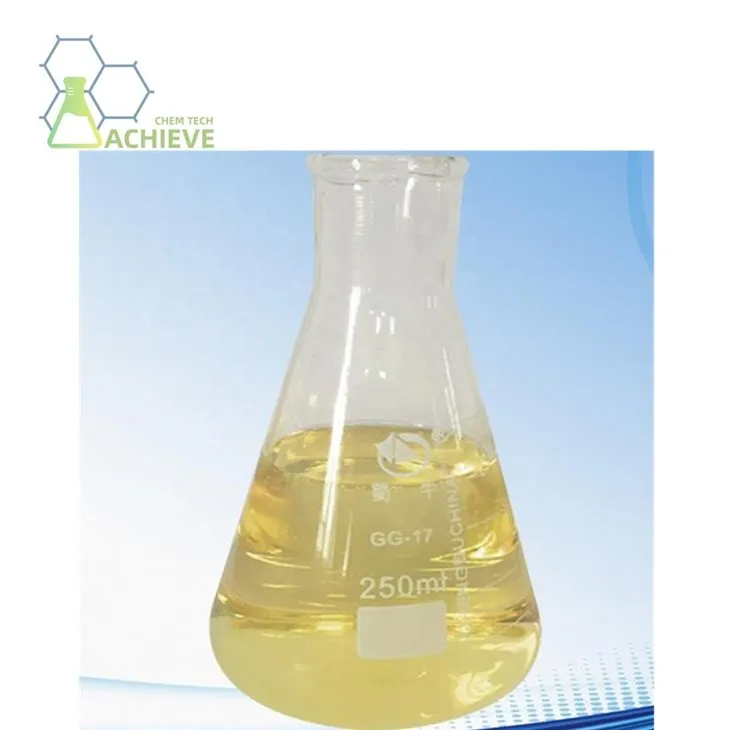
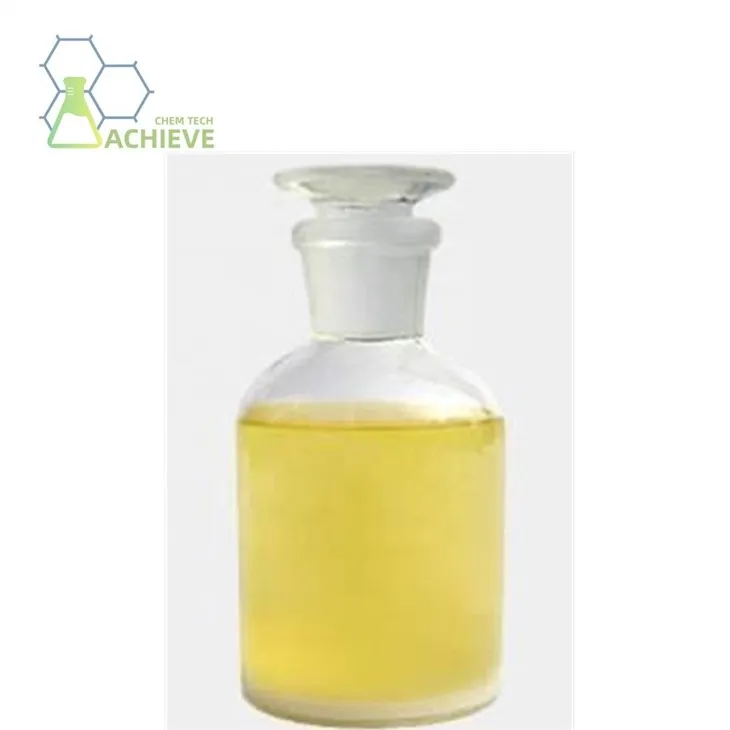
1-Isopropyl-4-piperidone, also known as N-isopropyl-4-piperidone or 1- (1 '- methylethyl) -4-piperidone, appears as a colorless or slightly yellow liquid and is stable at room temperature and pressure. Mainly used in foreign trade exports, scientific research, and chemical reagents, it is an important organic synthesis intermediate. Easy to cause serious burns, therefore it should be stored in a dark, cool, and dry place, sealed and stored

Additional information of chemical compound:
|
Chemical Formula |
C8H15NO |
|
Exact Mass |
141.12 |
|
Molecular Weight |
141.21 |
|
m/z |
141.12 (100.0%), 142.12 (8.7%) |
|
Elemental Analysis |
C, 68.04; H, 10.71; N, 9.92; O, 11.33 |
|
Melting point |
105-105.5℃ |
|
Boiling point |
100-101℃ (27 mmHg) |
|
Density |
0.95 |
|
Flash point |
100-101℃/27mm |
|
Storage conditions |
2-8℃ |
|
|
|


What are the side effects or hazards of this compound?
Q:1.Acute toxicity
If the compound has acute toxicity, large amounts of exposure or ingestion in a short period of time may cause serious health damage, such as difficulty breathing, coma, and even death. However, there is currently no clear acute toxicity data for this compound.
Q:2.Thrill
Certain chemicals may cause irritation to the eyes, skin, or respiratory tract, leading to pain, redness, inflammation, and other symptoms.
According to relevant safety information, this compound may have irritating effects on the eyes, respiratory tract, and skin, therefore appropriate protective measures need to be taken when using it.
Q:3.Long term exposure hazards
Long term exposure to certain chemicals may lead to chronic health problems such as cancer, neurological damage, reproductive system damage, etc.
There is currently insufficient research data on the long-term exposure hazards of this compound. However, long-term exposure to any chemical substance should be treated with caution and follow relevant safety operating procedures.
Q:4.Environmental hazards
Certain chemicals may pose a threat to the environment, such as contaminating water sources, soil, or air.
There is currently no specific data or research report on the environmental hazards of this compound. However, when handling and using this compound, it should be ensured to comply with local environmental protection regulations and standards.
Q:5.Allergic reactions
Some individuals may experience allergic reactions to specific chemicals, such as rash, itching, difficulty breathing, etc.
If an allergic reaction occurs while using this compound, it should be immediately stopped and medical assistance sought.
Which specific drugs does this compound play a key role in synthesis?
1-Isopropyl-4-piperidone plays a key role in the synthesis of specific drugs, including:
1. Central nervous system drugs:
- Medications used to treat schizophrenia, such as haloperidol, bromoperidone, triflopidor, telmisartan, pimechet, pentafluoropyridamole, fluoxetine, risperidone, capecitabine, etc.
- Medications for treating senile dementia, such as donepezil.
- Medications for treating depression, such as paroxetine.
2. Antiallergic drugs:
- Antihistamines H1 receptor antagonists, such as cyproheptadine, astemizole, terfenadine, ebastine, ketotifen, etc.
- Piperidine drugs used for the treatment of allergic skin diseases, such as diphenylamine, azatadine, piperacillin, mequat, Bamipine, clopidogrel, pheniramine, etc.
3. Analgesics:
- Strong anesthetics and analgesics such as pethidine,pimelodine,fentanyl, etc.
- Short term pain relievers such as afarodine, piprazolam,and anavaline hydrochloride.
- Migraine medications, such as thiamethoxam.
4.Digestive system medication:
- Domperidone is used to treat digestive disorders caused by delayed gastric emptying and gastroesophageal reflux.
- Difenofibrate is suitable for acute and chronic functional diarrhea and chronic enteritis.
- Cisapride is used to increase gastrointestinal motility.
- Loperamide hydrochloride, as a highly potent long-acting anti diarrheal drug.
5. Anti asthma drugs:
- Finspirille hydrochloride is used for bronchial asthma,chronic bronchitis, and respiratory dysfunction.
- Ketotifen has a long-lasting anti allergic effect.
6. Antihypertensive drugs:
- 5-hydroxytryptamine receptor blocker cotropin.
- Alpha receptor blocker indoleamine hydrochloride.
7. Other medications:
- The antiarrhythmic drug lorcanide.
- Neuroprotective agent ropiazole.
- Anti tumor drug irinotecan.
- Kaputuo, in addition to having general anti-tumor activity, can also inhibit acetylcholinesterase.
Is this compound more effective on specific types of plants?
Anti plant pathogenic fungi
Research has found that piperidine thiazole isoxazoline is the core skeleton of the fungicide oxathiapin, exhibiting good bactericidal activity against pathogenic Phytophthora infestans and Plasmopara viticola. This indicates that 1-Isopropyl-4-piperidone and its derivatives have good control effects on phytophthora and downy mildew on plants such as tomatoes, cucumbers, peppers, potatoes, and grapes.
Anti plant pathogenic bacteria
A novel derivative containing piperidine fragment isoindolin-1-one exhibits excellent anti plant pathogenic bacterial activity against Pseudomonas syringae kiwifruit variety (Psa) and citrus yellow pseudomonas variety (Xac), especially against Xanthomonas oryzae pv. oryzae (Xoo). This means that the compound and its derivatives have good control effects on bacterial diseases on plants such as rice.
Insecticidal activity
Insecticidal activity: Spiropidion is a pyridine containing spirocyclic ketone acid insecticide that exhibits broad-spectrum insecticidal activity against various pests such as peach aphids (Myzus persica), Tetranychus urticae, and brown planthoppers (Niiparvata lugens). This indicates that the compound and its derivatives have good pest control effects on various crops.
What specific promoting effects does this compound have on plant growth?
Stimulating root and fruit formation
Indole compounds, such as this compound, have unique properties of mimicking peptide structures and reversible binding with enzymes, and have important development value in plant growth regulation. They can stimulate root and fruit formation.
Activating the plant immune system
This compound can activate the immune system of plants to combat harmful biotic and abiotic factors.
Promoting crop growth or disease resistance
By analyzing the target recognition, receptor recognition, key activation sites, and activation mechanisms of indole in plants, this compound can help promote crop growth or enhance disease resistance.
Plant growth regulator
This compound, as a plant growth regulator, has the ability to promote cell division and differentiation of new organs in the body, and its effects can be partially reversed by plant growth inhibitors.
Improving plant stress resistance
This compound can activate the stress resistance and levels of various endogenous hormones in plants, alter the chemical composition of tissue cells, and induce the activity of various enzymes.
Promoting plant resistance to external stress
As a plant growth regulator, this compound plays an important role in plants' resistance to external stress and can enhance their tolerance to various biotic and abiotic stresses.
Supramolecular gelator
1-Isopropyl-4-piperidone is a nitrogen-containing heterocyclic ketone compound. Its molecular structure consists of a piperidine ring, a carbonyl group, and an isopropyl substituent. In the field of supramolecular chemistry, this compound has gradually been explored as a potential candidate for supermolecular gelators due to its unique intermolecular interaction properties. The following analysis is conducted from three aspects: molecular structure characteristics, gelation ability, application potential, and challenges.
Molecular Structure Characteristics and Gelation Foundation
In the molecular structure of 1-Isopropyl-4-piperidone, the piperidine ring provides a rigid framework, the carbonyl group acts as a hydrogen bond acceptor, and the isopropyl group influences the molecular packing through hydrophobic interactions. These characteristics make it potentially capable of forming supramolecular gels:
Hydrogen bonding effect
The oxygen atom of the carbonyl group can form hydrogen bonds with molecules containing hydrogen bond donors (such as water, alcohols), driving the construction of one-dimensional or two-dimensional hydrogen bond networks. For example, in aqueous solvents, the carbonyl group is connected to water molecules through hydrogen bonds, possibly forming chain-like or layered structures, providing a framework for the gel network.
Hydrophobic effect
The hydrophobic nature of the isopropyl group can drive the assembly of molecules through van der Waals forces or hydrophobic interactions. In non-polar solvents, the molecules may align with the isopropyl group, forming layered or columnar arrangements, thereby enhancing the mechanical stability of the gel.
π-π stacking limitation
Although the aromaticity of the piperidine ring is relatively weak, its conjugated structure may still participate in weak π-π interactions, further stabilizing the gel network.
Gelation ability and experimental evidence
At present, there are relatively few direct studies on 1-Isopropyl-4-piperidone as a pure supramolecular gelator, but its structural characteristics are similar to those of known gelators, and it can achieve gelation through the following pathways:

Eutectic Design
By forming a eutectic with compounds containing hydrogen bond donors (such as carboxylic acids, amides), a hydrogen bond network can be constructed. For example, when forming a eutectic with terephthalic acid, the carboxylic groups form hydrogen bonds with the carbonyl groups, and the isopropyl group generates a hydrophobic interaction with the benzene ring, potentially resulting in a gel with a pore structure for gas adsorption or drug sustained-release.
Solvent-induced Self-Assembly
In specific solvents, molecules self-assemble into fibrous structures, subsequently forming gels. For instance, in alcohol solvents, the carbonyl groups form hydrogen bonds with the alcohol hydroxyl groups, and the isopropyl group drives the fibrous aggregation through hydrophobic interactions, potentially achieving gelation.


Metal Coordination Assistance
By coordinating with metal ions (such as Zn²⁺, Cu²⁺), metal-organic gels (MOF-like gels) can be formed. The oxygen atom of the carbonyl group acts as a coordination site, binding with the metal ions, while the isopropyl group stabilizes the structure through hydrophobic interactions. Such gels have potential in catalysis or sensing applications.
Application Potential and Challenges
Drug Delivery System: If 1-Isopropyl-4-piperidone can form a stable gel, its pore structure can be used to encapsulate drug molecules, achieving sustained release. For example, by regulating the density of the gel network, the drug release rate can be controlled, improving bioavailability.
Catalytic Materials: Metal-coordination gels can serve as heterogeneous catalyst carriers. Their high specific surface area and controllable pore structure facilitate the diffusion of reactants, enhancing catalytic efficiency.
Sensing Materials: Gels responsive to temperature, pH, or light can achieve signal output through structural changes. For instance, gels containing 1-Isopropyl-4-piperidone undergo a sol-gel transition under specific stimuli, used for detecting environmental changes.
Challenges:
Gel stability: The mechanical strength of pure 1-Isopropyl-4-piperidone gel may be insufficient, and it needs to be enhanced through co-crystallization, cross-linking, or the addition of polymers.
Solvent dependence: Gelation may only occur in specific solvents, and suitable solvent systems need to be screened.
Scale-up preparation: The transition from laboratory to industrialization requires addressing issues such as optimization of crystallization conditions and repeatability.
Future Research Directions
Structure-performance relationship study
By systematically changing substituents (such as altering the length of the alkyl chain), investigate the influence of molecular structure on the gelation ability.
Stimuli-responsive gel development
Introduce photosensitive, thermosensitive, or pH-sensitive groups to design intelligent gel materials.
Biocompatibility evaluation
If used in the biomedical field, assess the cytotoxicity of the gel and the safety of degradation products.
Hot Tags: 1-isopropyl-4-piperidone cas 5355-68-0, suppliers, manufacturers, factory, wholesale, buy, price, bulk, for sale, 1 4 Phenylenebisboronic Acid CAS 4612 26 4, Phenylglyoxylic Acid, 3 Nitrobenzaldehyde 99 , Chlorocyclohexane CAS 542 18 7, tert Butyldimethylsilyl chloride, DOTA CAS 60239 18 1