




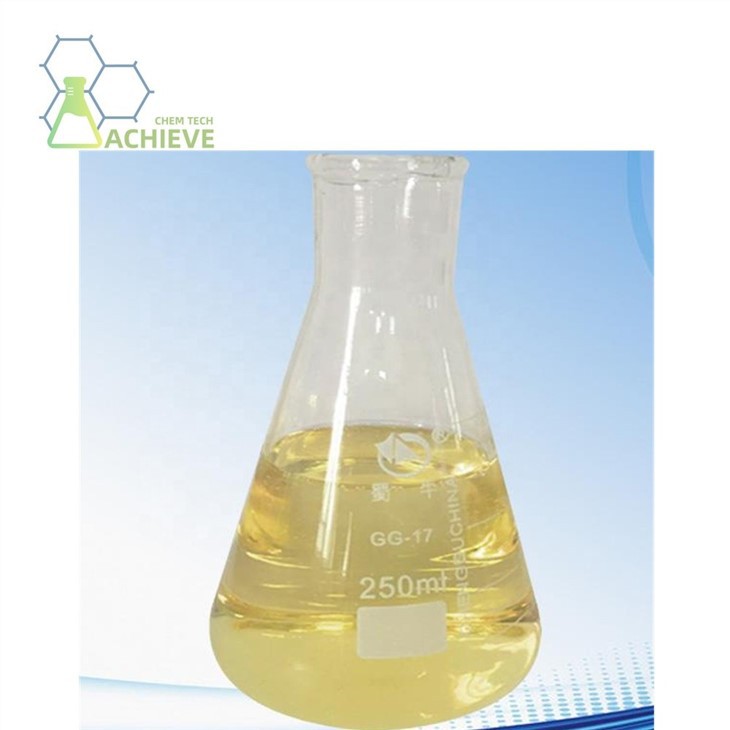


Aniline powder, also known as aminobenzene, is an organic compound with the molecular formula C6H5NH2. Colorless oily liquid, toxic, harmful to human body. Decompose when heated to 370 ℃. Slightly soluble in water, easily soluble in organic solvents such as ethanol and ether. Aniline is one of the most important amines. Mainly used for manufacturing dyes, drugs, and resins, it can also be used as a rubber vulcanization accelerator. It can also be used as a black dye. Its derivative methyl orange can be used as an indicator for acid-base titration.

|
Chemical Formula |
C6H7N |
|
Exact Mass |
93 |
|
Molecular Weight |
93 |
|
m/z |
93 (100.0%), 94 (6.5%) |
|
Elemental Analysis |
C, 77.38; H, 7.58; N, 15.04 |



The nitrobenzene iron powder reduction method adopts batch production. The reaction materials are put into the reduction pot. Under the hydrochloric acid medium and the temperature of about 100 ℃, nitrobenzene is reduced with iron powder to produce aniline and iron oxide. The product is distilled to obtain crude aniline and then rectified to obtain the finished product. The yield of aniline is 95% ~ 98%. The quality of iron powder directly affects the yield of aniline.
Nitrobenzene iron powder reduction method is a classical method for the production of aniline. However, it is gradually replaced by other methods due to the disadvantages of large equipment, difficult to recover the reaction heat, large consumption of iron powder, serious environmental pollution, serious equipment corrosion, high operation and maintenance costs, difficult continuous production, slow reaction speed and difficult product separation. However, because this method can produce iron oxide pigments simultaneously, a small number of small and medium-sized enterprises in China still use this method for production.
Catalytic hydrogenation of nitrobenzene is the main method to produce aniline in industry. It also includes fixed bed gas phase catalytic hydrogenation, fluidized bed gas phase catalytic hydrogenation and nitrobenzene liquid phase catalytic hydrogenation.

The fluidized bed gas-phase catalytic hydrogenation method is that the raw material nitrobenzene is heated and vaporized, mixed with about 3 times the theoretical amount of hydrogen, and enters the fluidized bed reactor equipped with copper silica gel catalyst. The hydrogenation reduction reaction is carried out at 260-280 ℃ to generate aniline and water vapor, and then the aniline product is obtained through condensation, separation, dehydration and rectification. This method improves the heat transfer condition, controls the reaction temperature, avoids local overheating, reduces the generation of side reactions, and extends the service life of the catalyst. The disadvantages are that the operation is complicated, the catalyst is worn out, the equipment construction cost is large, and the operation and maintenance costs are high.
The liquid-phase catalytic hydrogenation process of nitrobenzene is to hydrogenate nitrobenzene under anhydrous conditions at 150-250 ℃ and 0.15-1.0mpa pressure with noble metal catalyst to produce aniline, and then obtain the finished product after rectification. The yield of aniline is 99%. The advantages of liquid-phase catalytic hydrogenation process are low reaction temperature, few side reactions, high catalyst load, long service life and large equipment production capacity. The disadvantages are that reactants, catalysts and solvents must be separated, and equipment operation and maintenance costs are high.
There are mainly two types of catalysts for catalytic hydrogenation of nitrobenzene to produce aniline. One is CuO / SiO2 catalyst supported on silica support and improved catalyst added with Cr, Mo and other second components. This type of catalyst has the advantages of low cost and good selectivity, but the disadvantages are poor toxicity resistance, and trace organic sulfide can easily poison the catalyst; The other is a noble metal catalyst that supports Pt, PD, Rh and other metals on alumina, activated carbon and other supports. This kind of catalyst has the advantages of high catalytic activity and long life, but the production cost is high.

Aniline (chemical formula C6 H5NH2) is a colorless to pale yellow oily liquid with a unique odor. It is slightly soluble in water but easily soluble in organic solvents such as ethanol and ether. As the core raw material of organic chemistry, aniline can be derived into thousands of compounds through chemical reactions, which are widely used in dyes, pharmaceuticals, rubber, pesticides, materials science, and emerging technology fields.
It is one of the most important intermediates in the dye industry, and various dyes can be synthesized through reactions such as oxidation, diazotization, and coupling
Acid dyes: such as Acid Ink Blue G and Acid Medium BS, used for dyeing protein fibers such as wool and silk.
Direct dyes: such as Direct Orange S and Direct Peach Red, suitable for rapid dyeing of cellulose fibers such as cotton and linen.
Disperse dye: such as dispersed yellow brown, used for high-temperature dyeing of polyester fibers.
Special dyes: indigo (traditional denim dye), aniline black (black ink material), etc.
In addition, aniline can also be used to synthesize organic pigments such as golden red and red powder, which are used in fields such as paint and ink.

Rubber Industry: An Additive for Performance Improvement

Mainly used as anti-aging agents and vulcanization accelerators in the rubber industry:
Antioxidants, such as antioxidant A and antioxidant RD, can inhibit rubber oxidation and degradation, extending its service life.
Accelerators: such as accelerators M and D, accelerate the vulcanization reaction, improve rubber strength and elasticity.
Special rubber: Aniline is used to synthesize nitrile rubber (NBR), which has excellent oil and heat resistance and is widely used in fields such as automotive seals and fuel pipes.
Aniline derivatives are precursors for the synthesis of various drugs, and their amino structures can participate in redox reactions in vivo, endowing them with pharmacological activity
Antipyretic and analgesic drugs, such as acetaminophen (paracetamol), require aniline as the raw material for synthesis.
Antimalarial drugs: Some antimalarial drugs enhance their efficacy through modification with aniline derivatives.
Sulfonamide drugs: Aniline is a key intermediate for antibiotics such as sulfamethoxazole and sulfamethoxazole.
Emerging field: In 2020, research found that N-aniline derivatives can inhibit tau protein aggregation, providing a new direction for the treatment of Alzheimer's disease.

Pesticide industry: the "guardian" of agricultural production

It is an intermediate of various pesticides, which synthesizes highly efficient and low toxic insecticides and herbicides through reactions such as alkylation and nitration
Insecticides, such as DDV (parathion) and chlorpyrifos, achieve killing by interfering with the insect nervous system.
Herbicides such as herbicide ether and metoclopramide can inhibit weed photosynthesis or cell division.
Fungicide: Aniline derivatives are used to synthesize sodium dichlorvos, seed dressing agents, etc., to prevent and control plant fungal diseases.
Its aromatic structure and reactivity make it an important raw material for materials science:
Conductive polymer: Polyaniline (PANI) has the characteristics of adjustable conductivity and good environmental stability, and is used in anti-static coatings, anti-corrosion coatings, and battery electrode materials.
Polyurethane material: aniline is the key raw material for the production of MDI (diphenylmethane diisocyanate). MDI is further polymerized to form polyurethane foam, which is widely used in furniture, car seats, and building insulation materials.
Solar cells: In 2024, research showed that organic dyes containing di (p-toluene) aniline donors can significantly improve the light absorption efficiency of solar cells.

Emerging fields: explorers of interdisciplinary applications

Derivatives of aniline have shown potential in fields such as biotechnology and environmental science
Biomarker: Biotin aniline complex is used for fluorescent labeling of proteins and nucleic acids to improve the sensitivity of biological detection.
Environmental governance: Aniline derivatives are used as adsorbents or catalysts for the removal of heavy metal ions in wastewater treatment.
Energy storage: Aniline based compounds are used as electrode materials for supercapacitors to enhance energy density and cycling stability.

Aniline powder, as an important organic synthesis raw material, has a wide range of applications in multiple fields:
Dye industry:
An important intermediate for manufacturing various azo dyes, which are widely used in industries such as textiles, leather, and papermaking.
Rubber industry
Can be used as synthetic rubber additives, such as anti-aging agents, vulcanization accelerators, etc. These additives help improve the performance and stability of rubber products.
Pesticide industry:
It is the raw material for manufacturing certain pesticides, which are used in agricultural production to prevent and control pests and diseases.
Pharmaceutical industry
This substance and its derivatives also have applications in the pharmaceutical field, such as for synthesizing certain pharmaceutical ingredients.
Synthesis of other chemicals:
Used for synthesizing various other chemicals, including as the main raw material for rubber anti-aging agents and antioxidants, as well as an important intermediate for manufacturing MDI (diphenylmethane diisocyanate).
Analytical reagents:
Used as an analytical reagent for detecting halogens, chromates, vanadate salts, nitrites, and carboxylic acids. It can also be used to manufacture spices, explosives, surfactants, and certain chemical reagents.
What are the side effects?
Aniline powder, also known as aniline, aniline oil, or aminobenzene, is a highly toxic colorless to light yellow transparent liquid that may turn brown after prolonged storage, has a strong odor, and is easily volatile. Regarding the toxicity of aniline, detailed understanding can be obtained from the following aspects:
1.Route of intoxication
It can enter the human body through the respiratory tract, skin, and digestive tract, and its liquid and vapor can be absorbed through the skin. Therefore, transdermal absorption is the main cause of poisoning.
2.Toxicity performance
Acute poisoning:
- Mainly causing methemoglobinemia, possible symptoms include dizziness, headache, loss of appetite, nausea and vomiting, chest tightness, back and limb pain, as well as chills, fever, etc.
- If oral poisoning occurs, gastrointestinal irritation symptoms are more pronounced.
- Eye contact can cause conjunctival keratitis.
- Skin contact can cause eczema and dermatitis.
- In rare cases, myocardial damage may be observed.
Chronic poisoning:
- Caused by long-term exposure to low concentrations, symptoms include dizziness, headache, fatigue, insomnia, memory loss, loss of appetite, etc., accompanied by mild cyanosis, anemia, and hepatosplenomegaly, or eczema and dermatitis.
- Hearn bodies can appear in red blood cells.
3.Main hazards
Hematological system:
It has blood toxicity and can cause hypoxia and hemolysis. It can oxidize hemoglobin into methemoglobin, causing hemoglobin to lose its oxygen carrying capacity and leading to hypoxia. At the same time, it can seriously damage the red blood cell membrane, increase red blood cell fragility, and lead to hemolytic anemia.
liver:
It has hepatotoxicity, and the hemolysis it causes can lead to the deposition of a large amount of dissolved products in the liver, causing secondary liver damage and impaired liver function.
nervous system:
It can directly act on nerve cells, causing atrophy or even necrosis of nerve cells, leading to sustained damage to the nervous system.
skin:
It has a certain degree of strong irritability and can cause skin irritation and allergies, manifested as papules, herpes, pigmentation, skin hardening, etc.
4.Handling and Prevention
Poisoning treatment:
- After accidental inhalation or contact with Aniline powder, immediately leave the poisoned environment and breathe fresh air in a well ventilated, cool, and dry place.
- Observe the patient's condition, and if there are symptoms such as unclear consciousness, they should be promptly sent to the hospital for treatment.
- Early poisoning can be treated by gastric lavage or by rinsing the skin with a solution containing acetic acid or potassium permanganate.
- Select medication treatment based on the patient's condition, and in severe cases, perform hemofiltration therapy.
Preventive measures:
- Raise awareness of prevention and pay attention to personal safety.
- Avoid long-term exposure to aniline or being in a low concentration aniline environment.
- Strengthen personal protection, such as wearing protective masks, gloves, etc.
- During the use of aniline, it is necessary to strictly follow the safety operating procedures.
Attention: This substance is extremely toxic and can enter the human body through various pathways, causing damage to multiple organs and tissues. Therefore, when using and coming into contact with it, it is necessary to strictly follow the safety operating procedures and take corresponding preventive measures to reduce the risk of poisoning.
Hot Tags: aniline powder cas 62-53-3, suppliers, manufacturers, factory, wholesale, buy, price, bulk, for sale, 2 Chloro 4 6 dimethoxypyrimidine, 3 4 Pyridinedicarboxylic acid, Bromopentafluorobenzene CAS 344 04 7, Indium Chloride, Trimethyl Phosphate CAS 512 56 1, Cinnamamide