




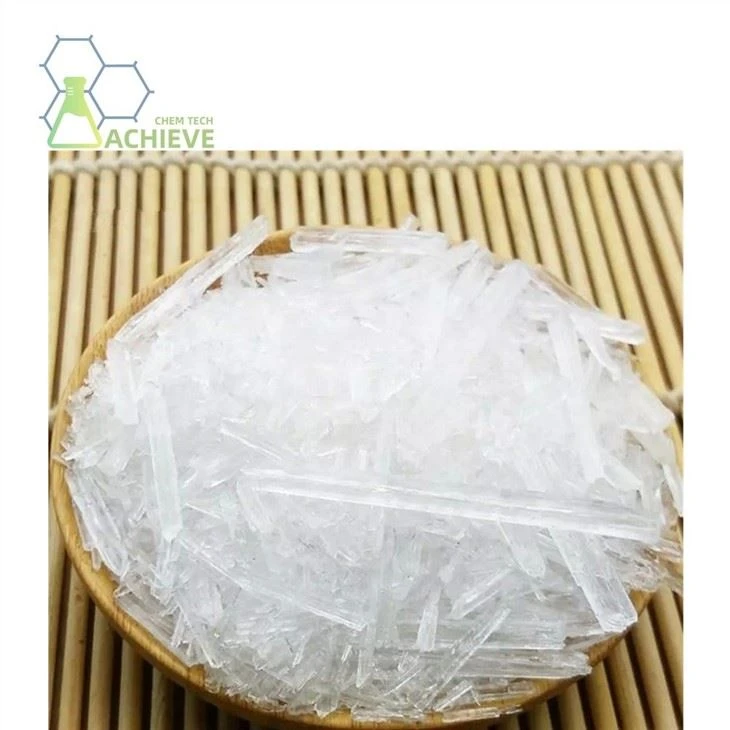
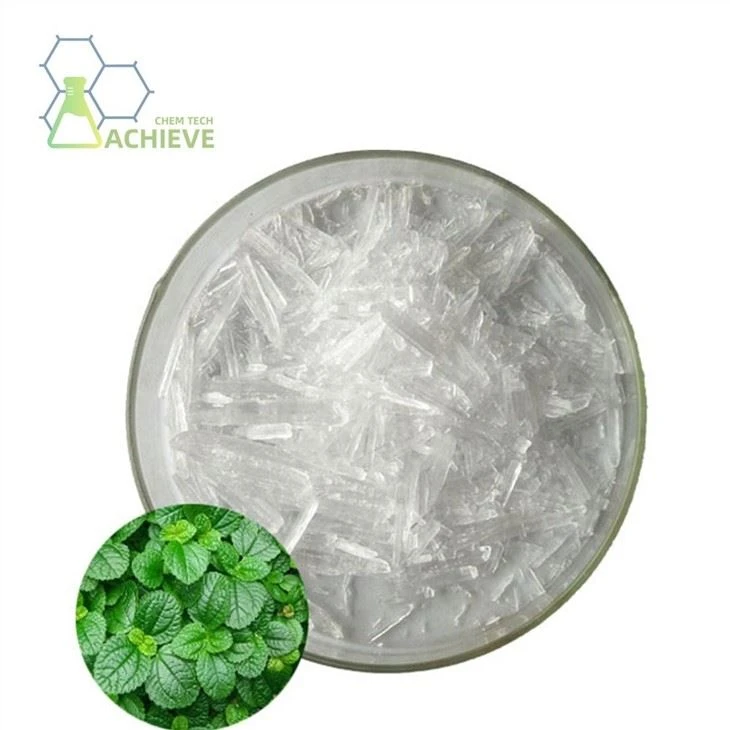


Shaanxi BLOOM Tech Co., Ltd. is one of the most experienced manufacturers and suppliers of glutaric acid cas 110-94-1 in China. Welcome to wholesale bulk high quality glutaric acid cas 110-94-1 for sale here from our factory. Good service and reasonable price are available.
Glutaric acid is an important organic chemical raw material and intermediate. Its structural formula is HOOC (CH2) 3COOH. It is monoclinic columnar crystal or acicular crystal (in benzene), usually containing 1 molecule of crystal water. Very soluble in water, absolute ethanol and ether, soluble in benzene, chloroform, slightly soluble in petroleum ether. Toxic. Mainly used as initiator for polymerization of synthetic resin and synthetic rubber; It is also used to prepare dimethyl glutarate and diethyl glutarate. Glutaric anhydride can be prepared by dehydration of glutarc acid. When cyclohexanone is oxidized with nitric acid to produce adipic acid, the by-product is obtained; It can also be prepared by liquid phase oxidation of cyclopentanone.

|
Chemical Formula |
C5H8O4 |
|
Exact Mass |
132 |
|
Molecular Weight |
132 |
|
m/z |
132 (100.0%), 133 (5.4%) |
|
Elemental Analysis |
C, 45.46; H, 6.10; O, 48.44 |
|
|
|


Glutaric acid, with the chemical formula C5H8O4 and structural formula HOOC (CH2) 3COOH, is an important organic chemical raw material and intermediate. It is usually a monoclinic columnar crystal or needle shaped crystal, containing 1 molecule of crystal water. The melting point of the anhydrous substance is 97.5-98 ℃, and the boiling point is 303 ℃ (101kPa). It is worth noting that succinic acid is a toxic substance that requires strict adherence to safety operating procedures during use to avoid harm to human health and the environment.

Application in Organic Synthesis
Glutarc acid has a wide range of applications in the field of organic synthesis, and can be used to prepare various organic compounds. These compounds have important application value in fields such as medicine, food, and health products. Here are some specific application examples:
(1) Preparation of glutaric anhydride: Glutarc acid can be dehydrated to obtain glutaric anhydride. Phthalic anhydride is an important organic anhydride with wide applications in fields such as medicine and pesticides. For example, it can be used to prepare pharmaceutical intermediates such as alpha ketoglutarc acid.
(2) Preparation of dimethyl glutarate and diethyl glutarate: Glutarc acid can undergo esterification reaction with methanol or ethanol under the action of acidic catalyst to produce dimethyl glutarate or diethyl glutarate. These two ester compounds are important organic solvents and chemical raw materials, widely used in the production and processing of materials such as coatings, paints, resins, etc.


As an application of soldering flux
Glutarc acid is one of the important and essential raw materials for lead-free soldering flux. Flux plays a role in assisting welding activity during the welding process, which can purify the solder and the surface of the workpiece, and improve the welding quality. Glutarc acid, as a raw material for soldering flux, has the advantages of minimal residue, cleanliness, high acidity, and low usage, making it particularly suitable for soldering high-precision electronic components. Here are some specific application examples:
(1) Welding of high-precision electronic components: In the manufacturing process of electronic products, succinic acid can be used as a raw material for flux and participate in the preparation of flux. By controlling the dosage and reaction conditions of succinic acid, a flux with excellent soldering activity can be prepared, thereby improving the soldering quality and reliability of electronic products.
(2) Production of solder paste: Glutarc acid can also be used in the production of solder paste. Solder paste is a paste like substance used for soldering electronic components, which contains components such as flux and solder powder. Glutarc acid, as a raw material for soldering flux, can enhance the soldering activity of solder paste and make the soldering process smoother.


Application in cosmetics and skincare products
Glutaric acid has antibacterial properties and is widely used in skin care products. Meanwhile, it can also be used to improve skin fluorescence, reduce pigment deposition, and is a commonly used whitening ingredient. Here are some specific application examples:
Whitening ingredients: Glutarc acid can also be used as a whitening ingredient. By inhibiting the formation of melanin and reducing pigment precipitation, succinic aid can make the skin fairer and smoother. Therefore, it is often added to whitening cosmetics and skincare products.
Application as a food additive
Glutarc acid can be used as a sour seasoning and helps control the acidity and alkalinity of food. In addition, due to its antibacterial and preservative properties, succinic aid can also be used in processed meat and fish products, canned goods, jams, and other foods to extend their shelf life. Here are some specific application examples:
Preservative effect: Glutaric aid has antibacterial and preservative effects, which can effectively extend the shelf life of food. Adding an appropriate amount of succinic aid to processed meat and fish products, canned goods, jams, and other foods can reduce the growth and reproduction of microorganisms, thereby improving the hygiene quality and safety of food.


Application as a solvent
Glutarc acid, as a solvent, is widely used in the production and processing of materials such as coatings, paints, resins, plastics, and fibers. Glutarc acid has good solubility and compatibility, which can effectively dissolve and disperse the components in these materials, thereby improving the quality and performance of the product. Here are some specific application examples:
Production of coatings and paints: In the production process of coatings and paints, succinic aid can be used as a solvent to help dissolve and disperse pigments, fillers, and other components, improving the uniformity and adhesion of coatings and paints.
Other applications
In addition to the applications mentioned above, succinic aid can also be used in the production of artificial fur and plastic clothing, as well as as as as a cleaning agent and other materials. Here are some specific application examples:
Production of artificial fur and plastic clothing: Glutaric aid can undergo polymerization reactions with other compounds to prepare artificial fur and plastic clothing materials with excellent elasticity and wear resistance. These materials have a wide range of applications in fields such as clothing and home furnishings.


Glutaric acid, with the chemical formula C5H8O4, is an important organic chemical raw material and intermediate with a wide range of industrial applications. However, with its widespread use, the harm of succinic aid to the environment has also received increasing attention. This article will explore in detail the harm of succinic aid to the environment from multiple perspectives and propose corresponding preventive measures.
Direct harm to the environment
Glutaric aid is an organic aid that is easily soluble in water. When discharged in large quantities into water bodies, it significantly changes the pH value of the water, leading to water acidification. Water acidification can have serious impacts on aquatic ecosystems, such as inhibiting the respiration of aquatic organisms, disrupting the stability of the food chain, and reducing the self purification capacity of water bodies. In addition, succinic aid can also combine with metal ions in water to form toxic metal compounds, further exacerbating the degree of water pollution.
The presence of succinic aid may also promote excessive reproduction of algae in water bodies, leading to the formation of algal blooms. Algae bloom can consume oxygen in water bodies, leading to the death of fish and other aquatic organisms due to lack of oxygen. Meanwhile, algae in algal blooms may also produce toxic substances such as blue-green algae toxins, posing a threat to human and animal health.
Glutarc acid is flammable and irritating, and during combustion, it releases a large amount of harmful gases and smoke. These pollutants diffuse in the atmosphere, reducing visibility, increasing particulate matter concentration, and exacerbating the occurrence of haze weather. In addition, the harmful gases produced by the combustion of succinic aid may also have an impact on atmospheric chemistry and physical processes, leading to the deterioration of atmospheric environmental quality.
During storage and transportation, if there is a leak or improper handling of succinic aid, it may also produce harmful gases that evaporate into the atmosphere. These volatile gases not only cause pollution to the atmospheric environment, but may also pose a threat to human health.
Glutarc acid can enter the soil through infiltration, changing the pH and fertility of the soil, thereby affecting its normal functions. Contaminated soil can hinder plant growth, reduce crop yields, and even lead to complete crop failure. In addition, succinic aid can also bind with metal ions in the soil to form difficult to degrade metal compounds, causing long-term pollution to the soil.
Glutarc acid may also enter the groundwater system through leaching, causing pollution to the groundwater. Groundwater is one of the important drinking water sources for humans, and once contaminated, it will have a serious impact on human health.
Indirect harm to the environment
The direct pollution of succinic aid to the environment can cause damage to the ecosystem. Water acidification, air pollution, and soil pollution can all lead to a reduction in biodiversity and a disruption of ecological balance. These changes will further affect the stability and sustainability of ecosystems, posing a threat to the long-term healthy development of the Earth's ecosystem.
The harm of succinic aid to human health mainly manifests in its irritating effects on the eyes, skin, and respiratory tract. Long term exposure or inhalation of succinic aid can lead to health problems such as respiratory diseases, skin diseases, and allergic reactions. In addition, succinic aid may also enter the human body through the food chain, causing damage to internal organs.
The pollution of the environment by succinic aid can also exacerbate the level of air and water pollution, thereby increasing the risk of human respiratory diseases, cardiovascular diseases, and cancer. These health problems not only affect individuals' quality of life, but also bring heavy medical and economic burdens to society.
The emission of organic pollutants such as succinic aid will exacerbate the greenhouse effect and lead to global warming. Climate change will have profound impacts on the Earth's ecosystem, such as glacier melting, rising sea levels, and frequent extreme weather events. These changes will pose serious challenges to the sustainable development of human society.
This substance is harmful to the environment and can cause pollution to water and atmosphere. Organic aids are easy to form aid rain in atmospheric chemistry and physical changes. Therefore, when the pH value drops below 5, glutaric acid will cause serious harm to animals and plants, and the reproduction and development of fish will be seriously affected. Metals in the basin soil and water sediment can be dissolved into the water to poison fish. The acidification of water body will also lead to changes in the composition and structure of aquatic organisms, increase in acid resistant algae and fungi, decrease in rooted plants, bacteria and vertebrates, and decrease in the decomposition rate of organic matter. After acidification, fish in lakes and rivers will be reduced or died seriously.
Hot Tags: glutaric acid cas 110-94-1, suppliers, manufacturers, factory, wholesale, buy, price, bulk, for sale, 5 Methylpyridine 3 boronic Acid CAS 173999 18 3, p Coumaric acid powder, 4 Chlorobutyryl Chloride CAS 4635 59 0, 9 10 DIBROMOANTHRACENE CAS 523 27 3, 2 5 Dihydroxybenzaldehyde, D-tert-Butylglycine