




Announcement
This chemicals was banned to sell, our website only can check the basic info. of chemicals here, we don't sell them!
June 24, 2026
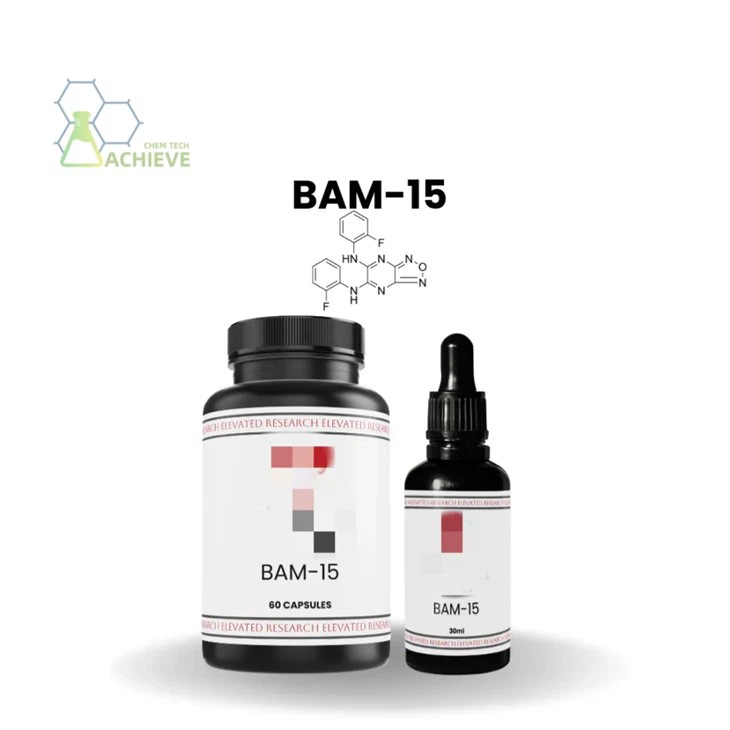
BAM 15 peptide is a small molecule mitochondrial proton uncoupling agent with a unique chemical structure. Its chemical name is N5, N6 bis (2-fluorophenyl) - [1,2,5] oxadiazolo [3,4-b] pyrazine-5,6-diamine, with a molecular formula of C16H10F2N6O and a molecular weight accurate to 340.29 daltons. The molecule forms a three-dimensional conformation with proton carrier activity through a specific arrangement of fluorophenyl and oxadiazole pyrazine skeleton. Its Canonical SMILES structural formula FC (C=CC=C1)=C1NC2=NC3=NON=C3N=C2NC4=C (C=CC=C4) F reveals the spatial distribution of its conjugated system and hydrogen bond donor/acceptor, which enables it to specifically bind to the proton gradient of the mitochondrial inner membrane and regulate energy metabolism through uncoupling oxidative phosphorylation process.
In terms of physical and chemical properties, BAM15 exhibits significant solvent dependent solubility. Experimental data shows that the solubility of the molecule in dimethyl sulfoxide (DMSO) can reach 75 mg/mL (220.40 mM), while its solubility in water is below 0.1 mg/mL, indicating a completely insoluble state. This characteristic requires the development of its formulation to use DMSO as the main solvent and to be combined with ultrasonic treatment (ultrasonic oscillation under 37 ℃ water bath conditions) to improve dissolution efficiency. Its storage conditions are strictly limited to -20 ℃ and dark storage. In powder form, it can be stably stored for 3 years, while in solution form, it can maintain activity for 6 months at -80 ℃.
Our product




Ceftiofur+. COA
 |
||
Certificate of Analysis |
||
|
Compound name |
BAM-15 | |
|
CAS No. |
210302-17-3 | |
|
Grade |
Pharmaceutical grade | |
|
Quantity |
Customized | |
|
Packaging standard |
Customized | |
| Manufacturer | Shaanxi BLOOM TECH Co., Ltd | |
|
Lot No. |
20250109001 |
|
|
MFG |
Jan 12th 2025 |
|
|
EXP |
Jan 8th 2029 |
|
|
Structure |
|
|
| TEST STANDARD | GB/T24768-2009 Industry. Stnndard | |
|
Item |
Enterprise standard |
Analysis result |
|
Appearance |
White or almost white powder |
Conformed |
|
Water content |
≤4.5% |
0.30% |
| Loss on drying |
≤1.0% |
0.15% |
|
Heavy Metals |
Pb≤0.5ppm |
N.D. |
|
As≤0.5ppm |
N.D. | |
|
Hg≤0.5ppm |
N.D. | |
|
Cd≤0.5ppm |
N.D. | |
|
Purity (HPLC) |
≥99.0% |
99.5% |
|
Single impurity |
<0.8% |
0.48% |
|
Residue on ignition |
<0.20% |
0.064% |
|
Total microbial count |
≤750cfu/g |
80 |
|
E. Coli |
≤2MPN/g |
N.D. |
|
Salmonella |
N.D. | N.D. |
|
Ethanol (by GC) |
≤5000ppm |
400ppm |
|
Storage |
Store in a sealed, dark and dry place at-20 degrees |
|

|
||



Mechanism of action and metabolic regulatory effects
The core mechanism of BAM 15 peptide lies in its role as a proton carrier, which breaks the coupling relationship between proton kinetic potential (PMF) and ATP synthesis by forming proton channels in the inner membrane of mitochondria. In vitro experiments showed that the half effective concentration (EC50) of the molecule in L6 myoblasts was 270 nM, and its strength of action was comparable to the classical uncoupling agent FCCP, but with a wider concentration response window. Within the dose range of 100 nM to 1 μ M, BAM15 can significantly increase cellular oxygen consumption rate (OCR) to FCCP levels; In the high concentration range of 1 μ M to 50 μ M, its ability to maintain uncoupling respiration is significantly better than FCCP, and it does not cause an increase in reactive oxygen species (ROS) levels. This characteristic stems from its unique proton conduction efficiency and membrane potential regulation ability, allowing BAM15 to increase basal metabolic rate while avoiding oxidative stress damage caused by traditional uncoupling agents such as DNP.

2. Reshaping of energy metabolism

Animal experiments have shown that BAM15 can regulate energy balance through multiple pathways. In the diet induced obesity (DIO) mouse model, an 8-week intervention resulted in a 35% decrease in body fat content, while lean body mass (LBM) remained stable. The metabolic regulation mechanism includes:
Change in substrate oxidation preference: promotes fatty acid oxidation (FAO) pathway, inhibits glycolysis pyruvate dehydrogenase complex (PDH) activity, and shifts energy sources from carbohydrates to lipids;
Mitochondrial biogenesis enhancement: induces the expression of peroxisome proliferator activated receptor gamma co activator 1 alpha (PGC-1 alpha), enhances mitochondrial DNA copy number and respiratory chain complex activity;
Brown adipose like phenotype activation: induces uncoupling protein 1 (UCP1) expression in white adipose tissue (WAT), promoting upregulation of thermogenic gene programs such as PPAR α and CPT1.
The regulatory effect of BAM15 on glucose metabolism is reflected in the repair of the insulin signaling pathway. In db/db diabetes mice, continuous administration for 4 weeks reduced fasting blood glucose by 42%, insulin level by 30%, and significantly improved the area under the glucose tolerance test (IPGTT) curve (AUC). Mechanism studies reveal that it enhances insulin sensitivity through the following pathways:
Skeletal muscle glucose uptake: activates the AMPK-AS160-GLUT4 pathway, promoting membrane GLUT4 translocation;
Inhibition of hepatic gluconeogenesis: downregulation of phosphoenolpyruvate carboxykinase (PEPCK) and glucose-6-phosphatase (G6Pase) expression;
Inflammatory cytokine regulation: Inhibits macrophage M1 polarization and reduces the secretion of pro-inflammatory cytokines such as TNF - α and IL-6.


Progress in preclinical research and multi organ protective effects

1. Obesity and metabolic syndrome intervention
In the DIO mouse model, BAM 15 peptide exhibits superior therapeutic characteristics compared to traditional drugs:
Weight management: At a dose of 0.1 mg/kg/d, a 12 week intervention resulted in a weight gain inhibition rate of 58%, without appetite suppression or temperature fluctuations;
Fatty liver reversal: reduce liver triglyceride content by 67%, alleviate hepatocyte ballooning and inflammatory infiltration;
Lipid profile optimization: significantly reduces serum low-density lipoprotein cholesterol (LDL-C) and free fatty acid (FFA) levels, while increasing high-density lipoprotein cholesterol (HDL-C) content.
2. Renal protective effect
Studies on acute kidney injury (AKI) models have shown that BAM15 pretreatment can significantly alleviate ischemia-reperfusion (I/R) injury:
Renal function indicators: plasma creatinine (Cr) and urea nitrogen (BUN) levels decreased by 52% and 41%, respectively;
Histopathological improvement: reduced the area of renal tubular necrosis by 63%, inhibited the shedding of brush edges of proximal tubules and immune cell infiltration;
Mechanism exploration: By activating the mitochondrial STAT3 pathway, inhibiting NLRP3 inflammasome assembly, and promoting mitochondrial autophagy to clear damaged mitochondria.


3. Muscle function maintenance
In the model of sarcopenia associated with aging, BAM15 intervention showed anti atrophy effects:
Transformation of muscle fiber types: Increase the proportion of type II fast muscle fibers by 18% and enhance muscle contractility;
Protein homeostasis regulation: Inhibits the activity of the ubiquitin proteasome system (UPS) mediated by FoxO transcription factors and reduces the degradation of myosin heavy chain (MyHC);
Mitochondrial quality control: promotes mitochondrial fission fusion balance, enhances mitochondrial membrane potential (Δ PSI m) and respiratory control rate (RCR).

Prospects for formulation development and clinical translation
Regarding the water insolubility of BAM15, current research and development is focused on nano delivery technology:
Liposome encapsulation: Nanoliposomes prepared using DSPC/cholesterol/DSPE-PEG2000 (molar ratio 55:40:5) can increase the drug encapsulation efficiency to 92%, control the particle size at 120 ± 15 nm, and significantly prolong blood circulation time (t1/2 from 0.8 h to 6.2 h);
Polymer micelles: A micelle system constructed using mPEG PLGA as a carrier, with a drug release rate of only 18% under pH 7.4 conditions, and a release rate of 76% after 48 hours under pH 6.5 conditions simulated in the tumor microenvironment, achieving targeted delivery potential.
Based on existing research data, the clinical development path of BAM15 shows a diversified trend:
Metabolic disorders: as a combination therapy of GLP-1 receptor agonists (such as semaglutide), it breaks through the therapeutic bottleneck of existing weight loss drugs by synergistically regulating energy intake and expenditure;
Aging related diseases: exploring the potential of mitochondrial dysfunction related diseases such as sarcopenia and neurodegenerative diseases as neuroprotective or muscle strength enhancing agents;
Organ protection: In scenarios such as heart surgery and organ transplantation, it serves as a perioperative mitochondrial protector to reduce ischemia-reperfusion injury.
The clinical translation of BAM15 requires overcoming the following obstacles:
Classification definition: As a boundary ambiguity between small molecule compounds and peptide drugs, it may affect the selection of IND declaration pathways;
Biomarker development: It is necessary to establish mitochondrial functional parameters (such as OCR, ATP/ADP ratio) as pharmacological endpoints to support dose exploration studies;
Long term safety verification: Additional research covering reproductive toxicity, genetic toxicity, and other fields is required to meet the regulatory requirements of FDA/EMA for metabolic regulatory drugs.
BAM 15 peptide, as a new generation of mitochondrial uncoupling agent, has shown broad prospects in the treatment of metabolic diseases through its unique chemical structure and mechanism of action. Its multi-target regulatory ability is not limited to energy metabolism, but extends to pathological processes such as inflammation, oxidative stress, and protein homeostasis. Although clinical transformation still faces challenges such as preparation optimization and safety verification, with the breakthrough of delivery technology and the deepening of translational medicine research, BAM15 is expected to become the key drug for the transformation of therapeutic paradigm of metabolic diseases, providing innovative solutions for obesity, diabetes, NAFLD and other diseases.
Safety and tolerability
The BAM 15 Peptide (BAM15) demonstrated excellent safety and tolerance in animal experiments. The detailed analysis is as follows:
Safety Performance in Animal Experiments

Low cytotoxicity
At a concentration of up to 50 μM, the cell survival rate of BAM15-treated cells was significantly higher than that of the traditional uncoupling agent FCCP (as shown in the mitochondrial swelling experiment, the proportion of cell death induced by BAM15 was lower).
The experiment demonstrated that BAM15 stimulated the oxygen consumption rate (OCR) without significantly increasing the reactive oxygen species (ROS) level, reducing oxidative stress damage.
Organ protection
Kidney protection: In the acute renal ischemia-reperfusion injury model, the plasma creatinine level of mice treated with BAM15 decreased, the necrosis of renal tubules was reduced, the proximal tubular obstruction was alleviated, and the infiltration of immune cells was reduced.
Neuroprotection: In iPS differentiated retinal tissue, BAM15 could weaken the apoptosis caused by transport and reduce the risk of neurodegenerative diseases.


Metabolic safety
No temperature fluctuation: Unlike traditional uncoupling agents such as DNP, BAM15 did not cause abnormal increase or decrease in body temperature at the effective dose.
Blood parameters remained normal: Long-term administration did not lead to abnormal toxicity markers such as blood routine, liver and kidney function.
Tolerability Advantages
Oral bioavailability
The oral bioavailability of BAM15 reached 67%, mainly distributed in the liver, and was gradually cleared from tissues within 4 hours. The pharmacokinetic characteristics were stable.
After oral administration, the energy consumption of mice continued to increase (for a dose of 100 mg/kg, the OCR was 48% higher than the baseline and gradually returned to normal after 3 hours), indicating good tolerance.
No appetite suppression or muscle loss
In the diet-induced obesity model, BAM15 (0.05%-0.15% w/w) could completely inhibit fat increase, but did not affect food intake or muscle mass.
Unlike molecules such as GDF15 that reduce weight by inhibiting appetite, BAM15 acts directly by increasing energy consumption, avoiding central nervous system side effects.
Dose-dependent effect
Low dose (0.05% w/w) could prevent more than 50% of fat increase, high dose (0.10%-0.15% w/w) completely inhibited fat accumulation, and no dose-limiting toxicity was observed.
Potential Risks and Limitations

Short half-life
In animal experiments, the effective time of BAM15 in the body was limited (such as the drug effect lasted for about 3-4 hours), and frequent administration or optimization of formulation was required to maintain efficacy.

Human safety unknown
Although no significant toxicity was found in animal experiments, human metabolism differs from that of animals, and the safety needs to be verified through clinical trials (such as the effects on the liver and heart after long-term administration).

Complex mechanism of action
BAM15 acts through multiple pathways such as mitochondrial uncoupling and AMPK activation, and may interact with other drugs, requiring further research.
FAQ
1. Question: What is the fundamental difference between BAM 15 and the classic mitochondrial uncoupling agents (such as DNP)?
Answer: Targeted selectivity. BAM 15 is designed as a proton carrier, but studies have shown that it has a higher selectivity for the mitochondrial membrane and significantly less impact on the membrane potential. This means it may be more precisely able to promote heat production without affecting the functions of other cellular organelles (such as endoplasmic reticulum calcium homeostasis), aiming to have a better therapeutic window and safety in theory.
2. Question: Does BAM 15 have a direct effect on brown adipose tissue (BAT)?
Answer: The main function is not to directly activate BAT. The core mechanism of BAM 15 is chemical uncoupling, which involves "leaking" protons across the inner mitochondrial membrane, thereby dissipating energy in the form of heat. It mainly functions in tissues with high oxidative metabolism rates (such as skeletal muscle, liver). Its effect on BAT activity may be indirect (such as through changes in overall energy metabolism), rather than directly targeting BAT as is the case with β3-adrenergic receptor agonists.
3. Question: What is the biggest obstacle currently preventing the clinical application of BAM 15?
Answer: Dose-dependent risk of hyperthermia. This is an inherent challenge for all chemical uncouplers. Although BAM 15 shows better safety than DNP in animal models, the therapeutic window between the effective dose and the dose that causes overheating (high fever) still needs to be strictly defined in humans. Precise dose control and temperature monitoring are the absolute prerequisites for any potential clinical translation in the future.
Hot Tags: bam 15 peptide, suppliers, manufacturers, factory, wholesale, buy, price, bulk, for sale, DecaPeptide 12 CAS 137665 91 9, Kisspeptin powder, Melanotan ii powder, Best Growth Hormone Releasing Peptide CAS 87616 84 0, Selank Peptide CAS 129954 34 3, Bremelanotide Powder CAS 189691 06 3