




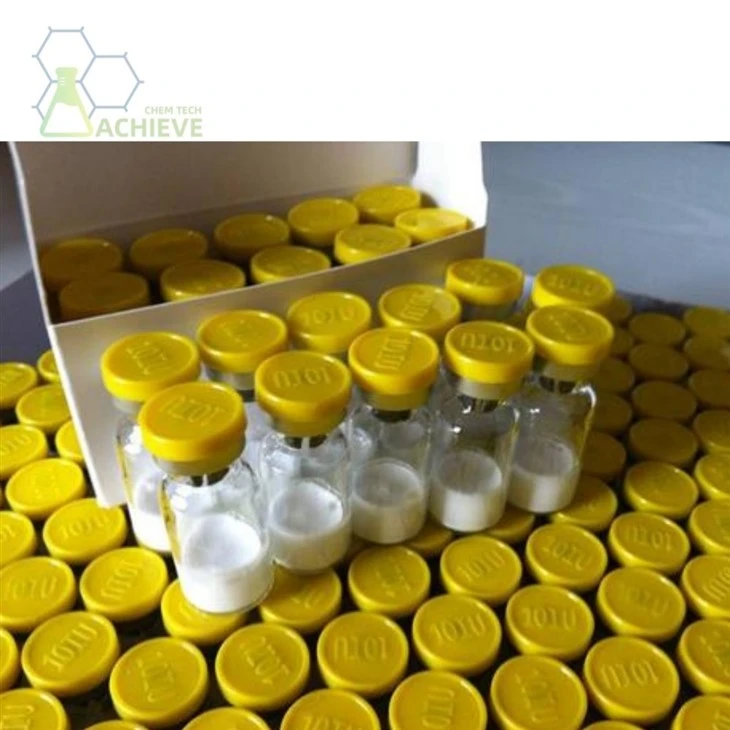
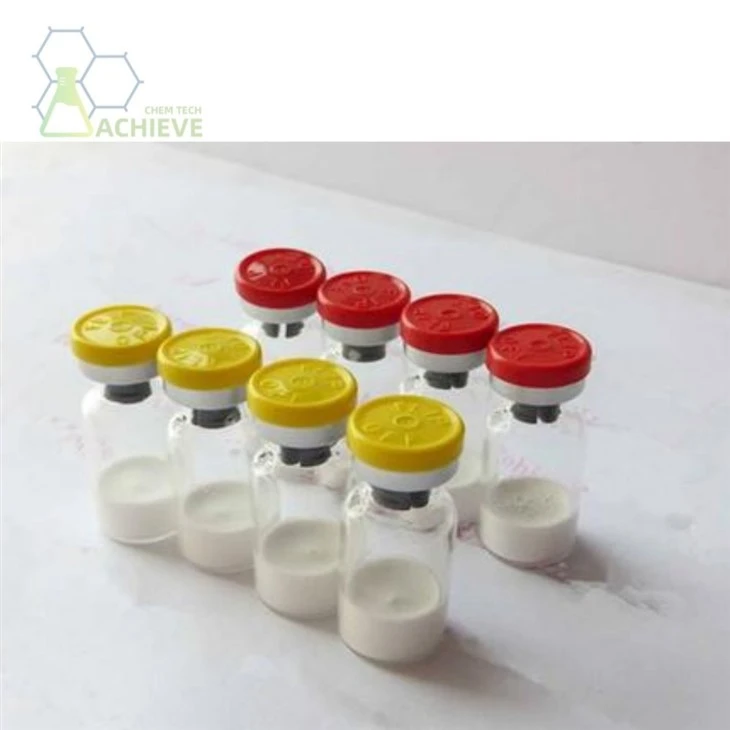
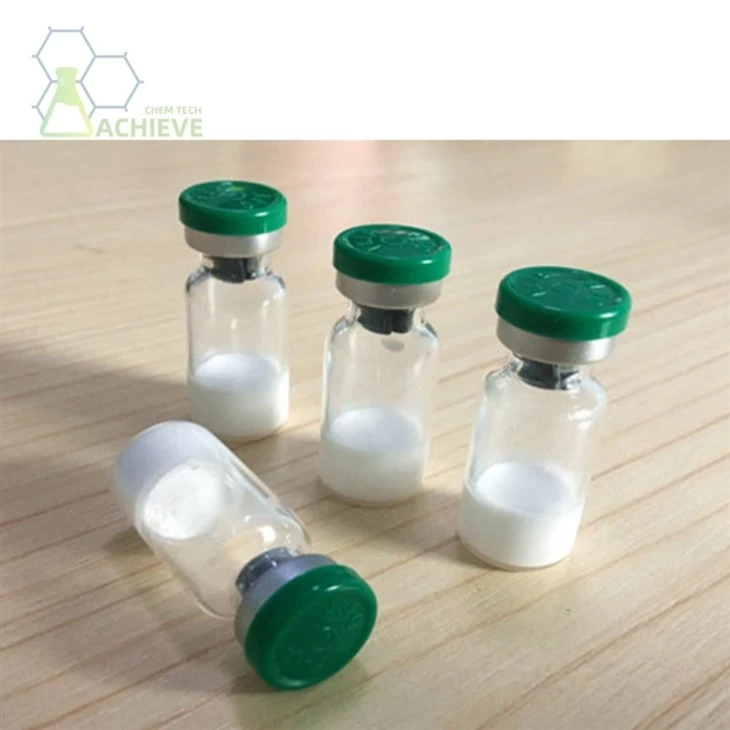

Dsip is a small molecule bioactive peptide composed of six amino acids with a molecular weight of 1049.2 Da. Its chemical structure consists of three β- Composed of folded sheets, each containing two amino acid residues. This molecule consists of two molecular fragments, with fragments I (Val Glu) and II (Nle Leu) connected by a glutamate. Dsip peptide is a zwitterion with an isoelectric point of approximately 5.7. It carries a positive charge in acidic environments and a negative charge in alkaline environments. It exists in an uncharged form at physiological pH values. Imitide has high hydrophilicity in aqueous solutions because its polar groups (such as carboxyl and amino groups) interact with water molecules. It has various pharmacological effects and biological activities such as anti-inflammatory, antioxidant, anti-tumor, antibacterial, antiviral, anti fibrotic, and neuroprotective. This molecule has a small hydrophobic core and is composed of non-polar groups such as the methyl group of leucine and the methylene group of valine. These non-polar groups tend to gather together, away from water molecules, and play an important role in molecular conformation.


|
Customized Bottle Caps And Corks:
|
|


Boiling point 1522.7 ± 65.0 ° C (Predicted), density 1.458 ± 0.06 g/cm3 (Predicted), storage conditions -20 ° C, acidity coefficient (pKa) 3.18 ± 0.10 (Predicted), form Powder, water solubility Double in water at 0.5mg/ml InchIKeyZRZROXNBKJAOKB-GFVHOAGBSA-N

Dsip is a compound extracted from sweet potato plants and has various pharmacological effects and biological activities.
1. Anti-inflammatory effect: Emoditide has significant anti-inflammatory effects. It can inhibit the release of inflammatory mediators, alleviate inflammatory reactions, and alleviate inflammatory symptoms. Research has shown that amitriptide can inhibit tumor necrosis factor (TNF)-α). The production and release of inflammatory mediators such as interleukin-1 (IL-1) can alleviate inflammation and alleviate symptoms.
2. Antioxidant effect: Emoditide has antioxidant effects, which can eliminate free radicals in the body and inhibit the production and release of free radicals. It can enhance the activity of antioxidant enzymes such as superoxide dismutase (SOD) and glutathione peroxidase (GSH-Px), inhibit oxidative stress reactions, and protect cells from free radical damage.


4. Antibacterial effect: Emoditide has antibacterial effects and has inhibitory effects on various bacteria and fungi. Research has shown that imidipide can inhibit the growth and reproduction of pathogenic microorganisms such as Staphylococcus aureus, Escherichia coli, and Candida albicans.
3. Anti tumor effect: Emoditide has anti-tumor effects and can inhibit the growth and proliferation of tumor cells. Research has shown that amitriptide can inhibit the proliferation of various tumor cells, induce tumor cell apoptosis, and regulate cell cycle and differentiation. In addition, imidipide can also inhibit the generation of tumor blood vessels, thereby inhibiting tumor growth and metastasis.
5. Antiviral effect: Emethide has antiviral effects and has inhibitory effects on various viruses. Research has shown that amitripeptide can inhibit the replication and transmission of viruses such as influenza virus, hepatitis B virus, and human immunodeficiency virus.
6. Anti fibrotic effect: Emoditide has an anti fibrotic effect and can inhibit the occurrence and development of organ fibrosis. It can inhibit the proliferation of fibroblasts and the synthesis of collagen, thereby inhibiting the process of organ fibrosis.
7. Neuroprotective effect: Emethide has neuroprotective effects and can protect neurons from damage. It can inhibit the production and release of free radicals, promote the growth and differentiation of neurons, and enhance their ability to resist damage.


Dsip peptide is a polyphenolic hydroxyl compound with the chemical name 3,5,8,12-tetrahydroxy-1-methyl-6- {[2- (4-hydroxyphenyl) - ethyl] oxy} - rosewood element. The molecular formula is C16H12O5, with a molecular weight of 284.25. The structure is composed of two benzene rings and two pyran rings, and it has multiple chemically active sites. Its appearance is a yellow to orange yellow crystalline powder, with multiple hydroxyl groups and double bonds in the molecules, thus possessing more active chemical properties.
Structural features
Imitidine belongs to flavonoids, and its basic structure consists of two benzene rings and one pyran ring. Among them, A ring is a benzopyran ring, B ring is a benzopyranone ring, and C ring is α- Pyranone ring. There are three phenolic hydroxyl groups distributed on the A and B rings, while on the C ring there are double bonds and methyl groups. In addition, there is also an ethyl and phenolic hydroxyl connected to the B-ring. These structural features endow imidipide with various pharmacological and biological activities.
Chemical stability
The phenolic hydroxyl groups and double bonds in the molecule of imidipide give it high chemical stability. Amitripeptide is not easily oxidized in the air. However, under conditions such as high temperature, ultraviolet radiation, and oxidants, imidipeptide may undergo chemical changes such as degradation, polymerization, or oxidation reactions. These changes may affect the pharmacological and biological activities of imidipide.
Solubility
Imitide has good water solubility and lipid solubility. It has a certain solubility in both hot water and organic solvents. Especially in organic solvents such as ethanol, methanol, and ethyl acetate, imidipide has good solubility. These properties give imidipide certain advantages in drug preparation and biological applications.
Color response
Due to the presence of multiple phenolic hydroxyl groups and double bonds in the molecule of imidipeptide, it has strong reducibility. When placed in the air, the color of imidipeptide gradually darkens. This is due to the oxidation of phenolic hydroxyl groups and double bonds in its molecules. In addition, imidipide can also react with chromogenic agents such as iron trichloride and potassium ferrocyanide to produce color changes. These color reactions can be used for the identification and content determination of imidipide.
Complexation reaction
The phenolic hydroxyl groups in the molecule of imidipide can undergo complex reactions with metal ions. This reaction can be used to prepare metal complexes of imidipide. In addition, during the drug preparation process, imidipide can also undergo complex reactions with certain drugs or ligands, thereby altering the biological activity or pharmacokinetic properties of the drugs.
Metabolism and Biotransformation
Imitide undergoes various metabolic and biological transformation processes in the body. After oral administration, imidipide is mainly absorbed in the small intestine and enters the blood circulation system. Dsip can be metabolized and excreted in the liver, kidneys, and other tissues. The metabolites of imidipide mainly include phenolic acids, glucuronides, and sulfates. These metabolites can be detected in urine and bile.
The Interaction between DSIP and Biological Electromagnetic Fields
The influence of magnetic field on the structure and function of DSIP
The impact on protein structure
As a polypeptide, the structural stability of DSIP is affected by electromagnetic fields. Electromagnetic fields can affect the structure and function of biomolecules by altering the distribution and movement of charges within them. For example, charged amino acids in proteins can interact with electromagnetic fields, leading to changes in protein structure. The charged amino acid residues such as tryptophan, aspartic acid, and glutamic acid in DSIP molecules may undergo changes in their charge distribution under the action of electromagnetic fields, thereby affecting the secondary structure (such as alpha helix and beta fold) and tertiary structure (spatial conformation determined by amino acid sequences, involving hydrophobic interactions, van der Waals forces, salt bridges, and other non covalent interactions) of DSIP.
Low frequency electromagnetic fields may affect the hydrophobicity of DSIP molecule surfaces, alter hydrophobic interactions between molecules, and thus affect their distribution in the cell membrane or binding ability with other biomolecules. High frequency electromagnetic fields such as ultraviolet radiation may cause excitation and ionization of DSIP molecules, leading to the breaking or formation of chemical bonds within the molecules, thereby altering their structure.
Biological response mechanism of DSIP in electromagnetic field
Regulation of membrane potential and ion channels
The cell membrane is sensitive to electric fields, and external electromagnetic fields alter the surface charge distribution of the membrane, affecting the steady state of the membrane potential, which in turn affects the gating probability of voltage-gated ion channels. DSIP may regulate the ion concentration inside and outside the cell by affecting the ion channels on the cell membrane, thereby affecting the physiological functions of the cell. For example, DSIP may act on nerve cells. After electromagnetic fields affect the membrane potential of nerve cells, DSIP may participate in regulating the opening and closing of voltage-gated calcium or sodium channels, affecting the conduction of nerve impulses and subsequently affecting physiological processes such as sleep regulation.
Coupling of Calcium Signaling and Metabolic Pathways
Calcium ions are important secondary messengers within cells, and many signaling pathways (such as muscle contraction, nerve conduction, gene expression, etc.) are closely related to calcium homeostasis. The mode of action of electromagnetic fields may affect calcium ion flux through changes in membrane potential, conformational changes in membrane proteins, or mitochondrial functional regulation. DSIP may be involved in the calcium signaling process under the influence of electromagnetic fields. For example, DSIP may regulate the activity of intracellular calmodulin or affect the interaction between calcium ions and other signaling molecules in cells, thereby affecting cell metabolism and growth adaptability.
Reactive oxygen species and oxidative stress
Exposure to certain field strengths may lead to an increase in intracellular levels of reactive oxygen species (ROS), which in turn can affect the oxidative status of DNA, proteins, and lipids. DSIP may to some extent regulate the oxidative stress response induced by electromagnetic fields. On the one hand, DSIP may clear excessive reactive oxygen species in cells through its antioxidant effect, protecting cells from oxidative damage; On the other hand, moderate oxidative stress may participate in signal transduction and adaptive regulation, and DSIP may play a regulatory role in this process, causing cells to produce adaptive responses to electromagnetic fields.
Hot Tags: dsip cas 62568-57-4, suppliers, manufacturers, factory, wholesale, buy, price, bulk, for sale, Epitalon Powder CAS 307297 39 8, GLP 1 Peptide CAS 87805 34 3, LONG R3 IGF I CAS 143045 27 6, Melanotan ii powder, Bremelanotide Powder CAS 189691 06 3, sermorelin powder