


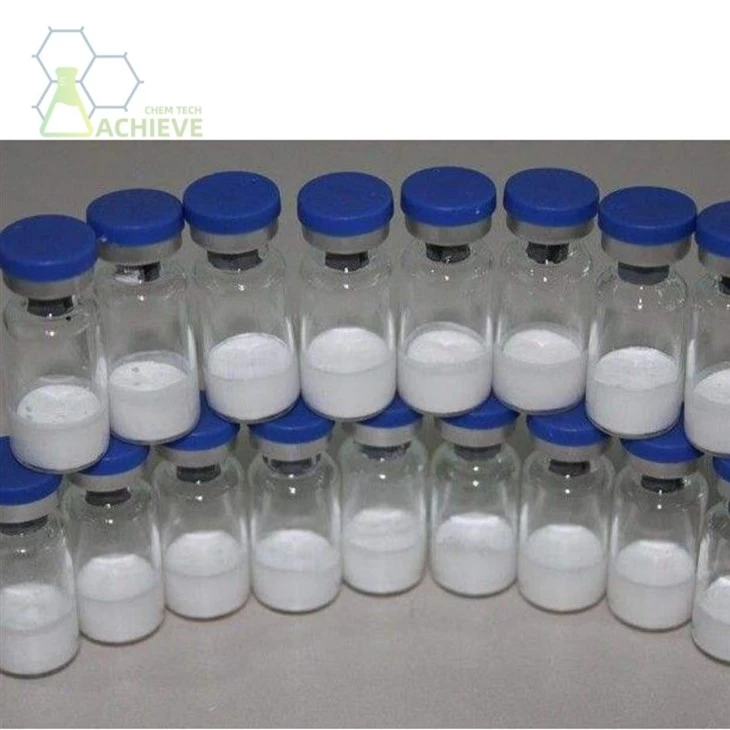


GLYX-13 (Rapatinib) usually appears as a white or almost white crystalline powder. Molecular formula C18H31N5O6, CAS 117928-94-6. It exhibits good solubility in various organic solvents, such as ethanol, acetone, etc. This solubility characteristic allows rapatinib to be easily mixed with other components during the preparation process of drug formulations, forming a uniform solution or suspension. In terms of spectral properties, it exhibits specific absorption and emission spectra at specific wavelengths.
These spectral features can be used for qualitative and quantitative analysis of drugs, as well as research on the interaction between drugs and biomolecules. Through spectral analysis, we can gain a deeper understanding of the metabolic process, mechanism of action, and interaction with other drugs of rapatinib in living organisms.
Our Products Form



GLYX-13 COA
 |
||
| Certificate of Analysis | ||
| Compound name | GLYX-13 | |
| Grade | Pharmaceutical grade | |
| CAS No. | 117928-94-6 | |
| Quantity | 33g | |
| Packaging standard | PE bag+Al foil bag | |
| Manufacturer | Shaanxi BLOOM TECH Co., Ltd | |
| Lot No. | 202601090088 | |
| MFG | Jan 9th 2026 | |
| EXP | Jan 8th 2029 | |
| Structure |
|
|
| Item | Enterprise standard | Analysis result |
| Appearance | White or almost white powder | Conformed |
| Water content | ≤5.0% | 0.47% |
| Loss on drying | ≤1.0% | 0.77% |
| Heavy Metals | Pb≤0.5ppm | N.D. |
| As≤0.5ppm | N.D. | |
| Hg≤0.5ppm | N.D. | |
| Cd≤0.5ppm | N.D. | |
| Purity (HPLC) | ≥99.0% | 99.98% |
| Single impurity | <0.8% | 0.32% |
| Total microbial count | ≤750cfu/g | 415 |
| E. Coli | ≤2MPN/g | N.D. |
| Salmonella | N.D. | N.D. |
| Ethanol (by GC) | ≤5000ppm | 672ppm |
| Storage | Store in a sealed, dark, and dry place below -20°C | |
|
|
||
|
|
||


| Chemical Formula | C18H31N5O6 |
| Exact Mass | 413.23 |
| Molecular Weight | 413.48 |
| m/z | 413.23 (100.0%), 414.23 (19.5%), 414.22 (1.8%), 415.23 (1.8%), 415.23 (1.2%) |
| Elemental Analysis | C, 52.29; H, 7.56; N, 16.94; O, 23.22 |

Rapatinel (chemical name GLYX-13) is an innovative N-methyl-D-aspartate receptor (NMDAR) modulator with partial agonist properties. Its unique pharmacological mechanism - by targeting the glycine site of NMDAR, regulating receptor function in a "partially excited" mode, activating receptors to produce physiological effects while preventing neurotoxicity caused by excessive activation - makes it highly promising in the treatment of neurological diseases.
The core use is as an adjuvant therapy for refractory major depression (TRD). TRD patients have insufficient response to at least two antidepressants (such as selective serotonin reuptake inhibitors (SSRIs) and tricyclic antidepressants (TCAs)), and traditional drugs have limited efficacy and slow onset (usually taking 4-6 weeks). Rapatinib provides a new treatment option for TRD patients by rapidly regulating the glutamatergic system.


Clinical evidence:Phase III clinical trial (SYNAPSE study): 479 patients with TRD were included, and the results showed that after a single intravenous injection of rapatinib (completed within 30 minutes), the depression symptom score (MADRS scale) of patients was significantly reduced compared to baseline, reaching statistical significance after 24 hours (p=0.007), and the efficacy lasted for at least 7 days.
In contrast, the placebo group showed minimal improvement in symptoms.
Long term efficacy: An open label extended study showed that after repeated administration (once a week for 4 weeks), the patient response rate (MADRS score ≤ 10) reached 32%, significantly higher than the placebo group's 12%, and the safety was good without serious adverse events.


Advantages of mechanism of action:
Traditional antidepressants (such as SSRIs) work by regulating monoamine neurotransmitters (serotonin, norepinephrine), but their effects are slow and ineffective for some patients. Rapatinib directly acts on the glutamatergic system, partially stimulating the NMDAR glycine site, enhancing synaptic plasticity, promoting neuronal survival, and rapidly improving depressive symptoms. Its "partial excitation" characteristic avoids the excitotoxicity caused by complete excitation, while retaining the regulatory function of physiological glutamate transmission.
Its mechanism of action is the core foundation of its use. NMDAR is the main excitatory glutamate receptor in the central nervous system, involved in key processes such as learning, memory, and neuroplasticity. However, its excessive activation can lead to calcium influx overload, causing neuronal apoptosis (excitotoxicity), and is associated with various diseases such as depression and Alzheimer's disease (AD).
Partial agonist characteristics:
As a partial agonist of the NMDAR glycine site, it has the following unique advantages:


Bidirectional regulation: enhances receptor activity and promotes normal neural transmission at low glutamate concentrations; Inhibit receptor overactivation at high glutamate concentrations to prevent neurotoxicity.
Subtype selectivity: It mainly acts on NMDARs containing NR2B subunits (distributed in the prefrontal cortex, hippocampus, and other brain regions related to emotion regulation), reducing their impact on other brain regions such as the cerebellum and brainstem, and lowering the risk of side effects.
Quick onset: After intravenous injection, it quickly penetrates the blood-brain barrier, reaches peak concentration within 30 minutes, and immediately takes effect after binding to the receptor without long-term accumulation.


Comparison with King Kong:
Memantine is another NMDAR modulator, but a non competitive antagonist that prevents calcium overload by blocking ion channels. Its function is relatively extensive and may inhibit normal nerve transmission. Rapatinib's "partial activation" mode is more refined, protecting neurons and maintaining physiological functions, making it more suitable for diseases such as depression that require rapid improvement of symptoms.
At present, it has been approved by the FDA for adjuvant therapy of TRD, but its use is gradually expanding to other neurological diseases.
1. Indications related to depression
Rapid antidepressant demand: Its rapid onset characteristics make it a potential choice for patients at risk of suicide or in need of emergency intervention. A trial targeting patients with suicidal ideation showed a significant decrease in the Suicide Assessment Scale (SSI) score 24 hours after a single dose, and the effect lasted for 7 days.
Combination therapy: Combining with SSRIs can enhance therapeutic efficacy.


In a phase II trial, the response rate of the group treated with rapatinib and escitalopram (52%) was significantly higher than that of the group treated with escitalopram alone (30%), and the onset was faster (1 week vs. 4 weeks).
2. Alzheimer's disease (AD)
AD patients have abnormal NMDAR function in the hippocampus, leading to memory impairment.By regulating glutamate transmission, cognitive function may be improved. Animal models have shown that GLYX-13 can reverse A β - induced synaptic plasticity damage and restore spatial memory ability. Currently, a phase II trial is underway for patients with mild to moderate Alzheimer's disease, and preliminary results suggest that it may delay cognitive decline.


3. Post traumatic stress disorder (PTSD)
PTSD patients have abnormal function of the prefrontal cortex amygdala circuit, leading to excessive solidification of fear memories. By regulating NMDAR function, it may promote fear resolution. A phase Ib trial targeting PTSD patients showed a decrease in fear recall test response after a single dose, and the effect lasted for one week.
4. Pain management
Chronic pain is associated with central sensitization (excessive excitation of spinal cord and spinal cord level neurons). Rapatinib may alleviate neuropathic pain by inhibiting excessive activation of NMDAR. Animal experiments have shown that it can alleviate mechanical and thermal hypersensitivity in sciatic nerve ligation model rats.


5.Ischemic Stroke
As a partial agonist at the glycine site of NMDA receptors, GLYX-13 can specifically regulate the expression ratio of NMDA receptor subunits, upregulate the NR2A subunit and downregulate the NR2B subunit, thereby reconstructing the functional balance of receptors. In pathological models of ischemic stroke, this molecule effectively blocks the excitotoxic cascade reaction, significantly reduces cerebral infarct size, and inhibits excessive neuronal apoptosis in the peri-ischemic region.
Meanwhile, it repairs impaired synaptic plasticity, upregulates cerebral BDNF expression, facilitates the recovery of damaged neural circuits, and continuously improves post-stroke motor dysfunction as well as deficits in learning, memory and spatial cognitive function. It possesses dual application value for neuroprotection in the acute phase and rehabilitation repair in the later stage of stroke.
6. Traumatic Brain Injury (TBI)
In the context of traumatic brain injury, GLYX-13 can penetrate the blood‑brain barrier, inhibit the excessive release of cerebral inflammatory factors, and alleviate secondary inflammatory damage to brain tissues.


It stabilizes synaptic structure, preserves intact synaptic function, and reduces trauma-induced synaptic loss and neurodegenerative changes. In addition, it modulates the balance of central nervous excitation and inhibition, relieves cerebral edema and neuronal stress injury, assists the microenvironmental repair of damaged brain tissue, and effectively promotes the recovery of motor, cognitive and neurobehavioral functions after trauma. It serves as a promising peptide molecule for basic research and potential therapeutic candidate in traumatic brain injury.

A common synthesis method of rapatinib is achieved through carefully designed stepwise construction of molecular frameworks. This method covers multiple reaction stages, each of which precisely regulates specific chemical bonds and functional groups to ultimately synthesize the target molecule - rapatinib.
1. The starting material introduces or replaces functional groups through substitution reactions. This step is usually carried out under the action of specific solvents and catalysts, ensuring that functional groups can accurately and efficiently connect to the raw material molecules. The selectivity of substitution reactions is crucial as it directly affects the likelihood of subsequent reactions and the purity of the products.
2. Addition reactions are used to construct new chemical bonds and molecular frameworks. In this step, the raw material molecules react with specific reagents to expand the molecular structure by forming new carbon carbon bonds or carbon heteroatom bonds. The conditions for addition reactions, such as temperature, pressure, and reaction time, need to be precisely controlled to ensure efficient reaction and product stability.

3. The cyclization reaction is a crucial step in the synthesis of rapatinib, which is responsible for converting linear molecules into compounds with specific cyclic structures. This reaction typically involves intramolecular rearrangement or closure, requiring the selection of appropriate catalysts and reaction conditions to promote the formation of cyclic structures. The success or failure of the cyclization reaction is directly related to the structure and activity of the final product.
After each reaction stage is completed, careful separation and purification of the reaction products are required. This typically involves using methods such as column chromatography, crystallization, or distillation to remove unreacted raw materials, catalysts, solvents, and byproducts. This step is crucial for ensuring the smooth progress of the next reaction, as the presence of impurities may interfere with subsequent reactions, leading to a decrease in product purity or the generation of unnecessary by-products.
Through this series of reactions and purification steps, the molecular framework of rapatinib can be gradually constructed, and ultimately a high-purity target product can be obtained. Although this method involves multiple steps and complex operations, its high selectivity and controllability make it an effective method for synthesizing complex organic molecules such as rapatinib.
Meanwhile, with the continuous development of synthetic chemistry and separation technology, this method is also constantly being optimized and improved, providing a more efficient and environmentally friendly approach for the synthesis of drugs such as GLYX-13.

As a new type of antidepressant drug, its development prospects are mainly reflected in the following aspects:
rapid-onset
It can quickly produce antidepressant effects after a single dose administration, which can last for at least a week in human patients.
Long lasting effect
Its antidepressant effect is not only rapid, but also long-lasting. In animal models, its effect can last up to two weeks.
No serious side effects
Compared with the traditional NMDA receptor antagonist ketamine, it produces antidepressant effects without the serious and limiting side effects of ketamine.

I. Research and Development of NMDA Receptor-Regulating Antibodies (1980s–1990s)
In the 1980s, the research team led by Joseph Moskal at Northwestern University in the United States focused on the mechanism of NMDA receptors in learning and memory, and developed the monoclonal antibody B6B21 targeting this receptor.
From 1987 to 1991, the team confirmed that B6B21 could specifically bind to the NMDA receptor and regulate its function, laying a foundation for the subsequent development of peptide mimetics.
At that time, the NMDA receptor was known to be associated with depression and cognitive impairment, yet safe and selective modulators were lacking, making the development of targeted modulators a research hotspot.
II. Design and Identification of GLYX-13 (Late 1990s – Early 21st Century)
In the late 1990s, the team cloned the variable region sequence of the light chain of antibody B6B21 and found that the fragment QQHYSTPPT possessed receptor-binding activity.
Based on this, a series of short peptides were synthesized, and GLYX-13 (Thr-Pro-Pro-Thr-NH₂) composed of four amino acids was screened out. As the 13th active peptide in this series, it was named GLYX-13.
Acting as a partial agonist at the glycine site of the NMDA receptor, it can cross the blood-brain barrier, enhance BDNF release, exert rapid onset of action, and cause no hallucinogenic side effects. Structural optimization and patent application were completed after 2000.
III. Clinical Development and Renaming (After 2010)
In 2015, Naurex Inc. was acquired by Allergan, and GLYX-13 was renamed Rapastinel. In 2016, it was granted FDA Breakthrough Therapy Designation for adjuvant treatment of treatment-resistant depression.
Phase II clinical trials from 2015 to 2018 verified its remarkable rapid antidepressant efficacy; however, Phase III trials in 2019 failed to meet clinical endpoints, suspending further development. Even so, it has provided critical insights for the subsequent research of NMDA receptor-targeted antidepressants.
Frequently Asked Questions
What is GLYX-13?
+
-
GLYX-13, a NMDA Receptor Glycine-Site Functional Partial Agonist, Induces Antidepressant-Like Effects Without Side Effects.
Is rapastinel FDA approved?
+
-
On March 3, 2014, the U.S. FDA granted Fast Track designation to the development of rapastinel as an adjunctive therapy in treatment-resistant major depressive disorder.
What are the long-term effects of rapastinel?
+
-
This resonates very well with the studies reported here in that rapastinel treatment showed a long lasting behavioral effect in many models associated with synaptic plasticity as well as in physiology studies showing marked increases in the magnitude of LTP induced by a sub-maximal stimulus that lasted at least two ...
Hot Tags: glyx-13 cas 117928-94-6, suppliers, manufacturers, factory, wholesale, buy, price, bulk, for sale, sermorelin powder, Melanotan ii powder, CJC 1295 Peptide, Lpamorelin Powder CAS 170851 70 4, DecaPeptide 12 CAS 137665 91 9, Kisspeptin powder